
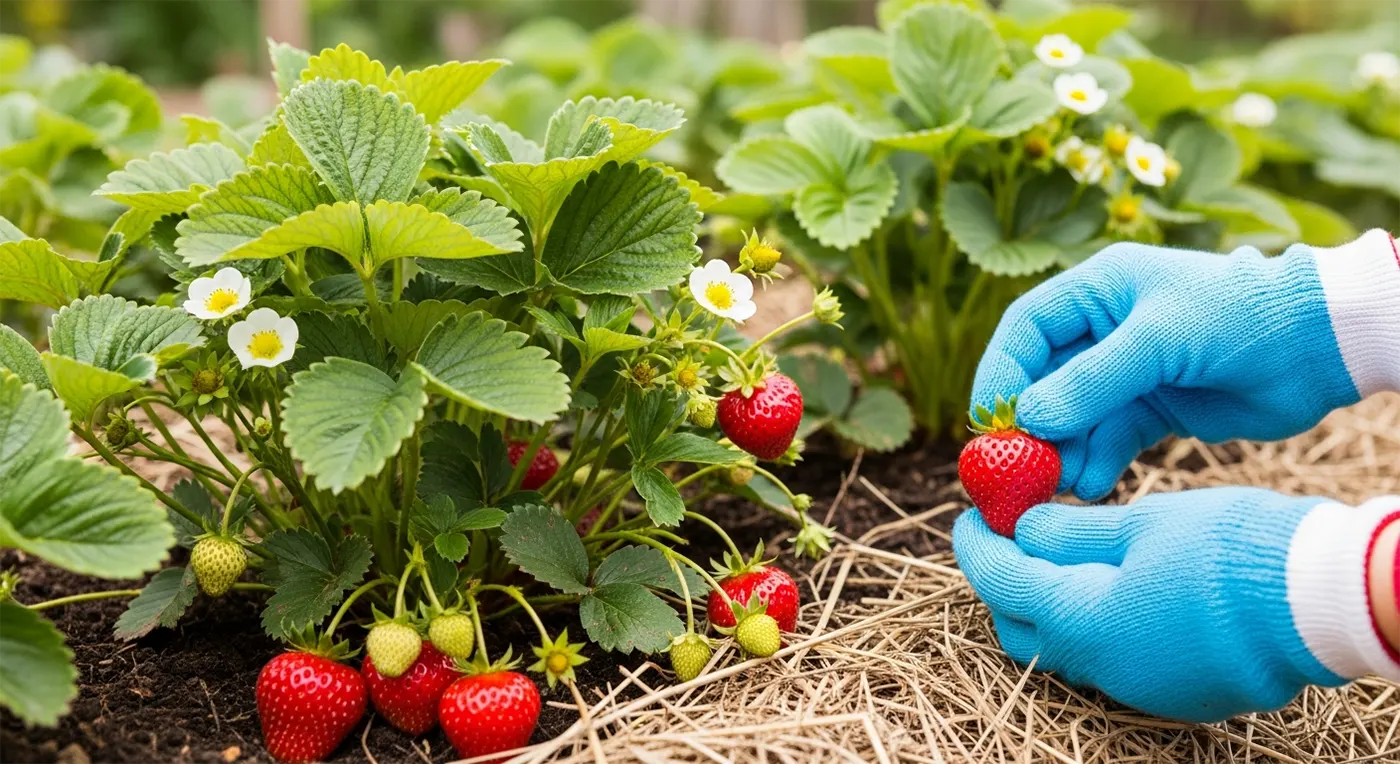
Dâu tây, thuộc họ Rosaceae, là một trong những loại trái cây nhỏ được trồng rộng rãi nhất trên toàn cầu. Các loại trái cây này thường được phân loại thành hai nhóm chính: dâu tây ngày ngắn (loại ra quả vào tháng 6) và dâu tây ngày trung tính (loại ra quả liên tục). Dâu tây ra quả vào tháng 6 bắt đầu ra hoa và kết quả từ tháng 5 đến tháng 6, cho thu hoạch lớn trong thời gian ngắn. Ngược lại, dâu tây không phụ thuộc vào ngày dài ra hoa và kết quả liên tục trong suốt mùa sinh trưởng, với sản lượng đỉnh điểm vào tháng 6 và thu hoạch thứ hai kéo dài từ cuối mùa hè đến mùa thu.
Lựa chọn đa dạng
Dâu tây được chia thành hai loại chính: loại ngày ngắn (còn gọi là loại ra quả vào tháng 6) và loại trung tính ngày (còn gọi là loại ra quả liên tục). Dâu tây loại ngày ngắn nở hoa và ra quả từ tháng 5 đến tháng 6, cho thu hoạch lớn trong thời gian ngắn. Ngược lại, dâu tây loại trung tính ngày nở hoa và ra quả suốt mùa sinh trưởng, đạt đỉnh điểm sản lượng vào tháng 6 và tiếp tục ra quả từ cuối mùa hè đến mùa thu.
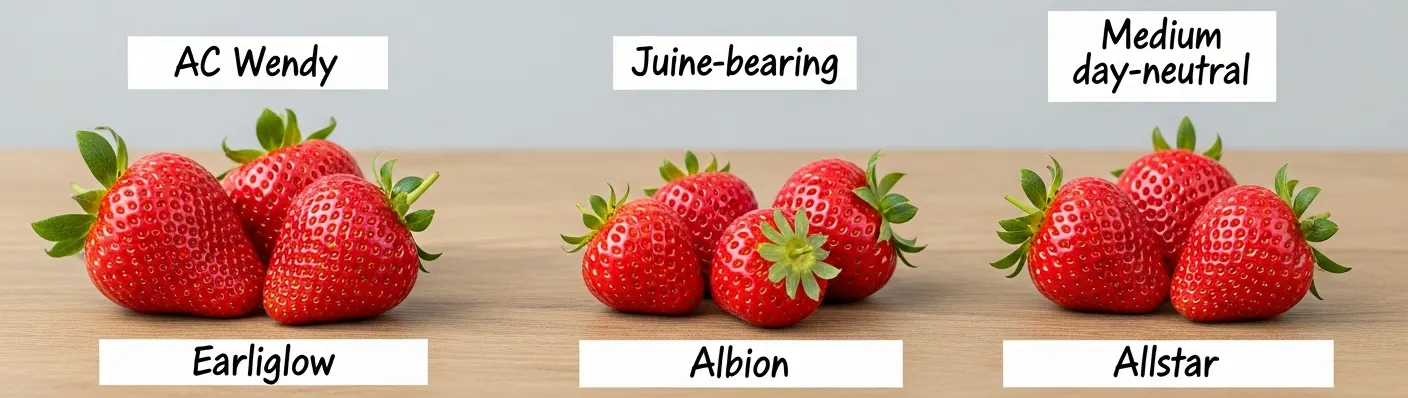
| Sự đa dạng | Phân loại | Kích thước quả mọng | Hương vị | Đặc trưng |
|---|---|---|---|---|
| AC Wendy | Tháng Sáu | Lớn | Vị đậm đà và tuyệt vời | Dễ bị bệnh đốm lá; giống cho thu hoạch sớm với màu sắc đẹp; kháng bệnh phấn trắng và bệnh thối đỏ; có nguy cơ bị hư hại do sương giá do nở hoa rất sớm. |
| Albions | Luôn ra quả | Trung bình | Hương vị tuyệt vời; quả mọng chắc. | Sản xuất từ tháng 6 cho đến khi có sương giá; kháng bệnh Verticillium; dễ bị bệnh Anthracnose. |
| Allstar | Tháng Sáu | Lớn | Nhẹ nhàng, ngọt ngào | Cây trồng khỏe mạnh và kháng bệnh Verticillium và bệnh thối rễ đỏ; rất thích hợp cho người mới bắt đầu; thích hợp để đông lạnh và ăn tươi. |
| Chandler | Tháng Sáu | Lớn | Hương vị tuyệt vời | Nhà kính cao; hoạt động ổn định trong mọi điều kiện môi trường; rất dễ bị bệnh thán thư quả; sản xuất vào giai đoạn giữa đến cuối mùa. |
| Ánh sáng ban mai | Tháng Sáu | Nhỏ/trung bình | Vị ngọt | Quả chín sớm hơn so với các giống khác; kháng bệnh Verticillium và bệnh thối đỏ; thích hợp để đóng hộp. |
Trong sản xuất dâu tây, người trồng thường chọn cây dâu tây thay vì hạt giống vì cây dâu tây có tỷ lệ sống cao hơn, phát triển nhanh hơn, đặc tính ổn định và dễ quản lý hơn. Cây dâu tây đã có hệ thống rễ phát triển tốt, nên chúng nhanh chóng thích nghi sau khi trồng. Chúng thường ra hoa trong vòng 30–50 ngày và có thể thu hoạch sau 60–90 ngày, trong khi việc nhân giống bằng hạt giống mất nhiều thời gian hơn.
Ngoài ra, dâu tây thường được nhân giống vô tính, và việc sử dụng cây con giúp duy trì các đặc tính ưu việt của cây mẹ, dẫn đến kích thước, hương vị và năng suất quả đồng đều hơn. Ngược lại, cây được trồng từ hạt có khả năng biến đổi về chất lượng và hiệu suất cao hơn.
Dâu tây có thể được mua dưới dạng cây không có rễ, cây con trong khay hoặc cây trưởng thành. Cây không có rễ đang trong giai đoạn ngủ đông và nên được trồng ngay sau khi nhận hàng. Trước khi trồng, hãy giữ chúng ở nơi mát mẻ và ngâm rễ trong nước khoảng 30 phút. Cây con trong khay là những cây con đang phát triển tích cực và thường có sẵn vào mùa thu. Thông thường, cây không có rễ được trồng vào đầu xuân, trong khi cây con trong khay được trồng vào mùa thu.
Đất
Cây dâu tây và hệ thống rễ của chúng không thể phát triển mạnh mẽ nếu đất quá ẩm ướt, vì nước đọng làm thiếu oxy cho rễ. Do đó, việc chọn một vị trí có hệ thống thoát nước tốt là điều cần thiết. Trồng dâu tây trong đất được trộn với perlite hoặc cát để cải thiện thông khí và thoát nước.
Bón phân từ hai đến ba tuần trước khi trồng hoặc ít nhất sáu tuần sau khi trồng, kết hợp với lượng lớn chất hữu cơ đã phân hủy hoàn toàn hoặc phân compost để tăng hàm lượng chất hữu cơ trong đất và cung cấp nguồn dinh dưỡng ổn định. Dâu tây cần dinh dưỡng liên tục, nhưng nồng độ không nên quá cao. Phân compost, phân cừu ủ chín, phân bò và humus không chỉ cung cấp dinh dưỡng mà còn cải thiện cấu trúc đất, khiến chúng an toàn và hiệu quả hơn so với phân bón tập trung tác dụng nhanh trong việc sản xuất dâu tây chất lượng cao và năng suất cao.
Độ pH của đất cũng nên được kiểm tra trước khi trồng, tốt nhất là vào mùa thu. Dâu tây phát triển tốt nhất ở những khu vực có ánh nắng đầy đủ và độ pH từ 5,8 đến 6,8. Việc kiểm tra đất được khuyến khích mạnh mẽ để có thể áp dụng phân bón phù hợp, đảm bảo sản xuất quả dâu thành công.
Trồng cây
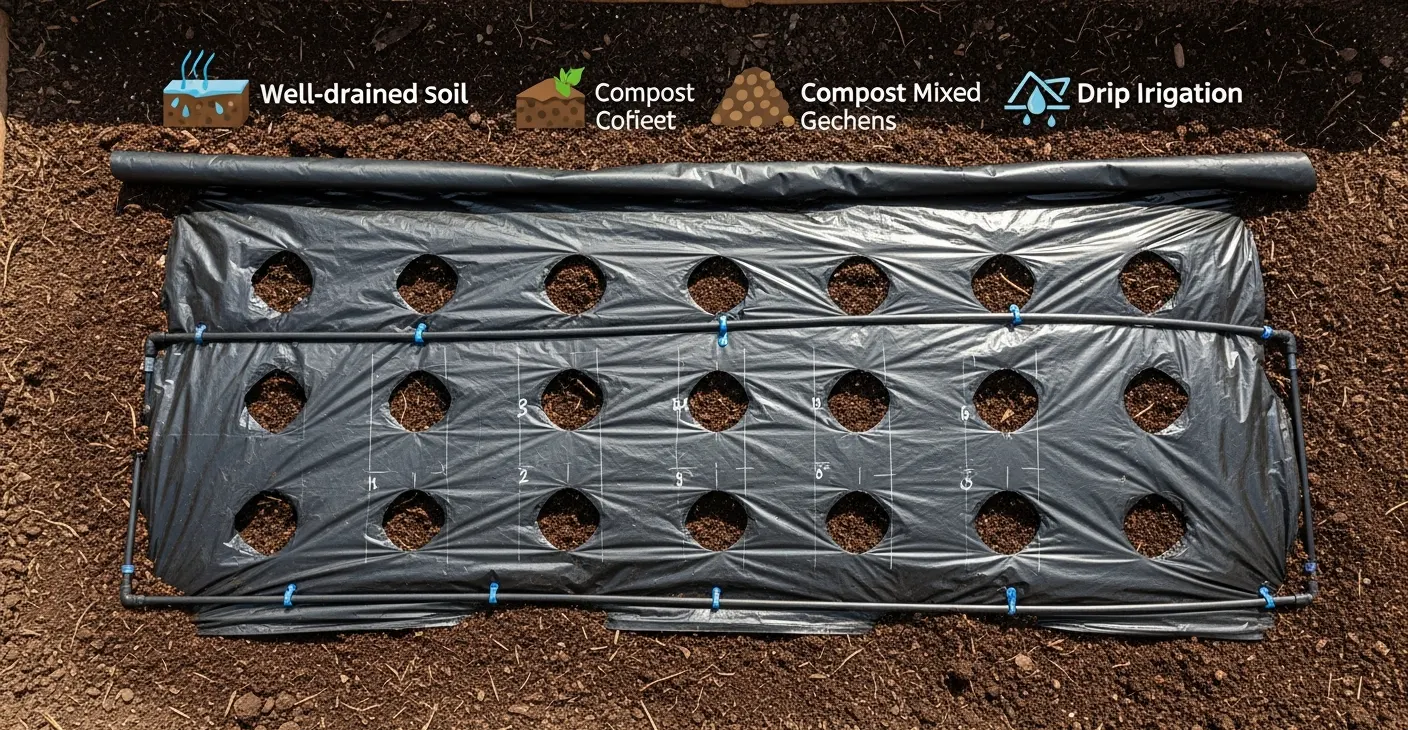
Trồng cây trên giường cao là phương pháp lý tưởng cho dâu tây vì nó cải thiện khả năng thoát nước, tăng nhiệt độ đất, kiểm soát cỏ dại và giúp thu hoạch dễ dàng hơn. Khi trồng trên giường cao phủ lớp phủ nhựa (tốt nhất là có hệ thống tưới nhỏ giọt được lắp đặt bên dưới), hãy trồng cây cách nhau từ 8 đến 14 inch.
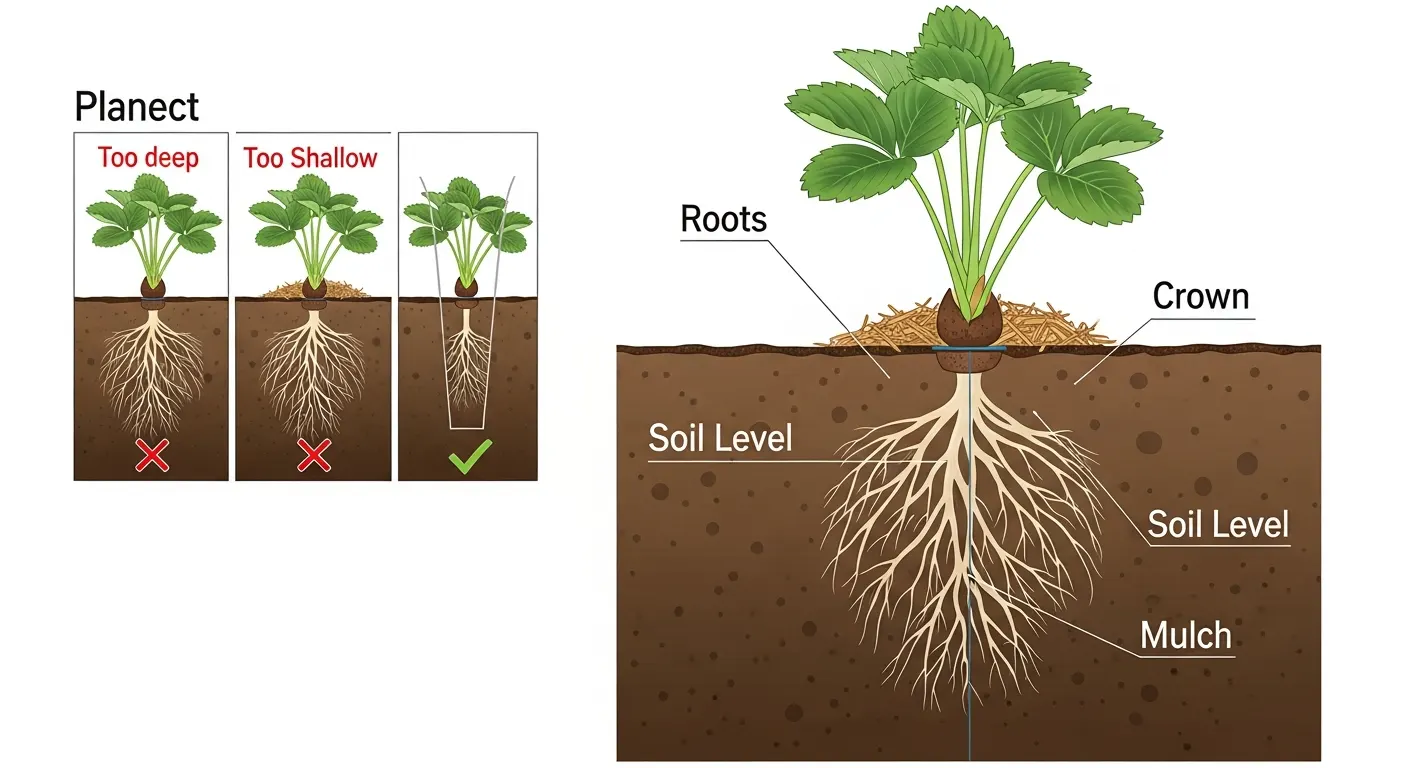
Nếu không sử dụng giường trồng, hãy giữ khoảng cách giữa các cây từ 12 đến 24 inch, và khoảng cách giữa các hàng từ 36 đến 48 inch. Khi trồng, đặt rễ thẳng đứng xuống dưới, với phần cổ rễ (phần nằm giữa rễ và lá) nằm hơi cao hơn hoặc ngang bằng với mặt đất.
Để đảm bảo sự phát triển khỏe mạnh của cây, chúng ta nên loại bỏ lứa hoa và chồi đầu tiên để cây có thể phát triển hệ thống rễ mạnh mẽ. Dâu tây cần đủ độ ẩm trong đất suốt mùa sinh trưởng, nhưng tránh tưới quá nhiều nước, vì điều này sẽ làm loãng hương vị của quả. Hãy nhổ cỏ hàng tuần để ngăn cỏ dại cạnh tranh dinh dưỡng với dâu tây và giúp giảm thiểu sâu bệnh. Nếu sử dụng lớp phủ để kiểm soát cỏ dại, rơm là lựa chọn được khuyến nghị. Tránh sử dụng cỏ cắt hoặc lá rụng, vì những thứ này có thể gây bệnh, làm ngạt cây hoặc cản trở sự thấm nước.
Khi mùa đông sắp đến, hãy phủ lớp phủ hoặc tấm che hàng cho cây trồng để bảo vệ chúng khỏi sương giá và khuyến khích sự phát triển sớm vào mùa xuân. Sau khi nguy cơ sương giá đã qua—thường là từ tháng 3 đến tháng 5—lớp phủ hoặc tấm che hàng có thể được gỡ bỏ.
Tưới nước
Sau khi trồng dâu tây, nhẹ nhàng nén đất xung quanh mỗi cây để rễ tiếp xúc tốt với đất, sau đó tưới nước kỹ để giúp cây nhanh chóng thích nghi. Trong giai đoạn sinh trưởng, dâu tây cần nguồn nước ổn định, khoảng 1 inch (khoảng 2,5 cm) mỗi tuần, tương đương với lượng mưa vừa phải. Sử dụng thiết bị đo mưa để theo dõi lượng mưa tự nhiên và bổ sung tưới tiêu khi cần thiết.
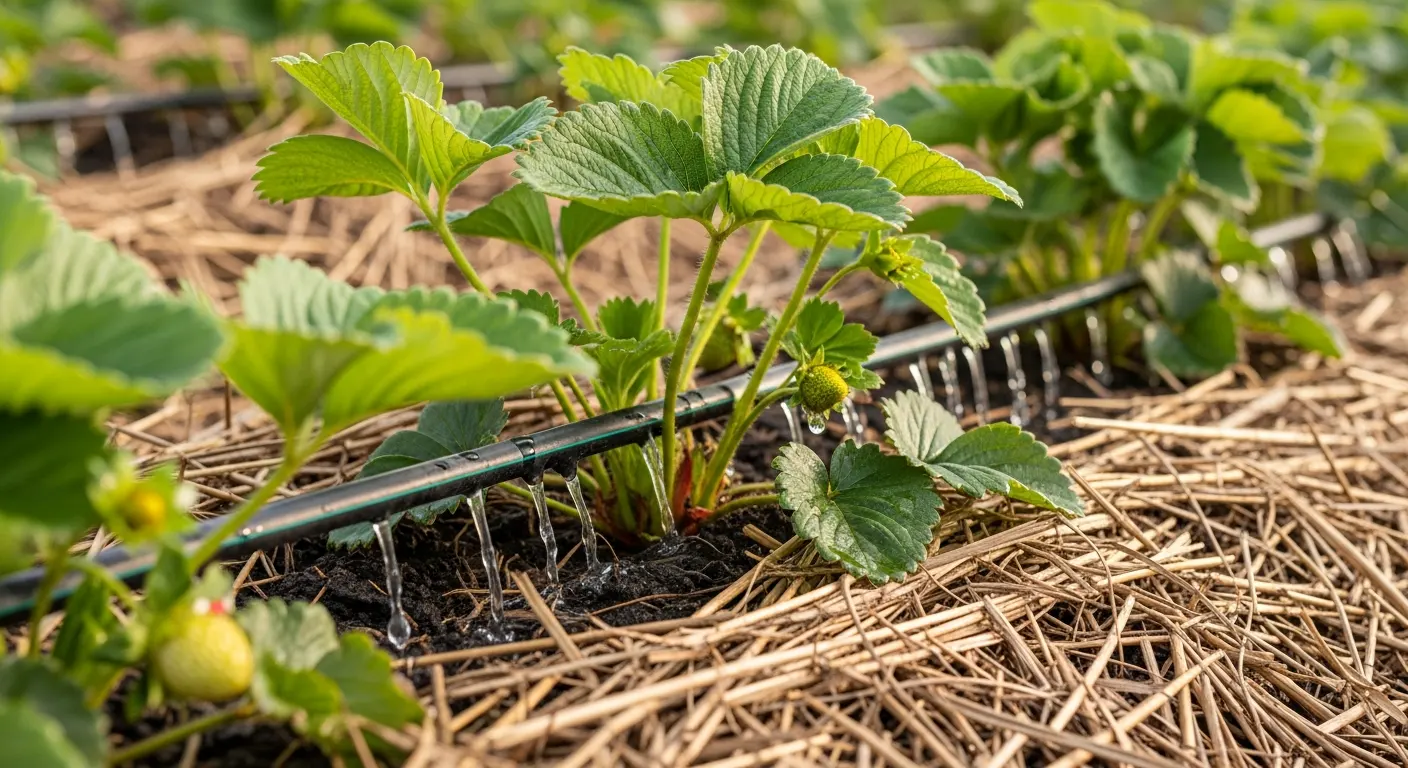
Các phương pháp tưới nước hiệu quả nhất là sử dụng ống tưới thấm hoặc hệ thống tưới nhỏ giọt, giúp nước di chuyển chậm vào vùng rễ, tiết kiệm nước và ngăn ngừa đất bắn lên lá và quả. Trong hầu hết các điều kiện đất, tưới nước sâu một lần mỗi tuần là đủ, tuy nhiên tần suất có thể cần tăng lên trong thời tiết nóng hoặc đất cát. Tưới nước nên được thực hiện vào sáng sớm để lá có thể khô trong ngày, giảm nguy cơ mắc các bệnh như nấm mốc xám và nấm mốc bột, đồng thời đảm bảo sự phát triển khỏe mạnh và chất lượng quả tốt.
Thụ tinh
Sau khi ra quả, dâu tây bước vào giai đoạn sinh trưởng vegetative và thường bắt đầu sản sinh nhiều chồi (stolons). Nếu sau khi ra quả vào tháng 6, đến giữa tháng 7 mà ít chồi xuất hiện, điều này thường cho thấy cây thiếu dinh dưỡng, đặc biệt là nitơ. Nitơ chủ yếu thúc đẩy sự phát triển của lá và chồi. Khi thiếu nitơ, cây sẽ nhỏ bé, lá trở nên nhợt nhạt và khả năng tái sinh yếu.
Hiện tại, bạn có thể bón phân cho cây bằng phân compost đã hoai mục, phân cừu đã ủ chín, phân cá hoặc bữa ăn máu, trộn nhẹ nhàng vào lớp đất mặt và tưới nước kỹ để các chất dinh dưỡng thấm vào vùng rễ. Phân cá như Rutom Fish Amino Acid Giải pháp dạng lỏng 3-0.5-5, được sản xuất từ các sản phẩm phụ của cá lên men như xương, thịt và da, cũng có thể được sử dụng. Tuy nhiên, việc bón phân nên được thực hiện một cách vừa phải để tránh sự phát triển quá mức của phần thân lá hoặc gây cháy rễ.
Vào mùa xuân thứ hai, trước khi cây bắt đầu phát triển trở lại, hãy bón phân compost hoặc phân bón nitơ hữu cơ một lần nữa để cung cấp dinh dưỡng cho lá mới, hoa và sự phát triển của quả, giúp cây khỏe mạnh hơn, nhiều chồi hơn, quả đậu tốt hơn và năng suất tổng thể cao hơn cùng chất lượng tốt hơn.
Các bệnh thường gặp
Trong quá trình trồng dâu tây, việc quản lý nước, phân bón, thông gió hoặc nhiệt độ không đúng cách có thể dễ dàng dẫn đến các bệnh hại và triệu chứng bất thường. Các vấn đề phổ biến chủ yếu xuất hiện trên lá, hoa, quả và rễ.
| Nấm mốc xám | Nhiễm trùng sớm có thể ban đầu biểu hiện dưới dạng một vết thối cứng, màu nâu bắt đầu từ phần gốc. Vết thối nâu này nhanh chóng được bao phủ bởi một lớp bào tử nấm và sợi nấm màu xám. | Bảo đảm vệ sinh là biện pháp phòng ngừa tốt nhất—kiểm soát cỏ dại để cải thiện lưu thông không khí, loại bỏ trái cây chín quá và hư hỏng, và sử dụng lớp phủ để giảm tiếp xúc giữa trái cây và đất. Hầu hết các trường hợp nhiễm bệnh xảy ra trong giai đoạn hoa nở; việc phun thuốc trừ nấm nên được thực hiện khi 10% đến 90% hoa đang nở. Thời điểm cụ thể phụ thuộc vào điều kiện thời tiết. Theo dõi chặt chẽ dự báo thời tiết và phun thuốc trừ nấm trước khi có mưa dự báo. |
|---|---|---|
| Bệnh thối lá | Những đốm nhỏ, tròn màu tím có tâm màu trắng hoặc xám xuất hiện trên lá và cuống lá. | Các giống cây trồng kháng bệnh. Sử dụng cây trồng không bị bệnh và sâu bệnh. Penthiopyrad, Nhóm IRAC 7 (Fontelis) Difenoconazole + Cyprodinil (IRAC 3 & 9) (Inspire Super) |
| Bệnh phấn trắng | Hoa bị biến dạng và héo úa; quả non cứng lại và không chín đúng cách; quả chín trở nên mềm và ngọt nước. Vào mùa xuân, lá cuộn lại, mặt dưới của lá chuyển sang màu đỏ, và nấm mốc lông tơ có thể nhìn thấy. | Quinoxyfen, Nhóm IRAC 13 (Quintec) |
| Bệnh thối da | Nhiễm trùng trên quả xanh thường xuất hiện dưới dạng các vùng màu nâu nhạt hoặc nâu, hoặc các viền nâu bao quanh các vùng xanh. Khi bệnh tiến triển, những quả non này sẽ chuyển sang màu nâu hoàn toàn và phát triển một kết cấu thô ráp, cứng như da. Quả chín có thể không thay đổi màu sắc sau khi bị nhiễm trùng, hoặc các vùng bị nhiễm trùng có thể chuyển sang màu nhạt, tím hoặc nâu. | Chọn vị trí có khả năng thoát nước tốt hoặc cải thiện hệ thống thoát nước trước khi trồng, ví dụ bằng cách thêm chất hữu cơ vào đất và dẫn nước ra khỏi khu vực trồng. Dâu tây cũng có thể được trồng trên giàn cao để cải thiện thoát nước. Sử dụng lớp phủ rơm có thể ngăn quả dâu tiếp xúc với đất và nước đọng. Lớp phủ cũng giảm thiểu việc bắn tung bào tử từ đất lên quả và hoa. Tưới nước bằng hệ thống tưới nhỏ giọt hoặc ống tưới thấm. Nếu chỉ có thể tưới nước từ trên cao, hãy tưới vào sáng sớm trong ngày nắng để lá khô nhanh nhất có thể sau khi tưới. |
Thu hoạch và bảo quản
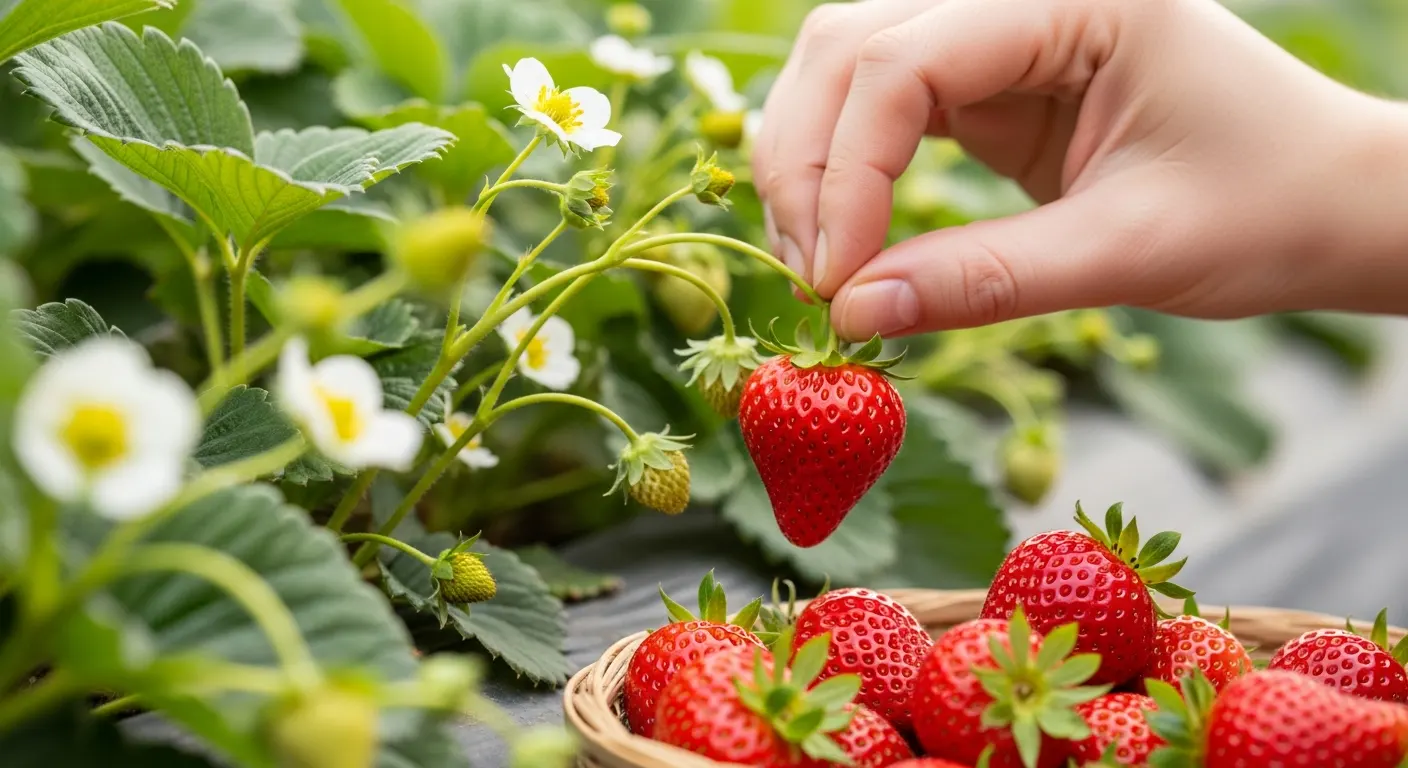
Việc thu hoạch dâu tây đòi hỏi phải cân nhắc kỹ lưỡng cả độ chín của quả và phương pháp thu hoạch để đảm bảo hương vị và chất lượng tối ưu. Dâu tây là loại quả không có giai đoạn chín sau thu hoạch, nghĩa là chúng không tiếp tục chín hoặc ngọt hơn sau khi được hái, vì vậy chỉ nên thu hoạch khi quả đã chín đỏ hoàn toàn để có hương vị tốt nhất. Thời điểm lý tưởng để thu hoạch là vào sáng sớm hoặc chiều muộn khi nhiệt độ thấp hơn, quả cứng hơn và ít bị hư hỏng hơn.
Khi thu hoạch, tránh kéo trực tiếp vào quả. Thay vào đó, nắm lấy cuống và cắt hoặc bẻ cuống cách quả khoảng 1–2 cm, để lại một đoạn cuống ngắn để giảm thiểu tổn thương và kéo dài thời gian bảo quản. Xử lý quả nhẹ nhàng sau khi hái, tránh xếp chồng lên nhau và không rửa ngay lập tức; chỉ rửa trước khi sử dụng. Dâu tây chín nên được thu hoạch kịp thời, thường mỗi hai ngày. Điều này giúp giảm thiểu hư hỏng và bệnh tật đồng thời khuyến khích cây tiếp tục ra hoa và kết quả, từ đó nâng cao năng suất và chất lượng quả tổng thể.

 English
  Spanish
  Japanese
  Korean
  German
  Portuguese
  Italian
  Indonesian
  Vietnamese
  Turkish
  Persian
  Russian
  Chinese