
Fertilizante de ácido húmico
— Fabricação em grande escala
& Fornecimento para importadores
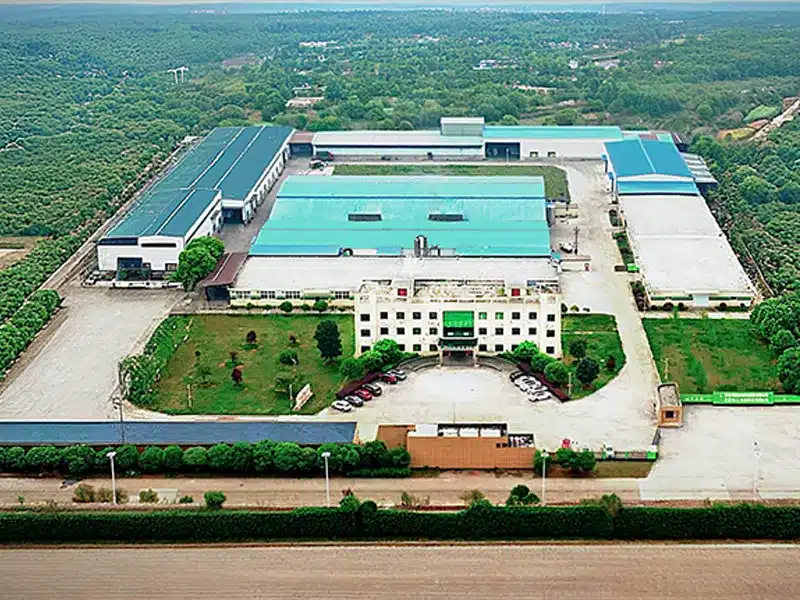
Ácido húmico e humato de potássio derivados do lignito — provenientes de 2–4 mm classificação do solo granular para 98%- em flocos e pó solúveis — diretamente de nossa unidade fabril em Jiangxi, na China, exportados para 20+ países que exigem um Certificado de Análise (COA) por lote em cada remessa.
// enviado em até 24 horas · não é necessário ter uma conta
O que isso realmente é — e onde os compradores em grande quantidade acabam se dando mal
Dois recipientes, ambos rotulados como "fertilizante à base de ácido húmico", podem apresentar uma diferença de até quatro vezes no valor que realmente importa. Um deles é um aditivo funcional para o solo; o outro é pó de lignito de baixa qualidade, com uma porcentagem impressa no saco.
A armadilha está na manchete "ácido húmico %"." Um grânulo de lignito de baixo custo pode conter muito menos ácido húmico extraível do que uma lasca refinada a partir de leonardita de alta qualidade — e, como a leonardita é um derivado do carvão, Os metais pesados (arsênico, cádmio, chumbo) devem ser analisados, e não presumidos. É exatamente isso que impede a entrada de cargas da UE e da Coreia no porto.
O único documento que distingue uma nota verdadeira de um certificado duvidoso é o COA — não é o rótulo.
Encontre o tipo certo para o seu mercado
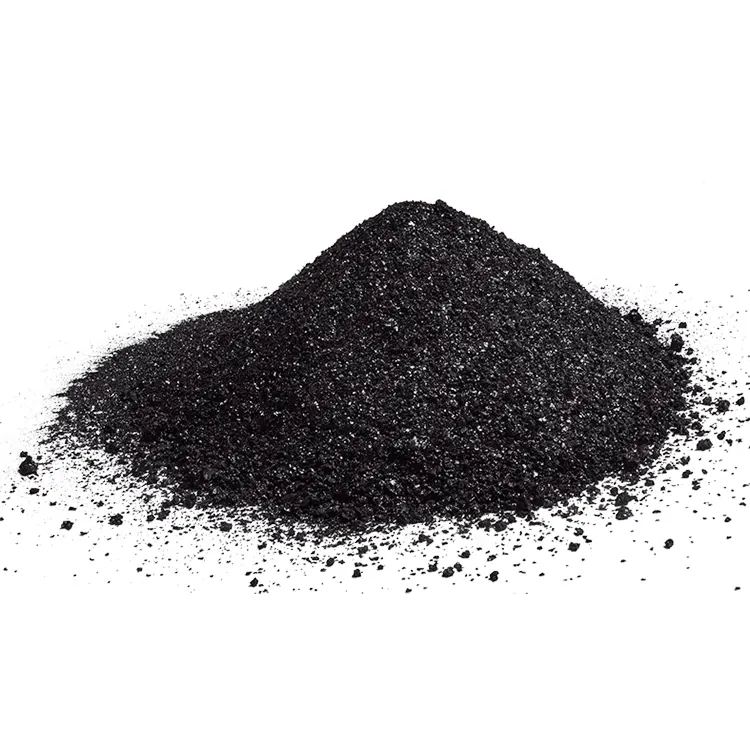
Nossas categorias de ácido húmico em granulado, pó e flocos seguem uma mesma tendência: o teor de ácido húmico e a solubilidade em água aumentam em conjunto, assim como o preço. Três categorias atendem a praticamente todos os pedidos a granel.
Não sabe se deve comprar o produto em grânulos, em pó solúvel ou em flocos, ou na forma líquida pronta para uso? Consulte nosso guia do comprador para Ácido húmico granular x líquido x em pó antes de finalizar o plano de classificação e frete.
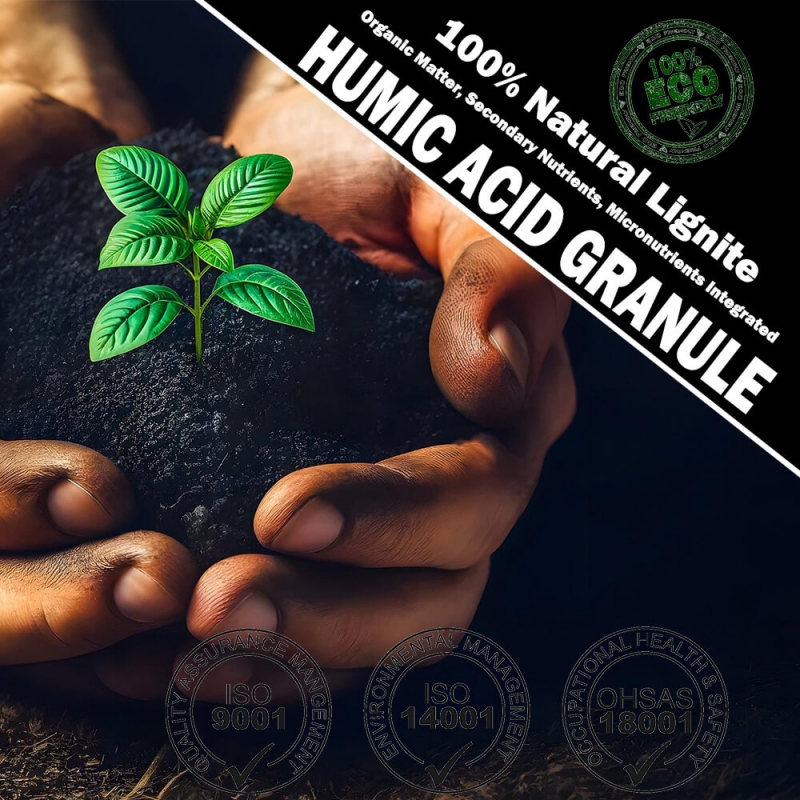
Grânulos de ácido húmico de lignito
Grânulo marrom-escuro de 2 a 4 mm para aplicação como base e mistura em fertilizantes compostos. Solúvel apenas em meio alcalino — atua no solo, não no tanque de pulverização. Formato a granel para condicionamento de grandes áreas.
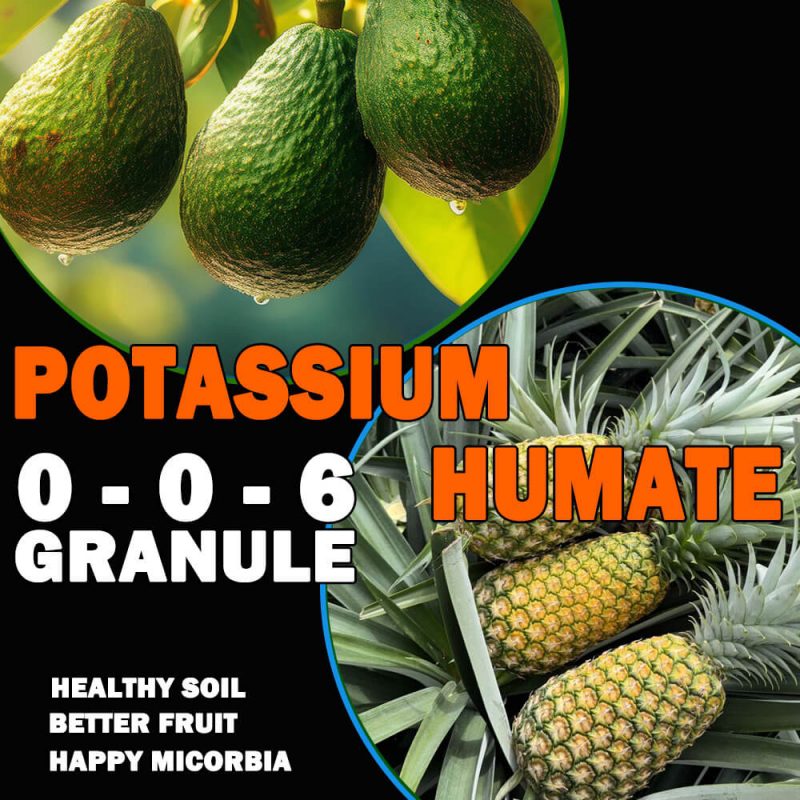
Grânulo de humato de potássio 0-0-6
Refinado para ~41,51 TP3T de ácido húmico e 931 TP3T de substâncias solúveis em água, com 61 TP3T de K₂O incorporado. Dissolve-se para uso em linhas de gotejamento, mas é comercializado na forma de grânulos estáveis. O grau intermediário para potássio + ácido húmico em escala de campo.
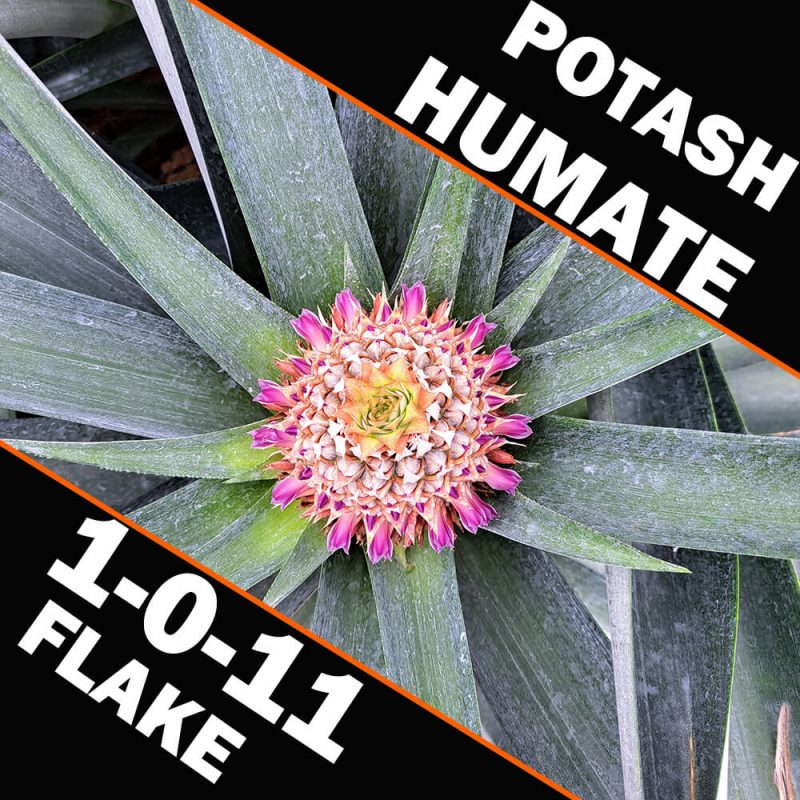
Humato de potássio em flocos 1-0-11
A qualidade superior — ~56,51 TP3T de ácido húmico, 981 TP3T de substâncias solúveis em água, 111 TP3T de K₂O, resíduo quase nulo. Em forma de flocos pretos ou pó solúvel, onde a solubilidade e o baixo teor de insolúveis determinam a venda.
★ Qual série você deve estocar?
- Seus compradores utilizam sistemas de irrigação por gotejamento, fertirrigação ou programas de aplicação foliar
- Os insolúveis/resíduos do tanque prejudicariam a venda
- É necessário que o % tenha um alto teor de ácido húmico no Certificado de Análise (COA)
- Você quer potássio incorporado (K₂O 11%)
- Seus compradores aplicam no solo e misturam ao composto NPK
- O custo por tonelada é o fator decisivo
- Você movimenta grandes volumes para o preparo de grandes áreas de cultivo
- Você precisa de um condicionador funcional, não de solubilidade
▸ Não sabe ao certo o que seus compradores precisam? Informe-nos sobre a aplicação e a cultura-alvo — recomendaremos um tipo de produto e enviaremos a ficha técnica correspondente.
Especificações e dados técnicos
Use isso como sua lista de verificação para a análise do COA. A matriz de capacidade de três classes apresenta nossa classe padrão de solo, nossa melhor classe solúvel e a classe de concentração máxima que produzimos.
| Parâmetro | Padrão — Grânulo de lignito HA | Melhor — K-Humate Granulado 0-0-6 | Maximum — K-Humate em flocos 1-0-11 |
|---|---|---|---|
| Ácido húmico | confirmar no COA em tempo real + método | 41.5% | 56.5% |
| Solubilidade em água | solúvel em álcali (solo) | 93% | 98% |
| K₂O | 0.7% | 6.35% | 11.12% |
| N total | 0.33% | 0.98% | 1.21% |
| Matéria orgânica | 21.29% | 60.13% | 65.13% |
| pH | quase neutro / alcalino | 8.96 | 9.96 |
| Umidade | — | 2.5% | 1.5% |
| Condição física | Grânulo de 2 a 4 mm | Grânulo de 2 a 4 mm | floco / pó |
| Melhor uso | base de solo, mistura | irrigação por gotejamento + solo, fornecimento de potássio | fertirrigação, foliar |
Verifique o certificado de análise (COA) de cada produto húmico antes de fazer o pedido
- 1Ácido húmico % e método de ensaio — um "70%" calculado de uma determinada maneira pode equivaler a um "45%" calculado de outra. Confirme se o método é o mesmo em todas as cotações.
- 2Solubilidade em água / insolúveis — na aplicação por gotejamento e foliar, os compostos insolúveis entopem os emissores e revestem as folhas.
- 3Metais pesados (As, Cd, Pb, Hg) — Verifique se os limites de cádmio estão em conformidade com o Regulamento (UE) 2019/1009 antes de agendar o transporte de carga.
- 4Fonte — A comparação entre a lignita e a leonardita de alta qualidade altera tanto o rendimento de HA quanto o perfil de metais pesados.
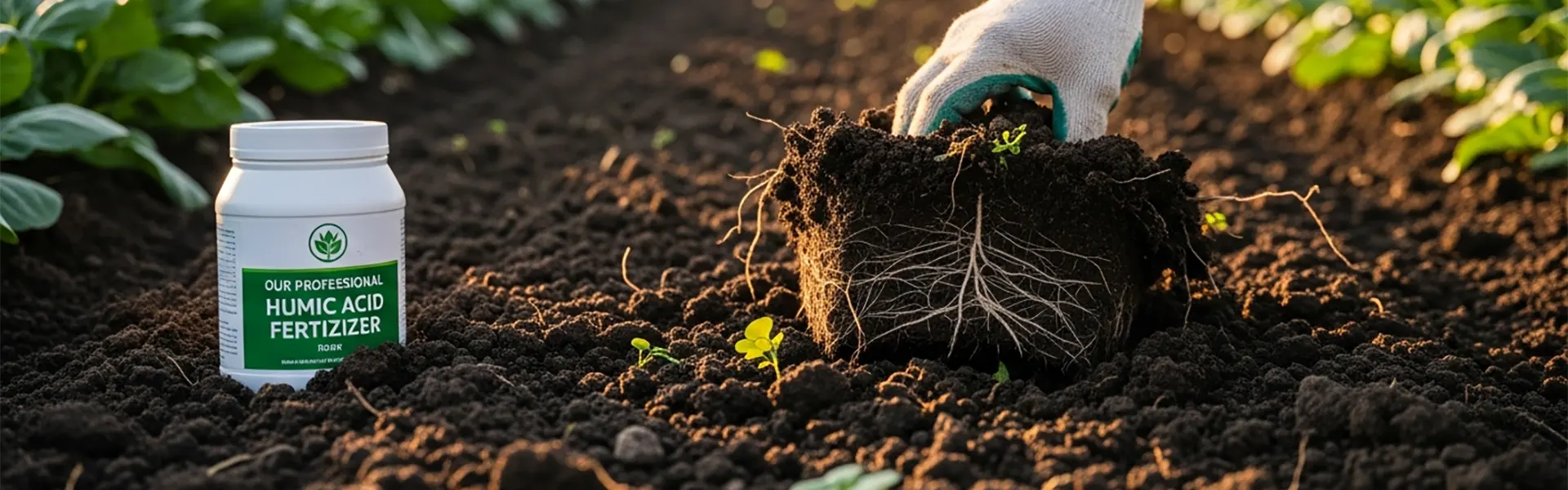
Setores e aplicações
Os produtos húmicos raramente são de tipo único — é a aplicação que determina o tipo.
Para programas em regiões áridas ou costeiras que lidam com solos afetados pelo sal ou arenosos, consulte nosso guia sobre ácido húmico para solos salinos e arenosos antes de escolher o grânulo para incorporação no solo e o tipo de fertirrigação.
Culturas em grandes áreas e culturas de campo
Grânulos de lignito misturados ao fertilizante NPK básico — o produto que impulsiona as vendas dos distribuidores de culturas em fileiras.
Horticultura por gotejamento
Aplique humato de potássio em grânulos ou em flocos por meio da linha de gotejamento para lavagem das raízes e troca catiônica.
Fertilização foliar e fertirrigação
O 98% em flocos solúveis, onde o baixo teor de insolúveis e a mistura limpa no tanque são requisitos imprescindíveis.
Misturadores de NPK (OEM)
O humato como aditivo funcional — frequentemente misturado com nossos Fertilizante de aminoácidos.
★ Desafios comuns → nossa resposta por série
| Problema do comprador | Resposta sobre nota/especificação |
|---|---|
| Entupimento dos emissores por humato "solúvel" | 98% — flocos solúveis (1-0-11), baixo teor de insolúveis — confirmar no Certificado de Análise (COA) |
| Remessa para a UE retida por causa do cádmio | solicitar o Certificado de Análise (COA) de metais pesados de acordo com o Regulamento (UE) 2019/1009 antes de agendar o transporte |
| Pagar um valor elevado pelo % que não cumpre o prometido | confirmar o método de teste de HA; um solo agrícola raramente precisa do grau em flocos |
| Preciso de K + húmico em um único item | grânulo de humato de potássio 0-0-6 ou floco 1-0-11 (com K₂O incorporado) |
Como sabemos que um lote é exatamente o que diz o rótulo
A maioria dos fornecedores de substâncias húmicas pede que você confie em uma porcentagem. Nós preferimos oferecer a você os meios para verificar isso — porque, no caso de um insumo derivado do carvão, essa porcentagem é o número mais fácil de alterar na ficha técnica.
"Uma porcentagem de ácido húmico sem o método de teste indicado ao lado é um número de marketing, não uma especificação. O mesmo lote pode apresentar o código 70% de uma forma e 45% de outra — ninguém está mentindo, apenas as medições foram feitas de maneira diferente. Por isso, sempre indicamos o método junto com o valor. E como a leonardita é uma camada de carvão marrom, consideramos o painel de metais pesados como parte da identidade do lote, e não como um extra pelo qual você paga."
— Equipe de Processos e Controle de Qualidade da Rutom Bio HumicA matriz acima é tudo — grânulo padrão, 93% (grânulo solúvel), 98% (floco solúvel). Não existe um quarto tipo oculto reservado para clientes privilegiados.
O teto é o minério — ~56,51 TP3T HA a 981 TP3T: a solubilidade está próxima do limite máximo do processo de refino. Não podemos comprovar uma alegação de "901 TP3T+" sem alterar discretamente o método de teste.
Todos os valores podem ser verificados em relação a um documento que você possui — o certificado de análise (COA) por lote, o novo teste realizado por terceiros e um certificado que inclua ou não o seu SKU no escopo.
Certificações, qualidade e conformidade com as normas de exportação
Um certificado é uma afirmação sobre um sistema ou um categoria de produto — isso não constitui prova sobre o lote contido no seu contêiner. No caso de matéria-prima derivada do carvão, é exatamente nessa lacuna que as remessas da UE e da Coreia são retidas. Portanto, esta seção distingue os dois aspectos: o que temos em mãos, o que cada documento realmente comprova e a documentação a ser solicitada para que você possa efetuar a compra provas, não um logotipo.
- ✓Orgânico: A certificação ECOCERT, CERES e o escopo orgânico da UE devem ser comprovados por meio do SKU e de uma cópia do certificado.
- ✓Sistemas: ISO 9001 (qualidade) e ISO 14001 (meio ambiente)
- ✓Controle de qualidade por lote: cada lote é testado internamente ou pela SGS antes do embarque; Certificado de Análise (COA) por lote
- ✓Exportar: com experiência em inspeções da CIQ para produtos fertilizantes

| Documento retido | O que isso comprova | O que isso NÃO prova |
|---|---|---|
| ECOCERT / CERES / Certificação Orgânica da UE | O insumo está aprovado para a produção orgânica certificada — por organismo certificador e por produto específico abrangido | Níveis de metais pesados ou HA% de qualquer lote; isso seu O SKU está incluído no escopo, a menos que o certificado o mencione |
| ISO 9001 | Um sistema de gestão da qualidade sistema está em vigor e foi auditado | Que cada lote atenda às suas especificações |
| ISO 14001 | Um sistema de gestão ambiental sistema está em vigor | Qualquer informação sobre a qualidade ou pureza do produto |
| Certificado de Análise (COA) por lote | Os números reais relativos a isso lote — HA%, método de ensaio, painel de metais pesados | (isso é as evidências do lote — basta confirmar o método de teste HA) |
Conclusão: os certificados orgânicos e da ISO comprovam requisitos e processo; apenas o O Certificado de Análise (COA) por lote comprova a qualidade do material. Quem vende apenas com base no certificado está vendendo o logotipo, e não o lote.
O que solicitar a qualquer fornecedor de húmus — inclusive a nós — para que você tenha provas concretas, em vez de meras alegações. Cole isso diretamente em uma ordem de compra:
- 1Certificado de Análise (COA) por lote — HA % de acordo com o método de ensaio indicado + painel de metais pesados (As, Cd, Pb, Hg). Comprova esse lote.
- 2Cópia do certificado orgânico que inclua seu SKU no escopo, com número e validade.
- 3Cópias dos certificados ISO 9001 / 14001. Comprova os sistemas por trás do lote.
- 4Certificado de Origem + o código HS que declaramos na exportação.
- 5Relatório de teste de terceiros (por exemplo, SGS) mediante solicitação. Verificação independente dos dados do COA.
O que não afirmamos (limite honesto)
- A certificação orgânica se aplica por certificadora e por produto específico — confirme por escrito se o SKU que você solicitou está dentro do escopo das certificações ECOCERT / CERES / orgânica da UE.
- Não alegamos possuir certificações que não temos para um determinado mercado; se o seu destino exigir certificação USDA NOP ou JAS, entre em contato conosco e confirmaremos o que está e o que não está em vigor.
- Não publicamos nenhum resultado de "ácido húmico %" sem indicar o método de teste utilizado.
- "Experiência em exportação CIQ" refere-se à experiência em desembaraço aduaneiro, não uma certificação de segurança do produto para o seu destino.
Custo no destino e classificação HS
O preço FOB em uma cotação de humato não é o valor que o produto custa para você, já entregue. Para um pedido proveniente da China, o valor que afeta sua margem é o custo de importação — e há dois itens que costumam surpreender quem importa pela primeira vez.
| Fator de custo total de importação | O que verificar | Como ajudamos |
|---|---|---|
| Preço unitário FOB | orçamento para o seu tipo específico de produto + embalagem | cotação específica para cada série, sem aquelas generalizações do tipo "%" |
| Classificação na Nomenclatura Harmonizada (NH) e alíquotas de imposto | declarado nos códigos HS 3101 / 3105 / 3824, dependendo da forma e do destino — a alíquota varia de acordo com o código | nós informamos o código que declaramos na exportação; você confirma sua alíquota de importação |
| Carga + peso da umidade | Os flocos solúveis contêm mais húmico ativo por tonelada do que os grânulos úmidos | A classificação em flocos reduz o frete por unidade de matéria húmica ativa |
| Custo de escape de qualidade | retrabalho, linhas de gotejamento entupidas, retenção de metais pesados | Certificado de Análise (COA) por lote + análise de metais pesados antes do envio |
Duas calculadoras — sem conta, sem PDF restrito
Ambos funcionam com base nas especificações publicadas acima, além dos números que você inserir. Nenhum dos dois fornece um preço; ambos ajudam a restringir as opções antes de você falar com alguém.
Seletor de Grau Húmico
Insira sua aplicação e indique se você precisa de potássio incorporado — o sistema retornará o tipo correspondente da matriz acima.
Comparador de Cargas de Humato Ativo
Você não envia ácido húmico — você envia ácido húmico mais tudo o mais que estiver no saco. Ácido húmico ativo por tonelada = HA% × (1 − umidade).
| Série | HA | Umidade | Ativo/MT |
|---|---|---|---|
| Grânulo de K-humato 0-0-6 | 41.5% | 2.5% | ~405 kg |
| K-humato em flocos 1-0-11 | 56.5% | 1.5% | ~557 kg |
// Para ser sincero: se seus compradores aplicam no solo e misturam com NPK, o granulado barato é a escolha certa e esses cálculos não fazem sentido.
▸ Execute qualquer uma das ferramentas e, em seguida, Envie o resultado indicando sua porta e seu volume — faremos um orçamento com base exatamente nisso.
Solicite um orçamento para ácido húmico e humato de potássio
A decisão foi tomada com base em uma linha no COA, e não no preço por tonelada. Envie-nos sua classe de carga, porto de destino e volume mensal — enviaremos uma ficha técnica com as especificações da qualidade, uma cotação FOB ajustada ao teor de umidade e o código HS que declararemos, em até 24 horas.
Solicite uma amostra para avaliação; o prazo de entrega será confirmado na resposta.
Solicite uma amostra →Preços FOB por faixas + ficha técnica completa em até 24 horas.
Veja os preços por faixas →A quantidade mínima de pedido (MOQ) e o prazo para a documentação serão confirmados durante a cotação.
Iniciar um briefing de OEM →— Balcão de Atendimento da Rutom Bio Technical · Última atualização em 13/07/2026
Perguntas frequentes
O preço acompanha o grau de qualidade, e não a porcentagem indicada no título. O granulado de lignito é o mais barato por tonelada; o humato de potássio solúvel em flocos 98% ocupa o topo da lista porque a solubilidade e o baixo teor de insolúveis aumentam os custos de refino. O humato de potássio também contém K₂O incorporado, o que faz com que seu preço acompanhe o da potassa. Para obter um valor FOB preciso, envie o grau desejado, a embalagem, o porto de destino e o volume mensal — faremos a cotação em até 24 horas.
O humato de potássio é o sal de potássio do ácido húmico — é o que torna o produto solúvel em água. O ácido húmico bruto de lignito é solúvel apenas em álcalis (um tipo para solo); sua reação com o potássio resulta nos tipos granulados e em flocos solúveis em água 93–98%, utilizados em irrigação por gotejamento e aplicação foliar, além de adicionar 6–11% de K₂O. A mesma estrutura húmica, mas com solubilidade e teor de potássio diferentes. Para uma comparação completa de humato de potássio x ácido húmico, incluindo solubilidade, K₂O e quando usar cada um deles; consulte nosso guia do comprador.
O ácido húmico é extraído da leonardita, uma camada de carvão marrom; portanto, os metais pesados (arsênico, cádmio, chumbo) devem ser testados, em vez de se partir de suposições. Para remessas com destino à UE, confirme se o resultado do cádmio está dentro dos limites estabelecidos pelo Regulamento (UE) 2019/1009. Fornecemos, mediante solicitação, um painel de análise de metais pesados por lote; confirme os valores específicos para sua SKU e destino antes de agendar o frete.
O ácido húmico e o humato de potássio são normalmente declarados na posição 3101 do Sistema Harmonizado (fertilizantes de origem animal ou vegetal), mas, dependendo da forma do produto e da alfândega de destino, a classificação pode variar (por exemplo, 3105 ou 3824), e o imposto aduaneiro é determinado pelo código. Informamos o código que declaramos na exportação; confirme a classificação de importação e a alíquota do imposto com seu despachante aduaneiro antes de fechar o negócio.
Utilize o humato de potássio solúvel em flocos 98% (1-0-11) ou, para uma qualidade intermediária, o granulado solúvel 93% (0-0-6). Evite o granulado de solo de lignito em qualquer tanque — ele é solúvel apenas em meio alcalino e seus componentes insolúveis entopem os emissores e revestem as folhas. Para aplicação foliar, verifique se o índice de componentes insolúveis é baixo no Certificado de Análise (COA).
É um condicionador de solo e bioestimulante, não um substituto do NPK — ele melhora a absorção de nutrientes e a estrutura do solo, mas não fornece nitrogênio nem fósforo por si só. Doses muito altas ou repetidas podem elevar o pH do solo (as versões com humato são alcalinas, com pH ~9); portanto, em solos já alcalinos, utilize-o como parte de um programa equilibrado.
Sim. Fornecemos desde paletes inteiras até volumes de contêineres completos (FCL) e oferecemos suporte a misturas personalizadas (húmicas + potássio, húmicas + aminoácidos) e embalagens com marca própria por meio de um processo de três etapas: confirmação da sua necessidade, finalização da fórmula e, por fim, produção. A quantidade mínima de pedido (MOQ) e os prazos para a documentação de pedidos OEM são confirmados em até 3 dias úteis.
Sim. Como fabricantes diretos de fertilizantes à base de ácido húmico, fornecemos volumes no atacado e a granel nos formatos granulado (2–4 mm), pó solúvel e em flocos, além de ácido húmico/humato de potássio na forma líquida (para fertirrigação), mediante solicitação. Informe-nos a forma, o tipo e o volume mensal, e enviaremos uma cotação FOB acompanhada de um Certificado de Análise (COA) por lote.



 English
  Spanish
  French
  Japanese
  Korean
  German
  Portuguese
  Italian
  Indonesian
  Vietnamese
  Turkish
  Persian
  Russian
  Chinese