
Engrais à base d'acide humique
— Fabrication en grande série
& Recherche de fournisseurs pour les importateurs
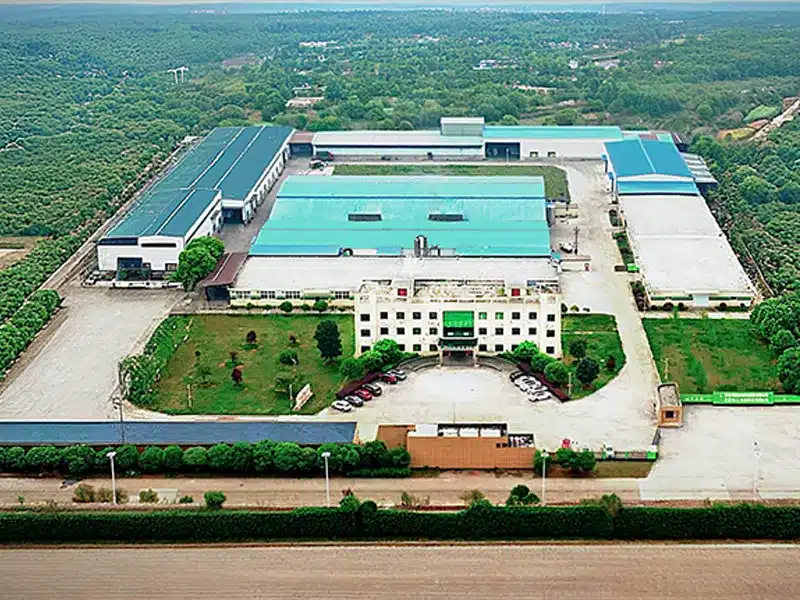
Acide humique et humate de potassium issus du lignite — provenant de 2 à 4 mm classe de sol granulaire à 98%- en flocons et en poudre solubles — en provenance directe de notre site de production du Jiangxi, en Chine, exportés vers 20+ les pays qui fournissent un certificat d'analyse (COA) par lot pour chaque envoi.
// envoyé sous 24 heures · aucun compte requis
De quoi s'agit-il réellement ? — Et pourquoi les acheteurs en gros se font-ils avoir ?
Deux sacs portant tous deux la mention " engrais à base d'acide humique " peuvent présenter un écart pouvant aller jusqu'à un facteur quatre pour la teneur qui compte réellement. L'un est un amendement efficace pour le sol ; l'autre est de la poussière de lignite de qualité inférieure, dont le pourcentage est indiqué sur le sac.
Le piège, c'est le titre " acide humique % "." Un granulé de lignite bon marché peut contenir bien moins d'acide humique extractible qu'un flocon raffiné à partir de léonardite de haute qualité — et comme la léonardite est un dérivé du charbon, La présence de métaux lourds (arsenic, cadmium, plomb) doit être vérifiée par des analyses, et non pas supposée. C'est précisément ce qui bloque les cargaisons en provenance de l'UE et de la Corée au port.
Le seul élément qui distingue une véritable note d'un « certificat bidon » est le COA — pas l'étiquette.
Trouvez la qualité adaptée à votre marché
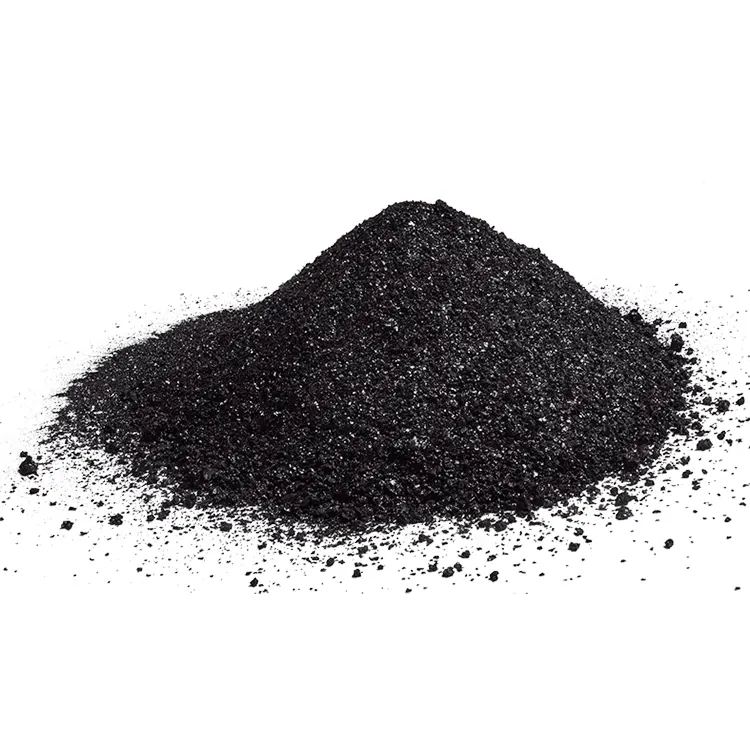
Nos différentes qualités d'acide humique (granulés, poudre et flocons) suivent une même courbe : la teneur en acide humique et la solubilité dans l'eau augmentent parallèlement, tout comme le prix. Ces trois qualités permettent de répondre à la quasi-totalité des commandes en vrac.
Vous hésitez entre acheter un produit sous forme de granulés, de poudre soluble ou de flocons, ou encore un produit liquide prêt à l'emploi ? Consultez notre guide d'achat pour Acide humique sous forme granulaire, liquide ou en poudre avant de valider le plan de classement et de transport.
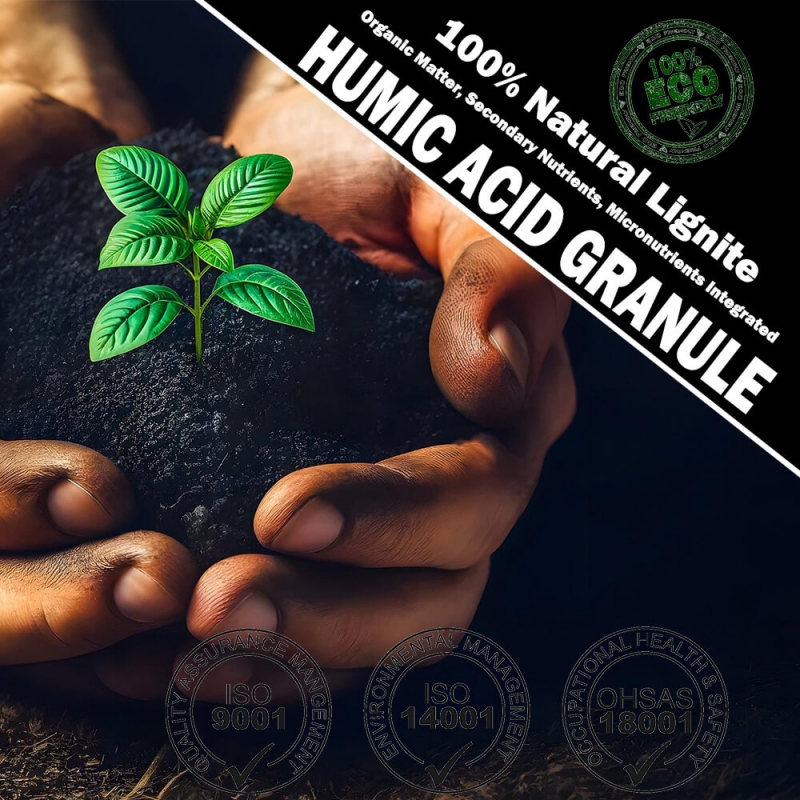
Granulés d'acide humique de lignite
Granulés noir-brun de 2 à 4 mm destinés à être épandus en couche de base et incorporés dans des engrais composés. Solubles uniquement en milieu alcalin — agissent dans le sol, et non dans la cuve de pulvérisation. Conditionnement en vrac pour l’amendement de grandes superficies.
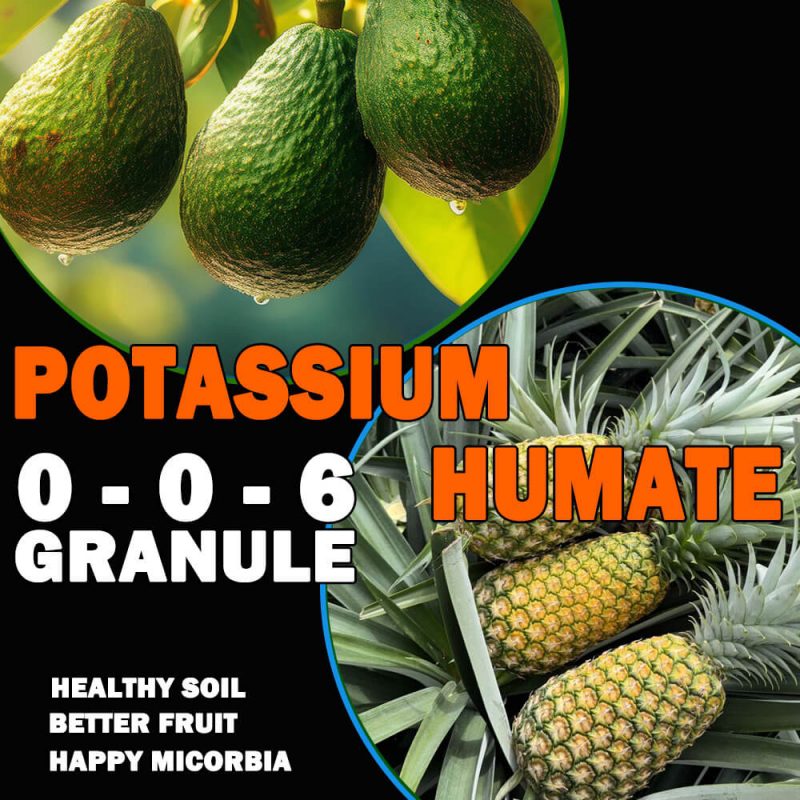
Granulés d'humate de potassium 0-0-6
Raffiné pour contenir environ 41,51 TP3T d'acide humique et 931 TP3T de composants hydrosolubles, avec 61 TP3T de K₂O incorporés. Se dissout pour l'irrigation goutte-à-goutte, mais est expédié sous forme de granulés stables. La qualité intermédiaire pour l'apport de potassium et d'acide humique à l'échelle du champ.
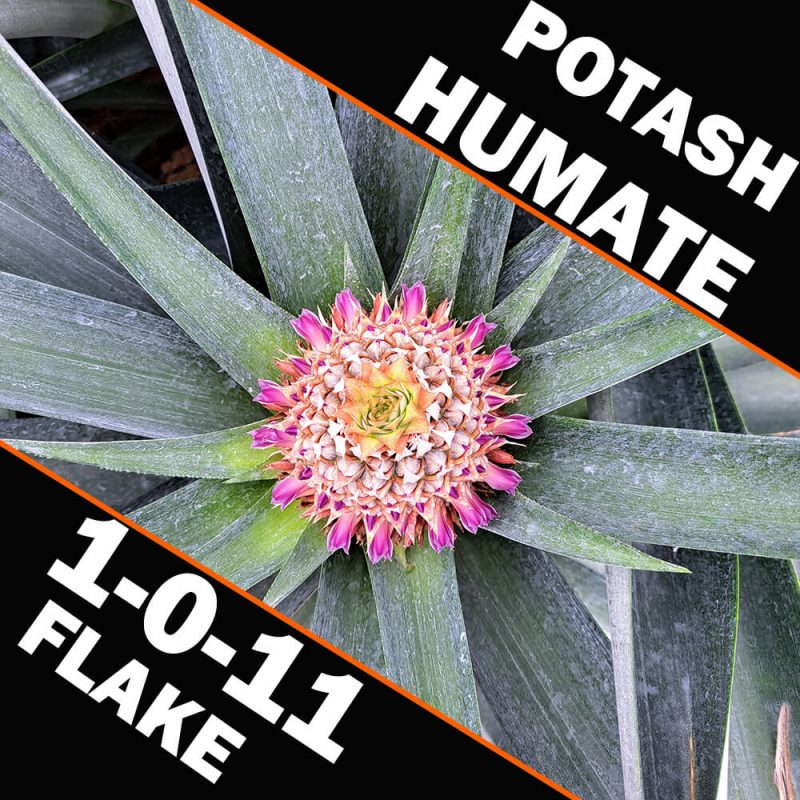
Humate de potassium en flocons 1-0-11
La qualité supérieure — environ 56,51 TP3T d'acide humique, 981 TP3T de substances hydrosolubles, 111 TP3T de K₂O, résidus quasi nuls. Sous forme de flocons noirs ou de poudre soluble, dont la solubilité et la faible teneur en matières insolubles déterminent la vente.
★ Quelle classe devriez-vous approvisionner ?
- Vos acheteurs ont mis en place des programmes d'irrigation goutte à goutte, de fertirrigation ou de fertilisation foliaire
- Les matières insolubles / les résidus dans la cuve feraient capoter la vente
- Il vous faut un % à forte teneur en acide humique sur le certificat d'analyse (COA)
- Vous souhaitez du potassium intégré (K₂O 11%)
- Vos acheteurs épandent le produit sur le sol et l'incorporent à un engrais NPK composé
- Le coût à la tonne est le facteur déterminant
- Vous manipulez de gros volumes pour la préparation des grandes surfaces
- Ce qu'il vous faut, c'est un agent de conditionnement efficace, pas une simple solubilité
▸ Vous ne savez pas exactement ce dont vos acheteurs ont besoin ? Indiquez-nous l'utilisation prévue et la culture ciblée — nous vous proposerons une qualité et vous enverrons la fiche technique correspondante.
Caractéristiques et données techniques
Utilisez ce document comme liste de contrôle pour l'examen de votre COA. La matrice des trois teneurs indique notre teneur standard dans le sol, notre meilleure teneur en solubles et la teneur maximale que nous produisons.
| Paramètres | Standard — Granulés de lignite HA | Le meilleur — K-Humate Granule 0-0-6 | Maximum — K-Humate en flocons 1-0-11 |
|---|---|---|---|
| Acide humique | Valider sur le COA en production + méthode | 41.5% | 56.5% |
| Solubilité dans l'eau | soluble en milieu alcalin (sol) | 93% | 98% |
| K₂O | 0.7% | 6.35% | 11.12% |
| N total | 0.33% | 0.98% | 1.21% |
| Matière organique | 21.29% | 60.13% | 65.13% |
| pH | presque neutre / alcalin | 8.96 | 9.96 |
| Humidité | — | 2.5% | 1.5% |
| Forme physique | granulés de 2 à 4 mm | granulés de 2 à 4 mm | en paillettes / en poudre |
| Utilisation optimale | base de terre, mélange | irrigation goutte-à-goutte + sol, apport en potassium | fertirrigation, application foliaire |
Vérifiez chaque certificat d'analyse (COA) du produit humique avant de passer commande
- 1Acide humique % et méthode d'essai — un " 70% " calculé d'une certaine manière peut correspondre à un " 45% " calculé d'une autre manière. Vérifiez que la méthode utilisée est la même pour toutes les cotations.
- 2Solubilité dans l'eau / substances insolubles — En cas d'irrigation goutte à goutte et de traitement foliaire, les substances insolubles obstruent les émetteurs et recouvrent les feuilles.
- 3Métaux lourds (As, Cd, Pb, Hg) — Vérifiez que les limites de cadmium sont conformes au règlement (UE) 2019/1009 avant de réserver le transport.
- 4Source — Le fait d'utiliser du lignite plutôt que de la léonardite de haute qualité modifie à la fois le rendement en HA et le profil en métaux lourds.
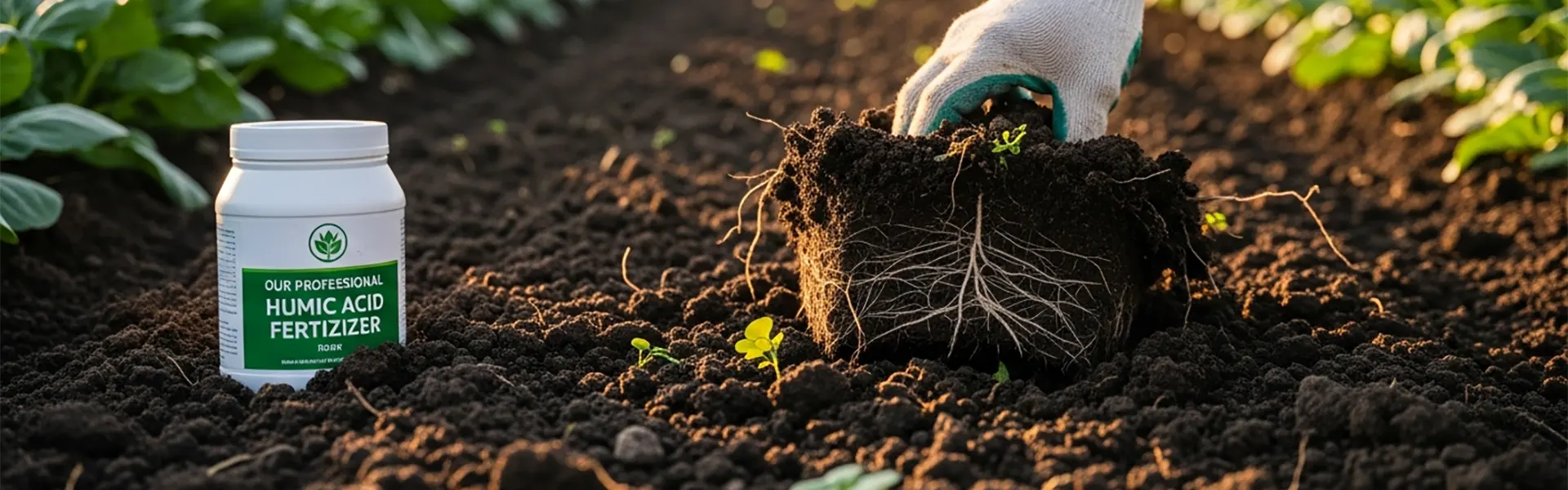
Secteurs d'activité et applications
Les produits humiques sont rarement de type « taille unique » : c'est l'application qui détermine la qualité.
Pour les projets menés dans des zones arides ou côtières, sur des sols salins ou sableux, consultez notre guide consacré à Acide humique pour les sols salins et sableux avant de choisir le type de granulés à incorporer au sol et le type de fertirrigation.
Grandes cultures et cultures de plein champ
Des granulés de lignite incorporés à un engrais NPK de base : le produit phare des distributeurs spécialisés dans les cultures en rangs.
Horticulture par goutte-à-goutte
Apporter de l'humate de potassium sous forme de granulés ou de flocons via le système d'irrigation goutte-à-goutte pour un rinçage des racines et un échange cationique.
Fertilisation foliaire et fertirrigation
Les flocons solubles 98%, lorsque la faible teneur en matières insolubles et la propreté du mélange en cuve sont des critères incontournables.
Mélangeurs NPK (OEM)
L'humate en tant qu'additif fonctionnel — souvent mélangé à nos engrais à base d'acides aminés.
★ Défis courants → notre réponse par niveau scolaire
| Problème de l'acheteur | Note / Réponse relative aux spécifications |
|---|---|
| Encrassement des émetteurs par l'humate " soluble " | 98% - flocons solubles (1-0-11), faible teneur en matières insolubles — à confirmer sur le certificat d'analyse (COA) |
| Expédition vers l'UE bloquée en raison de la présence de cadmium | Demander un certificat d'analyse (COA) pour les métaux lourds conformément au règlement (UE) 2019/1009 avant de réserver le transport. |
| Payer un supplément pour un % qui ne tient pas ses promesses | Vérifier la méthode d'essai HA ; une culture en pleine terre nécessite rarement la granulométrie « flake ». |
| Il faut regrouper le K et les substances humiques dans un seul poste | granulés d'humate de potassium 0-0-6 ou flocons 1-0-11 (K₂O incorporé) |
Comment savoir si le contenu d'un lot correspond bien à ce qui est indiqué sur l'étiquette ?
La plupart des fournisseurs de substances humiques vous demandent de vous fier à un pourcentage. Nous préférons vous donner les moyens de le vérifier nous-mêmes — car, dans le cas d'un intrant dérivé du charbon, ce pourcentage est le chiffre le plus facile à manipuler sur la fiche technique.
" Un pourcentage d’acide humique sans mention de la méthode d’analyse à côté n’est qu’un argument marketing, pas une spécification technique. Un même lot peut être référencé 70% d’une manière et 45% d’une autre — personne ne ment, c’est simplement que les mesures ont été effectuées différemment. C’est pourquoi nous précisons systématiquement la méthode utilisée avec le chiffre. Et comme la léonardite est une couche de lignite, nous considérons l’analyse des métaux lourds comme faisant partie intégrante de l’identité du lot, et non comme un supplément que vous payez en plus. "
— Équipe « Bio Humic Process & QC » de RutomLa matrice ci-dessus résume tout — granulés standard, 93% (granulés solubles), 98% (flocons solubles). Il n'existe pas de quatrième catégorie cachée réservée à une clientèle privilégiée.
Le plafond, c'est le minerai — ~56,51 TP3T HA à 981 TP3T : la solubilité est proche de la limite supérieure du raffinage. Nous ne pouvons pas atteindre la valeur annoncée de " 901 TP3T+ " sans modifier discrètement la méthode d'essai.
Chaque chiffre peut être vérifié par rapport à un document en votre possession : le certificat d'analyse (COA) par lot, le nouveau test effectué par un organisme tiers et un certificat indiquant si votre référence (SKU) est incluse ou non dans le champ d'application.
Certifications, qualité et conformité aux normes d'exportation
Un certificat est une affirmation concernant un système ou un catégorie de produits — cela ne constitue pas une preuve concernant le lot contenu dans votre conteneur. Pour une marchandise issue du charbon, c’est précisément à ce stade que les expéditions en provenance de l’UE et de la Corée sont bloquées. Cette section fait donc la distinction entre les deux : ce que nous détenons, ce que chaque document prouve réellement, et le dossier à demander pour que vous puissiez effectuer votre achat. des preuves, pas un logo.
- ✓Bio : ECOCERT, CERES et le champ d'application de la réglementation européenne en matière d'agriculture biologique doivent être confirmés par la référence produit (SKU) et une copie du certificat.
- ✓Systèmes : ISO 9001 (qualité) et ISO 14001 (environnement)
- ✓Contrôle qualité par lot : Chaque lot est contrôlé en interne ou par SGS avant expédition ; certificat d'analyse (COA) fourni pour chaque lot
- ✓Exporter : expérimenté dans le domaine des contrôles CIQ des engrais
| Document conservé | Ce que cela prouve | Ce que cela ne prouve PAS |
|---|---|---|
| ECOCERT / CERES / Certification biologique de l'UE | L'intrant est agréé pour la production biologique certifiée — par organisme de certification et par produit spécifique concerné | Les teneurs en métaux lourds ou HA% de n'importe quel lot ; cela votre Le SKU est inclus dans le champ d'application, sauf s'il est mentionné dans le certificat |
| ISO 9001 | Un système de gestion de la qualité système est en place et fait l'objet d'un audit | Que chaque lot réponde à vos spécifications |
| ISO 14001 | Un système de gestion environnementale système est en place | Tout ce qui concerne la qualité ou la pureté d'un produit |
| Coût d'acquisition par lot | Les chiffres réels concernant ceci lot — HA%, méthode d'essai, panel de métaux lourds | (ceci est les données relatives au lot — il suffit de vérifier la méthode d'essai HA) |
Conclusion : les certifications bio et ISO prouvent que conditions d'éligibilité et procédure; seul le Le certificat d'analyse (COA) établi par lot atteste de la conformité du matériau. Quiconque vend uniquement sur la base du certificat vous vend le logo, et non le lot.
Ce qu'il faut demander à tout fournisseur de substances humiques — y compris nous — afin de disposer de preuves concrètes plutôt que de simples affirmations. Copiez-collez directement ceci dans votre bon de commande :
- 1Coût d'acquisition par lot — HA % conformément à la méthode d'essai indiquée + analyse des métaux lourds (As, Cd, Pb, Hg). Résultats pour ce lot.
- 2Copie du certificat de production biologique mentionnant votre référence (SKU) dans le champ d'application, avec le numéro et la date d'expiration.
- 3Copies des certificats ISO 9001 / 14001. Vérifie les systèmes à l'origine du lot.
- 4Certificat d'origine + le code SH que nous déclarons à l'exportation.
- 5Rapport d'essai réalisé par un organisme tiers (par exemple, SGS) disponible sur demande. Vérification indépendante des chiffres du COA.
Ce que nous ne prétendons pas (limites honnêtes)
- La certification biologique s'applique par organisme de certification et par produit spécifique — Vérifiez par écrit si la référence que vous commandez relève des normes ECOCERT, CERES ou de l'agriculture biologique de l'UE.
- Nous ne prétendons pas disposer de certifications que nous ne possédons pas pour un marché donné ; si votre destination exige les certifications USDA NOP ou JAS, n'hésitez pas à nous le demander et nous vous confirmerons ce qui est en place et ce qui ne l'est pas.
- Nous ne publions aucun résultat concernant l"" acide humique % » sans préciser la méthode d'analyse utilisée.
- " L'expérience en matière d'exportation CIQ " désigne l'expérience en matière de dédouanement, pas une homologation de sécurité du produit pour votre pays de destination.
Coût au débarquement et classification SH
Le prix FOB indiqué dans un devis d'humate ne correspond pas au coût réel du produit livré. Pour une commande en provenance de Chine, le chiffre qui influe sur votre marge est le coût au dédouanement — et deux éléments surprennent souvent les importateurs novices.
| Facteur de coût à l'arrivée | Ce qu'il faut vérifier | Comment nous vous aidons |
|---|---|---|
| Prix unitaire FOB | Devis correspondant exactement à votre calibre + conditionnement | une estimation spécifique à chaque niveau, pas de vague généralisation du type " % " |
| Classification SH et droits de douane | déclaré sous les codes SH 3101 / 3105 / 3824 selon la forme et la destination — les droits de douane varient en fonction du code | Nous indiquons le code que nous déclarons à l'exportation ; vous confirmez votre taux d'importation |
| Poids du fret + poids de l'humidité | Les flocons solubles contiennent davantage d'humus actif par tonne que les granulés humides. | La qualité « flake » réduit les frais de transport par unité de matière humique active |
| Coût lié à la perte de qualité | révision, tuyaux d'égouttage bouchés, retenue des métaux lourds | certificat d'analyse par lot + panel de métaux lourds avant expédition |
Deux calculatrices — pas de compte, pas de PDF protégé par mot de passe
Ces deux outils fonctionnent à partir des caractéristiques techniques indiquées ci-dessus et des chiffres que vous saisissez. Aucun des deux ne donne de prix ; ils vous aident tous deux à affiner votre choix avant de contacter un conseiller.
Sélecteur de teneur en humus
Indiquez votre application et précisez si vous avez besoin de potassium intégré : le système vous indiquera la qualité correspondante dans le tableau ci-dessus.
Comparateur de fret « Active-Humic »
On n'expédie pas simplement de l'acide humique : on expédie de l'acide humique ainsi que tout ce qui se trouve dans le sac. Quantité d'acide humique actif par tonne = HA% × (1 − taux d'humidité).
| Niveau | HA | Humidité | Actif/MT |
|---|---|---|---|
| Granulés K-humate 0-0-6 | 41.5% | 2.5% | environ 405 kg |
| K-humate en flocons 1-0-11 | 56.5% | 1.5% | environ 557 kg |
// En toute honnêteté : si vos acheteurs épandent le produit au sol et le mélangent à un engrais NPK, les granulés bon marché constituent la solution idéale et ce calcul n'a aucune pertinence.
▸ Lancez l'un ou l'autre de ces outils, puis Envoyez le résultat en précisant votre port et votre volume — nous établirons un devis en fonction de ces critères précis.
Demandez un devis pour de l'acide humique et de l'humate de potassium
La décision repose sur une ligne figurant dans le COA plutôt que sur le prix à la tonne. Envoyez-nous votre classe de fret, votre port de destination et votre volume mensuel — Nous vous ferons parvenir, dans les 24 heures, une fiche technique indiquant les qualités, un devis FOB tenant compte du taux d'humidité, ainsi que le code SH que nous déclarons.
Demandez un échantillon d'évaluation ; le délai de livraison vous sera communiqué dans notre réponse.
Demander un échantillon →Tarification FOB échelonnée + fiche technique complète dans les 24 heures.
Découvrez notre tarification échelonnée →La quantité minimale de commande (MOQ) et le calendrier de remise des documents seront confirmés lors de l'établissement du devis.
Lancer un cahier des charges OEM →— Service d'approvisionnement technique de Rutom · Dernière mise à jour le 13 juillet 2026
Foire aux questions
Le prix dépend de la qualité du produit, et non du pourcentage indiqué. Les granulés de lignite sont les moins chers à la tonne ; les flocons d’humate de potassium soluble 98% se situent en haut de la gamme, car leur solubilité et leur faible teneur en matières insolubles entraînent des coûts de raffinage plus élevés. L’humate de potassium contient également du K₂O, ce qui fait évoluer son prix en fonction de celui de la potasse. Pour obtenir un devis FOB précis, veuillez nous communiquer la teneur souhaitée, le conditionnement, le port de destination et le volume mensuel — nous vous ferons parvenir notre devis dans les 24 heures.
L'humate de potassium est le sel de potassium de l'acide humique ; c'est ce qui rend le produit soluble dans l'eau. L'acide humique brut issu du lignite n'est soluble qu'en milieu alcalin (qualité « sol ») ; sa réaction avec le potassium permet d'obtenir les granulés et les flocons hydrosolubles 93–98% utilisés en irrigation goutte-à-goutte et en application foliaire, et d'ajouter 6–11% de K₂O. Même structure humique, mais solubilité et teneur en potassium différentes. Pour une comparaison complète de Humate de potassium vs acide humique, notamment la solubilité, la teneur en K₂O et les cas d'utilisation de chacun, consultez notre guide d'achat.
L'acide humique étant extrait de la léonardite, une couche de lignite, la présence de métaux lourds (arsenic, cadmium, plomb) doit faire l'objet d'analyses et ne peut être supposée. Pour les expéditions à destination de l'UE, veuillez vérifier que le résultat concernant le cadmium respecte les limites fixées par le règlement (UE) 2019/1009. Nous fournissons, sur demande, un panel d'analyse des métaux lourds par lot ; veuillez vérifier les valeurs spécifiques à votre référence (SKU) et à votre destination avant de réserver le transport.
L'acide humique et l'humate de potassium sont généralement classés sous la position SH 3101 (engrais d'origine animale ou végétale) ; toutefois, selon la forme du produit et les autorités douanières du pays de destination, le classement peut varier (par exemple, 3105 ou 3824), et les droits de douane sont fixés en fonction du code. Nous vous indiquons le code que nous déclarons à l'exportation ; veuillez vérifier la classification à l'importation et le taux de droits de douane auprès de votre courtier en douane avant de vous engager.
Utilisez les flocons d'humate de potassium solubles 98% (1-0-11) ou, pour une qualité intermédiaire, les granulés solubles 93% (0-0-6). Évitez d'utiliser les granulés à base de lignite dans n'importe quel réservoir : ils ne sont solubles qu'en milieu alcalin et leurs matières insolubles obstruent les émetteurs et recouvrent les feuilles. Pour l'application foliaire, vérifiez que la teneur en matières insolubles indiquée sur le certificat d'analyse (COA) est faible.
Il s'agit d'un amendement de sol et d'un biostimulant, et non d'un substitut aux engrais NPK : il améliore l'absorption des nutriments et la structure du sol, mais n'apporte pas d'azote ni de phosphore à lui seul. Des doses très élevées ou répétées peuvent augmenter le pH du sol (les formules à base d'humates sont alcalines, pH ~9) ; sur des sols déjà alcalins, utilisez-le donc dans le cadre d'un programme équilibré.
Oui. Nous proposons des volumes allant de la palette complète au conteneur complet (FCL) et prenons en charge les mélanges sur mesure (humiques + potassium, humiques + acides aminés) ainsi que le conditionnement sous marque de distributeur, selon un processus en trois étapes : confirmation de vos besoins, finalisation de la formule, puis production. Les quantités minimales de commande (MOQ) et les délais de traitement des documents pour les commandes OEM sont confirmés dans un délai de 3 jours ouvrés.
Oui. En tant que fabricant direct d'engrais à base d'acide humique, nous expédions des volumes en gros et en vrac sous forme de granulés (2 à 4 mm), de poudre soluble et de flocons, ainsi que de l'acide humique / humate de potassium sous forme liquide (fertigation) sur demande. Indiquez-nous la forme, la qualité et le volume mensuel souhaités, et nous vous ferons parvenir un devis FOB accompagné d'un certificat d'analyse (COA) par lot.



 English
  Spanish
  French
  Japanese
  Korean
  German
  Portuguese
  Italian
  Indonesian
  Vietnamese
  Turkish
  Persian
  Russian
  Chinese