
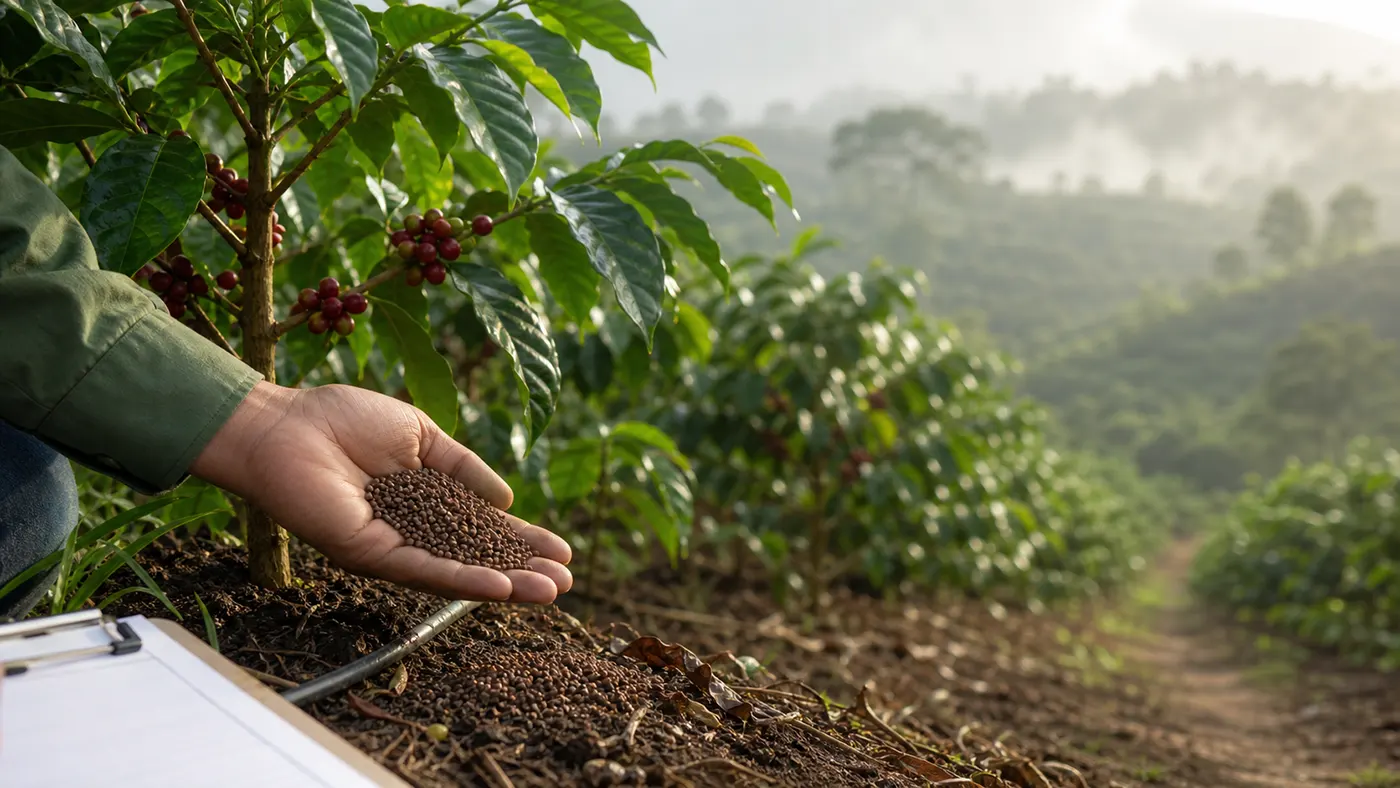
Promover o crescimento das plantas.
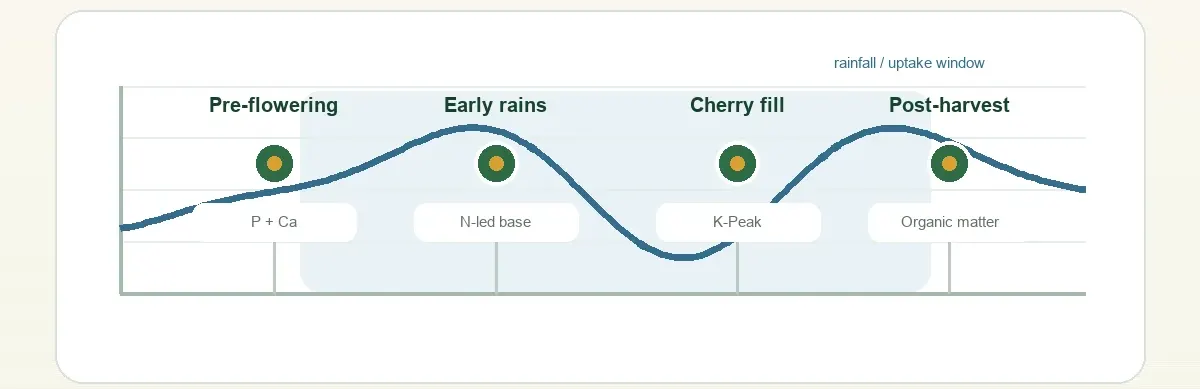
- 4 pencereli kahve ikmal haritası
- Organik madde, kahve yetiştirilen tropikal topraklarda neden kendine bir yer edinmiştir?
- Programı iki bölüme ayırmak
- Sertifikalı kahve söz konusu olduğunda, hammadde listesi denetlenir
- Çevre dostu kaynaklardan kahve programı oluşturulması
- Toptan sipariş vermeden önce nelere dikkat etmek gerekir?
- Rutom Bio – Kahve programları için ekolojik girdiler
- Başlıca sonuçlar
- Sıkça sorulan sorular
- Guano ve amino asit bazlı gübreler kullanırsam organik kahve sertifikamı koruyabilir miyim?
- Toprağa uygulama ile karşılaştırıldığında, damla sulama için hangi tane boyutunu seçmeliyim?
- Bir kahve tarlası bir sezon boyunca kaç kez gübrelenmelidir?
- Deniz kuşlarının dışkısı, kirazların olgunlaşması için yeterli potasyum sağlar mı?
- Kahve gübresinin analiz raporunda hangi ağır metaller belirtilmelidir?
- Bu kılavuz hakkında
- Kaynakça ve kaynaklar
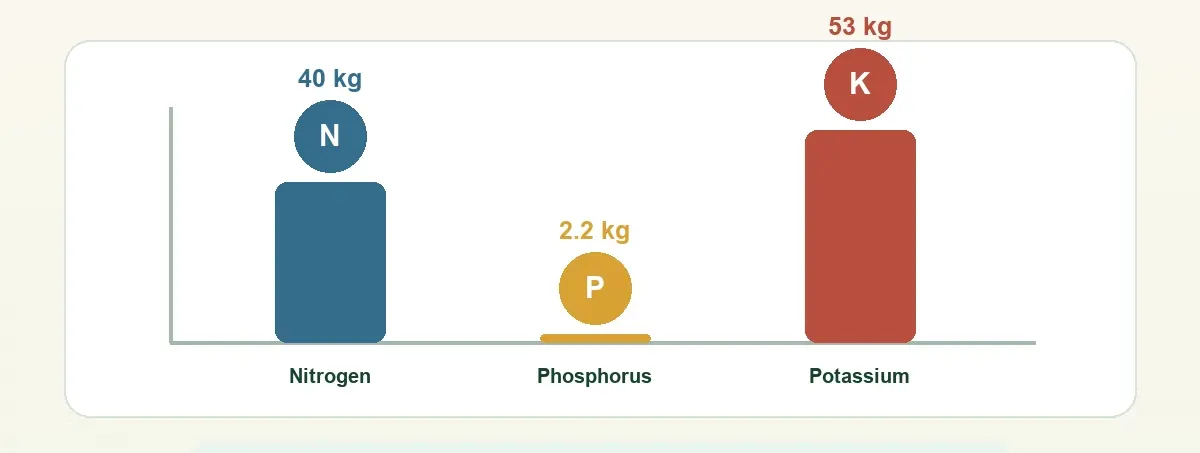
Kahve, azot ve potasyum ağırlıklı bir üründür. Bir ton yeşil çekirdek, yaklaşık 53 kg potasyum ve 40 kg azot içerirken, sadece yaklaşık 2,2 kg fosfor içerir (FAO Arabica Kahve El Kitabı) – bu nedenle her sezon hem N hem de K geri verilmelidir ve daha fazla ihraç edilen potasyum, çoğu programda yetersiz verilen besindir. Çoğu programı zorlayan şey, toplam miktar değil, zamanlamadır. Potasyum ihtiyacı, ağacın çekirdek ağırlığını artırdığı ve meyveleri olgunlaştırdığı, çekirdeklerin dolduğu dönemde yoğunlaşır ve genel bir “dengeli” karışım, bu dönem için neredeyse hiçbir zaman K seviyesini yükseltmez. Sonuç olarak, bitki büyümesi iyi gider, ancak hasat zamanı geldiğinde çekirdekler ince ve düzensiz olur.
Bu kılavuz, kahvenin besin ihtiyacını dört büyüme dönemine göre sınıflandırır, çekirdek ağırlığını belirleyen kuralı açıklar ve bir konteyneri sipariş etmeden önce COA’da nelere dikkat edilmesi gerektiğini gösterir. Bu kılavuz, tedarik yapan üreticiler, plantasyon yöneticileri ve ithalatçılar için hazırlanmıştır. organik girdiler büyük miktarda, ev bitkileri rafı için değil.
Önemli Bilgiler
| Besin maddesi giderimi (ton yeşil fasulye başına) | ~53 kg K, ~40 kg N, ~2,2 kg P (FAO) – Potasyum en büyük ihracat kalemidir |
|---|---|
| En iyi NPK uygulaması | Yıl boyunca tek bir besin maddesi oranı yoktur: Vejetatif büyüme döneminde azot ağırlıklı, çiçeklenme döneminde fosfor ağırlıklı, meyve dolum döneminde potasyum ağırlıklı |
| İmza kuralı | Cherry Fill'de K-Peak: Fasulyeler ağırlık kazandıkça potasyum seviyesini yükseltin |
| Hedef toprak pH değeri | 5,0–6,0 (hafif asidik) |
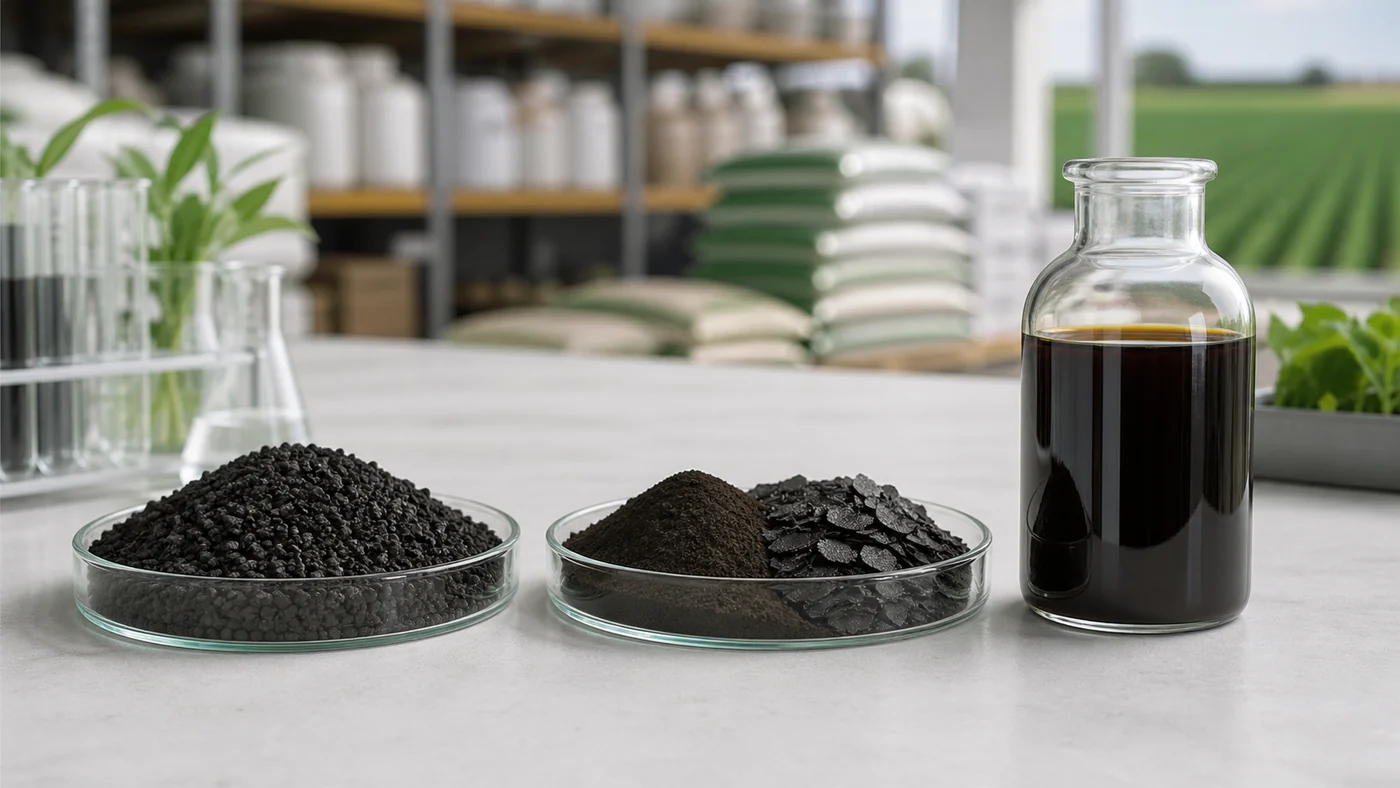
| Temel organik girdiler | Deniz kuşu gübresi (P+Ca), amino asitli sıvı gübre (yaprak azotu), hümik asit (CEC), granül organik NPK baz |
| Sertifikasyon kuralı | Onay, ürün ve sertifikalandırıcı bazında verilir: AB 2018/848 / USDA NOP / JAS |
| #1 kalıntı riski | Fosfat yoluyla kadmiyum: Parti bazında COA talep edin (AB 2019/1009) |
4 Pencereli Kahve Besleme Haritası
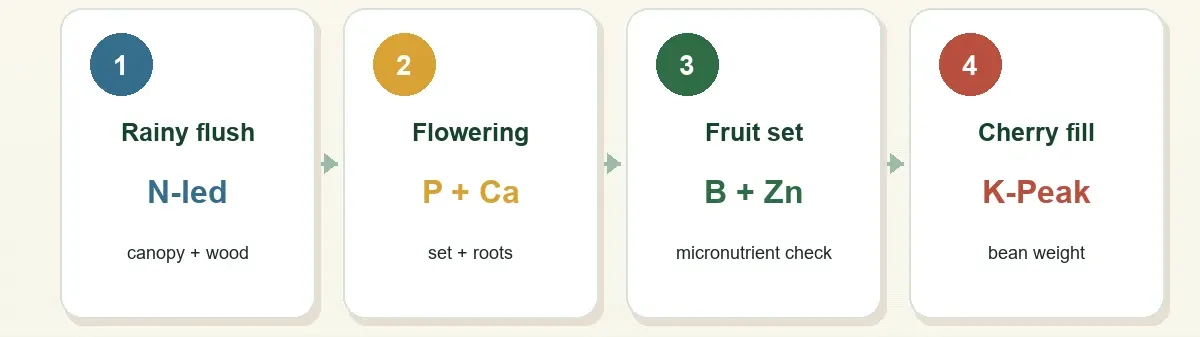
Gübrelemeyi torba bazında değil, dönem bazında yapın. Mahsul talep eğrisinde dört farklı dönem bulunur ve en uygun maliyetli verim artışı, her turda aynı sabit NPK karışımını yaymak yerine, her dönemin gerçek ihtiyacına göre gübreleme yapıldığında elde edilir.
| Büyüme dönemi | Besin maddelerinin önceliği | Organik girdilerin rolü |
|---|---|---|
| 1. Fidanlık / işletme | Kök kütlesi için fosfor + sabit azot | Kompostlanmış granül baz + yüksek fosforlu guano; kök hacmini artırmak için hümik asit |
| 2. Vejetatif büyüme (yağmurlar) | Azot bazlı | Azot bakımından zengin organik granüller; hızlı büyüme döneminde amino asitli yaprak gübresi |
| 3. Çiçeklenme ve meyve tutumu | Fosfor, bor ve kalsiyum | Yüksek fosforlu deniz kuşu gübresi; Kalsiyum ve bor destek seti |
| 4. Kirazların toplanmasına kadar | Potasyum ağırlıklı, sürekli azot | Bulabileceğiniz en yüksek K değerine sahip organik karışım; azot seviyesini sabit tutun |
| Hasat sonrası | Dengeli + organik madde | Bir sonraki döngüden önce rezervleri ve topraktaki karbonu yeniden oluşturmak |
Tarla Notu – Tek bileşenli gübre tuzağı. Yerel deponun stokladığı ürünlerle beslenen tarlalarda en sık görülen hata, her turda tek tip bir NPK kullanılmasıdır. Bu, yeşil ve sağlıklı görünen bir yaprak gelişimi sağlar, ancak daha sonra hayal kırıklığı yaratan bir verimle sonuçlanır; çünkü fasulye ağırlığını belirleyen tek pencere için potasyum hiç alınmamıştır. Bu pencere 4. penceredir. Bunu kaçırırsanız, satamayacağınız bir bitki örtüsü için bedel ödersiniz.
Kahve bitkileri için en uygun NPK oranı hangisidir?
Yıl boyunca geçerli tek bir besin maddesi oranı yoktur. Bitkinin vejetatif büyüme döneminde azot ağırlıklı bir besleme uygulayın, çiçeklenme döneminde fosfor oranını artırın, ardından meyve dolum aşamasına kadar potasyum ağırlıklı bir karışıma geçin. K, dolum aşamasında en sık yetersiz kalan besin maddesidir ve dolum aşaması, fasulye ağırlığının ve dolayısıyla satış fiyatınızın belirlendiği aşamadır.
Organik Madde Neden Tropikal Kahve Topraklarında Önemli Bir Yere Sahiptir?
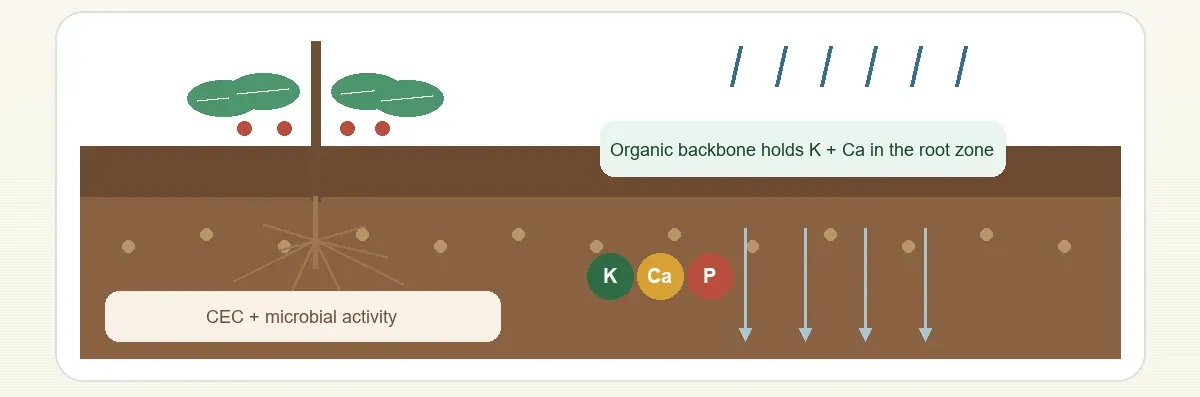
Kahve genellikle yağışın bol olduğu, toprağın asidik, aşınmış ve katyon değişim kapasitesinin düşük olduğu yerlerde yetişir. Bu tür topraklarda, tek bir çözünür doz yerinde kalmaz: potasyum ve kalsiyum birkaç hafta içinde kök bölgesinden süzülüp gider ve fosforun büyük bir kısmı, ağaç onu kullanamadan demir ve alüminyum tarafından bağlanır. Bu, ideolojik değil, pratik bir organik temel gerekliliğidir.
- Katyon değişim kapasitesini artırır – organik granül gübreler ve hümik asit, toprağın şiddetli yağmurlar karşısında potasyum (K) ve kalsiyum (Ca) tutmasına yardımcı olur.
- Yavaş mineralizasyon – besin maddeleri aylar boyunca salınır ve bu, uzun alım dönemine denk gelir.
- Sabit fosforu serbest bırakır – topraktaki karbon, asitli toprakta hapsolmuş fosforu serbest bırakan mikrobiyal aktiviteyi besler.
- pH dalgalanmalarını dengeler – sabit organik madde, programın kimyasal olarak etkisiz hale gelmesini önleyerek etkinliğini korur.
Kahve, pH değeri yaklaşık 5,0-6,0 aralığında en iyi verimi verir. Toprağın pH değerini bu aralığın çok ötesine taşırsanız, ne kadar gübre uygularsanız uygulayın fosfor ve çeşitli mikro besinler toprağa bağlanıp kullanılamaz hale gelir; bu nedenle gübre siparişinden önce toprak analizi yapılmalıdır, sonra değil. Organik, “yaklaşık” anlamına gelmez; gübre miktarları yine de toprak analizine göre belirlenir.
Programı Yağmurlarla Bölün
Kahve bitkisi besin maddelerini aylarca emer; bu nedenle program da buna uygun olarak bölünmelidir: Yağış zamanlarına göre planlanan üç ila dört uygulama, aynı bütçeyle yapılan tek bir yoğun uygulamadan genellikle daha iyi sonuç verir.
- Fosfor ve kalsiyum katmanını, çiçeklenme döneminden hemen önce, meyve tutumu kesinleştiğinde uygulayın.
- Erken yağışlar sırasında bitkinin büyüme evresinde azot verimini sürdürün, ardından kirazlar oluşmaya başladıkça bu verimi kademeli olarak azaltın.
- Dolum aralığı için potasyum seviyesini yükseltin ve fasulyeler ağırlık kazanırken bu seviyenin korunmasını sağlayın (uygulamada K-Peak kuralı).
- Toprak işleme dönemleri arasında hızlı bir düzeltme için amino asitli yaprak gübresi kullanın; sezon boyunca besin temini için ise granül bazlı gübreyi kullanmaya devam edin.
Yer seçimi, zamanlama kadar önemlidir. Damlama hattı boyunca şeritler halinde gübreleme yapmak, besin maddelerini aktif köklerin bulunduğu yere ulaştırır; gübreyi gövdeye yığmak ise besleyici kökleri yakar ve ürün israfına yol açar.
Sertifikalı Kahve'de, Girdi Listesi Denetlenir
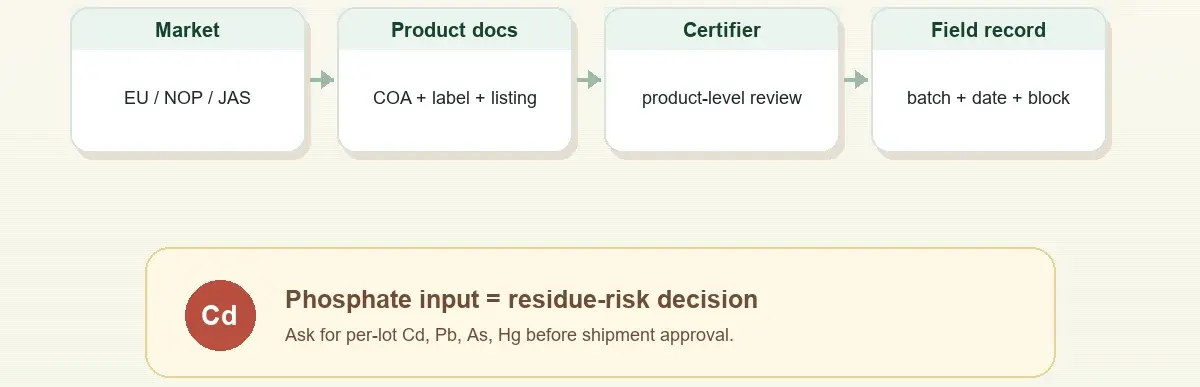
Alıcınız organik veya özel ürün primi ödüyorsa, gübre kullanımınız denetimin bir parçasıdır; sadece arka plandaki bir ayrıntı değildir. Kullanılan girdilerin listesini yanlış hazırlarsanız, maliyetler toprağa katılmış olduktan sonra bile sertifikalı parti, standart ürün sınıfına indirgenebilir.
- Standartları pazara uyumlu hale getirin. AB pazarına yönelik organik kahve, (AB) 2018/848 sayılı Tüzük kapsamında izin verilen girdilere kadar izlenebilir olmalıdır; ABD pazarına yönelik partiler, USDA Ulusal Organik Programı (7 CFR Bölüm 205) kapsamındadır; Japonya pazarına yönelik partiler ise JAS Organik standardına tabidir.
- Onay, ürün ve sertifikalandırıcı bazında verilir. Kullanılan hammaddeler, sertifikalandırıcınız (ECOCERT, CERES ve diğerleri) tarafından kabul edilmelidir; OMRI listesine dahil olmak, uygunluğu kanıtlamayı kolaylaştırır. Nihai karar, sertifikalandırıcınıza aittir.
- Sentetik girdiler sertifikayı tehlikeye atar. Sentetik üre veya onaylanmamış potasyum kaynakları, ilgili standarda ve sertifikasyon kuruluşunun kararına bağlı olarak organik statüyü tehlikeye atabilir.
Kahve yetiştiriciliğinde fosfatlı gübrelerde neden kadmiyum testi yapılır?
Fosfat girdileri, kadmiyumun gübreleme programına girmesinin başlıca yoludur. (AB) 2019/1009 sayılı Tüzük, fosfatlı gübre ürünlerindeki kadmiyum miktarını sınırlamaktadır; bu nedenle, çiçeklenme dönemi için seçeceğiniz fosfor girdisi, özellikle kaya fosfatı veya düşük kaliteli guano kullanıldığında, kalıntı riski açısından da bir karar gerektirir. Herhangi bir sevkiyatı onaylamadan önce, parti başına ağır metal sonuçlarını (Cd, Pb, As, Hg) isteyin.
Organik Kaynaklardan Bir Kahve Programı Oluşturmak
Tek bir “kahve gübresi” ürününe ihtiyacınız yok. Sezon boyunca doğru organik girdilerin bir arada kullanılmasına ihtiyacınız var; her birinin, kullanılacağı dönem ve sağladığı besin maddeleri göz önünde bulundurularak seçilmesi gerekiyor.
| Organik girdi | Kahve programındaki rolü | COA'da onaylayın |
|---|---|---|
| Yüksek fosforlu deniz kuşu gübresi | Çiçeklenme/meyve tutumu için fosfor + kalsiyum | P2O5 % ve parti başına kadmiyum sonucu; set için buna güveniyorsanız Ca |
| Amino asit içeren sıvı | Hızlı yaprak azotu ve stresten kurtulma | N % ve amino asit içeriği; yaprak/salgı sulama için etiketlenmiş |
| Hümik asit | Kök gelişimi, besin tutma | Hümik/fulvik %; guano ile birlikte kullanıldığında uygulanan fosfor tutulur, kaybolmaz |
| Granül organik NPK baz | Sezonun temelini oluşturan yavaş salınımlı ürün | Garantili N-P-K + organik madde %; dolgu amaçlı K ağırlıklı bir tür |
Robusta için kullanılan gübre, arabica için olandan ne açıdan farklıdır?
| Eğer yetiştirirseniz… | Ardından programı şu yönde ağırlıklandırın… |
|---|---|
| Robusta (daha fazla besin gerektirir, verimi daha yüksektir) | Her şeyden önce potasyum – pencereyi aç-4 K |
| Yüksek rakımlı Arabica (daha hassas) | Magnezyum ve bor – mikro besin katmanına dikkat edin |
Tek bir organik taban hazırlayın ve K ile mikro besin katmanlarını bitki türüne ve kendi yaprak analizi geçmişinize göre ayarlayın; torbanın üzerindeki genel oranları aynen uygulamayın.
Toplu Sipariş Vermeden Önce Nelere Dikkat Etmelisiniz?
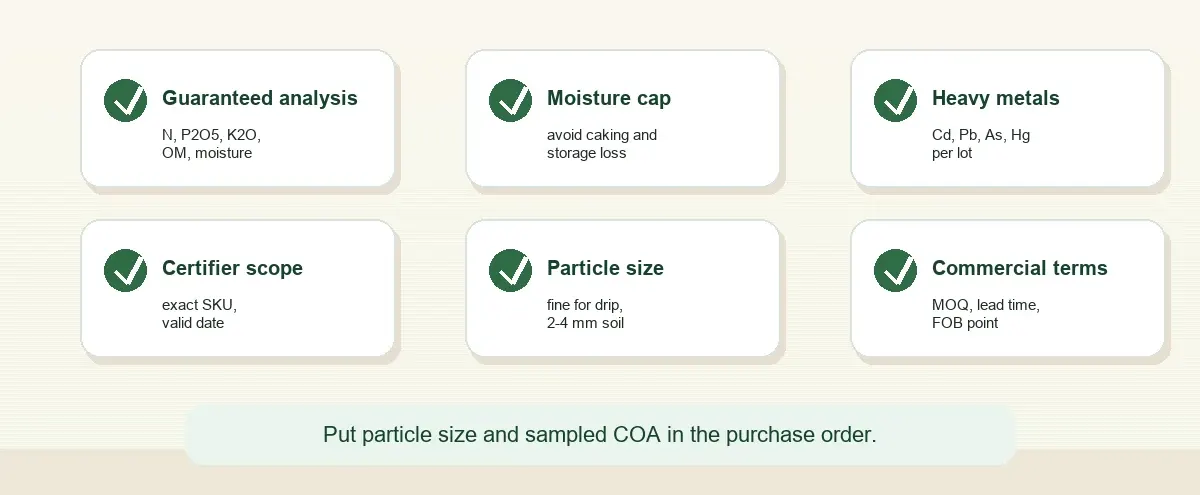
Bir hammaddenin kahveye uygun olup olmadığını broşür değil, COA (Analiz Raporu) gösterir. Bir konteyner sevk edilmeden önce bu listeyi baştan sona gözden geçirin ve geçen yılın tarama sonuçlarını değil, güncel bir sertifikayı ve numuneyi isteyin.
- Birimlerle birlikte garantili analiz – “P₂O₅ en az 12%”, “organik madde en az 30%”, asla “yüksek P” şeklinde değil.”
- Belirtilen sınırın üzerindeki nem – ıslak gübre ve granüller topaklanarak gübreleme hatlarını tıkar.
- Her parti için ağır metaller (Cd, Pb, As, Hg) test edilir; bu, sertifikalı fosfat girdisini güvence altına alır.
- Sertifikasyon kapsamının tam olarak ilgili ürüne ait olması – sadece şirketin sertifikalı olduğunu değil, söz konusu SKU’nun da listede yer aldığını doğrulayın.
- Yönteme uygun partikül boyutu – yaprak/damla sulama için ince mikron boyutu, toprak uygulaması için 2-4 mm'lik granül.
- Ticari şartlar – Asgari sipariş miktarı (MOQ), teslim süresi, FOB noktası, numuneye ilişkin COA'ya göre kararlaştırılmıştır.
Saha Notu – Parçacık boyutu bir teknik özelliktir, bir ayrıntı değildir. Bir alıcı, damla sulama sistemi için deniz kuşu gübresi sipariş eder, ancak iri taneli bir gübre alır ve hasat mevsimini emiterlerin tıkanıklıklarını gidermekle geçirir. Parçacık boyutunu sipariş formuna ekleyin.
Rutom Bio – Kahve Programları için Organik Girdiler
Rutom Bio, yukarıdaki dört kategoriye uyan organik girdiler tedarik etmektedir; talep üzerine sertifika belgeleri ve parti bazında COA sunulmaktadır. Sipariş vermeden önce teknik özelliklerin güncel ürün broşürüyle karşılaştırılarak teyit edilmesi gerekmektedir.
- Yüksek fosforlu deniz kuşu gübresi – çiçeklenme/meyve tutma dönemi; fosfor bakımından zengindir, ayrıca kalsiyum da sağlar. Her parti için P₂O₅ ve kadmiyum değerlerini talep edin; ECOCERT/CERES kapsamını teyit edin.
- Amino Asitli Sıvı Gübre – hızlı yaprak azotu ve stres sonrası toparlanma. N % değerini ve yaprak/salgı gübreleme etiket bilgilerini kontrol edin.
- Hümik Asit – Süzülmüş topraklarda kök gelişimi ve besin tutma. Hümik/fulvik % ürününü talep edin.
- Granül Organik NPK Baz – yavaş salınımlı ana bileşen; kiraz dolgusu için potasyum ağırlıklı bir ürün. Garantili N-P-K içeriği, % organik madde oranı ve 2-4 mm tanecik boyutu talep edilmektedir.
Teknik veri sayfaları, parti bazında COA, sertifika belgeleri ve aşamaya uygun bir numune talep etmek için, Rutom Bio ile iletişime geçin. hedeflediğiniz NPK değerleri, sertifika gereklilikleri ve hacim ile.
Önemli Çıkarımlar
- Torba bazında değil, dönem bazında gübreleme yapın – Yağmurlu büyüme döneminde azot (N), çiçeklenme döneminde fosfor (P), kiraz meyvelerinin dolgunlaşması sırasında potasyum (K) miktarını önemli ölçüde artırın (K-Peak kuralı).
- Sipariş vermeden önce toprağın pH değerinin 5,0-6,0 aralığında olup olmadığını kontrol edin – bu aralığın dışında uygulanan fosfor ve mikro besinler toprağa bağlanır.
- Sertifikalı partiler için, her bir girdinin sertifikalandırıcı kurum tarafından AB 2018/848, NOP veya JAS kapsamında listelendiğini doğrulayın – şirket bazında değil, ürün bazında.
- Fosfat kaynağını bir kalıntı değerlendirmesi olarak ele alın – AB 2019/1009 sayılı yönetmeliğe göre parti bazında kadmiyum sonuçlarını isteyin.
- Sipariş formunda partikül boyutunu belirtin – gübreleme için ince, toprak için 2-4 mm – ve konteyner gemiye yüklenmeden önce numune alın.
Sıkça Sorulan Sorular
Guano ve amino asit içeren gübreler kullanarak organik kahve sertifikasını koruyabilir miyim?
Evet, her bir ürünün sertifikalandırıcı kurum tarafından listelenmiş olması şartıyla. Deniz kuşu gübresi, amino asit içeren sıvılar ve hümik asit, üzerinde ECOCERT'İN, CERES'İN, veya AB 2018/848 veya USDA NOP ile uyumlu bir OMRI kaydı. Sertifikadaki sadece tedarikçi durumunu değil, ilgili SKU'yu da doğrulayın; nihai onay yetkisi sertifikalandırma kuruluşunuza aittir.
Damla sulama ile toprağa uygulama arasında hangisi için hangi tanecik boyutunu sipariş etmeliyim?
Yaprak püskürtme ve gübreleme için ince mikron dereceli toz, yüzeye serpme veya şerit halinde toprak uygulaması için ise 2-4 mm'lik granül kullanın. Sipariş vermeden önce tedarikçinin belirttiği tanecik boyutunun gübreleme ekipmanınızla uyumlu olup olmadığını kontrol edin; yanlış tanecik boyutu, emiterlerin tıkanmasının sık görülen bir nedenidir.
Bir kahve mahsulü sezon başına kaç kez gübrelenmelidir?
Aynı bütçeyle yapılan üç ila dört aşamalı uygulama, genellikle tek bir yoğun uygulamadan daha etkili olur: çiçeklenmeden önce bir fosfor/kalsiyum katmanı, vejetatif büyüme döneminde azot ve kiraz dolgusu döneminde potasyum ağırlıklı bir uygulama. Bu aşamalı uygulama, kahvenin yetiştirildiği asidik ve yağışlı topraklarda sızıntıyı sınırlar.
Deniz kuşlarının dışkısı, vişneli dolgu için yeterli potasyum sağlıyor mu?
Hayır. Deniz kuşu gübresi fosfor ve kalsiyum ağırlıklıdır; bu da çiçeklenme ve meyve tutumuna uygundur, ancak meyve dolum aşamasına uygun değildir. Kiraz meyvelerinin dolumu için, bu gübreyi potasyum ağırlıklı granül organik bir baz gübre veya potasyum içeriği yüksek bir organik karışımla birlikte kullanın ve analiz raporunda (COA) belirtilen garantili potasyum değerini kontrol edin.
Bir kahve gübresinin COA raporunda hangi ağır metaller belirtilmelidir?
Her parti için en az kadmiyum, kurşun, arsenik ve cıva testleri yapılır. Kadmiyum, fosfat kaynakları yoluyla ürünlere karıştığı ve (AB) 2019/1009 sayılı Tüzük uyarınca AB pazarına giriş için sınırlandırıldığı için önceliklidir.
Sipariş vermeden önce kalite derecesini, işleme türünü, sertifikalandırma kapsamını ve tanecik boyutunu belirleyin; bu, üzerinde sadece “organik” yazan bir çuvalda ton başına en düşük fiyatı kovalamaktan çok daha iyi bir şekilde kahve programınızı korur.”
– Rutom Biyoteknik Tedarik Masası
Bu Kılavuz Hakkında
Rutom Bio Teknik Tedarik Birimi tarafından incelenmiştir – organik girdi tedariki ve kalite kontrol. Son güncelleme tarihi: 09.06.2026. Bu kılavuz, kahve gübrelemesi konusunda bir ihracatçı/tedarikçinin bakış açısını sunmaktadır; nihai tarımsal uygulama oranları için kendi toprak ve yaprak analizlerinizi yaptırmanız gerekmektedir ve sertifikasyonun kabulü sertifikasyon kuruluşuna bağlıdır.
Kaynakça ve Kaynaklar
- (AB) 2018/848 sayılı Tüzük – organik üretim ve etiketleme
- (AB) 2019/1009 sayılı Tüzük – Gübre Ürünleri Yönetmeliği; kadmiyum sınır değerleri
- ABD Tarım Bakanlığı Ulusal Organik Programı, 7 CFR Bölüm 205
- JAS Organik (MAFF, Japonya)
- OMRI – Organik Malzemeler İnceleme Enstitüsü
- FAO Arabica Kahve El Kitabı – kahveden besin maddelerinin uzaklaştırılması (ton başına yaklaşık 40 kg azot, 2,2 kg fosfor, 53 kg potasyum)
Yazar Hakkında: Rutom




 English
  Spanish
  French
  Japanese
  Korean
  German
  Portuguese
  Italian
  Indonesian
  Vietnamese
  Turkish
  Persian
  Russian
  Chinese