
Inhaltsverzeichnis
Zwei Produkte, ein Rohstoff und eine Preisdifferenz, die Erstkäufer vor ein Problem stellt. Kaliumhumat und Huminsäure stammen aus derselben Leonardit-Lagerstätte, doch das eine löst sich problemlos in einem Fertigationstank auf, während das andere auf den Boden sinkt und Ihre Tropfer verstopft. Bestellen Sie das falsche Produkt, zahlen Sie entweder zu viel für eine Bodenbehandlung oder müssen zusehen, wie eine Tropfleitung aufgrund eines “löslichen” Produkts ausfällt, das bei dem von Ihnen verwendeten pH-Wert gar nicht löslich war.
Die Entscheidung hängt von einer einzigen Eigenschaft ab, nicht von einer Liste von Vorteilen. Nachstehend: die chemische Zusammensetzung in zwei Sätzen, eine Vergleichstabelle der Spezifikationen, ein Rechenbeispiel für die Kosten pro aktivem Huminsäuregehalt sowie die genauen Angaben im Analysezertifikat, die vor dem Versand einer Bestellung von 20 MT aus dem Hafen zu überprüfen sind.
Kaliumhumat vs. Huminsäure: Die kurze Antwort
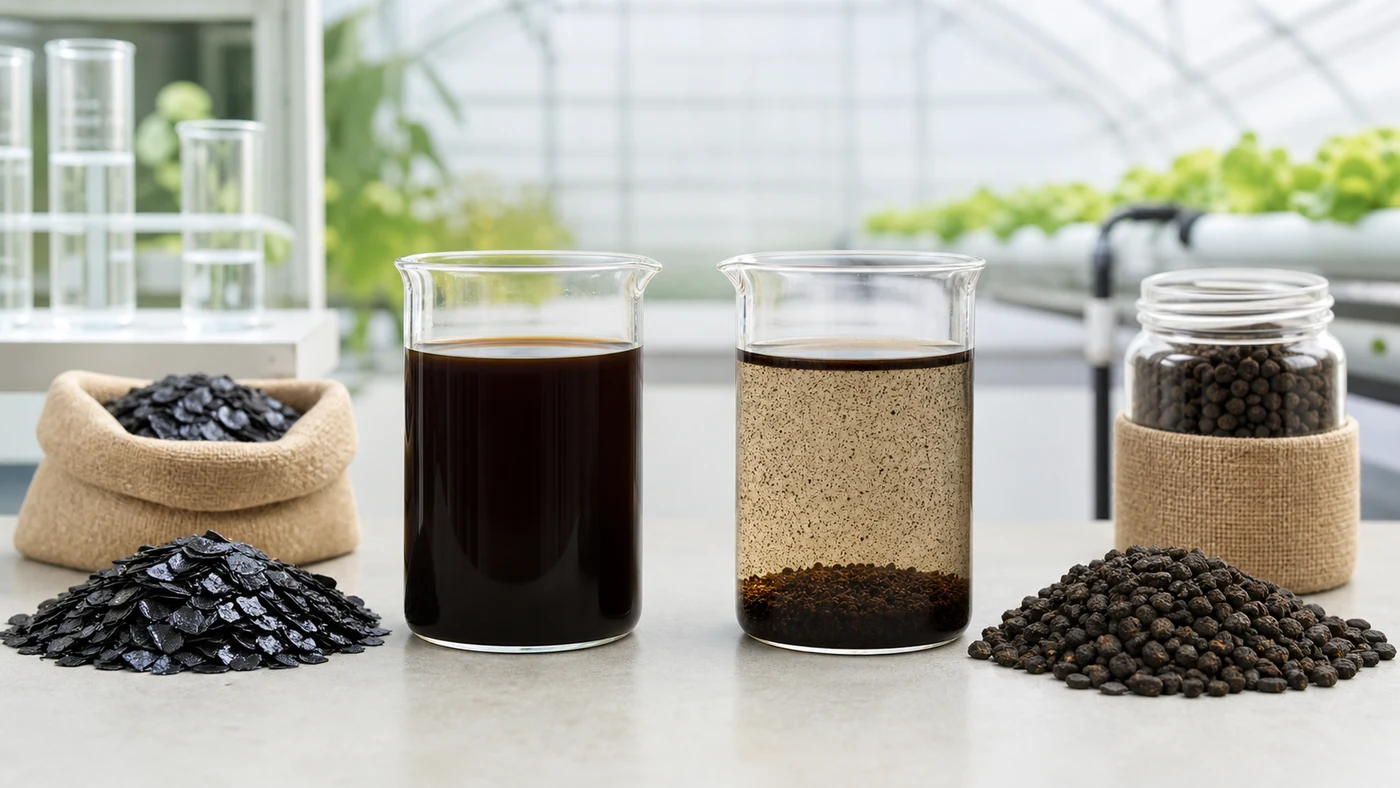
Kaliumhumat ist wasserlöslich gemachtes Huminsäure. Beide sind Huminstoffe, die aus Leonardit, einer weichen Braunkohle, gewonnen werden, doch Kaliumhumat ist das Kaliumsalz der Huminsäure, das durch die Reaktion von roher Huminsäure mit Kaliumhydroxid (KOH) hergestellt wird. Diese eine Reaktion verändert fast alles, worauf es einem Käufer ankommt: Löslichkeit, Ausbringungsmethode, Kaliumgehalt und Preis pro Tonne.
Rohe Huminsäure löst sich nur unter alkalischen Bedingungen auf und verbleibt im Boden, sodass sie als langsam wirkender Bodenverbesserer fungiert. Kaliumhumat löst sich bei jedem pH-Wert vollständig in Wasser auf, wird schnell über Tropfschläuche und Blattspritzungen verteilt und enthält von sich aus 6–11% K₂O. Wenn Ihre Abnehmer den Dünger bodenseitig ausbringen, reicht Huminsäure in der Regel aus. Wenn sie Fertigation oder Blattdüngungsprogramme durchführen, benötigen sie Kaliumhumat.
Wenn Sie sich zudem zwischen den verschiedenen Kaufformen – Granulat, Flüssigkeit, Pulver und Flocken – entscheiden müssen, lesen Sie unseren Leitfaden zu Huminsäure in Granulatform vs. flüssige Huminsäure vs. Huminsäure in Pulverform.
Ist Kaliumhumat dasselbe wie Huminsäure?
Nein. Kaliumhumat enthält Huminsäure, allerdings in Form einer mit Kalium versetzten, wasserlöslichen Verbindung. Stellen Sie sich Huminsäure als Ausgangsmaterial vor und Kaliumhumat als die veredelte, tankfertige Qualität mit bereits eingebautem Kalium. Ein Analysezertifikat (COA) für Kaliumhumat sollte sowohl den Huminsäureanteil als auch den K₂O-Wert ausweisen; ein Analysezertifikat für rohe Huminsäure enthält keine Angaben zum Kaliumgehalt.
Kaliumhumat vs. Huminsäure im Überblick
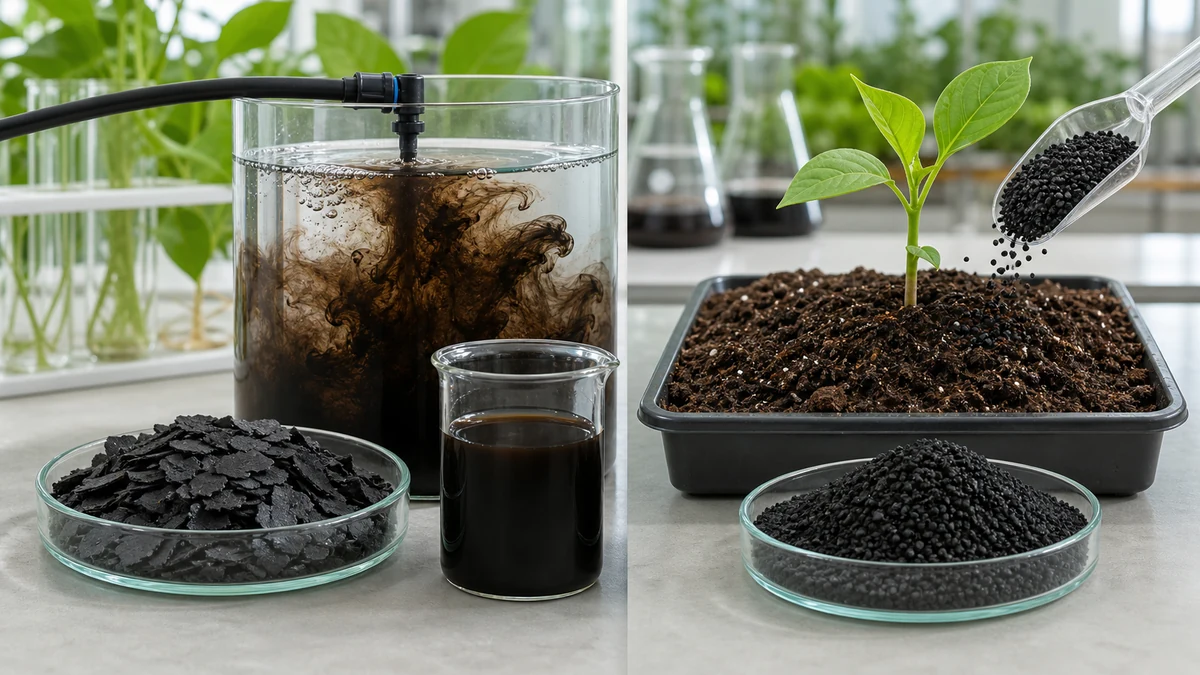
In der folgenden Tabelle sind die beiden Werte den Eigenschaften gegenübergestellt, die für eine Bestellung ausschlaggebend sind. Bei den Kaliumhumat-Werten handelt es sich um unsere eigenen veröffentlichten Qualitätsspezifikationen; bitte überprüfen Sie die genauen Zahlen anhand des Analysenzertifikats (COA) für die von Ihnen bestellte Artikelnummer.
| Eigenschaft | Huminsäure (aus Rohbraunkohle) | Kaliumhumat |
|---|---|---|
| Was es ist | Aus Leonardit gewonnene Huminstoffe | Das Kaliumsalz der Huminsäure |
| Wasserlöslichkeit | Nur in alkalischem Wasser löslich; in neutralem bzw. saurem Wasser nahezu unlöslich | 90–100% – wasserlöslich bei jedem pH-Wert |
| Physikalische Güteklasse | 2–4 mm Granulat / Pulver | Lösliches Granulat, Flocken oder Pulver |
| Kalium (K₂O) | Keine | 6–11%, eingebaut |
| Huminsäuregehalt | Bestätigung gemäß COA + Prüfverfahren | ~41,51 TP3T (Granulat 0-0-6) bis ~56,51 TP3T (Flocken 1-0-11) |
| pH-Wert | Nahezu neutral bis alkalisch | Alkalisch, ~9–10 |
| Hauptverwendungszweck | Bodengrunddüngung, Einmischung in NPK | Tropfbewässerung, Fertigation, Blattdüngung, Saatgutbehandlung |
| Geschwindigkeit | Langsame, langfristige Bodenverbesserung | Schnelle Nährstoffaufnahme |
| Relativer Preis pro Tonne | Niedrigster | Höher (Löslichkeit + die Raffination von Kalium ist kostspieliger) |
Referenzwerte aus unseren veröffentlichten Produktspezifikationen. Bitte vergleichen Sie diese mit dem aktuellen COA, bevor Sie den Transport in Auftrag geben.
Was Huminsäure eigentlich ist
Huminsäure ist der Anteil der Huminstoffe, der sich in Laugen löst, in Säuren jedoch ausfällt. Das ist keine Werbesprache, sondern die analytische Definition, die von der Internationale Gesellschaft für Huminstoffe um Huminsäure, Fulvosäure und Humin voneinander zu trennen. Die praktische Konsequenz liegt in diesem einen Wort: „ausfällt“ – gibt man rohe Huminsäure in einen neutralen oder sauren Behälter, bleibt ein Großteil davon nicht in Lösung.
Kommerziell wird Huminsäure aus Leonardit gewonnen, einer verwitterten Braunkohleschicht mit einem Gehalt an Huminstoffen von etwa 85%, was weit über den 3–10% in Torf liegt. Das Rohprodukt von Rutom Bio wird als schwarz-braunes Granulat mit einer Korngröße von 2–4 mm geliefert. Es wirkt im Boden und nicht im Sprühtank; Käufer verwenden es als Grunddünger oder als funktionellen Zusatzstoff, der in NPK-Mischdünger eingemischt wird.
Bei jedem aus Kohle gewonnenen Rohstoff ist Vorsicht geboten. Da es sich bei Leonardit um Braunkohle handelt, müssen Schwermetalle wie Arsen, Cadmium und Blei tatsächlich geprüft und dürfen nicht einfach vorausgesetzt werden – und genau aus diesem Grund werden Lieferungen aus der EU und Korea im Hafen zurückgehalten. Ein Analysezertifikat für Huminsäuren ohne Schwermetallanalyse ist ein unvollständiges Dokument.
Kernpunkt: Rohe Huminsäure ist pro Tonne der kostengünstigste Humuszusatz, doch aufgrund ihrer ausschließlich alkalischen Löslichkeit steht bereits fest, wo sie eingesetzt werden kann, noch bevor der Preis überhaupt eine Rolle spielt. Was ihr Verhalten im Boden bei den einzelnen Kulturpflanzen betrifft, finden Sie in unserem Leitfaden zu Huminsäure für Pflanzen befasst sich eingehend mit der Agrarwissenschaft.
Was Kaliumhumat eigentlich ist
Kaliumhumat entsteht, wenn rohe Huminsäure mit Kaliumhydroxid zur Reaktion gebracht wird. Das KOH neutralisiert die sauren Gruppen am Huminmolekül und bildet ein Kaliumsalz, das sich bei jedem pH-Wert in Wasser löst. Das Humin-Grundgerüst bleibt unverändert; verändert werden lediglich seine Löslichkeit und sein Kaliumgehalt.
Aus dieser Reaktion ergeben sich zwei Eigenschaften, die ein Käufer in ein Datenblatt aufnehmen kann. Erstens steigt die Wasserlöslichkeit auf 90–100%, sodass das Produkt durch Tropfdüsen und Blattsprühgeräte fließt, ohne Rückstände zu hinterlassen. Zweitens enthält das Material nun Kalium als K₂O, typischerweise 6–11% je nach Qualität, sodass es gleichzeitig als leichte Kaliumquelle dient.
Die Qualität bestimmt auch, wie das Produkt versendet und gehandhabt wird. Flocken und lösliches Pulver lösen sich am schnellsten auf und hinterlassen die wenigsten Rückstände, weshalb sie bei der Blattdüngung und der sauberen Fertigation den höchsten Preis erzielen. Lösliches Granulat opfert ein wenig Löslichkeit zugunsten einer einfacheren Handhabung und geringerer Staubentwicklung und lässt sich ohne separaten Auflöseschritt in Trockendüngungsprogramme einmischen. Auch der K₂O-Gehalt variiert je nach Qualität, sodass ein Käufer, der sich nach dem Kaliumgehalt richtet, und einer, der sich nach der Löslichkeit richtet, oft auf dieselbe Artikelnummer (SKU) zurückgreifen.
Rutom Bio bietet zwei Kaliumhumat-Qualitäten an, die den nutzbaren Bereich abdecken. Die Kaliumhumat-Granulat 0-0-6 enthält etwa 41,51 TP3T Huminsäure bei einer Löslichkeit von 931 TP3T und einem K₂O-Gehalt von 61 TP3T und wird als stabiles Granulat mit einer Korngröße von 2–4 mm geliefert, das sich dennoch für Tropfschläuche auflöst. Das Kaliumhumat-Flocken 1-0-11 ist die Spitzenqualität mit etwa 56,51 TP3T Huminsäure, 981 TP3T Löslichkeit und 111 TP3T K₂O, in Form von Flocken oder löslichem Pulver, wobei ein geringer Anteil an unlöslichen Bestandteilen ausschlaggebend für den Verkauf ist.
Zu beachten: Kaliumhumat ist kein anderes Molekül als Huminsäure. Es handelt sich um dasselbe Huminmaterial, das so modifiziert wurde, dass es sich auflöst und Kalium bindet, und Sie bezahlen für beide dieser Verbesserungen.
Die Löslichkeitsgabel: Der eine Unterschied, der alles entscheidet
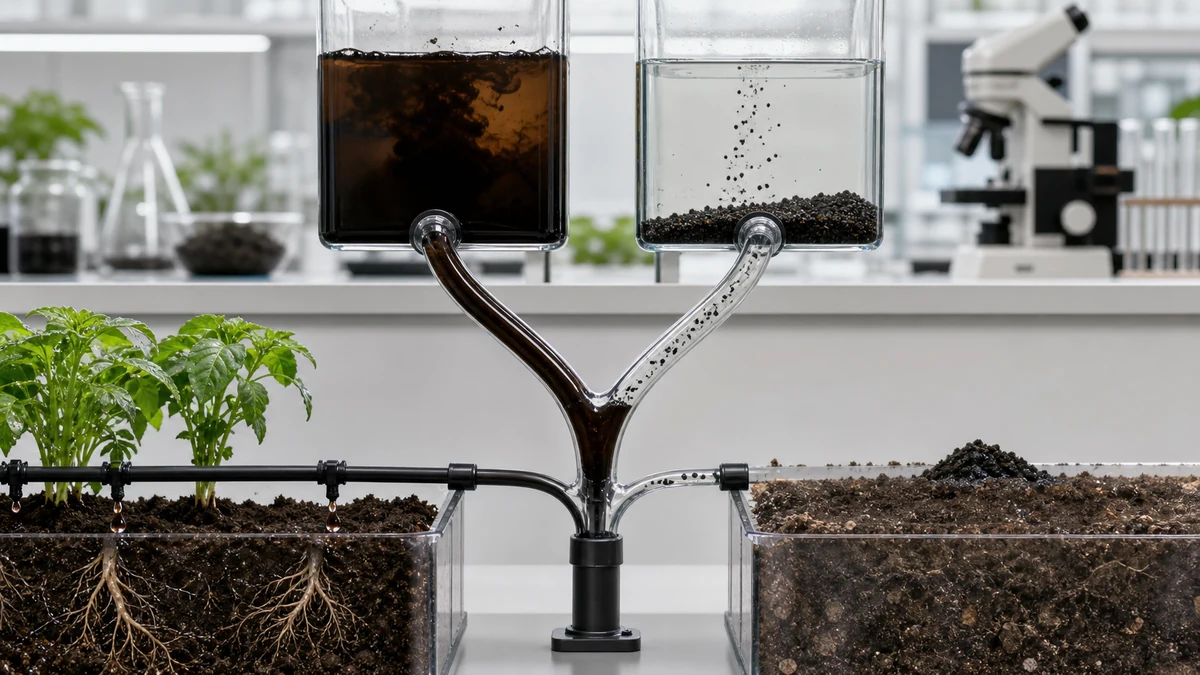
Alles, was diese beiden Produktlinien voneinander unterscheidet, hängt von einer einzigen Eigenschaft ab: ob sie sich in dem Wasser auflöst, das Sie verwenden werden. Nennen wir es die Löslichkeitsbereich — der Punkt, an dem sich ein Rohstoff in zwei Anwendungsbereiche aufteilt. Wer diese Entscheidung richtig trifft, dem ergibt sich der Rest von selbst; wer sie falsch trifft, dem kann keine andere Spezifikation den Auftrag noch retten.
Einen Zweig weiter unten befindet sich Huminsäure, die ausschließlich alkalisch ist. Sie verbleibt im Boden, wird langsam freigesetzt und verbessert im Laufe einer Vegetationsperiode die Bodenstruktur und den Kationenaustausch. Da sie nicht in eine neutrale Tropfleitung gelangen kann, ohne aus der Lösung auszufallen, verläuft ihre gesamte Wirkzeit im Boden.
Auf dem anderen Zweig befindet sich Kaliumhumat. Da es durch den Kaliumierungsschritt bei jedem pH-Wert löslich gemacht wurde, gelangt es über Fertigation- und Blattdüngungssysteme innerhalb weniger Tage zu den Wurzeln und Blättern und transportiert dabei sein eigenes Kalium mit. Geschwindigkeit und Mobilität sind der Ausgleich für die Veredelungskosten.
Kann ich Huminsäure in Wasser auflösen?
Nur teilweise, und auch nur, wenn das Wasser alkalisch ist. Rohe Huminsäure ist in alkalischem Wasser löslich, fällt jedoch in neutralem oder saurem Wasser aus, sodass sich ein Teil absetzt und die Düsen verstopft. Wenn ein Anbieter angibt, seine rohe Huminsäure sei “vollständig wasserlöslich”, handelt es sich mit ziemlicher Sicherheit um ein Kalium- oder Natriumhumat und nicht um rohe Huminsäure. Fragen Sie nach, um welches Salz es sich handelt, und lassen Sie sich den Löslichkeitswert im Analysezertifikat (COA) nennen.
Molekulargewicht und Verhalten in hartem Wasser
Die Löslichkeitslücke hat eine zweite Auswirkung, die in Regionen mit hartem Wasser von Bedeutung ist. Huminsäure ist der größere, hochmolekulare Anteil der Huminstoffe, was mit ein Grund dafür ist, dass sie so leicht aus der Lösung ausfällt; Fulvosäure liegt am unteren Ende der Skala und bleibt löslich, und Kaliumhumat wird so aufbereitet, dass es sich näher am löslichen Ende verhält. In der Praxis verträgt Kaliumhumat hartes, mineralreiches Bewässerungswasser, in dem rohe Huminsäure ausflocken und sich absetzen würde. Für die Fertigation mit Bohrloch- oder Brunnenwasser, das einen hohen Kalzium- und Magnesiumgehalt aufweist, ist das lösliche Kaliumsalz die Sorte, die lange genug in Suspension bleibt, um die Wurzelzone zu erreichen. Dies ist die „Anti-Harthwasser“-Eigenschaft, mit der manche Anbieter werben, und sie ist real, aber sie ist dem Humat-Salz zuzuschreiben, nicht der rohen Huminsäure.
Diese Aufspaltung erklärt auch die Preisdifferenz, die Käufer verwirrt. Sie zahlen nicht mehr für Kaliumhumat, weil es ein besseres Molekül ist. Sie zahlen für die KOH-Reaktion, durch die es löslich gemacht wurde, und für das Kalium, das es nun enthält. Entscheidungsregel: Wählen Sie die Produktvariante danach aus, wo das Produkt angewendet werden soll, und nicht nach dem angegebenen Huminsäureanteil.
Die Zahlen: Löslichkeit, K₂O und Kosten pro aktivem Huminstoff

Der Preis pro Bruttotonne ist kein geeigneter Vergleichswert für diese beiden Größen. Was tatsächlich durch Ihr Programm fließt, ist aktive Huminsäure, und die sinnvolle Grundlage für die Bemessung einer Bestellung ist die Menge an aktiver Huminsäure pro Tonne, berechnet als Prozentsatz der Huminsäure multipliziert mit (1 minus Feuchtigkeitsgehalt).
Lassen Sie die beiden Kaliumhumat-Sorten durch das Gerät laufen:
- Granulat 0-0-6: 0,415 × (1 − 0,025) ≈ 405 kg aktives Humin pro MT
- Flake 1-0-11: 0,565 × (1 − 0,015) ≈ 557 kg aktives Humin pro MT
Um also 10 MT aktives Huminsubstrat abzudecken, würden Sie etwa 24,7 MT Granulat oder 18,0 MT Flocken bestellen. Diese Differenz von 6,7 MT entspricht den Fracht- und Zollkosten, die Sie entweder zahlen oder einsparen – weshalb die Flockenqualität bei den Gesamtkosten oft die Nase vorn hat, selbst bei einem höheren Preis pro Tonne. Geben Sie Ihre eigenen Zielwerte ein und sehen Sie, wo bei Ihrem Hafen der Break-Even-Punkt liegt.
| Metrisch | Huminsäure (roh) | K-Humate Granulat 0-0-6 | K-Humate Flake 1-0-11 |
|---|---|---|---|
| Huminsäure % | auf dem COA bestätigen | ~41.5% | ~56.5% |
| Wasserlöslichkeit | nur alkalisch | ~93% | ~98% |
| K₂O | 0% | ~6% | ~11% |
| Luftfeuchtigkeit | auf dem COA bestätigen | ~2.5% | ~1.5% |
| Aktives Humin / MT | hängt von der Klassenstufe ab | ~405 kg | ~557 kg |
Der Vergleich mit roher Huminsäure funktioniert anders. Rohe Huminsäure mag pro Tonne und pro Kilogramm Huminsäure am günstigsten erscheinen, doch wenn Ihre Anwendung Löslichkeit erfordert, steht ihr aktiver Huminsäureanteil für eine Tropfbewässerung zu keinem Preis zur Verfügung. Das ist die Falle, auf die der nächste Abschnitt hinweist.
Wann sollte man sich für welche Variante entscheiden?
Wählen Sie zunächst das für die jeweilige Anwendung geeignete Produkt aus – dann fällt die Entscheidung für die richtige Güteklasse ganz einfach. Bei der Unterscheidung geht es nicht darum, welche Variante abstrakt gesehen “besser” ist, sondern darum, wie die Kunden des Käufers das Produkt einsetzen.
| Situation des Käufers | Wählen Sie |
|---|---|
| Bodenvorbehandlung, Bodenverbesserung auf großen Flächen, Beimischung in NPK-Düngemittel | Rohes Huminsäuregranulat |
| Die Kosten pro Tonne sind der entscheidende Faktor, und die Löslichkeit spielt keine Rolle. | Rohes Huminsäuregranulat |
| Tropfbewässerung oder Fertigation, kostenbewusst | Kaliumhumat-Granulat 0-0-6 |
| Blattspritzmittel, Saatgutbehandlung oder jeder Tank, in dem unlösliche Stoffe den Verkauf zunichte machen | Kaliumhumat-Flocken 1-0-11 |
| Der Käufer benötigt Kalium und Huminsäure in einer einzigen Position | Kaliumhumat (6–11% K₂O) |
| Hartes Wasser in der Fertigation-Versorgung | Kaliumhumat (löst sich unabhängig von der Wasserhärte auf) |
Ein und dieselbe Entscheidung wird unterschiedlich bewertet, je nachdem, wer innerhalb des Unternehmens des Käufers danach fragt. Ein Händler wägt ab, welche Qualitäten sich am schnellsten verkaufen und am wenigsten Betriebskapital binden. Ein Agrarwissenschaftler oder Landwirt interessiert sich dafür, welche Sorte für seine Kulturpflanze und Bewässerungsmethode tatsächlich geeignet ist. Ein Einkaufsleiter achtet auf die Gesamtkosten pro Einheit an aktivem Humus. Alle drei Fragen deuten auf dieselbe Aufteilung hin, doch die Anpassung des Angebots an die jeweiligen Bedürfnisse verkürzt den Verkaufsprozess.
Für die meisten Händler lautet die ehrliche Antwort, dass sie beides im Sortiment benötigen: ein kostengünstiges Huminsäuregranulat für Kunden, die das Produkt in den Boden einbringen, und ein lösliches Kaliumhumat für Kunden, die Tropfbewässerung oder Blattdüngung einsetzen. Die beiden Produkte ergänzen sich, sie stehen nicht in Konkurrenz zueinander. Wenn Sie auch Fragen zur Fraktion mit niedrigerem Molekulargewicht haben, ist unser Fulvosäure-Dünger Auf dieser Seite wird erläutert, wo das hingehört.
Entscheidungsregel: Wenn es in einen Tank kommt, kaufen Sie Kaliumhumat; wenn es in den Boden kommt und der Preis entscheidend ist, kaufen Sie rohe Huminsäure.
Die Steuer auf falsche Formulare: Was die falsche Wahl kostet
Der teuerste Fehler ist hier nicht, ein paar Dollar pro Tonne zu viel zu bezahlen. Es ist der Kauf einer Form, die nicht zum Verwendungszweck passt – Kosten, die wir als Steuer wegen fehlerhafter Form —Der Preis für die Löslichkeit, die Sie gekauft haben und nicht nutzen können, oder die Löslichkeit, die Sie übersprungen haben und nun benötigen.
Das kann in beide Richtungen gehen. Man kauft rohe Huminsäure für einen Fertigation-Kunden, weil sie pro Tonne günstiger war, doch die unlöslichen Bestandteile verstopfen die Tropfer, überziehen die Blätter und führen zu Rücksendungen und Beschwerden, die die Ersparnis zunichte machen. Kauft man hingegen die löslichen 98%-Flocken für einen Großflächen-Bodenkunden, der sie in den Boden einarbeitet, hat man einen Aufpreis für die Löslichkeit gezahlt, den die Kulturpflanze nie genutzt hat.
Stellen Sie sich einen Händler vor, der einen Container mit “löslichem Humat” allein aufgrund des Preises bestellt, nur um bei der Ankunft festzustellen, dass es sich um eine alkalisch lösliche Rohware handelt. Seine Kunden aus dem Bereich der Tropfbewässerung melden bereits innerhalb einer Woche verstopfte Leitungen. Der Container kann nicht auf dem vorgesehenen Markt verkauft werden, die Frachtkosten sind bereits angefallen, und der nächste Auftrag geht an einen Lieferanten, der den Löslichkeitswert von vornherein angegeben hat. Die eingesparten Tonnen sind um ein Vielfaches verloren gegangen.
Um diese Steuer zu vermeiden, müssen Sie lediglich vor dem Kauf zwei Zeilen auf dem COA lesen: den Prozentsatz der Wasserlöslichkeit und das Prüfverfahren, auf dem der Huminsäurewert basiert. Anmerkung aus dem Feld: Ein niedriger Preis ohne Angabe der Löslichkeit ist kein Schnäppchen, sondern ein Risiko ohne Preis.
So überprüfen Sie die Qualität anhand des COA 
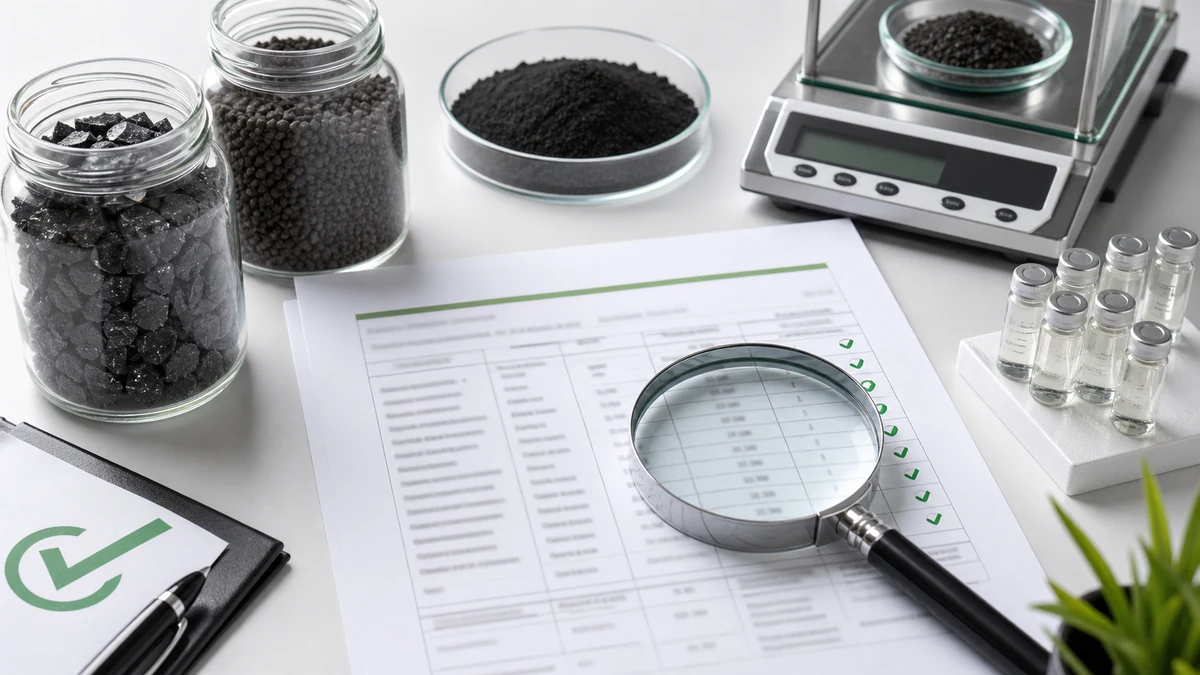
Ein Humate-Analysezertifikat ist nur dann von Nutzen, wenn Sie wissen, welche Angaben Sie beachten müssen – und zwei davon entscheiden darüber, ob Sie echte Qualität oder nur ein Logo kaufen. Überprüfen Sie diese Angaben vor jeder Bestellung anhand des Analysezertifikats für die jeweilige Charge, nicht anhand des Etiketts oder der Broschüre.
- Huminsäure % mit Angabe der Prüfmethode. Ein Wert, der auf eine bestimmte Weise gemessen wurde, kann 70% lauten, während dasselbe Material bei einer anderen Messweise den Wert 45% ergibt. Vergewissern Sie sich, dass die Messmethode in allen Angeboten, die Sie vergleichen, identisch ist, da die Prozentangaben sonst nicht vergleichbar sind.
- Wasserlöslichkeit und unlösliche Bestandteile. Bei Tropf- und Blattdüngung ist dies das entscheidende Kriterium für den Kauf. Unlösliche Stoffe verstopfen die Düsen und bilden einen Belag auf den Blättern; fragen Sie nach der Zahl, nicht nach dem Begriff “löslich”.”
- K₂O (für Kaliumhumat). Bestätigt, dass es sich tatsächlich um ein Kaliumsalz handelt und nicht um umetikettierte rohe Huminsäure. Das Fehlen einer K₂O-Linie bedeutet, dass kein Kalium enthalten ist.
- Schwermetalle (As, Cd, Pb, Hg). Leonardit ist Braunkohle; überprüfen Sie daher vor einer Buchung mit Bestimmungsort in der EU, ob der Cadmiumwert den Grenzwerten der Verordnung (EU) 2019/1009 entspricht.
- Herkunft und Güteklasse. Der Vergleich von Braunkohle mit hochwertigem Leonardit wirkt sich sowohl auf die Huminsäureausbeute als auch auf das Schwermetallprofil aus.
Ist Kaliumhumat ein organischer Stoff?
Das hängt vom Zertifizierer und dem jeweiligen Produkt ab, nicht allein vom Begriff. Kaliumhumat wird aus Leonardit, einer natürlichen Mineralvorkommen, gewonnen, und viele Qualitäten sind für den ökologischen Landbau zugelassen; die KOH-Reaktion ist jedoch ein Herstellungsschritt, der von einigen Standards genau geprüft wird. Fragen Sie nach dem Bio-Zertifikat, in dem Ihre genaue Artikelnummer im Geltungsbereich aufgeführt ist, einschließlich Zertifikatsnummer und Gültigkeitsdauer, anstatt sich nur auf ein Logo auf der Seite zu verlassen.
Das Wichtigste auf einen Blick: Das Zertifikat belegt die Eignung und den Herstellungsprozess; nur das lotbezogene COA belegt die Zusammensetzung des Materials in Ihrem Behälter.
Ein Zitat von Humate lesen: Warnsignale bei Angebotsanfragen
Zwei Angebote für Humate nebeneinander zu vergleichen, funktioniert nur, wenn sie dasselbe beschreiben – was in der Regel nicht der Fall ist. Der schnellste Weg, mit Humusprodukten Geld zu verlieren, besteht darin, einen niedrigeren Preis als besseres Angebot zu betrachten, ohne zu prüfen, was dahintersteckt. Eine Handvoll Anhaltspunkte unterscheiden ein vertrauenswürdiges Angebot von einem, dem man nicht trauen kann.
- Ein Huminsäuregehalt, der ohne Angabe einer Prüfmethode angegeben wird. Der häufigste Trick: Je nach Methode weist dieselbe Charge einen hohen oder niedrigen Wert auf, sodass ein ohne Angabe der Methode genannter Prozentsatz nicht mit den Werten anderer Anbieter vergleichbar ist.
- Das Wort “löslich” ohne Angabe einer Zahl. Bei Kaliumhumat sollten Sie nach dem Prozentsatz der Wasserlöslichkeit und dem Anteil der unlöslichen Bestandteile fragen, nicht nach einem Adjektiv.
- In der Aufstellung zu “Kaliumhumat” fehlt die K₂O-Angabe. Entweder handelt es sich um umetikettierte rohe Huminsäure, oder der Kaliumgehalt ist zu gering, um ihn anzugeben.
- Es wird kein COA pro Charge angeboten, sondern lediglich ein allgemeines Datenblatt. Ein Datenblatt enthält Angaben zur Produktreihe; das COA ist ein Nachweis für Ihre einzelne Lieferung.
- Ein Bio- oder ISO-Logo ohne Zertifikat, in dem die Artikelnummer und die Nummer aufgeführt sind. Ein Logo ist kein Zertifikat mit festgelegten Geltungsbereich.
Vergleicht man die Angebote hinsichtlich Huminsäuregehalt, Löslichkeitswert, K₂O-Gehalt und Schwermetallgehalt, wird der tatsächliche Preisvergleich deutlich. Oftmals erweist sich die günstigere Schlagzeile als die teurere Tonne, sobald unlösliche Bestandteile und Rückstände mit einberechnet werden. Entscheidungsregel: Passen Sie die Angebote an die gleichen COA-Zeilen an, bevor Sie die Preise vergleichen – niemals umgekehrt.
Hinweise zur Beschaffung: Qualitätsklassen, Verpackung und HS-Klassifizierung
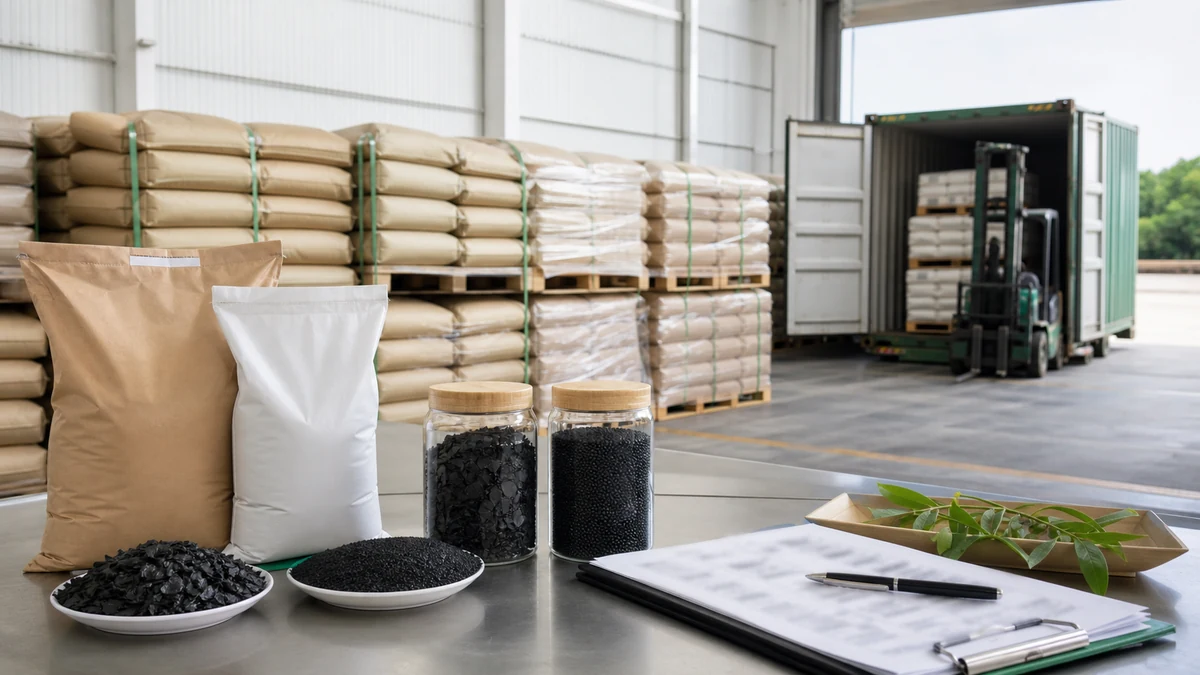
Sobald die Form festgelegt ist, sind die Fragen zur Beschaffung für beide Produkte identisch, wobei für Kaliumhumat eine zusätzliche Zeile hinzugefügt wird. Bei der Qualität, der Verpackung und der zollrechtlichen Einstufung zeigt sich, ob ein seriöser Anbieter oder nur ein Zwischenhändler ein klares Angebot unterbreitet.
Sowohl Huminsäure als auch Kaliumhumat werden üblicherweise unter der HS-Position 3101 (tierische oder pflanzliche Düngemittel) angemeldet, wobei die Einreihung je nach Produktform und Bestimmungsort unter Umständen auf die Positionen 3105 oder 3824 verschoben werden kann; der Zollsatz richtet sich nach dem jeweiligen Code. Wir geben den Code an, unter dem wir die Ware bei der Ausfuhr anmelden; Ihr Zollagent bestätigt den Einfuhrzollsatz. Die Verpackung erfolgt in der Regel in 25-kg-Säcken auf Paletten bis hin zu Vollcontainerladungen, wobei auf Anfrage auch Eigenmarken und kundenspezifische Mischungen erhältlich sind.
Die vollständige Güteklassenmatrix, die dreistufigen Spezifikationen und die Details zu den Gesamtkosten sind auf unserer Huminsäuredünger Beschaffungsseite – hier können Sie die Bodenqualitäten vergleichen, bevor Sie eine Anfrage senden. Für einen Kunden aus dem Anbaubereich, der die Rohbodenqualität benötigt, ist die Huminsäuregranulat SKU ist die Option für die Stückzahl.
Ausblick: Warum „Solubility“ immer mehr Regalfläche erobert
Die Nachfrage verlagert sich hin zu den wasserlöslichen Sorten, und der Grund dafür ist struktureller Natur und nicht saisonbedingt. Da sich die Tropfbewässerung und die Fertigation im hochwertigen Gartenbau im Nahen Osten, in Südostasien und Lateinamerika immer weiter verbreiten, wachsen gerade jene Anwendungsbereiche am schnellsten, für die rohe Huminsäure nicht geeignet ist. Wasserlösliches Kaliumhumat profitiert von diesem Wandel; ein Granulat, das ausschließlich im Boden eingesetzt wird, hingegen nicht.
Das bedeutet jedoch nicht, dass rohe Huminsäure vom Markt verschwindet. Die Nachfrage nach Großflächenprodukten und Mischungen sorgt dafür, dass das billige Granulat weiterhin in großen Mengen abgesetzt wird. Ein Händler, der für die nächsten Jahre ein Humatsortiment aufbaut, lagert jedoch mehr lösliche Qualitäten und weniger Rohmaterial ein als noch vor fünf Jahren. Passen Sie den Anteil löslicher Produkte in Ihrem Lagerbestand an den aktuellen Bewässerungsbedarf an – und nicht an den bisherigen.
Das Fazit für den Käufer
- Kaliumhumat ist Huminsäure, die durch eine KOH-Reaktion wasserlöslich gemacht wurde, wobei 6–11% K₂O zugesetzt wurde. Gleiche Grundstruktur, unterschiedliche Löslichkeit und Kaliumgehalt.
- Entscheiden Sie je nach Anwendungsart: Für die Bodenbehandlung und zum Einmischen kaufen Sie rohe Huminsäure; für die Tropfbewässerung, Fertigation oder Blattdüngung kaufen Sie Kaliumhumat.
- Vergleichen Sie den Gehalt an aktivem Humus pro Tonne, nicht den Rohpreis. Für die Löslichkeit und den Kaliumgehalt zahlen Sie den Aufpreis.
- Überprüfen Sie vor jeder Bestellung zwei COA-Parameter: Huminsäure % mit Testmethode sowie Wasserlöslichkeit mit unlöslichen Bestandteilen.
- Die meisten Händler müssen beide Qualitätsstufen im Sortiment führen, deren Preise auf die beiden Kundengruppen abgestimmt sind.
Häufig Gestellte Fragen
Was ist besser: Kaliumhumat oder Huminsäure?
Keines der beiden Produkte ist abstrakt betrachtet besser; sie dienen unterschiedlichen Anwendungszwecken. Kaliumhumat ist überall dort die bessere Wahl, wo das Produkt ins Wasser gelangt, wie beispielsweise bei der Tropfbewässerung, der Fertigation und der Blattdüngung, da es sich vollständig auflöst und Kalium zuführt. Rohe Huminsäure ist preislich vorteilhafter für die Bodengrunddüngung und die NPK-Mischung, wo keine Löslichkeit erforderlich ist. Wählen Sie das Produkt je nachdem, wo Ihr Kunde es einsetzt.
Kann ich Kaliumhumat und Huminsäure zusammen verwenden?
Ja, und das ist bei vielen Programmen der Fall. Landwirte bringen oft rohe Huminsäure auf den Boden aus, um im Laufe der Saison die Bodenstruktur zu verbessern, und setzen lösliches Kaliumhumat über die Tropfbewässerung oder als Blattspritzmittel ein, um eine schnelle Aufnahme zu gewährleisten. Da sie unterschiedliche Aufgaben erfüllen, ist ihre Kombination eher üblich als überflüssig.
Wie hoch ist der Huminsäureanteil in Kaliumhumat?
Das hängt von der Güteklasse ab. Unser Kaliumhumat reicht von etwa 41,51 TP3T Huminsäure im 0-0-6-Granulat bis zu etwa 56,51 TP3T im 1-0-11-Flockenprodukt, mit einer Wasserlöslichkeit von 931 TP3T bzw. 981 TP3T. Überprüfen Sie stets die Angaben und die Prüfmethode auf dem COA der jeweiligen Charge, da ein Huminsäureanteil ohne Angabe der Prüfmethode nicht zwischen verschiedenen Lieferanten vergleichbar ist.
Löst sich Kaliumhumat in hartem Wasser auf?
Ja. Kaliumhumat ist über den gesamten pH-Bereich hinweg löslich und verträgt hartes Wasser weitaus besser als rohe Huminsäure, weshalb es sich für die Fertigation bei schwankender Wasserqualität eignet. Bei Blattdüngung und Tropfbewässerung mit hartem Wasser sollten Sie den Gehalt an unlöslichen Bestandteilen im Analysezertifikat überprüfen, damit sich keine Ablagerungen im Tank bilden oder die Düsen verstopfen.
Unter welchem HS-Code wird Kaliumhumat exportiert?
Kaliumhumat und Huminsäure werden üblicherweise unter der HS-Position 3101 eingereiht; je nach Produktform und Bestimmungsort kann die Einreihung jedoch auch unter 3105 oder 3824 erfolgen, wobei sich der Zollsatz nach dem jeweiligen Code richtet. Wir teilen Ihnen den Code mit, den wir bei der Ausfuhr angeben; klären Sie die Einreihung und den Zollsatz bei Ihrem Zollagenten ab, bevor Sie die Fracht in Auftrag geben.
Ist Natriumhumat dasselbe wie Kaliumhumat?
Nein. Bei beiden handelt es sich um wasserlösliche Humat-Salze, doch Natriumhumat enthält Natrium anstelle von Kalium, wodurch es kostengünstiger ist und sich für viele industrielle oder nicht-landwirtschaftliche Anwendungen eignet. Als Düngemittel wird Kaliumhumat bevorzugt, da es nützliches K₂O liefert und eine Anreicherung von Natrium im Boden verhindert, wo sich dieses bei wiederholter Anwendung ansammeln und die Bodenstruktur schädigen kann. Geben Sie für Kulturpflanzen Kaliumhumat an, es sei denn, der Käufer hat einen bestimmten Grund für die Natriumvariante.
Verwandte Artikel
- Huminsäure-Dünger: Lieferanten, Qualitäten und Großabnahme, die Seite mit den Preisen – nutzen Sie diese, wenn Sie bereit sind, Angebote zu vergleichen und ein Angebot anzufordern.
- Huminsäure für Pflanzen, der agronomische Aspekt – greifen Sie darauf zurück, wenn es darum geht, wie sich Huminsäure im Boden verhält, und zwar für jede Kulturpflanze einzeln.
- Fulvosäuredünger, die Fraktion mit niedrigerem Molekulargewicht – verwenden Sie diese, wenn ein Kunde nach Fulvosäuren statt nach Huminsäuren fragt.
- Huminsäure vs. Fulvosäure, der Leitfaden zur Auswahl der Konzentration; nutzen Sie diesen, bevor Sie verschiedene Humatformen vergleichen, wenn der Käufer sich nicht sicher ist, ob es bei der Anwendung um die Bodenstruktur oder um eine schnelle Aufnahme geht.
Sind Sie auf der Suche nach Kaliumhumat oder Huminsäure für Ihren Markt?
Teilen Sie uns Ihre Anwendungsart (Boden, Tropfbewässerung oder Blattdüngung), die gewünschte Qualität und die monatliche Abnahmemenge mit, und wir senden Ihnen innerhalb von 24 Stunden eine Qualitätsempfehlung, ein feuchteangepasstes FOB-Angebot sowie ein COA-Muster zu.
Notenempfehlung und FOB-Angebot anfordern →
Über diesen Leitfaden
Überprüft vom Rutom Bio Technical Supply Desk. Zuletzt aktualisiert am 20.07.2026. Bei den hier angegebenen Spezifikationen für Kaliumhumat und Huminsäure handelt es sich um unsere eigenen veröffentlichten Produktdaten; die Definitionen zu chemischer Zusammensetzung und Löslichkeit sind unten aufgeführt. Wir stellen beide Qualitäten her, weshalb dieser Vergleich mit Angaben zur Herkunft und zum Analysezertifikat (COA) beginnt, die auf rein agrarwissenschaftlichen Seiten oft fehlen. Die Angaben zum Huminsäureanteil und zum Feuchtigkeitsgehalt sind typische veröffentlichte Werte; überprüfen Sie die genauen Zahlen anhand des lotbezogenen Analysezertifikats (COA) für die von Ihnen bestellte Artikelnummer.
Literaturverzeichnis & Quellen
- Was sind Huminstoffe? — International Humic Substances Society (Definition von Huminsäure, Fulvosäure und Humin anhand der pH-abhängigen Löslichkeit).
- Verordnung (EU) 2019/1009 – Verordnung der Europäischen Union über Düngemittel (Grenzwerte für Schwermetalle und Cadmium).
- Rutom Bio hat Produktspezifikationen veröffentlicht – Daten zu Kaliumhumat-Granulat der Sorte 0-0-6 und zu Kaliumhumat-Flocken der Sorte 1-0-11.
Über den Autor: Rutom




 English
  Spanish
  French
  Japanese
  Korean
  German
  Portuguese
  Italian
  Indonesian
  Vietnamese
  Turkish
  Persian
  Russian
  Chinese