
テーブルの内容
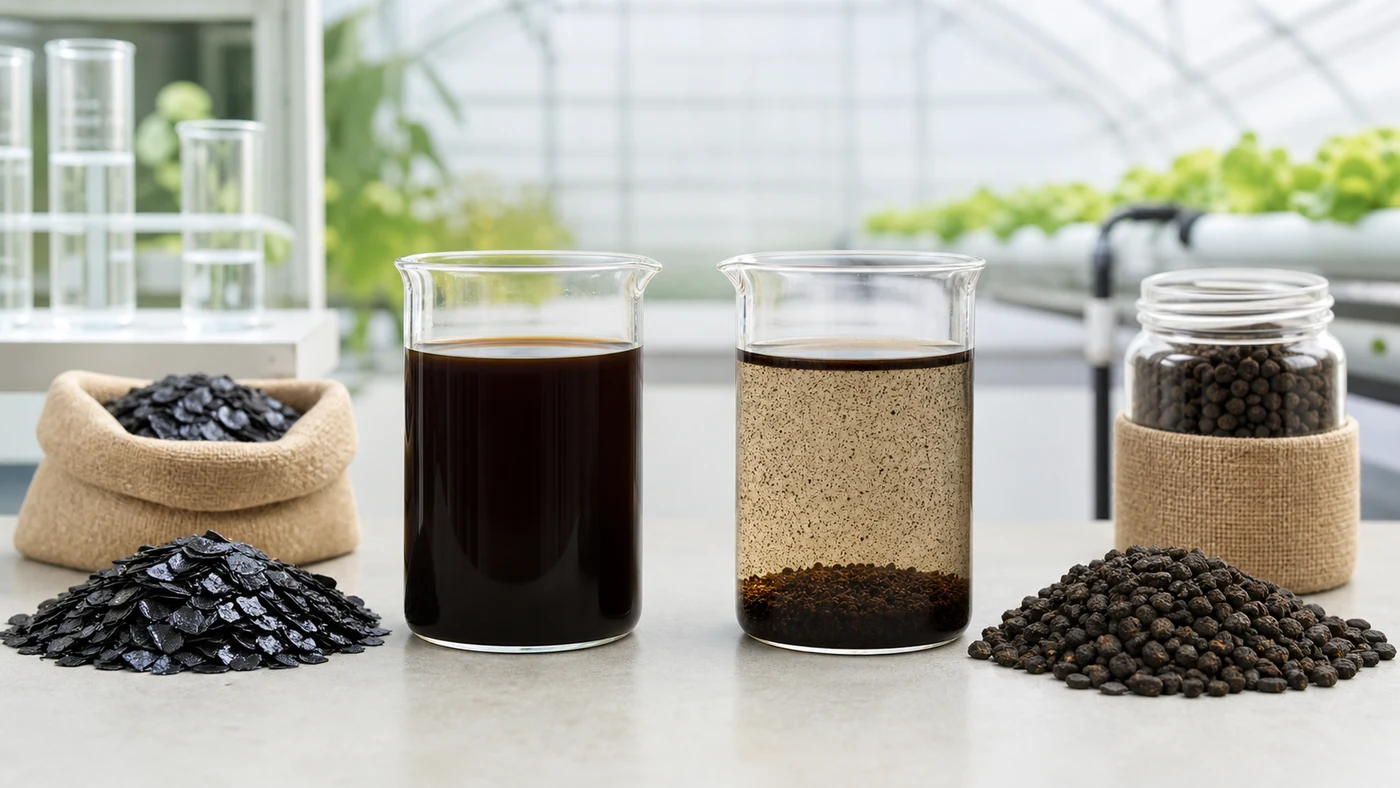
2つの製品、1つの原料、そして初めて購入する人を戸惑わせる価格差。フミン酸カリウムとフミン酸は、同じレオナルダイト鉱脈から採掘されるにもかかわらず、一方は施肥灌漑タンクできれいに溶解するのに対し、もう一方は底に沈んでエミッターを詰まらせてしまいます。 間違った製品を注文してしまうと、土壌栽培用の製品に過剰な代金を支払うか、あるいは使用しているpH環境では決して溶解しなかった「可溶性」製品によって点滴灌漑ラインが故障してしまうのを目の当たりにすることになります。.
決定の決め手となるのは、メリットの一覧ではなく、ある1つの特性です。以下に、2文でまとめた相性評価、仕様表の並列比較、有効腐植質1単位あたりのコストに関する具体例、そして20 MTの注文が港を出荷される前に確認すべき正確なCOAの項目を掲載します。.
フミン酸カリウムとフミン酸:その違いを簡潔に解説
フミン酸カリウムは、水溶性にしたフミン酸のことです。どちらも軟質褐炭であるレオナルダイトから抽出されたフミン物質ですが、フミン酸カリウムは、未処理のフミン酸を水酸化カリウム(KOH)と反応させて得られるフミン酸のカリウム塩です。 この単一の反応によって、購入者が重視するほぼすべての要素、すなわち溶解性、施用方法、カリウム含有量、そしてトン当たりの価格が変化します。.
未精製のフミン酸はアルカリ性条件下でのみ溶解し、土壌中に留まるため、緩効性の土壌改良剤として機能します。フミン酸カリウムは、pHを問わず水に完全に溶解し、点滴灌漑や葉面散布を通じて素早く移動し、それ自体で6~11% K₂Oを含んでいます。 購入者が土壌施肥を行う場合は、通常、フミン酸で十分です。施肥灌漑や葉面散布プログラムを実施する場合は、カリウムフミン酸が必要となります。.
また、粒状、液体、粉末、フレークの購入形態から選択する必要がある場合は、当社のガイドをご覧ください。 粒状・液状・粉末のフミン酸の比較.
フミン酸カリウムはフミン酸と同じものですか?
いいえ。フミン酸カリウムにはフミン酸が含まれていますが、それはカリウムが結合した水溶性の形態です。 フミン酸を原料と考えると、フミン酸カリウムは、カリウムが組み込まれた、精製済みでタンクへの注入が可能なグレードの製品と言えます。フミン酸カリウムの分析証明書(COA)には、フミン酸の含有率とK₂Oの値の両方が記載されているはずですが、未精製のフミン酸の分析証明書にはカリウムの記載はありません。.
フミン酸カリウムとフミン酸の比較概要
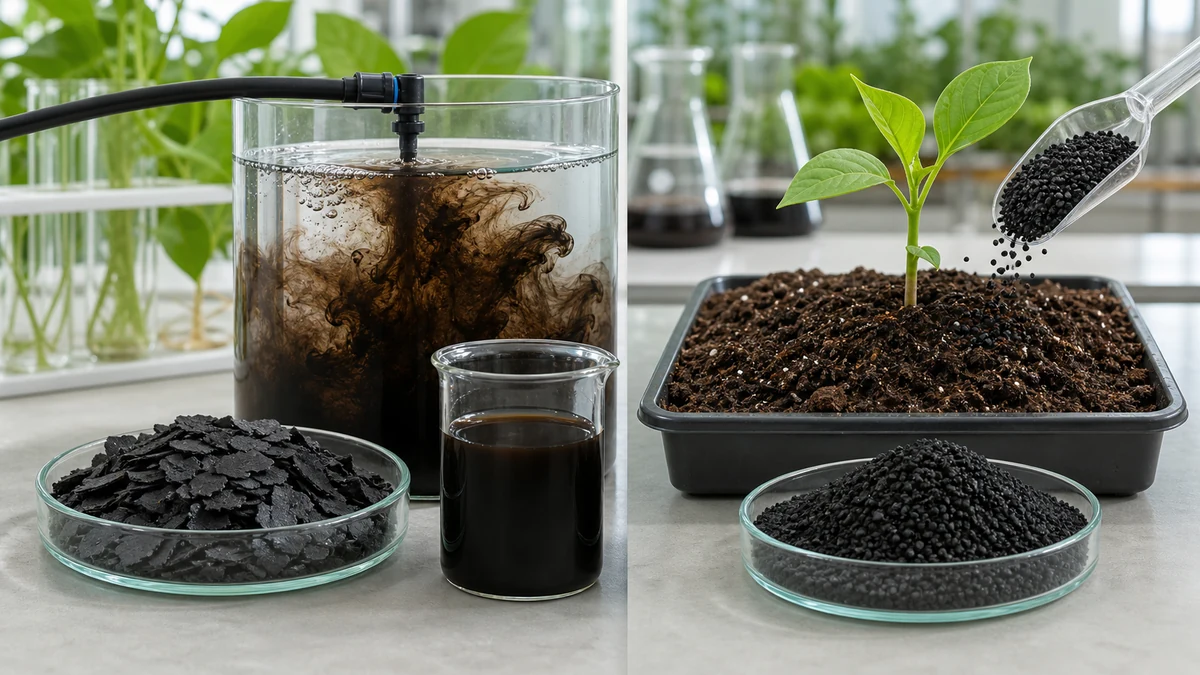
以下の表は、これら2つの項目と、発注を決定する特性との対応関係を示したものです。フミン酸カリウムの数値は、当社が公表しているグレード仕様です。ご注文されるSKUのCOA(分析証明書)と照らし合わせて、正確な数値をご確認ください。.
| プロパティ | フミン酸(未精製褐炭グレード) | フミン酸カリウム |
|---|---|---|
| 概要 | レオナルダイトから抽出された腐植物質 | フミン酸のカリウム塩 |
| 水溶性 | アルカリ性溶液にのみ溶解する。中性または酸性の水にはほとんど溶解しない。 | 90–100%:あらゆるpH条件下で水溶性 |
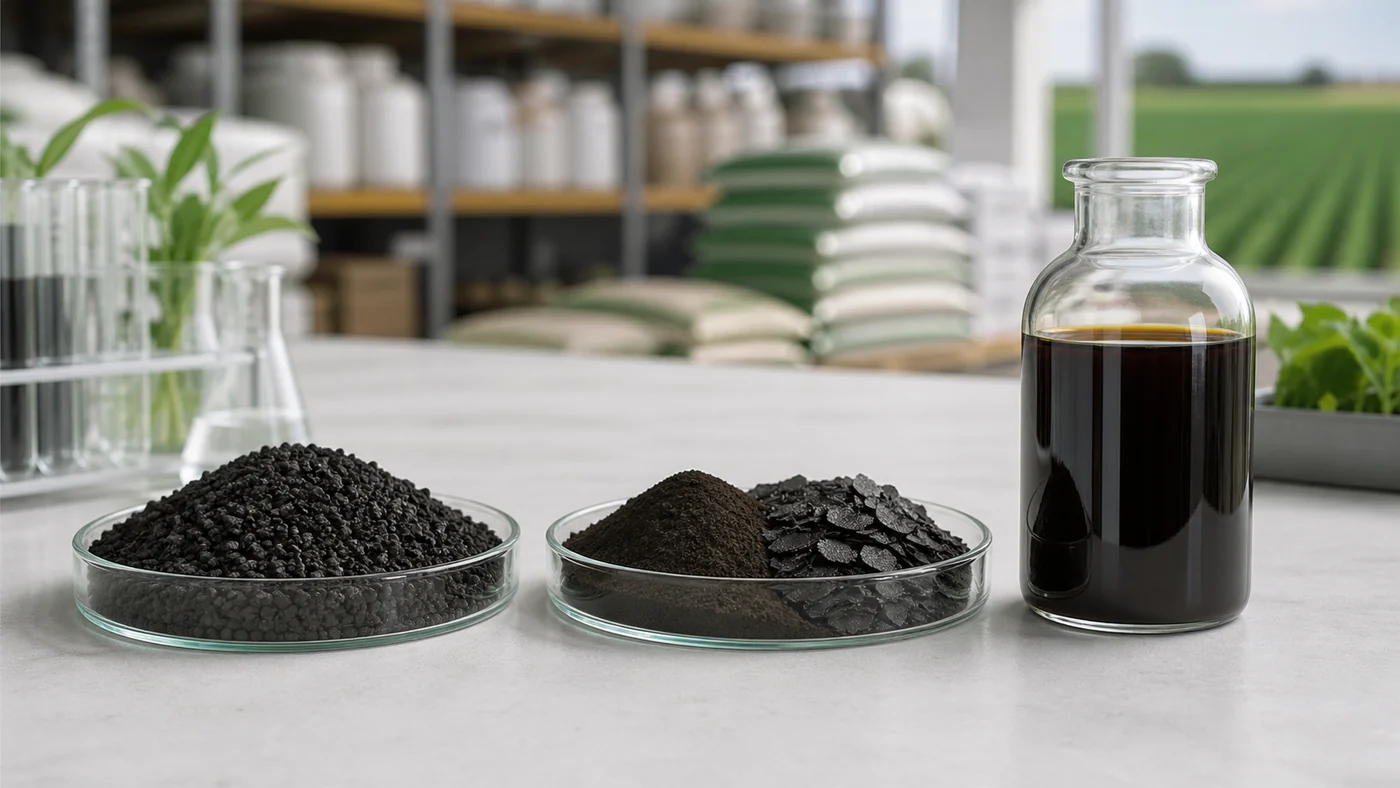
| 物理グレード | 2~4 mmの顆粒/粉末 | 水溶性の顆粒、フレーク、または粉末 |
| カリウム(K₂O) | なし | 6–11%、内蔵型 |
| フミン酸含有量 | COAおよび試験方法の確認 | ~41.5%(顆粒 0-0-6)から ~56.5%(フレーク 1-0-11) |
| pH | ほぼ中性からアルカリ性 | アルカリ性、約9~10 |
| 主な用途 | 土壌への基肥施用、NPKとの混合 | 点滴灌漑、施肥灌漑、葉面散布、種子処理 |
| 速度 | 緩やかで長期的な土壌改良 | 栄養素の迅速な吸収 |
| 1トンあたりの相対価格 | 最低 | 高い(溶解度が高く、カリウムの精製コストが高い) |
当社の公表済み製品仕様書に基づく参考値です。貨物の手配を行う前に、実際のCOAと照合してください。.
フミン酸とは一体何なのか
フミン酸とは、フミン物質のうち、アルカリ溶液には溶解するが、酸溶液では沈殿する成分のことです。これは単なるマーケティング用語ではなく、 国際腐植物質学会 フミン酸、フルボ酸、およびフミンを分離するためである。その実用上の意義は、「沈殿」という一言に集約される。未処理のフミン酸を中性または酸性のタンクに投入すると、その大部分は溶液中に留まらなくなる。.
商業的には、フミン酸はレオナルダイトから抽出されます。レオナルダイトは風化した褐炭層であり、そのフミン物質含有量は約85%で、泥炭の3~10%をはるかに上回っています。 Rutom Bio社の原級品は、2~4 mmの黒褐色の顆粒として出荷される。これは散布タンクではなく土壌中で作用し、購入者は基肥として、あるいは複合肥料(NPK)に配合する機能性添加剤として使用している。.
石炭由来の原料には、常に注意すべき点があります。レオナルダイトは褐炭であるため、ヒ素、カドミウム、鉛などの重金属については、単に想定するのではなく、必ず検査を行う必要があります。まさにこの点こそが、EUや韓国からの貨物が港で差し止められる原因となっています。重金属の検査項目が含まれていない腐植物酸の分析証明書(COA)は、不完全な書類となります。.
要点: 未精製のフミン酸は、1トンあたりのコストが最も安いフミン質資材ですが、アルカリ性環境でのみ溶解するという特性上、価格の問題以前に使用可能な場所が限定されてしまいます。土壌内での挙動について作物ごとに詳しく知りたい場合は、当社のガイドをご覧ください。 植物用フミン酸 農学について深く掘り下げて解説しています。.
フミン酸カリウムとは一体何なのか
フミン酸カリウムは、未処理のフミン酸を水酸化カリウムと反応させたときに得られる化合物です。KOHがフミン酸分子上の酸性基を中和してカリウム塩を形成し、その塩はpHを問わず水に溶解します。フミン酸の骨格は変化しませんが、その溶解性とカリウム含有量は変化します。.
この反応により、購入者が仕様書に記載できる2つの利点が生まれます。第一に、水溶性が90~100%へと飛躍的に向上するため、この製品はドリップエミッターや葉面散布器を通しても残留物を残さずに流れます。 第二に、この材料はK₂Oとしてカリウムを含有するようになり(グレードによって通常6~11%)、軽度のカリウム源としても機能します。.
グレードによって、輸送方法や取り扱い方法も決まります。フレーク状および水溶性粉末は溶解が最も速く、残留物も最も少ないため、葉面散布やクリーンな施肥において最高価格がつきます。水溶性顆粒は、溶解性を若干犠牲にする代わりに、取り扱いが容易で粉塵も少なく、別途溶解工程を必要とせずに乾燥施肥プログラムに混ぜ合わせることができます。 K₂Oの含有量もグレードによって異なるため、カリウム含有量を基準に選ぶ購入者と、溶解性を基準に選ぶ購入者は、しばしば同じSKUを選ぶことになります。.
Rutom Bio社は、実用範囲の両端をカバーする2種類のフミン酸カリウム製品を販売しています。その フミン酸カリウム粒剤 0-0-6 フミン酸含有量は約41.5%、溶解度は93%、K₂O含有量は6%であり、点滴灌漑用としても溶解する安定した2~4 mmの顆粒として出荷されます。この フミン酸カリウム(フレーク) 1-0-11 最高グレードの製品で、フミン酸が約56.5%、溶解度が98%、K₂Oが11%であり、フレーク状または可溶性粉末状で、不溶分が少ないことが販売の決め手となります。.
覚えておくべきポイント: フミン酸カリウムは、フミン酸とは別の分子というわけではありません。これは、溶解しやすく、カリウムを運搬できるように改良された同じフミン物質であり、その両方の改良点に対して代金を支払うことになります。.
「溶解度の分岐点」:すべてを決定づけるたった一つの違い
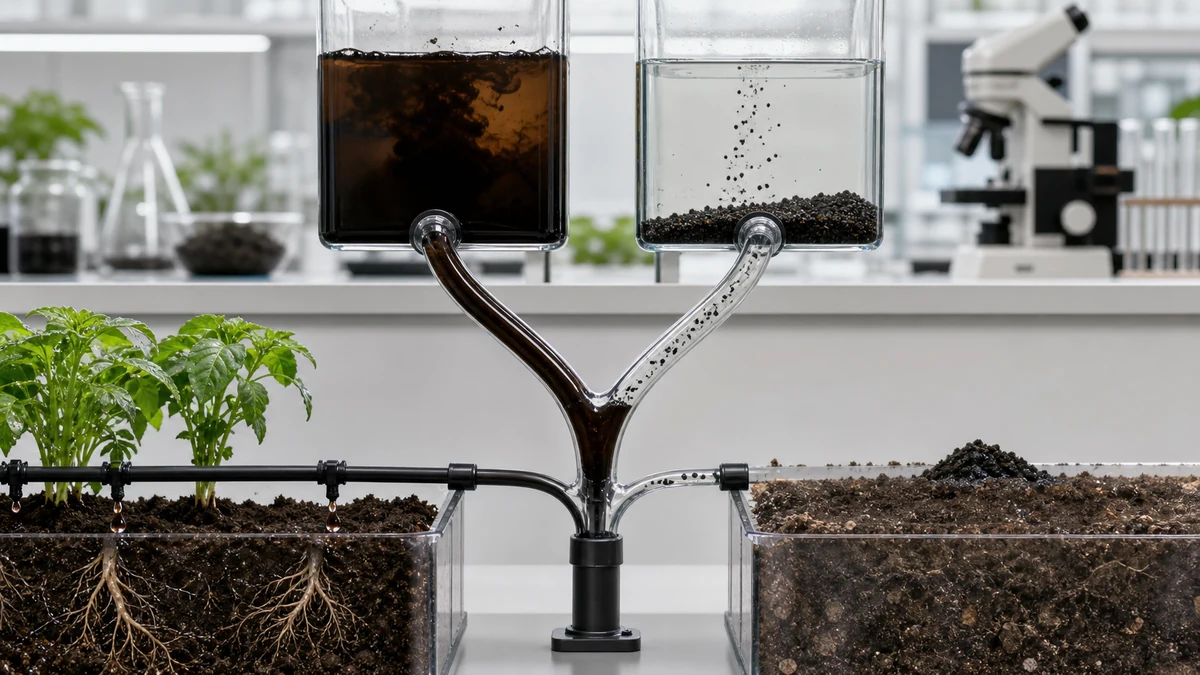
これら2つの製品を区別するすべての要素は、たった1つの特性に由来しています。それは、使用する水に溶けるかどうかという点です。これを 溶解度フォーク — ある原材料が2つの用途分野に分岐する分岐点。この分岐を正しく見極めれば、残りの決定事項は自然と決まってくる。しかし、ここで間違えれば、どんな仕様書もその注文を救うことはできない。.
その下流には、アルカリ性のみに存在するフミン酸があります。これは土壌中に留まり、ゆっくりと放出され、1シーズンをかけて土壌構造や陽イオン交換能を改善します。中性の点滴灌漑ラインには、溶液から沈殿してしまうため流入できず、その作用はすべて土壌中で行われます。.
もう一方の系統には、フミン酸カリウムがあります。カリウム化処理により、あらゆるpH条件下で溶解性を持つようになったため、施肥灌漑や葉面散布システムを通じて数日のうちに根や葉に到達し、その過程でカリウムも一緒に運ばれます。この迅速さと移動性こそが、精製コストに見合うメリットなのです。.
フミン酸を水に溶かすことはできますか?
部分的にしか溶けず、それも水がアルカリ性の場合に限られます。未精製のフミン酸はアルカリ性水には溶けますが、中性または酸性の水では沈殿するため、その一部が沈殿してエミッターを詰まらせてしまいます。 もしサプライヤーが、自社の未精製フミン酸が「完全に水溶性」であると説明した場合、それはほぼ間違いなく、未精製フミン酸ではなく、フミン酸カリウムまたはフミン酸ナトリウムのことを指しています。どの塩類であるかを確認し、COAに記載されている溶解度の数値を尋ねてください。.
分子量と硬水中の挙動
この溶解度の差には、硬水地域において重要なもう一つの影響があります。 フミン酸はフミン物質の中でも分子量が大きく、高分子な成分であり、これが溶液から容易に沈殿する理由の一つとなっている。一方、フルボ酸は分子量の低い側に位置し、溶解性を維持しており、フミン酸カリウムは、溶解性の高い性質に近づくよう精製されている。 実際には、未精製のフミン酸が凝集して沈殿してしまうような、硬水でミネラル分が多い灌漑用水でも、フミン酸カリウムは問題なく使用できます。 カルシウムやマグネシウムを多く含むボーリング水や井戸水を用いた施肥灌漑においては、可溶性のフミン酸カリウム塩こそが、根圏に到達するまで十分に長い時間、懸濁状態を維持できるグレードです。これは一部のサプライヤーが宣伝する「硬水対策」の特性であり、確かに実在するものです。しかし、この特性はフミン酸カリウム塩に由来するものであり、未精製のフミン酸そのものにはありません。.
この分岐は、購入者を困惑させる価格差の理由も説明しています。フミン酸カリウムの価格が高いのは、その分子自体が優れているからではありません。その価格には、フミン酸カリウムを水溶性にしたKOH反応のコストと、現在その分子が含有しているカリウムのコストが含まれているのです。. 決定ルール: 製品を使用する場所に応じて品種を選び、表に記載されているフミン酸の含有率だけで選ぶのは避けてください。.
数値:溶解度、K₂O、および有効フミン質あたりのコスト
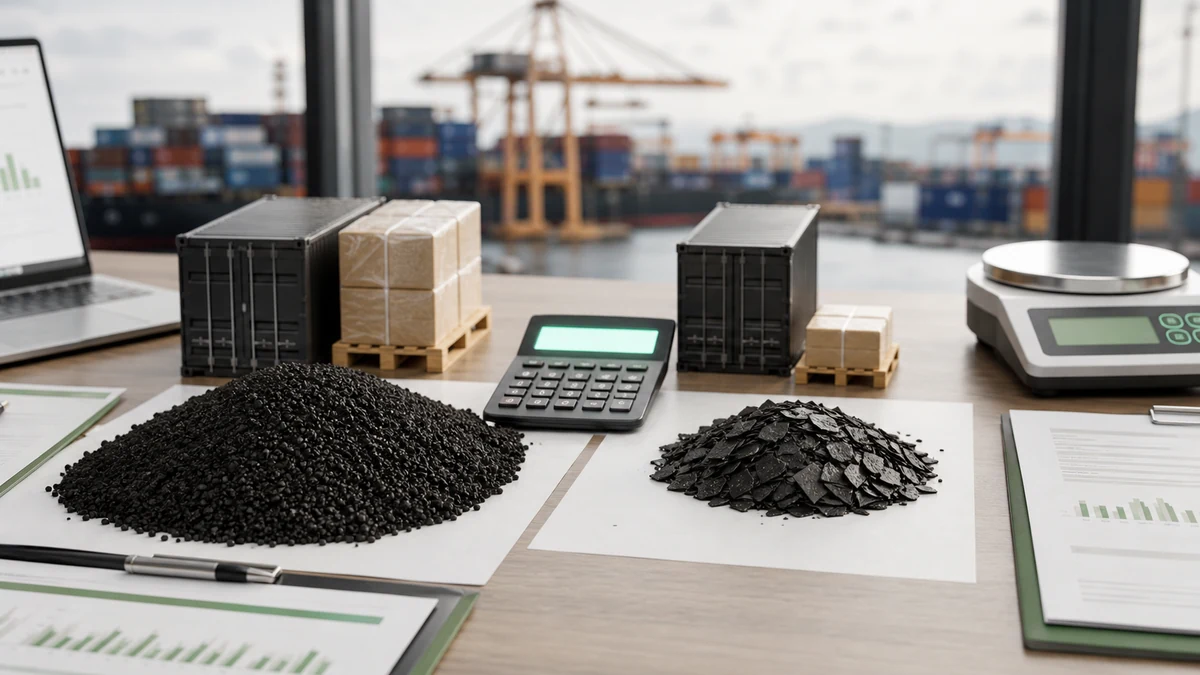
これら2つを比較する際、総トン数単価は適切な指標ではありません。実際に貴社のプログラムを通じて処理されるのは活性フミンであり、発注量を決定する上で有用な指標は、1トンあたりの活性フミン量です。これは、フミン酸の含有率に(1-水分率)を乗じて算出されます。.
2種類のフミン酸カリウムをこの装置に通してみてください:
- 顆粒 0-0-6:0.415 × (1 − 0.025) ≈ 1メートルトンあたり405 kgの活性フミン質
- フレーク 1-0-11:0.565 × (1 − 0.015) ≈ 1メートルトンあたり557 kgの活性フミン質
したがって、10 MTの活性フミン質を賄うには、顆粒タイプなら約24.7 MT、フレークタイプなら18.0 MTを注文することになります。この6.7 MTの差分が、支払うか、あるいは回避できる運賃と関税に相当します。そのため、トン当たりの単価が高くても、総着コストの面ではフレークタイプの方が有利になることが多いのです。 ご自身の目標値を当てはめて、ご利用の港における損益分岐点がどこになるか確認してみてください。.
| メートル法 | フミン酸(未精製) | K-Humate 顆粒 0-0-6 | K-Humate フレーク 1-0-11 |
|---|---|---|---|
| フミン酸 % | COAで確認する | ~41.5% | ~56.5% |
| 水溶性 | アルカリ性のみ | ~93% | ~98% |
| K₂O | 0% | ~6% | ~11% |
| 水分 | COAで確認する | ~2.5% | ~1.5% |
| 活性フミン酸/MT | 学年によって異なります | 約405 kg | 約557 kg |
未精製のフミン酸との比較では、事情が異なります。未精製のフミン酸は、1トン当たりや1キログラム当たりの単価では最も安く見えるかもしれませんが、用途に溶解性が求められる場合、その有効なフミン成分は、いくらお金を払っても点滴灌漑ラインでは利用できません。これが、次のセクションで指摘されている落とし穴です。.
いつ、どれを選ぶべきか
まず用途に合わせて製品を選べば、グレードの決定は簡単になります。この区分は、抽象的な意味でどちらが「優れている」かという問題ではなく、購入者の顧客がそれをどのように使用するかにかかっているのです。.
| 買い手の状況 | 選択してください |
|---|---|
| 土壌の基肥施用、広面積の土壌改良、複合肥料(NPK)への混合 | 未精製フミン酸顆粒 |
| 1トンあたりのコストが決定的な要因であり、溶解性は必要とされない | 未精製フミン酸顆粒 |
| 点滴灌漑または施肥灌漑、コスト重視 | フミン酸カリウム粒剤 0-0-6 |
| 葉面散布、種子処理、あるいは不溶性物質が販売の妨げとなるあらゆるタンク | フミン酸カリウム(フレーク) 1-0-11 |
| 購入者は、カリウムとフミン酸を1つの品目として購入する必要があります | フミン酸カリウム(6–11% K₂O) |
| 施肥灌漑用水に含まれる硬水 | フミン酸カリウム(水の硬度に関係なく溶解します) |
同じ決定でも、買い手側の企業内で誰が質問するかによって、その見方は異なります。販売代理店は、どのグレードが最も早く売れ、運転資金の拘束が最も少ないかを検討します。一方、農学者や生産者は、自分たちの作物や灌漑方法に実際に利用できるものがどれかを重視します。 購買担当者は、有効腐植質1単位あたりの着荷コストに注目します。これら3つの質問はいずれも同じ製品区分を指していますが、それぞれの立場に合わせて提案内容を調整することで、成約までの時間を短縮できます。.
多くの販売業者にとって、正直なところ、棚には両方を揃えておく必要があるというのが実情です。つまり、土壌散布を行う顧客向けの安価なフミン酸顆粒と、点滴灌漑や葉面散布を行う顧客向けの可溶性フミン酸カリウムです。この2つは競合するものではなく、互いに補完し合う関係にあります。もし低分子量分画に関する質問も寄せられる場合は、当社の フルボ酸肥料 該当する箇所については、そのページで説明しています。.
決定ルール: 水槽で育てる場合はフミン酸カリウムを購入し、地植えで育てる場合で価格を重視するなら、未精製のフミン酸を購入しましょう。.
「誤った形式の税金」:誤った選択がもたらす代償
ここで最も大きな損失をもたらすミスは、1トンあたり数ドル余分に支払うことではありません。それは、用途に合わない形態の製品を購入してしまうことであり、このコストを私たちは 不適正な形態の税金—購入したが使えない「溶解度」の代償、あるいは見送ったものの、今になって必要になった「溶解度」。.
これは両刃の剣です。施肥灌漑を行う顧客向けに、トン当たりの単価が安かったという理由で未精製のフミン酸を購入したところ、不溶物がエミッターを詰まらせ、葉に付着し、返品や苦情を招いてしまい、結果的にコスト削減効果が帳消しになってしまいました。 一方、広大な農地を耕す顧客向けに98%可溶性フレークを購入し、それを土壌に混ぜ込んだ場合、作物が決して利用することのない溶解性のプレミアム分を支払ったことになる。.
ある販売業者が、価格だけを基準に「水溶性フミン酸」のコンテナを注文したところ、到着して初めてそれがアルカリ可溶性の原料グレードであることに気づいたと想像してみてください。点滴灌漑を利用している顧客からは、1週間も経たないうちに配管が詰まったという報告が寄せられました。 そのコンテナは当初の市場では販売できず、運賃はすでに支払済みであり、次の注文は溶解度を事前に提示していたサプライヤーに流れてしまいます。その結果、トン数分のコスト削減効果は数倍にも及ぶ損失となってしまいます。.
この税金を回避するのにかかる費用は、購入前にCOA(分析証明書)の2行――水溶性率と、フミン酸の数値の算出根拠となる試験方法――を読むこと以外には何もかかりません。. フィールドノート: 溶解度の数値が記載されていない安価な商品は、お買い得品ではなく、価格のつかないリスクに他なりません。.
COAにおける品質の確認方法 
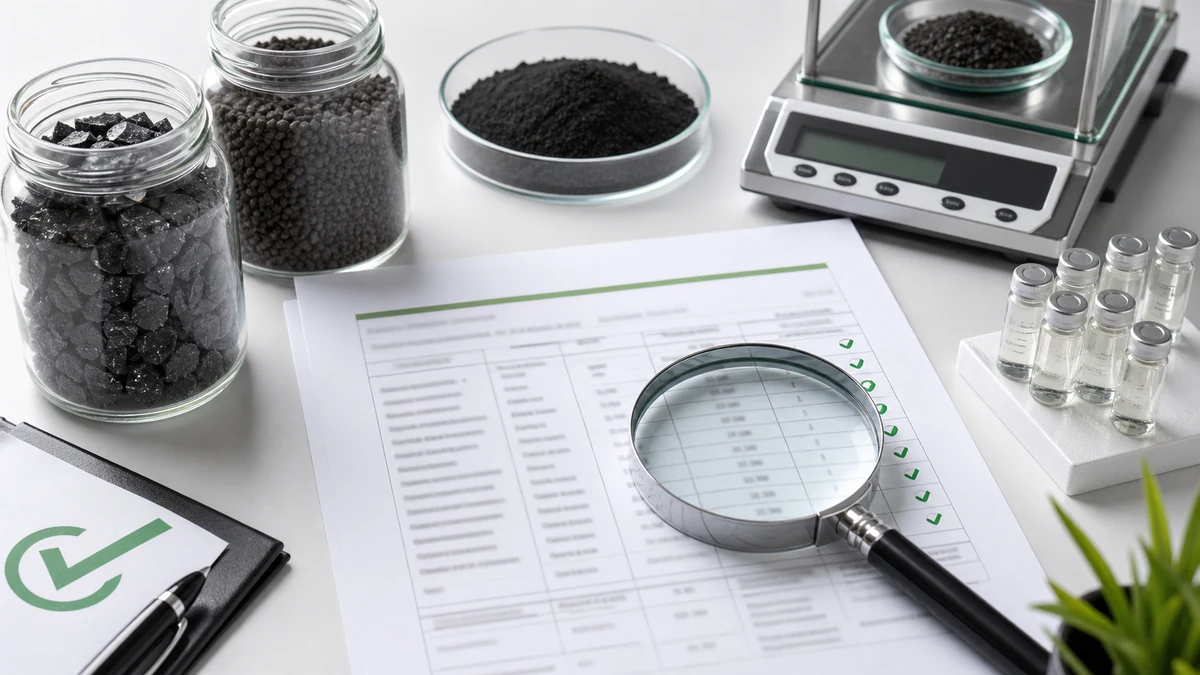
ヒューメート製品の分析証明書(COA)は、どの項目を確認すべきかを知っている場合にのみ有用であり、そのうちの2つの項目によって、あなたが「証拠」を購入するのか、それとも「ロゴ」を購入するのかが決まります。注文を行う前に、ラベルやパンフレットではなく、ロットごとの分析証明書と照らし合わせてこれらを確認してください。.
- フミン酸 %(試験方法が記載されているもの)。. ある測定方法では70%と表示される数値が、同じ材料でも別の測定方法では45%と表示されることがあります。比較対象の見積もりにおいて測定方法が同一であることを確認してください。そうしないと、パーセンテージを比較することができません。.
- 水溶性と不溶性。. 点滴灌漑や葉面散布において、この数値こそが販売の成否を左右する決め手となります。不溶性物質はエミッターを詰まらせたり、葉に付着したりします。「可溶性」という言葉ではなく、具体的な数値を確認してください。“
- K₂O(フミン酸カリウム)。. これが純粋なカリウム塩であり、ラベルを貼り替えただけの未精製のフミン酸ではないことが確認されました。K₂Oの線が確認されないということは、カリウムが含まれていないことを意味します。.
- 重金属(As、Cd、Pb、Hg)。. レオナルダイトは褐炭であるため、EU向けの出荷手配を行う前に、カドミウムの分析結果が規則(EU)2019/1009の基準値内に収まっていることを確認してください。.
- 産地と等級。. 褐炭と高品位のレオナルダイトを比較すると、フミン酸の収量と重金属の含有プロファイルの両方に変化が見られる。.
フミン酸カリウムは有機物ですか?
それは、単にその言葉自体ではなく、認証機関や具体的な製品によって異なります。フミン酸カリウムは天然鉱物であるレオナルダイトに由来するものであり、有機生産において多くのグレードが認められていますが、KOH反応は、一部の基準において厳格に審査される製造工程の一つです。 ページ上のロゴではなく、対象範囲に貴社の正確なSKUが記載され、認証番号と有効期限が明記された有機認証書を求めるようにしてください。.
主なポイント: この証明書は、適格性と手続きを証明するものであり、コンテナ内の材料そのものを証明するのは、ロットごとのCOAのみです。.
ヒュメイトの見積書の読み方:見積依頼(RFQ)における要注意点
2つのフミン酸製品の見積もりを並べて比較しても、それらが同じものを指している場合にのみ意味がありますが、通常はそうではありません。フミン酸製品で損失を被る最も早い方法は、その背景を確かめずに、数字が低いほどお得だと誤解してしまうことです。信頼できる見積もりとそうでない見積もりを区別するポイントは、ほんのわずかです。.
- 試験方法が明記されていないフミン酸含有率。最もよくある手口は、同じロットでも試験方法によって測定値が高くなったり低くなったりするため、試験方法が明記されていない含有率は他社の数値と比較できないという点にある。.
- 数値を伴わない「可溶性」という言葉。フミン酸カリウムについては、形容詞ではなく、水溶性の割合と不溶分の測定値を尋ねてください。.
- 「カリウムフミン酸」の見積書にはK₂Oの記載がない。これは、未加工のフミン酸にラベルを貼り替えたものか、あるいはカリウム含有量が低すぎて記載できないかのどちらかである。.
- ロットごとの分析証明書(COA)は提供されておらず、一般的な仕様書のみが提供されています。仕様書は製品ラインに関する主張であるのに対し、COAはお客様のコンテナに関する証拠となります。.
- SKUや番号が記載された証明書のない、オーガニックまたはISOのロゴ。ロゴは、適用範囲が定められた証明書ではありません。.
各社の見積もりを、腐植酸分析法、溶解度データ、K₂O含有量、および重金属含有量の項目で並べて比較すると、実際の価格差が明らかになります。多くの場合、一見安そうな見積もりも、不溶分や回収率を考慮すると、実際には1トンあたりのコストが高くなってしまうことがよくあります。. 決定ルール: 価格を比較する前に、見積書の行をすべて同じCOA行に統一してください。決してその逆を行ってはいけません。.
調達に関する注意事項:等級、包装、およびHS分類
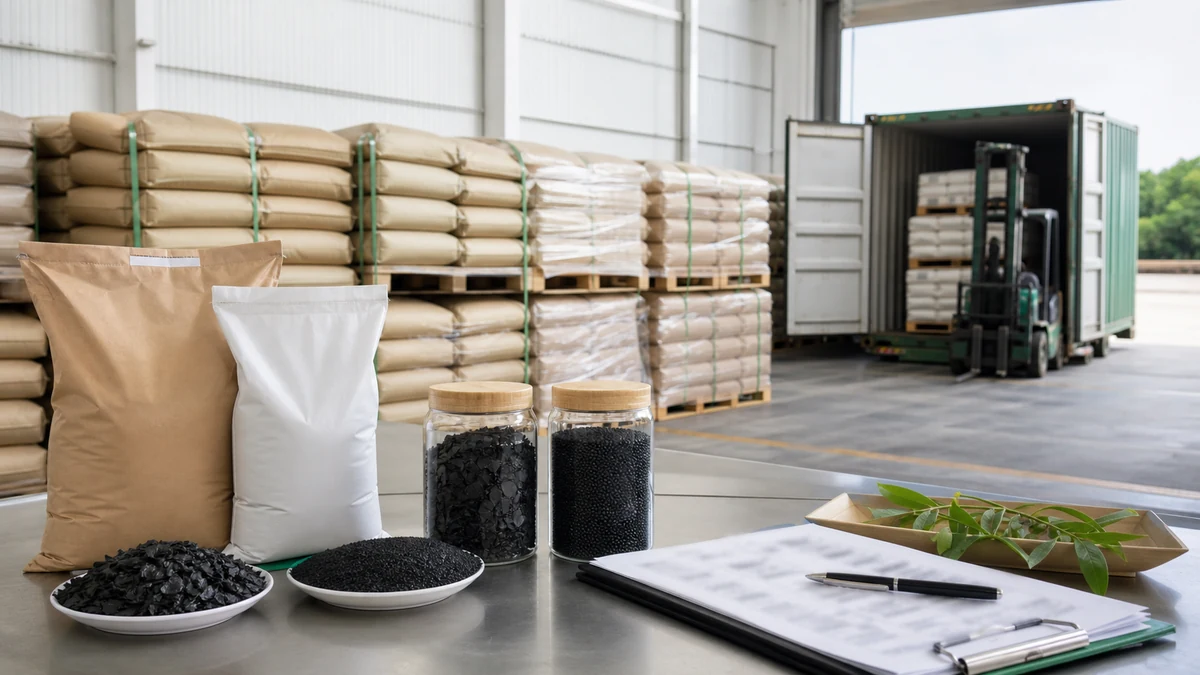
フォームの内容が決まれば、調達に関する質問事項は両製品とも同じですが、フミン酸カリウムについては1行追加されます。グレード、梱包、および関税分類こそが、正確な見積もりを提示できるかどうかで、真のサプライヤーと単なるトレーダーを見分けるポイントとなります。.
フミン酸およびフミン酸カリウムは、いずれも通常、HS番号3101(動物性または植物性肥料)として申告されますが、製品の形態や仕向地によっては、3105または3824に分類される場合があり、関税は当該コードに基づいて課されます。 弊社では輸出時に申告する品番を明記いたしますが、輸入時の税率はお客様の通関業者にご確認ください。梱包は通常、パレットに積載された25kg袋からコンテナ満載まで対応しており、ご要望に応じてプライベートブランドやカスタムブレンドもご用意可能です。.
完全な等級マトリックス、3段階の仕様、および着陸コストの詳細は、当社の フミン酸肥料 調達ページ。ここは、仕様書を送る前に土壌の等級を比較するための場所です。生土の等級を知りたい生産者向けの顧客にとっては、 フミン酸顆粒 SKUは数量の指定項目です。.
展望:なぜ溶解性が店頭スペースを勝ち取り続けているのか
需要は水溶性グレードへとシフトしており、その理由は季節的なものではなく、構造的なものである。中東、東南アジア、ラテンアメリカの高付加価値園芸分野で点滴灌漑や施肥灌漑が普及するにつれ、未処理のフミン酸では対応できない用途が最も急速に伸びている。 水溶性カリウムフミン酸はこの変化に対応していますが、土壌専用顆粒剤では対応できません。.
だからといって、未精製のフミン酸が市場から消えるわけではありません。広面積栽培用や複合ブレンドへの需要により、安価な顆粒製品の流通量は依然として堅調です。しかし、今後数年間を見据えてフミン酸製品ラインを構築している販売業者は、5年前と比べて、可溶性グレードの在庫を増やし、未精製原料の在庫を減らしています。 在庫の可溶性製品の量を決定する際は、これまでの状況ではなく、今後の灌漑の動向を見据えて調整してください。.
買い手の最終的な判断基準
- フミン酸カリウムは、KOH反応によって水溶性化されたフミン酸に、6~11% K₂Oを添加したものです。骨格は同じですが、溶解度とカリウム含有量が異なります。.
- 用途に応じて選択してください:土壌への施用や混合の場合は、未精製のフミン酸を購入し、点滴灌漑、施肥灌漑、または葉面散布の場合は、フミン酸カリウムを購入してください。.
- トンあたりの有効腐植質で比較し、原料価格そのものでは比較しないでください。溶解性とカリウム含有量こそが、割高な価格を支払う理由なのです。.
- 注文のたびに、以下の2つのCOA項目を確認してください:試験方法に基づくフミン酸%、および不溶分を含む水溶性。.
- ほとんどの販売代理店は、2種類の顧客層に合わせた価格設定で、両方のグレードを在庫として揃えておく必要があります。.
よくある質問
フミン酸カリウムとフミン酸、どちらが優れているのでしょうか?
抽象的に言えば、どちらが優れているというわけではなく、用途が異なります。カリウムフミン酸は、点滴灌漑、施肥灌漑、葉面散布など、製品が水に混入する用途では、完全に溶解してカリウムを供給するため、優れています。一方、土壌の基肥やNPK配合など、溶解性が求められない用途では、生フミン酸の方が価格面で優れています。 顧客がどこに施用するかによって選択してください。.
フミン酸カリウムとフミン酸を併用してもいいですか?
はい、多くの栽培プログラムでそうしています。生産者は、シーズンを通じて土壌構造を改善するために未処理のフミン酸を土壌に施用し、迅速な吸収を図るために、点滴灌漑ラインを通じて、あるいは葉面散布として水溶性のフミン酸カリウムを使用することがよくあります。これらはそれぞれ異なる目的を果たすため、両者を併用することは、重複ではなく一般的な手法です。.
フミン酸カリウムに含まれるフミン酸の割合はどのくらいですか?
グレードによって異なります。 当社のフミン酸カリウムは、0-0-6粒状製品でフミン酸含有量が約41.5%、1-0-11フレーク状製品で約56.5%であり、水溶性はそれぞれ93%および98%です。 分析方法の記載がないフミン酸含有率は、サプライヤー間で比較できないため、必ずロットごとのCOAに記載されている数値と分析方法を確認してください。.
フミン酸カリウムは硬水に溶けるのでしょうか?
はい。フミン酸カリウムは幅広いpH範囲で溶解性があり、未処理のフミン酸よりも硬水への耐性がはるかに高いため、水質が不安定な環境での施肥灌漑に適しています。硬水を使用する葉面散布や点滴灌漑を行う場合は、タンク内に沈殿物が生じたり、エミッターが詰まったりしないよう、COAに記載されている不溶分濃度を確認してください。.
フミン酸カリウムは、どのHSコードで輸出されますか?
フミン酸カリウムおよびフミン酸は、通常HS番号3101に分類されますが、製品の形態や仕向地によっては、3105または3824に分類される場合があり、関税はそのコードに基づいて決定されます。 当社では輸出時に申告するコードをお知らせします。貨物の手配を行う前に、輸入時の分類および関税率について、ご利用の通関業者にご確認ください。.
フミン酸ナトリウムはフミン酸カリウムと同じものですか?
いいえ。どちらも水溶性のフミン酸塩ですが、フミン酸ナトリウムはカリウムの代わりにナトリウムを含んでいるため、価格が安く、多くの工業用や農業以外の用途に適しています。 肥料としては、カリウムフミン酸が好まれます。これは、有用なK₂Oを供給できる上、土壌へのナトリウムの蓄積を防ぐことができるためです。ナトリウムは繰り返し使用することで土壌に蓄積し、土壌構造を損なう恐れがあります。購入者にナトリウムグレードを選ぶ具体的な理由がない限り、作物用にはカリウムフミン酸を指定してください。.
関連記事
- フミン酸肥料:サプライヤー、グレード、およびバルク調達, 、料金ページ――評価を比較し、見積もりを依頼する準備が整ったら、こちらをご利用ください。.
- 植物のためのフミン酸, 、農学の側面――土壌中でフミン酸がどのように振る舞うかという問いについて、作物ごとに検討する際にこれを利用してください。.
- フルボ酸肥料, 、低分子量分画――顧客から「フミン酸ではなくフルボ酸について」と尋ねられた場合は、こちらをご案内ください。.
- フミン酸とフルボ酸の比較, 、選択ガイド。購入者が、その用途が土壌構造の改善か、あるいは迅速な吸収のいずれかを判断できない場合、フミン酸の形態を比較する前に、このガイドを参考にしてください。.
貴社の市場向けに、フミン酸カリウムやフミン酸をお探しですか?
ご使用方法(土壌散布、点滴灌漑、葉面散布)、ご希望のグレード、および月間使用量をお知らせいただければ、24時間以内に、推奨グレード、含水率調整済みのFOB見積もり、およびCOAサンプルをご提示いたします。.
このガイドについて
Rutom Bio Technical Supply Deskによるレビュー。最終更新日:2026年7月20日。ここに記載されているフミン酸カリウムおよびフミン酸のグレード仕様は、当社が公表している製品データに基づいています。化学的性質および溶解度の定義については、以下にその出典を明記しています。 当社は両グレードを製造しているため、本比較では、農業用途専用のページでは省略されている原産地およびCOA(分析証明書)の詳細を最初に記載しています。フミン酸含有率および水分含有率の数値は、一般的に公表されている値です。正確な数値については、ご注文いただいたSKUのロットごとのCOAでご確認ください。.
参考文献・出典
- フミン物質とは何か? — 国際フミン物質学会(pHによる溶解度に基づくフミン酸、フルボ酸、およびフミンの定義)。.
- 規則(EU)2019/1009 — 欧州連合の肥料製品に関する規則(重金属およびカドミウムの含有量基準)。.
- Rutom Bio社は、製品仕様書として、フミン酸カリウムの顆粒(0-0-6)およびフレーク(1-0-11)のグレードデータを公表した。.




 English
  Spanish
  French
  Japanese
  Korean
  German
  Portuguese
  Italian
  Indonesian
  Vietnamese
  Turkish
  Persian
  Russian
  Chinese