
tabela de conteúdo
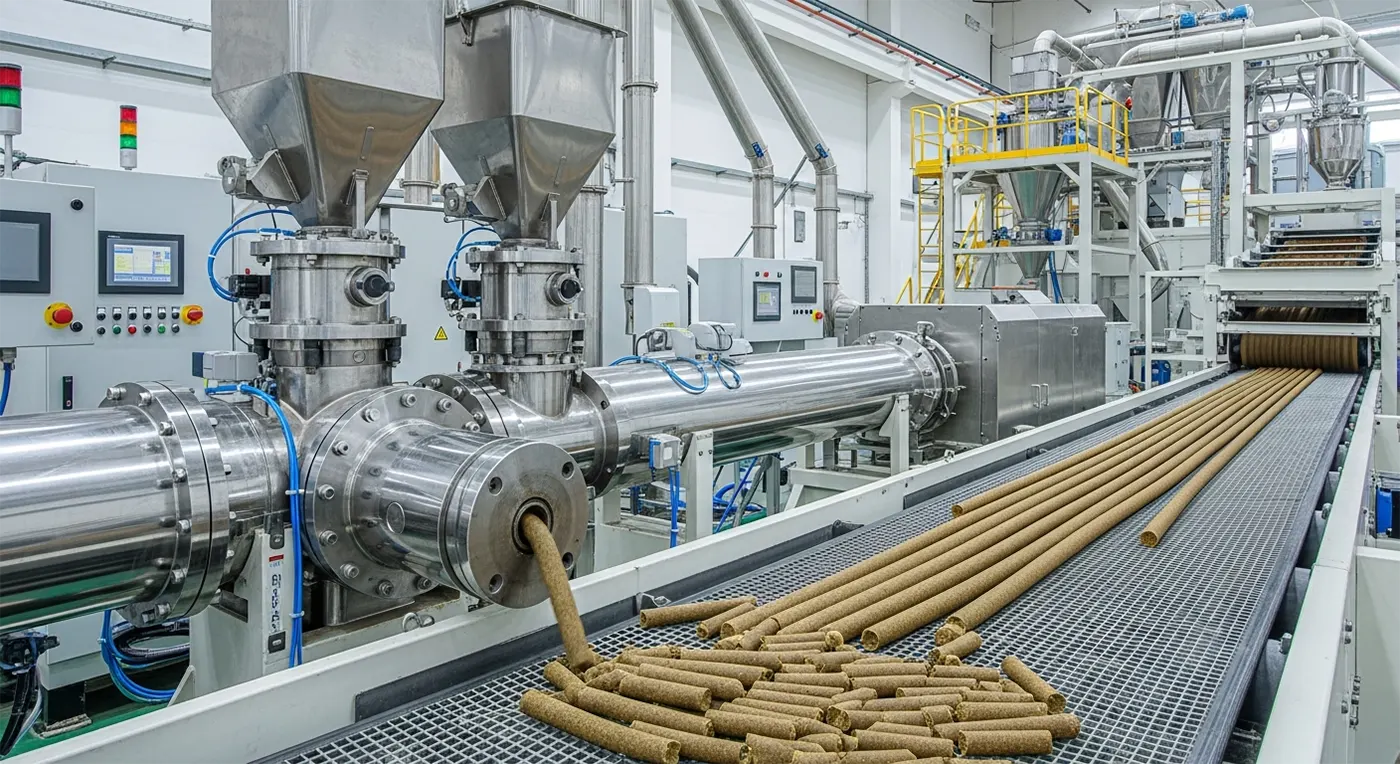
O avanço da tecnologia de extrusão integrada à granulação especializada e ao controle de formulação contribui para a adoção generalizada da extrusora de rosca dupla no moderno setor de fertilizantes. Utilizando um sistema sincronizado de rosca dupla, a extrusora transforma todos os tipos de materiais iniciais em pellets uniformes sustentáveis para linhas de produção de fertilizantes orgânicos e compostos. O processo de extrusão com materiais especiais consistentes melhora a escalabilidade da produção, reduz o consumo de energia e aumenta a continuidade da produção. Além disso, os mesmos princípios se aplicam à produção de vários alimentos, inclusive ração para peixes, demonstrando a aplicação intersetorial da extrusão de rosca. Visualizar:Os 25 principais fabricantes de extrusoras de parafuso duplo(Atualizado em 2026)
Introdução às extrusoras de rosca dupla
Em uma configuração de produção de fertilizantes, a extrusão de rosca dupla alcança uma forte produção de pellets com mistura precisa e controle de cisalhamento e temperatura. As extrusoras de rosca dupla oferecem melhor dispersão da matéria-prima em comparação com as extrusoras de rosca simples. As extrusoras de rosca dupla também oferecem a capacidade de processar materiais reativos e de alta umidade, comuns em fertilizantes orgânicos e alguma biomassa. O melhor desempenho a jusante dos granuladores de fertilizantes ou granuladores de extrusão, mantendo um bom desempenho energético ao longo da linha de produção, é resultado do fato de a extrusora processar uma gama mais ampla de formulações devido à configuração ideal do diâmetro do parafuso, do design do parafuso e do design do cilindro.
O que é uma extrusora de rosca dupla?
Uma extrusora de rosca dupla é uma extrusora de processamento contínuo que transporta, mistura e extrusa a matéria-prima usando roscas entrelaçadas e zonas controladas. Esse tipo de extrusora de rosca oferece mistura e desvolitalização significativas. Como resultado, a extrusão de misturas pode ser feita com alta precisão para fertilizantes, fertilizantes compostos, e fertilizantes orgânicos. Ao controlar o cisalhamento e o tempo de permanência em cada estágio do processo de extrusão, a extrusora de rosca dupla garante a uniformidade do tamanho do pellet, a densidade consistente e a granulação confiável. A modularidade permite mudanças rápidas na formulação para a produção de fertilizantes, bem como aplicações cruzadas, como extrusora de ração e extrusora de ração para peixes.
Principais recursos das extrusoras de rosca dupla
Algumas características notáveis das extrusoras de rosca dupla são o diâmetro ajustável da rosca, as roscas duplas giratórias ou contrarrotativas e o controle de temperatura específico da zona, que mantém a estabilização do processo de extrusão. Além disso, a combinação de acionamentos de alto torque e alimentadores precisos permite uma grande variedade de matérias-primas, de biomassa a minerais, com baixo consumo de energia e alto rendimento. Integrada facilmente com a dosagem a montante e o manuseio de pellets a jusante, a linha de extrusão é aprimorada ainda mais com um sistema de rosca dupla. A granulação é bastante aprimorada, e o potencial de produção de vários tamanhos de pellets é aumentado.
| Recurso/Aspecto | Detalhes |
|---|---|
| Configuração do parafuso | Parafusos duplos co- ou contra-rotativos; diâmetro do parafuso ajustável; elementos segmentados para mistura e amassamento |
| Controle de processos | O controle de temperatura específico da zona estabiliza a extrusão; acionamentos de alto torque e alimentadores precisos |
| Manuseio de materiais | Acomoda matérias-primas variadas, desde biomassa até sais minerais |
| Energia e integração | Baixo consumo de energia em relação à produção; integra-se à dosagem upstream e ao manuseio de pellets downstream |
| Desempenho em comparação com o parafuso único | Desempenho aprimorado com granulação consistente e capacidade escalonável para vários formatos de pellets |
Aplicações na produção de fertilizantes**
As extrusoras de rosca dupla na produção de fertilizantes desempenham a função de uma unidade de pré-condicionamento antes de um granulador de fertilizantes ou podem funcionar como um granulador de extrusão. Elas criam pellets de tamanho, porosidade e liberação de nutrientes específicos para formulações específicas de fertilizantes orgânicos e compostos. Eles têm o potencial de se destacar na produção de pellets estáveis a partir de materiais ricos em biomassa e misturas sensíveis à umidade. Elas ajudam a reter altos níveis de rendimento para a produção de pellets e a minimizar o consumo de energia. As plantas utilizam a tecnologia de extrusão de rosca dupla para acomodar as flutuações sazonais das matérias-primas. A avançada tecnologia de extrusão de rosca e os controles robustos para a produção de ração para peixes e grânulos flutuantes de ração para peixes foram usados com sucesso para produzir pellets estáveis a partir de uma variedade de misturas sensíveis à umidade.
O processo de extrusão de rosca dupla
Na produção de fertilizantes, a extrusão de rosca dupla combina aquecimento controlado, mistura e pressão adequada para transformar matérias-primas em pellets duráveis. O processo de extrusão em uma extrusora de rosca dupla começa com uma alimentação precisa, em que a máquina de extrusão mede uma mistura de fertilizante orgânico ou fertilizante composto no barril de extrusão. A umidade, a temperatura e o cisalhamento são sequencialmente divididos em zonas e controlados à medida que os materiais passam pelo granulador. A tecnologia de extrusão garante tamanho e densidade uniformes dos pellets. O consumo de energia e a capacidade de produção são monitorados e controlados para otimizar a linha de produção, garantindo uma produção consistente de pellets e um desempenho confiável do fertilizante.
Início do processo de extrusão de rosca dupla
O início da extrusão de rosca dupla exige a sincronização precisa da temperatura do cilindro e da velocidade da rosca com a dosagem da matéria-prima para atingir a mistura desejada. Os elementos de rosca dupla intercalados realizam o transporte, o amassamento e a desgaseificação para obter a dispersão total da biomassa e dos aditivos. A extrusora de rosca controla o tempo de residência para facilitar a aglutinação e a modelagem antes que o material seja extrudado em uma matriz. A jusante, o granulador ou cortador de extrusão determina o comprimento do pellet, garantindo a uniformidade. Há circuitos de feedback para ajustar e equilibrar o torque, o uso de energia e a pressão de fusão. A altura da rosca também é ajustável para acomodar diferentes formulações, garantindo uma produção consistente de fertilizantes sólidos em uma variedade de condições.
A variedade de materiais que podem ser usados na extrusão
A extrusão de materiais celulósicos, pastas de fertilizantes orgânicos, fibras de biomassa, minerais de sal e pré-misturas de micronutrientes para fertilizantes compostos são todos aceitos pela extrusão de rosca dupla. A extrusão de rosca não se importa com a umidade e permite a mistura de transportadores secos com orgânicos pegajosos para obter uma granulação estável. Os processadores podem usar aditivos de superfície, como agentes de liberação controlada, finos reciclados e aglutinantes para melhorar a qualidade dos pellets. O conhecimento adquirido na produção de rações, especialmente de peixes e rações flutuantes, ajudou a extrusora de rosca dupla no gerenciamento da água e no controle da porosidade na extrusão de materiais proteicos variados. As formulações em constante mudança podem ser incorporadas com a rosca dupla. É essa confiabilidade que fornece a tecnologia de extrusão para várias linhas de produção de fertilizantes.
Benefícios da rosca dupla em relação à rosca simples
Uma extrusora de rosca dupla oferece melhor mistura, auto-limpeza e melhor estabilidade de rendimento em comparação com uma extrusora de rosca simples. Esses fatores levam a uma melhor uniformidade do pellet e a uma melhor granulação. O design de rosca dupla em comparação com o design de rosca simples oferece melhor manuseio de misturas de maior umidade e mais reativas, que são comuns em fertilizantes orgânicos e biomassa, com menor risco de surtos. O cisalhamento e a transferência de calor aprimorados otimizam o consumo de energia e reduzem os defeitos. O aumento da devolatização reduz os defeitos e otimiza o consumo de energia. Um projeto modular, juntamente com o diâmetro da rosca e uma ampla variedade de elementos, permite mudanças rápidas nas formulações sem reduções no rendimento. Uma extrusora de rosca simples pode produzir receitas menos complicadas, enquanto uma extrusora de rosca dupla oferece recursos de processo mais amplos e melhor controle, o que é significativo para a extrusão de fertilizantes e rações associadas (por exemplo, extrusão de rações para peixes).
Aplicações na produção de fertilizantes orgânicos
A estabilidade da produção de pellets e o desempenho de insumos de produção variáveis são benefícios importantes da extrusão de rosca dupla para a fabricação de fertilizantes orgânicos. Uma extrusora de rosca dupla gerencia o condicionamento da biomassa junto com o esterco e os micronutrientes, ajustando os parâmetros de umidade e temperatura para extrudar grânulos coesos. A tecnologia de extrusão integrada permite que a linha de produção varie o diâmetro e a configuração do parafuso para melhor atender aos requisitos específicos da formulação. A extrusora de rosca dupla permite maior rendimento, ao mesmo tempo em que consome menos energia e oferece melhor controle de granulação em comparação com uma extrusora de rosca única. Do ponto de vista da extrusão única e do manuseio downstream, essa abordagem da fabricação de fertilizantes não tem paralelo.
Granulação de Fertilizante Orgânico
A granulação de fertilizantes orgânicos começa com uma extrusora de rosca, que mede as misturas de fertilizantes junto com as fibras orgânicas em zonas específicas para extrusão controlada em alta temperatura. Os elementos de rosca dupla entrelaçados amassam e dispersam e, por meio da desvolitilização, amolecem o aglutinante antes da extrusão por meio de uma matriz para peletizar e formar formatos uniformes. A técnica de extrusão de rosca dupla consegue uma granulação durável de biomassa sensível à umidade sem aglomeração ou finos. A extrusora também controla e modifica os parâmetros de tempo de residência e cisalhamento para criar pellets de densidades e tamanhos específicos e uniformes. Quando a extrusão em linha é associada ao monitoramento em tempo real dos insumos brutos, o processo de extrusão é capaz de manter o equilíbrio e a qualidade. O resultado final é um pellet uniforme que aumenta a produção e reduz o desperdício, ao mesmo tempo em que faz uma transição perfeita para uma peletizadora ou cortadora de fertilizantes.
Produção de pellets de fertilizantes
A extrusora de rosca dupla na produção de pellets é usada para peletizar vários tipos de fertilizantes por meio do controle da alimentação, da temperatura e da velocidade da rosca. O fertilizante é moldado em pellets robustos. A atividade de água e a porosidade, que determinam e controlam a liberação de nutrientes, podem ser personalizadas com diâmetros de rosca específicos e diferentes seleções de elementos. Uma linha de produção pode reduzir as deficiências operacionais durante a desvolatilização por meio da extrusão de biomas com alto teor de sólidos com aglutinantes e também pode fornecer grandes capacidades de produção com rendimento estável. A extrusora de rosca dupla, em comparação com um projeto de rosca única, permite tolerâncias de formulação mais amplas e, com seu corte uniforme, mantém um comprimento consistente dos pellets. O resfriamento a jusante reduz a deformação dos grânulos e contribui para o desempenho consistente do fertilizante. O estágio do granulador de extrusão finaliza a geometria do grânulo.
Vantagens da tecnologia de extrusão de rosca dupla para fertilizantes orgânicos
O uso de extrusoras de rosca dupla traz vários benefícios para os produtores, incluindo melhor mistura de matérias-primas, granulação consistente em uma variedade de teores de umidade e menor uso de energia devido ao melhor gerenciamento de calor. O projeto das extrusoras de rosca dupla inclui a autolimpeza, que minimiza o acúmulo, e oferece um projeto modular mais rápido para trocas rápidas de produtos, especialmente para diferentes misturas de biomassa e minerais. Por isso, os produtores experimentam uma produção consistente e estável de pellets, maior capacidade de produção e compatibilidade versátil com sistemas de granuladores de fertilizantes e granuladores de extrusão. Além disso, as extrusoras de rosca dupla são facilmente integradas a sensores que monitoram e controlam o torque, a pressão e a temperatura, de modo que os processos de extrusão permaneçam dentro dos parâmetros ideais definidos. Em geral, esses parâmetros tornam as extrusoras de rosca dupla significativamente melhores do que as extrusoras de rosca simples para a produção de fertilizantes.
Produção de ração para peixes usando extrusoras de rosca dupla
A extrusão de rosca dupla foi ampliada para a produção de ração, especialmente para ração para peixes, em que a formulação de pellets, sua flutuabilidade e a retenção de nutrientes são fundamentais. Uma extrusora de rosca dupla é capaz de realizar o cozimento, a gelatinização do amido e a expansão dos pellets e, portanto, com algumas alterações na receita, pode produzir ração flutuante para peixes e pellets que afundam, tudo na mesma linha de produção. A extrusora é capaz de processar uma ampla variedade de matérias-primas, incluindo proteínas, óleos e fibras, e produzir pellets com uniformidade e porosidade determinadas. Além do controle e da consistência aprimorados da porosidade, a extrusão de rosca dupla oferece mais controle térmico e mecânico do que a extrusão de rosca simples, o que, em última análise, proporciona maior consistência do processo e reduz os gastos com energia para melhorar o rendimento em relação à eficiência energética e à constância da qualidade.
Por que a qualidade da ração para peixes é importante?
A qualidade da ração usada na aquicultura está diretamente relacionada às taxas de crescimento, às taxas de conversão alimentar e à qualidade geral da água dos sistemas. Além disso, pellets de tamanho uniforme e uma dinâmica de afundamento projetada para cada espécie na hierarquia aumentam as taxas de alimentação e reduzem o desperdício. A extrusão de rosca dupla aprimorou o processo de extrusão com tecnologias que reduzem os níveis de energia de extrusão e de processo, aumentam o controle do sistema de alimentação e melhoram a eficiência energética geral da linha do sistema, ao mesmo tempo em que a extrusão é otimizada para produzir uma ração para peixes consistente e de qualidade com nutrientes adicionais, melhor digestibilidade e retenção de aminoácidos e gorduras. O desempenho geral é consistente com a utilização de energia em um processo controlado. Ajuste dos parâmetros da rosca e da mistura.
Produção e distribuição de ração flutuante para peixes
A extrusão de rosca dupla é usada para fabricar espuma e ração flutuante para peixes. A espuma é produzida por meio de um processo chamado expansão. A extrusora de espuma para ração de peixe é capaz de controlar o teor de umidade, a temperatura e a força de cisalhamento. A fabricação de pellets de espuma para ração de peixes é uma etapa da produção de ração para peixes. O uso da extrusora de espuma para ração pode ajudar os fabricantes de ração para peixes porque eles podem alterar e controlar várias características. As extrusoras de espuma de ração podem ser configuradas para controlar o diâmetro dos pellets de espuma de ração, a velocidade da rosca e a configuração da matriz. Essas variáveis ajudam a determinar o tempo que os grânulos de espuma de ração podem flutuar na água e a quantidade de óleo que a espuma de ração expelirá. As extrusoras de espuma de ração também podem ser trocadas por receitas que flutuam ou afundam, o que é ótimo porque os fabricantes podem personalizar a ração de acordo com suas necessidades. A última etapa, revestimento e secagem, são etapas extras que alguns fabricantes adotam para garantir a qualidade. Os métodos de controle variável usados na extrusão de espuma de ração para peixes também são usados na produção de pellets de fertilizantes, o que permite que os fabricantes garantam uma excelente qualidade.
A importância da tecnologia de rosca dupla para a extrusão de ração para peixes
Com a ração para peixes, a qualidade e a palatabilidade da ração são importantes, e garantir a melhor qualidade requer uma mistura superior e um melhor controle do cozimento e da desgaseificação. Esses atributos estão disponíveis com o uso da tecnologia de rosca dupla e a diferenciam da extrusora de rosca simples. Por exemplo, a medição uniforme da energia dos parafusos entrelaçados permite um melhor controle do cozimento excessivo e da destruição de patógenos. Além disso, a extrusora de rosca dupla otimiza a incorporação de óleos e microingredientes para fabricar um pellet homogêneo e nutricionalmente equilibrado. Além disso, a tecnologia avançada de extrusão permite o controle do tempo e da pressão para extrudar com sucesso rações para peixes que afundam e flutuam. Por fim, a automação integrada torna essa extrusora a mais vantajosa nas linhas de produção de ração, pois equilibra o uso mínimo de energia, o rendimento constante e as mudanças rápidas na formulação.
Configuração de uma linha de produção de fertilizantes
O estabelecimento de uma linha de produção de fertilizantes começa com a adequação da tecnologia de extrusão à estratégia de formulação e às especificações pretendidas para os grânulos. Os engenheiros avaliam a variabilidade da matéria-prima, as metas de umidade e os caminhos de granulação desejados para decidir como uma extrusora de rosca dupla se integra à dosagem, à secagem e a um granulador de fertilizante ou granulador de extrusão. O mapeamento claro do processo define os estágios de extrusão da rosca, as zonas de temperatura e a seleção do diâmetro da rosca para um rendimento flexível. O planejamento cuidadoso dos serviços públicos protege as metas de consumo de energia, enquanto a automação coordena os alimentadores, a máquina extrusora, os cortadores e os resfriadores. Essa base dá suporte à produção confiável de fertilizantes, à capacidade de produção escalonável e às transições perfeitas entre receitas de fertilizantes orgânicos e compostos.
Componentes de uma linha de produção de fertilizantes
Em geral, uma linha de produção completa inclui recepção e armazenamento de matéria-prima, alimentadores precisos, uma extrusora de rosca dupla ou extrusora de rosca, sistemas de corte e matriz e resfriamento, secagem e classificação a jusante. Acessórios como misturadores, tanques de pré-mistura e dosagem de aglutinantes garantem uma granulação estável antes que os pellets passem para um granulador de fertilizante ou granulador de extrusão, caso seja necessária uma modelagem secundária. Transportadores, circuitos de reciclagem de finos e peneiramento mantêm a consistência da produção de pellets. Sensores em linha monitoram o torque, a pressão e a umidade para estabilizar o processo de extrusão. Os controles integrados sincronizam os equipamentos para limitar o consumo de energia e proteger a capacidade de produção nas operações de fertilizantes orgânicos e compostos.
| Estágio/Componente | Objetivo/Função |
|---|---|
| Recebimento e armazenamento de matéria-prima | Retenção de entradas antes do processamento |
| Alimentadores (precisos) | Medição de materiais na extrusora |
| Extrusora de rosca dupla ou de rosca | Processar e moldar o material antes do corte |
| Sistemas de matrizes e cortadores | Forma e tamanho dos pellets |
| Resfriamento, secagem, classificação | Estabilizar e classificar pellets no fluxo descendente |
| Misturadores, tanques de pré-mistura, dosagem de aglutinantes | Garanta uma granulação estável |
| Fertilizante ou granulador por extrusão | Modelagem secundária quando necessário |
| Transportadores, reciclagem de finos, peneiramento | Manter a consistência e recuperar multas |
| Sensores em linha (torque, pressão, umidade) | Estabilizar o processo de extrusão |
| Controles integrados | Sincronizar equipamentos e limitar o uso de energia |
A adição de extrusoras de rosca dupla à linha de produção
A adição de uma extrusora de rosca dupla requer uma consideração cuidadosa dos componentes modulares de resfriamento e corte a jusante, bem como o alinhamento da produtividade da extrusora do sistema de enchimento. As extrusoras de rosca dupla modulares podem processar matérias-primas com alto teor de umidade e/ou ricas em minerais sem atrasos na produção. Os conjuntos ideais de matriz, ventilação e devolatização, juntamente com a classificação direcionada, podem ser usados para definir e controlar o tamanho e a densidade do pellet. A extrusora de rosca dupla se integra perfeitamente aos alimentadores automatizados para proporcionar tempo de residência e granulação consistentes. Com um granulador de fertilizante, ele pode pré-condicionar ou finalizar os pellets, dependendo da formulação. Os sistemas de controle inteligentes permitem uma estratégia de produção flexível com base em demandas sazonais variáveis de insumos. A produção ágil é mantida pelo controle do uso de energia, mantendo o rendimento da produção.
O processamento de ração animal
As operações que produzem fertilizantes e ração animal devem integrar fluxos de trabalho de coprodução, embora separados. Usando a mesma tecnologia de extrusão, uma extrusora de rosca dupla ou uma extrusora de ração dedicada pode produzir ração para peixes juntamente com (e dentro de) fertilizantes com higienização e troca dependentes da receita. Os parâmetros críticos incluem o diâmetro da rosca, a temperatura e a umidade, além do cisalhamento para reter os nutrientes na ração para peixes e, ao mesmo tempo, obter a durabilidade do pellet para o fertilizante. A expansão controlada é necessária para a ração flutuante para peixes, enquanto o fertilizante geralmente tem mais a ver com densidade e resistência. As utilidades compartilhadas, especialmente a extrusão, exigem uma distribuição cuidadosa da carga para otimizar o baixo consumo de energia. Os procedimentos operacionais padrão (SOPs) para o manuseio de matérias-primas, limpeza de matrizes de extrusão e controles de alergênicos permitem que os operadores extrudem várias famílias de alimentos de forma segura e consistente.
Tendências futuras na tecnologia de extrusão
A tecnologia de extrusão está avançando em direção a controles mais inteligentes, janelas de formulação mais amplas e ganhos de sustentabilidade que remodelam a produção de fertilizantes. As plataformas de extrusão de rosca dupla de última geração empregam controle preditivo de modelo para estabilizar o processo de extrusão sob condições variáveis de matéria-prima. A recuperação de energia, as geometrias de baixo atrito e o aquecimento adaptável reduzem o consumo de energia. As trocas sem ferramentas e os elementos modulares da rosca aceleram as transições entre fertilizantes orgânicos e compostos, protegendo a capacidade de produção. As melhorias na ciência dos materiais permitem aglutinantes e revestimentos adaptados aos perfis de liberação de pellets. A polinização cruzada da produção de ração e do processamento de ração para peixes acelera a inovação, expandindo o que os processadores podem extrudar com eficiência em arquiteturas de linhas de produção integradas.
Inovações em extrusoras de rosca dupla
As extrusoras de rosca dupla modernas usam acionamentos de alto torque e baixa RPM, metalurgia de barril avançada e sensores inteligentes ao longo do caminho de processamento. A inferência de viscosidade em tempo real, os harmônicos de torque e a análise de umidade orientam os ajustes automatizados para manter a qualidade da granulação. Os elementos de troca rápida e os módulos de diâmetro de parafuso variável expandem a versatilidade, enquanto os perfis de autolimpeza reduzem o tempo de inatividade. A detecção de falhas habilitada por IA prevê o desgaste da extrusora, da matriz e do cortador, preservando a estabilidade da produção de pellets. As seções de desvolatilização aprimoradas melhoram o manuseio de biomassa úmida e aditivos reativos. Juntos, esses avanços permitem a extrusão de formulações complexas com menos desperdício e desempenho de fertilizante mais consistente.
| Recurso | Benefício |
|---|---|
| Acionamentos de alto torque e baixa RPM; metalurgia avançada; sensores inteligentes | Processamento estável e melhor monitoramento ao longo do caminho de extrusão |
| Viscosidade em tempo real, harmônicos de torque, análise de umidade | Ajustes automatizados da rosca para manter a qualidade da granulação |
| Elementos de troca rápida; módulos de diâmetro de rosca variável | Maior versatilidade nas formulações e trocas mais rápidas |
| Perfis autolimpantes | Tempo de inatividade reduzido e manutenção mais fácil |
| Detecção de falhas habilitada para IA (extrusora, matriz, cortador) | Prevê o desgaste e preserva a estabilidade da produção de pelotas |
| Seções de desvolatilização aprimoradas | Manuseio aprimorado de biomassa úmida e aditivos reativos |
| Avanços gerais do sistema | Menor desperdício e mais consistente |
| desempenho do fertilizante |
Efeitos sobre a biomassa e as práticas sustentáveis
Em fertilizantes centrados em biomassa, os avanços com extrusoras de rosca dupla permitem maiores inclusões orgânicas sem comprometer a integridade dos pellets. O aumento da retenção de carbono e dos principais nutrientes, bem como o controle aprimorado da umidade e do cisalhamento, contribuem para níveis ideais de consumo de energia, transferência de calor e equilíbrio de torque. O desperdício também é reduzido devido ao sistema de circuito fechado. Além disso, a tecnologia de extrusão é compatível com aglutinantes de base biológica e revestimentos biodegradáveis, alinhando-se à produção circular de fertilizantes. Com a capacidade de extrudar várias matérias-primas, os processadores da fábrica mantêm as emissões sustentáveis, aumentam a capacidade de produção e melhoram economicamente o desempenho da pista de descarga em toda a linha de produção.
Mercados emergentes para máquinas extrusoras
O mercado em expansão de máquinas extrusoras em todas as regiões que integram a produção localizada de fertilizantes e rações para animais continua a crescer devido à demanda por agricultura e aquicultura sustentáveis. As extrusoras de dupla rosca menores são adequadas para a produção descentralizada de fertilizantes orgânicos. Em contrapartida, extrusoras maiores são necessárias para a produção de misturas e pellets na produção de fertilizantes compostos. Algumas fábricas híbridas têm uma extrusora de ração para peixes flutuante separada, além dos sistemas de fertilizantes, o que ajuda a aproveitar as vantagens combinadas das sinergias de engenharia e utilidade. O financiamento de tais fábricas tende a favorecer os sistemas de extrusão por rosca. A disponibilidade de treinamento de operadores devido aos padrões do setor, juntamente com a harmonização do sistema da fábrica, resulta em uma produção eficaz. A complexidade cada vez maior da logística da cadeia de suprimentos, combinada com a tendência de as fábricas terem a capacidade de extrudar vários materiais em uma única linha de produção, aumenta a justificativa comercial para o investimento, especialmente quando o fornecimento de matérias-primas e/ou materiais controlados por políticas não é confiável.


 English
  Spanish
  Japanese
  Korean
  German
  Portuguese
  Italian
  Indonesian
  Vietnamese
  Turkish
  Persian
  Russian
  Chinese