
テーブルの内容
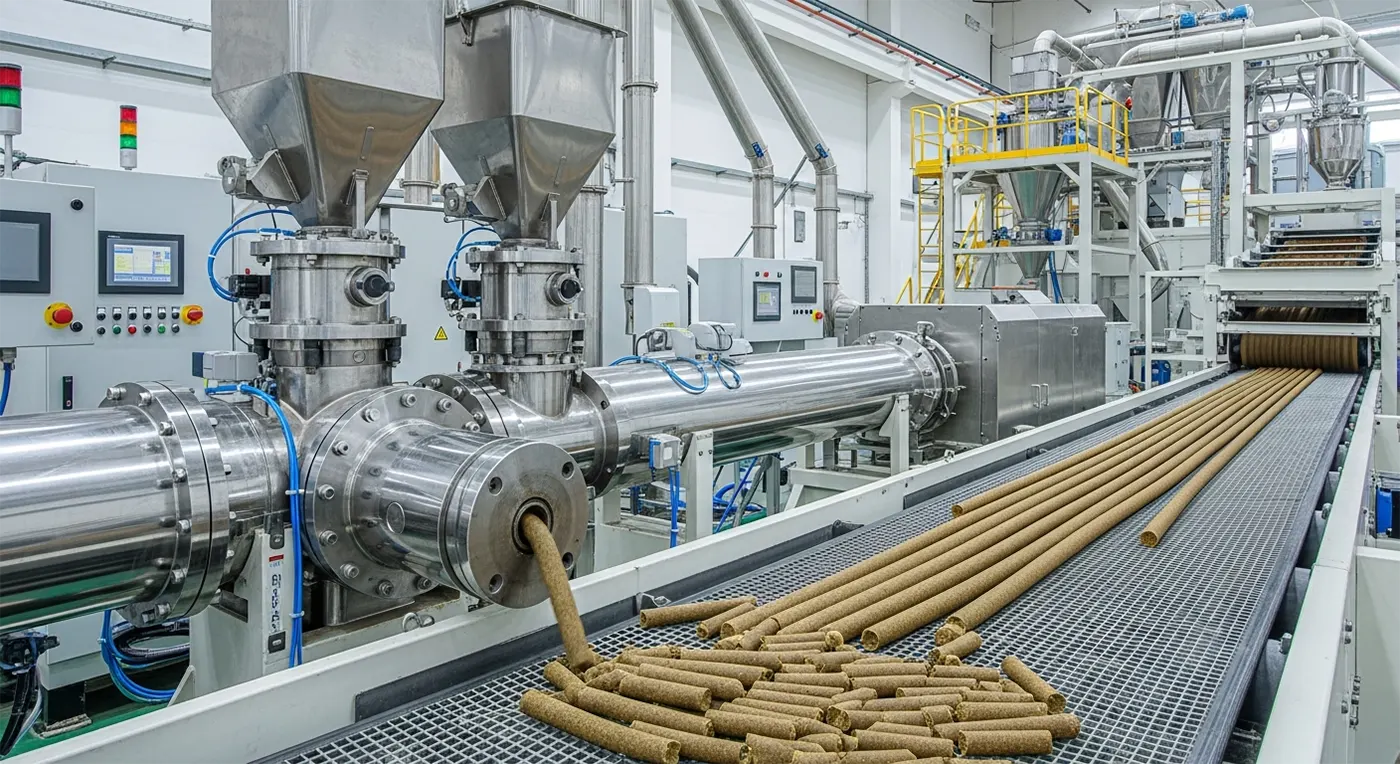
特殊な造粒と配合制御を統合した押出技術の進歩により、現代の肥料業界では二軸押出機が広く採用されています。同期化された二軸スクリューシステムを利用することで、押出機はあらゆる種類の出発原料を有機肥料や化成肥料の生産ライン用の持続可能な均一ペレットにします。一貫した特殊材料による押出工程は、生産の拡張性を向上させ、エネルギー消費量を削減し、生産の継続性を高めます。さらに、同じ原理が魚の飼料を含む様々な飼料の生産にも適用され、スクリュー押出の産業横断的な応用が実証されています。 表示二軸押出機メーカートップ25社(2026年最新版)
二軸押出機の紹介
肥料製造の現場において、二軸スクリュー押出機は、正確な混合、制御されたせん断と温度により、強力なペレット製造を実現します。二軸スクリュー押出機は、一軸スクリュー押出機に比べて原料の分散性が向上します。また、二軸スクリュー押出機は、肥料製造に一般的な高水分・高反応性原料を処理する能力も備えています。 有機肥料 および一部のバイオマス。生産ラインに沿って良好なエネルギー性能を維持しながら、肥料造粒機または押出造粒機の下流性能が向上するのは、最適に構成されたスクリュー直径、スクリュー設計、およびバレル設計により、押出造粒機がより幅広い処方を処理する結果である。.
二軸押出機とは?
二軸スクリュー押出機は、噛み合うスクリューと制御されたゾーンを用いて原料を搬送、混合、押出す連続加工押出機である。このタイプのスクリュー押出機は、大幅な混合と脱粒を実現する。その結果、肥料のブレンド押出を高い精度で行うことができる、, 複合肥料, および有機肥料に適しています。押出工程の各段階でせん断と滞留時間を制御することにより、二軸スクリュー押出機はペレットサイズの均一性、一貫した密度、信頼性の高い造粒を保証します。モジュール式であるため、肥料製造のための迅速な配合変更が可能であり、飼料押出機や養魚飼料押出機のようなクロスオーバー用途も可能です。.
二軸押出機の主な特徴
二軸スクリュー押出機の特長は、スクリュー径の調整が可能であること、二軸スクリューが共回りまたは逆回転すること、ゾーンごとに温度制御が可能であることなどが挙げられます。また、高トルクドライブと精密なフィーダーの組み合わせにより、バイオマスから鉱物まで、多種多様な原料を低エネルギー消費で高生産することができます。上流のドージングや下流のペレットハンドリングと容易に統合できるツインスクリューシステムにより、押出ラインはさらに強化されます。造粒性が大幅に向上し、様々なサイズのペレットの生産可能性が高まります。.
| 特徴/側面 | 詳細 |
|---|---|
| スクリュー構成 | 共回りまたは逆回転ツインスクリュー、スクリュー径調整可能、混合・混練用分割エレメント |
| プロセス制御 | ゾーン別温度制御による押出の安定化、高トルク駆動と精密フィーダー |
| マテリアルハンドリング | バイオマスからミネラル塩まで多様な原料に対応 |
| エネルギーと統合 | 生産量に対するエネルギー消費量が低い。上流のドージングと下流のペレットハンドリングと統合可能。 |
| 性能対シングルスクリュー | 安定した造粒と複数のペレットフォーマットに対応するスケーラブルな容量で、性能を強化 |
肥料生産における応用**
肥料製造における二軸スクリュー押出機は、肥料造粒機の前の前処理装置の役割を果たすこともあれば、押出造粒機として機能することもあります。二軸スクリュー押出機は、有機肥料や化成肥料の特定の配合に対して、特定のサイズ、空隙率、栄養分放出量のペレットを製造します。バイオマスが豊富な材料や、水分の影響を受けやすい混合物から安定したペレットを製造するのに優れています。また、ペレット製造の高い処理能力を維持し、エネルギー消費を最小限に抑えることができる。工場では、原料の季節変動に対応するため、二軸押出技術を利用しています。養魚飼料や浮遊性養魚飼料顆粒を生産するための高度なスクリュー押出技術と堅牢な制御は、水分の影響を受けやすい様々なブレンドから安定したペレットを生産するのに成功しました。.
二軸押出のプロセス
肥料の製造において、二軸押出成形は制御された加熱、混合、適切な圧力を組み合わせ、原料を耐久性のあるペレットに変えます。二軸スクリュー押出機の押出プロセスは、押出機が有機肥料または複合肥料の混合物を押出バレルに計量する正確な供給から始まります。水分、温度、せん断は、材料が造粒機を通過する際に順次ゾーン分けされ、制御されます。押出技術は、均一なペレットサイズと密度を保証します。エネルギー消費量と生産能力は、生産ラインを最適化するために監視・制御され、安定したペレット生産と信頼できる肥料性能を保証します。.
二軸スクリュー押出しのプロセスを開始する
二軸スクリュー押出成形を開始するには、バレル温度とスクリュー回転数を原料の投入量と正確に同期させ、目標混合量に到達させる必要があります。バイオマスと添加物の完全な分散を達成するために、噛み合い式二軸スクリューエレメントが搬送、混練、脱気を行います。スクリュー押出機は、材料がダイに押し出される前に、滞留時間を制御して結合と成形を促進します。下流では、押出造粒機またはカッターによってペレットの長さが決定され、均一性が確保される。トルク、エネルギー使用量、溶融圧力を調整し、バランスをとるためのフィードバックループがあります。スクリューの高さも調整可能で、さまざまな配合に対応できるため、さまざまな条件下で安定した固形肥料を生産することができます。.
押出成形に使用できる材料の範囲
セルロース系原料、有機肥料スラリー、バイオマス繊維、塩類ミネラル、複合肥料用微量栄養素のプレミックスなどの押出成形は、すべて二軸スクリュー押出成形で可能です。スクリュー押出しは水分を気にせず、乾燥した担体と粘着性のある有機物を混合して安定した造粒を行うことができる。加工業者は、放出制御剤、再生微粉、結合剤などの表面添加剤を使用して、ペレットの品質を向上させることができる。飼料、特に魚類飼料や浮遊性飼料の生産で得られた知識は、様々なタンパク質性原料の押出成形における水の管理と空隙率の制御において、二軸スクリュー押出機に役立っている。変化する配合も二軸スクリューで組み込むことができます。この信頼性こそが、様々な肥料製造ラインに押出技術を提供しているのです。.
ツインスクリューとシングルスクリューの利点
二軸スクリュー押出機は、一軸スクリュー押出機と比較して、混合性、自己拭き取り性、スループットの安定性に優れています。これらの要因により、ペレットの均一性が向上し、造粒が改善されます。一軸スクリューよりも二軸スクリューの方が、有機肥料やバイオマスによく見られる高水分・高反応性ブレンドのハンドリングに優れ、サージング発生のリスクも低くなります。熱せん断と熱伝達の改善により、エネルギー消費が最適化され、欠陥が減少します。脱揮の増加により、欠陥が減少し、エネルギー消費が最適化されます。スクリュー径とエレメントの幅広い選択肢を備えたモジュール設計により、スループットを低下させることなく、配合を迅速に変更できます。単軸スクリュー押出機では複雑な配合が可能ですが、二軸スクリュー押出機では、肥料や関連飼料の押出成形(魚用飼料の押出成形など)において重要な、幅広いプロセス能力と優れた制御性が得られます。.
有機肥料生産への応用
有機肥料の製造における二軸押出機の重要な利点は、ペレット出力の安定性と生産投入量の変化に対する性能です。二軸押出機は、バイオマスを肥料や微量栄養素とともに調整し、水分と温度のパラメーターを調整して、凝集性のある顆粒を押し出します。統合押出技術により、生産ラインはスクリューの直径と構成を変えることができ、特定の配合要件により適合させることができる。ツイン・スクリュー押出機は、シングル・スクリュー押出機と比較して、エネルギー消費を抑え、造粒制御を改善しながら、処理能力を向上させることができます。単一の押出と下流のハンドリングの観点から、肥料製造へのこのアプローチは比類のないものです。.
有機肥料の粒状化
有機肥料の造粒はスクリュー押出機から始まり、有機繊維とともに混合肥料を所定のゾーンに計量し、制御された高温押出を行います。噛み合うツインスクリューエレメントが混練と分散を行い、脱重合によってバインダーを軟化させた後、ダイを通して押し出し、ペレット化して均一な形状にします。二軸スクリュー押出技術は、凝集や微粉のない、水分に敏感なバイオマスの耐久性のある造粒を実現します。押出機はまた、滞留時間とせん断のパラメーターを制御・変更して、特定の均一な密度とサイズのペレットを設計する。インライン押出と原料投入のリアルタイム監視を組み合わせることで、押出工程はバランスと品質を維持することができます。その結果、生産性を向上させ、廃棄物を削減しながら、下流の肥料ペレタイザーや裁断機へとシームレスに移行する均一なペレットが出来上がります。.
肥料ペレット製造
ペレット製造における二軸押出機は、フィード、温度、スクリュー速度を制御することにより、様々な種類の肥料をペレット化するために使用されます。肥料は頑丈なペレットに成形されます。栄養素の放出を決定し制御する水分活性と空隙率は、特定のスクリュー直径と異なるエレメントの選択によってカスタマイズすることができます。生産ラインは、高固形分のバイオマスをバインダーと一緒に押し出すことで、脱揮中の操作上の欠陥を減らすことができ、また、安定した処理能力で大きな生産能力を提供することができます。二軸スクリュー押出機は、一軸スクリューと比較して、配合公差が広く、均一なカッティングによりペレットの長さを一定に保つことができます。下流の冷却はペレットの変形を減らし、肥料の安定した性能をサポートします。押出造粒機ステージは、ペレット形状を仕上げます。.
有機肥料の二軸押出技術の利点
二軸スクリュー押出機の使用は、原料の混合を改善し、様々な含水率で安定した造粒を行い、熱管理を改善することでエネルギー使用量を削減するなど、生産者にとって複数の利点があります。二軸スクリューの設計には、蓄積を最小限に抑えるセルフワイピングが含まれ、特にバイオマスとミネラルの異なる混合物に対して、迅速な製品交換を可能にするモジュール設計を提供します。このため、生産者はペレットの安定した生産、生産能力の向上、肥料造粒機と押出造粒機の両方のシステムとの多目的な互換性を体験できます。さらに、二軸スクリュー押出機は、トルク、圧力、温度を監視・制御するセンサーと容易に統合できるため、押出工程は定義された最適パラメータ内に維持されます。全体として、これらのパラメータにより、二軸スクリュー押出機は単軸スクリュー押出機よりも肥料製造において著しく優れています。.
二軸スクリュー押出機による養魚飼料製造
二軸スクリュー押出成形は、ペレットの配合、浮力、栄養素の保持が重要な飼料製造、特に魚の飼料製造に広がっている。二軸スクリュー押出機は、ペレットの調理、デンプンのゲル化、膨張を行うことができるため、いくつかのレシピを変更することで、浮く魚用飼料と沈むペレットをすべて同じ生産ラインで生産することができる。エクストルーダーは、タンパク質、油、繊維を含む幅広い原料を処理することができ、決められた均一性と空隙率のペレットを製造することができる。空隙率の制御と均一性の向上に加え、二軸スクリュー押出しは一軸スクリュー押出しよりも熱的・機械的制御が可能であり、最終的にプロセスの一貫性を向上させ、エネルギー支出を削減し、スループット対エネルギー効率と品質の安定性を向上させます。.
なぜ魚の飼料の品質が重要なのか?
水産養殖で使用される飼料の質は、成長率、飼料転換率、システム全体の水質に直結する。さらに、均一なサイズのペレットと、階層内の各生物種用に設計されたシンキングダイナミクスは、給餌率を高め、無駄を削減します。ツインスクリュー押出しは、押出しとプロセスのエネルギーレベルを低減し、飼料システムの制御を高め、システム全体のラインエネルギー効率を向上させる技術で押出しプロセスを改善しました。 アミノ酸 と脂肪。全体的な性能は、制御されたプロセスにおけるエネルギー利用と一致している。スクリューのパラメータと混合を調整します。.
浮遊魚用飼料の生産と販売
二軸押出成形は、発泡スチロールと浮遊性魚類用飼料の製造に使用される。発泡は膨張と呼ばれる過程を経て製造される。養魚飼料発泡押出機は、含水率、温度、せん断力を制御することができる。養魚飼料発泡ペレットの製造は、養魚飼料製造のステップです。飼料発泡押出機を使用すると、いくつかの特性を変更および制御できるため、魚の飼料製造に役立ちます。発泡飼料押出機は、発泡飼料ペレットの直径、スクリュー速度、およびダイの構成を制御するように設定することができる。これらの変数は、発泡飼料ペレットが水に浮く時間や、発泡飼料が排出する油の量を決定するのに役立つ。発泡飼料押出機は、浮くレシピと沈むレシピに切り替えることもでき、メーカーがニーズに合わせて飼料をカスタマイズできるのは素晴らしいことです。最後の工程であるコーティングと乾燥は、メーカーによっては品質を確保するために余分に行う工程である。発泡魚用飼料の押出成形で使用される可変制御法は、肥料のペレット製造でも使用されており、メーカーは優れた品質を確保することができる。.
養魚飼料押出におけるツインスクリュー技術の重要性
魚用飼料では、飼料の品質と嗜好性が重要であり、最高の品質を保証するには、優れた混合、調理とガス抜きの優れた制御が必要です。このような特性は、二軸スクリュー技術を使用することで得られるものであり、一軸スクリュー押出機とは異なるものである。例えば、かみ合ったスクリューが均一にエネルギーを供給することで、過加熱や病原菌の破壊をよりうまくコントロールすることができる。さらに、二軸スクリュー押出機は、栄養バランスのとれた均質なペレットを製造するために、油分や微量成分の混入を最適化する。さらに、高度な押出技術により、時間と圧力の両方を制御し、沈む魚用飼料と浮く魚用飼料の両方をうまく押出すことができます。最後に、統合的な自動化により、最小限のエネルギー使用、安定した処理能力、迅速な配合変更のバランスがとれたこのエクストルーダーは、飼料生産ラインにおいて最も有益なものとなっています。.
肥料製造ラインの立ち上げ
肥料製造ラインの確立は、押出技術を配合戦略や意図するペレット仕様に適合させることから始まります。エンジニアは、原料のばらつき、目標水分量、希望する造粒経路を評価し、二軸スクリュー押出機と投入、乾燥、肥料造粒機または押出造粒機との統合方法を決定します。明確なプロセスマッピングにより、スクリュー押出段階、温度ゾーン、スクリュー直径の選択を定義し、柔軟な処理能力を実現します。入念なユーティリティ計画がエネルギー消費目標を守り、自動化がフィーダー、押出機、カッター、冷却器を調整します。この基盤は、信頼性の高い肥料生産、拡張可能な生産能力、有機肥料と化成肥料のレシピ間のシームレスな移行をサポートします。.
肥料製造ラインの構成要素
完全な生産ラインには通常、原料の受け入れと貯蔵、精密なフィーダー、二軸押出機またはスクリュー押出機、ダイとカッターシステム、および下流の冷却、乾燥、分級が含まれます。ミキサー、プレミックスタンク、結合剤添加などの補助装置は、ペレットが肥料造粒機または二次成形が必要な場合は押出造粒機に移る前の安定した造粒を保証します。コンベヤー、微粉リサイクルループ、ふるい分けは、ペレット生産の一貫性を維持します。インラインセンサーがトルク、圧力、水分をモニターし、押出プロセスを安定させます。統合制御は、有機肥料と化成肥料の両方の作業において、エネルギー消費を制限し、生産能力を保護するために機器を同期化します。.
| ステージ/コンポーネント | 目的/機能 |
|---|---|
| 原材料の受け入れと保管 | 処理前に入力を保持する |
| フィーダー(精密) | 押出機に材料を計量する |
| 二軸またはスクリュー押出機 | 切断前の材料の加工と成形 |
| ダイ・カッターシステム | ペレットの形状とサイズ |
| 冷却、乾燥、分類 | ペレットの下流での安定化と選別 |
| ミキサー、プレミックスタンク、バインダー注入 | 安定した造粒 |
| 肥料または押出造粒機 | 必要に応じてセカンダリー・シェイピング |
| コンベヤー, 微粉リサイクル, ふるい分け | 一貫性の維持と罰金の回収 |
| インラインセンサー(トルク、圧力、水分) | 押出工程の安定化 |
| 統合制御 | 機器を同期させ、エネルギー使用を制限する |
生産ラインへの二軸押出機の追加
二軸スクリュー押出機の追加には、モジュラー冷却と切断の下流コンポーネント、およびフィラーシステム押出機のスループットアライメントを慎重に検討する必要があります。モジュール式二軸スクリュー押出機は、高水分やミネラルを多く含む原料をスループットの遅延なしに処理することができます。最適なダイ、ベント、脱揮セット、および目標分級を使用して、ペレットのサイズと密度を設定し、制御することができます。二軸スクリュー押出機は、自動フィーダーとシームレスに統合され、安定した滞留時間と造粒を実現します。肥料造粒機を使用すれば、配合に応じてペレットの前処理や仕上げを行うことができます。インテリジェントな制御システムにより、季節ごとに変化する投入需要に基づいた柔軟な生産戦略が可能になります。生産量を維持しながらエネルギー使用量を制御することで、機動的な生産が維持されます。.
動物飼料の加工
肥料と家畜飼料を生産する事業所は、共同生産ワークフローを統合する必要がある。同じ押出技術を使用することで、二軸押出機または飼料専用押出機は、レシピに依存したサニテーションと切り替えを行いながら、肥料と並行して(あるいは肥料の中で)飼料を養殖することができる。重要なパラメータには、スクリューの直径、温度、水分、および肥料用のペレットの耐久性を達成しながら魚用飼料の栄養素を保持するためのせん断が含まれる。魚の浮遊飼料には膨張の制御が必要であり、肥料は一般的に密度と強度が重要である。共有のユーティリティー、特に押し出しは、エネルギー消費を低く最適化するために、慎重な負荷分散が必要である。原材料の取り扱い、押出ダイスの洗浄、アレルゲンの管理に関する標準作業手順書(SOP)により、オペレーターは複数の食品ファミリーを安全かつ一貫して押出すことができる。.
押出技術の将来動向
押出技術は、よりスマートな制御、より広い配合枠、肥料生産を再構築する持続可能性の向上を目指して進歩している。次世代の二軸スクリュー押出プラットフォームは、モデル予測制御を採用し、原料条件が変化する押出工程を安定させます。エネルギー回収、低摩擦形状、適応加熱により、エネルギー消費を削減します。ツールレス・チェンジオーバーとモジュラースクリューエレメントは、有機肥料と複合肥料の切り替えを迅速化し、生産能力を保護します。材料科学の改善により、ペレットの放出プロファイルに合わせたバインダーやコーティングが可能になる。飼料生産と養魚飼料加工の相互受粉により技術革新が加速され、加工業者が統合生産ライン構造全体で効率的に押出成形できるものが拡大されます。.
二軸押出機の革新
最新の二軸スクリュー押出機は、高トルク、低回転のドライブ、高度なバレル冶金学、および処理経路に沿ったスマートセンサーを使用しています。リアルタイムの粘度推論、トルクハーモニクス、水分分析は、造粒品質を維持するための自動調整をガイドします。ラピッドスワップエレメントと可変スクリュー径モジュールが汎用性を拡大し、セルフクリーニングプロファイルがダウンタイムを削減します。AI対応の故障検出機能により、押出機、ダイ、カッターの摩耗を予測し、ペレット生産の安定性を維持します。強化された脱揮セクションは、湿ったバイオマスや反応性添加物の取り扱いを改善します。これらの進化により、複雑な配合でも廃棄物を減らし、より安定した肥料性能を発揮する押出成形が可能になります。.
| 特徴 | ベネフィット |
|---|---|
| 高トルク、低回転ドライブ、高度な冶金学、スマートセンサー | 安定した加工と押し出し経路のモニタリングの向上 |
| リアルタイム粘度、トルク高調波、水分分析 | 造粒品質を維持するための自動スクリュー調整 |
| ラピッドスワップエレメント、可変スクリュー径モジュール | 配合の多様性と切り替えの迅速化 |
| セルフクリーニング・プロファイル | ダウンタイムの削減とメンテナンスの容易化 |
| AIによる故障検出(押出機、ダイ、カッター) | 摩耗を予測し、ペレット生産の安定性を維持 |
| 脱揮セクションの強化 | 湿潤バイオマスおよび反応性添加物の取り扱いを改善 |
| システム全体の進歩 | 廃棄物の削減と一貫性の向上 |
| 肥料の性能 |
バイオマスへの影響と持続可能な実践
バイオマス中心の肥料では、二軸スクリュー押出機の進歩により、ペレットの完全性を損なうことなく、より多くの有機物を含有させることが可能になりました。炭素と主要栄養素の保持率が向上し、水分とせん断の制御が改善されたことで、エネルギー消費、熱伝達、トルクバランスの最適レベルが向上しました。また、クローズド・ループ・システムにより、廃棄物も削減される。さらに、押出成形技術は、バイオベースのバインダーや生分解性コーティング剤と互換性があり、肥料の循環生産に合致している。様々な原料を押出成形する能力により、プラント加工業者は持続可能な排出を維持し、生産能力を高め、生産ライン全体を通して排出レーンの性能を経済的に向上させることができる。.
押出機の新興市場
持続可能な農業と水産養殖の需要により、肥料と動物飼料の局地的生産を統合する押出機の市場は、地域全体で拡大を続けている。小型の二軸スクリュー押出機は、分散型の有機肥料生産に適している。一方、配合肥料製造におけるブレンドやペレットの製造には、より大型の押出機が必要となる。ハイブリッド・プラントの中には、肥料システムとは別にフロート式養魚飼料押出機を備えているものもあり、エンジニアリングとユーティリティの相乗効果による複合的な利点を生かすのに役立っている。このようなプラントの資金調達は、スクリュー押出システムに有利な傾向がある。プラントのシステム調和と相まって、業界標準によるオペレーター・トレーニングが利用できるため、効率的な生産が可能になる。サプライチェーン・ロジスティクスの複雑化は、プラントが単一の生産ラインで様々な材料を押出成形する能力を持つ傾向と相まって、特に原料や政策管理された材料の供給が不安定な場合に、投資のためのビジネスケースを強化する。.


 English
  Spanish
  Japanese
  Korean
  German
  Portuguese
  Italian
  Indonesian
  Vietnamese
  Turkish
  Persian
  Russian
  Chinese