

sommario
Un container di fertilizzante “biologico” esce dalla fabbrica, viaggia per tre settimane e poi non supera i test sui metalli pesanti al porto di destinazione — o, peggio ancora, viene respinto durante la verifica degli input da parte dell’ente di certificazione dopo che lo avete già rivenduto. Il deposito è andato perso, l’acquirente è arrabbiato e i documenti non tornano. Per un importatore, il rischio raramente si limita a un solo container difettoso: si traduce in un ritardo doganale, in un reclamo da parte dell’acquirente, nel rifiuto della verifica delle materie prime biologiche o in un problema di qualità che si ripete negli ordini successivi.
Questo esito è quasi sempre evitabile già in fase di approvvigionamento. Questa checklist ti fornisce sette controlli concreti da effettuare prima di effettuare un bonifico per il pagamento di un acconto: cosa richiedere per iscritto, come verificare che una dichiarazione di provenienza biologica sia veritiera e quali condizioni commerciali distinguere un produttore da un punto vendita che rivende borse di altri marchi.
Come utilizzare questo articolo: Consideratela come una lista di controllo per gli acquisti, non come una consulenza legale o in materia di certificazione. L'approvazione definitiva deve sempre essere verificata con il vostro acquirente, le norme del mercato di destinazione e le biologico ente di certificazione responsabile dell'attività di utilizzo finale.
Lista di controllo rapida in 7 punti per la verifica dei fornitori
Di seguito sono riportati tutti i dettagli relativi a ciascuna verifica. Utilizzate questa tabella come sintesi di riferimento o come base per il foglio di approvazione descritto al punto 7.
| Controlla | Cosa chiedere | Segnale d'allarme |
|---|---|---|
| 1. COA | Certificato di analisi recente specifico per il lotto, con numero di lotto, valori nutrizionali, umidità, pH, rapporto C/N e metalli pesanti. | Viene fornito solo un opuscolo o una scheda con i valori indicativi. |
| 2. Dichiarazione di provenienza biologica | Certificato o elenco degli ingredienti in cui sia indicato il nome esatto del prodotto o della formulazione. | Il certificato copre l'azienda ma non il prodotto indicato. |
| 3. Adeguamento al mercato | Documentazione riconosciuta dal mercato di destinazione dell'acquirente e ente di certificazione biologica. | Il fornitore sostiene che un unico certificato sia valido ovunque. |
| 4. Verifica in fabbrica | Documentazione relativa alla linea di produzione, capacità produttiva, processo di controllo qualità, campioni conservati e possibilità di ricorrere a ispezioni da parte di terzi. | Il fornitore evita di rispondere a domande relative ai video in diretta, alle ispezioni o alla tracciabilità dei lotti. |
| 5. Condizioni commerciali | Quantità minima d'ordine (MOQ), Incoterms, condizioni di pagamento, imballaggio, protezione dall'umidità e piano di carico. | Prezzo basso ma condizioni poco chiare relative al trasporto, all'imballaggio o all'umidità. |
| 6. Analisi dei campioni | Campione rappresentativo sottoposto a analisi da parte di un laboratorio indipendente prima di effettuare un nuovo ordine. | Il fornitore scoraggia l'esecuzione di test indipendenti. |
| 7. Modello riutilizzabile | Un foglio di conferma da compilare prima di ogni versamento. | Le decisioni si basano esclusivamente sulla cronologia delle chat o sulle promesse dei venditori. |
1. Inizia dal COA, non dalla brochure
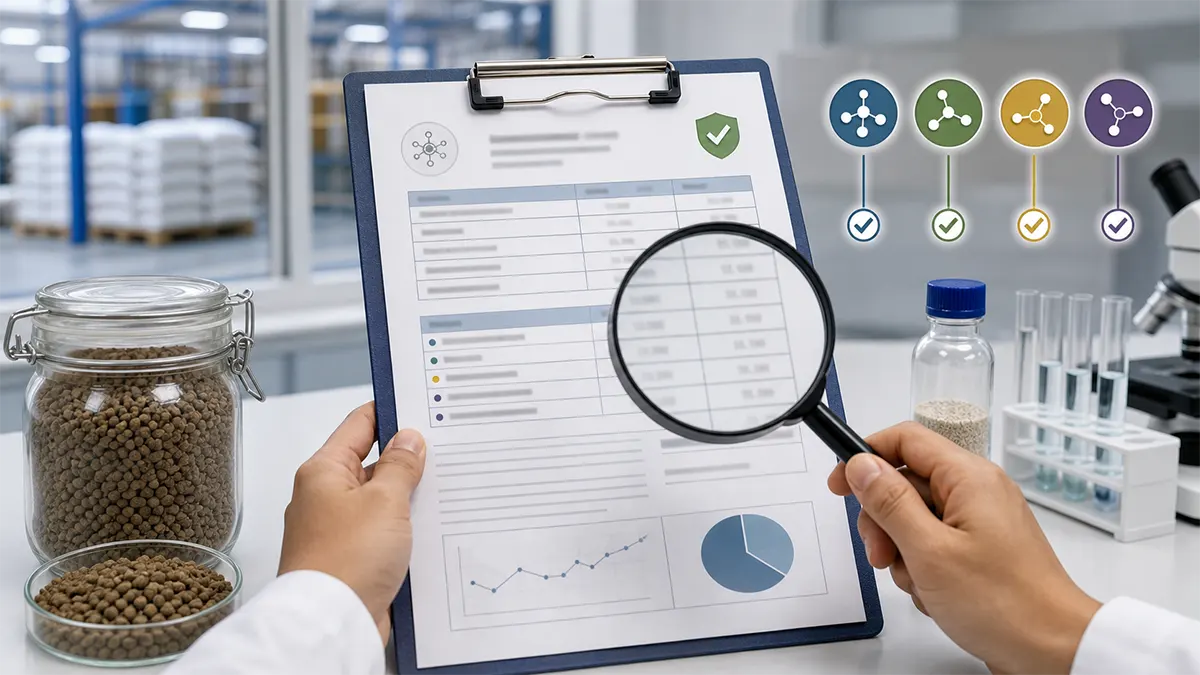
Il certificato di analisi ti fornisce più informazioni in una sola pagina di quante ne contenga un catalogo patinato in venti. Un fornitore che esita a inviarti un certificato di analisi recente e specifico per il lotto prima che tu effettui l'ordine ti sta dicendo qualcosa. Una volta ricevuto, sapere Come leggere il COA riga per riga—le linee che determinano l’accettazione o il rifiuto—costituiscono di per sé un controllo. Per un primo ordine, non affidarti a una scheda generica dei “valori tipici”: richiedi un certificato di analisi (COA) riferito a un lotto di produzione reale o a un campione conservato.
Leggi prima queste righe:
| Leggere prima la riga COA | Base | Perché è importante |
|---|---|---|
| Sostanza organica % + nutrienti totali (N+P₂O₅+K₂O) | Su base secca | Valori di riferimento della norma cinese NY/T 525: sostanza organica ≥30%, nutrienti totali ≥4%, umidità ≤30%. Un certificato di analisi (COA) che non soddisfi i requisiti della norma NY/T 525 non può essere legalmente commercializzato come “fertilizzante organico” nemmeno all’interno della Cina. |
| Contenuto di umidità | Così come consegnato | Un elevato contenuto di umidità aumenta il peso e favorisce la formazione di grumi e muffa durante il trasporto marittimo, che dura dai 30 ai 40 giorni. È opportuno stabilire un limite massimo contrattuale, preferibilmente inferiore al limite massimo previsto dal destinatario o dall'acquirente. |
| Metalli pesanti: Cd, Pb, As, Hg | Superamento del limite di destinazione | Queste quattro sono le cause più frequenti di rifiuto delle spedizioni in dogana e durante la verifica da parte dell'ente di certificazione. Confronta il valore indicato sul certificato di analisi (COA) con il limite numerico attualmente in vigore nel tuo mercato: non accettare mai la dicitura “rientra negli standard” senza che sia specificato il valore numerico. |
| pH e rapporto C/N | Per lotto, non per gamma di catalogo | Indica maturità e stabilità; il materiale non maturo continua a decomporsi nel sacco, generando calore e gas durante il trasporto. |
| Agenti patogeni: E. coli + Salmonella | Per lotto | Obbligatorio per qualsiasi prodotto derivato da letame o compost ai sensi delle norme UE e USDA NOP. Verificare che l'ambito di accreditamento del laboratorio comprenda le analisi relative agli agenti patogeni. |
Per quanto riguarda specificamente i limiti relativi ai metalli pesanti: l'UE stabilisce i limiti massimi per il cadmio e altri metalli pesanti nei prodotti fertilizzanti ai sensi del Regolamento (UE) 2019/1009, mentre gli Stati Uniti si attengono alle norme sugli input previste dal programma NOP dell'USDA (7 CFR Parte 205). Per i prodotti destinati all'agricoltura biologica nell'UE, si applicano anche il Regolamento 2018/848 e il Regolamento di esecuzione 2021/1165, Allegato II. Verificate il limite numerico attuale per il vostro mercato specifico confrontandolo con il valore del COA.
Un ritardo nella consegna del certificato di analisi non è di per sé una prova che il fornitore sia inaffidabile, ma costituisce comunque un'informazione utile. Un produttore che dispone di un laboratorio interno di controllo qualità è solitamente in grado di gestire rapidamente le richieste di routine relative al certificato di analisi. Un ufficio commerciale, invece, deve richiedere ogni singolo dato a un'altra fabbrica, e il ritardo che ne deriva è di per sé indicativo.
2. Una vera certificazione biologica si basa su una documentazione cartacea, non su un'etichetta
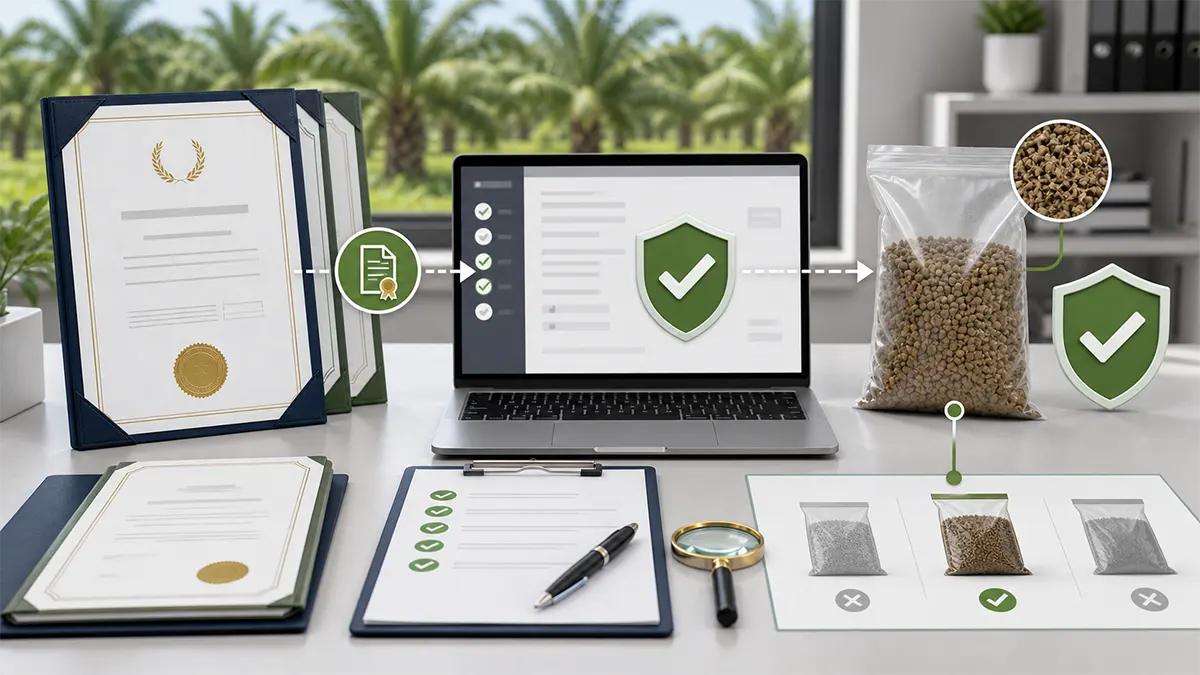
“La dicitura ”biologico» riportata su un opuscolo non ha alcun significato di per sé. Una dichiarazione di biologicità valida è costituita da una serie di documenti verificabili: numero di certificato, ente certificatore, ambito di applicazione del prodotto, data di validità, norma di riferimento e nome esatto del prodotto o della formulazione.
I fornitori spesso confondono la distinzione tra norme, organismi di certificazione e strumenti di verifica. È proprio tenendoli ben distinti che si riesce a verificare correttamente un'affermazione:
- Norme biologiche sono i quadri normativi che definiscono i criteri per la certificazione biologica: USDA NOP (Stati Uniti), Regolamento UE 2018/848 (agricoltura biologica nell'UE), JAS (Giappone).
- Organismi di certificazione sono le organizzazioni che effettuano le verifiche e rilasciano i certificati in base a tali standard: ECOCERT, CERES e altri organismi accreditati. Un certificato rilasciato da ECOCERT attesta la conformità a uno standard specifico; ECOCERT di per sé non è lo standard.
- Strumenti di verifica dei dati inseriti come l'inserimento nell'elenco OMRI, che attesta se un determinato prodotto è idoneo all'uso nella produzione certificata NOP. L'inserimento nell'elenco OMRI ne conferma l'idoneità; l'accettazione definitiva per un'azienda certificata spetta all'ente di certificazione dell'acquirente.
- IFOAM (Federazione Internazionale dei Movimenti per l'Agricoltura Biologica) gestisce un quadro di riferimento denominato “famiglia di standard” e accredita gli organismi di certificazione, ma non rilascia direttamente certificati biologici a livello di prodotto. Considerate un riferimento a “IFOAM” come un’indicazione del quadro di riferimento, non come un certificato di prodotto.
Prima di fidarti del PDF, verifica quanto segue: Verificate il numero del certificato, l'ambito di applicazione esatto (copre questo prodotto o solo una delle altre linee del fornitore?) e la data di validità, quindi controllate i dati nel database di ricerca dell'ente di certificazione. I certificati autentici ma scaduti e quelli il cui ambito di applicazione copre una linea di prodotti mentre il prodotto quotato è una miscela diversa che non è mai stata esaminata sono entrambi casi di errore comuni. Prima di effettuare l’ordine, confronta il nome del prodotto, la formulazione e l’ambito di applicazione del certificato con il preventivo, la fattura proforma, la lista di imballaggio e la grafica dell’etichetta. Un certificato autentico per il prodotto sbagliato, ai fini del vostro utilizzo, non è affatto un certificato.
3. Adatta la certificazione al tuo mercato di destinazione
Un fornitore in possesso di una certificazione non adeguata al vostro mercato è, ai vostri fini, da considerarsi non certificato: si tratta di una delle discrepanze più comuni che i nuovi importatori tendono a trascurare. Prima di richiedere un preventivo, individuate il mercato di destinazione, il programma dell'acquirente, l'ente di certificazione biologica e verificate se il prodotto viene commercializzato come fertilizzante, come input biologico o entrambi.
| Mercato di destinazione | Certificazione / norma richiesta | Nota di verifica |
|---|---|---|
| Stati Uniti | Conformità alle norme USDA NOP (7 CFR Parte 205); la certificazione OMRI è la verifica dei prodotti agricoli più ampiamente riconosciuta | Verificare che la certificazione OMRI copra il prodotto o la formulazione specifici, e non solo l'azienda. L'approvazione finale spetta all'ente di certificazione biologica dell'acquirente. |
| Unione Europea | Si applicano due quadri normativi: (1) utilizzo nell’agricoltura biologica — Reg. 2018/848 + Reg. di esecuzione 2021/1165, allegato II; (2) commercializzazione dei prodotti fertilizzanti — Reg. 2019/1009 | Si tratta di due cose distinte. Verificate quale sia quella richiesta dal vostro acquirente. Gli organismi di certificazione (ECOCERT, CERES, ecc.) rilasciano certificazioni in base allo standard: l'organismo non è lo standard. |
| Giappone | JAS (Japanese Agricultural Standard) per i fattori di produzione biologici, gestito da organismi registrati presso il MAFF | Il JAS è più rigoroso di quanto molti credano per quanto riguarda i prodotti ammessi. Verificate che l'ambito di applicazione del JAS copra specificatamente i fertilizzanti. |
| Cina (scenario di riferimento nazionale) | Standard industriale NY/T 525 per i solidi fertilizzante organico (sostanza organica ≥30%, nutrienti totali ≥4%, umidità ≤30%) | Lo standard nazionale minimo; la conformità alla norma NY/T 525 non è di per sé sufficiente per ottenere la certificazione biologica richiesta dai mercati di esportazione né per superare le verifiche specifiche richieste dai singoli acquirenti. |
Un fornitore che abbia già effettuato spedizioni verso il vostro mercato di destinazione e superato la verifica della documentazione da parte dell'acquirente merita un'attenzione particolare. Chiedete quale ente di certificazione o quale processo di ispezione sia stato utilizzato per gli ordini precedenti. Uno stabilimento che abbia superato i controlli doganali e la verifica dell'ente di certificazione del vostro mercato ha un valore maggiore rispetto a uno che, pur avendo un catalogo più ampio, non abbia un track record nel vostro mercato di riferimento.
4. Effettuare un controllo in fabbrica — anche quando non è possibile recarsi sul posto
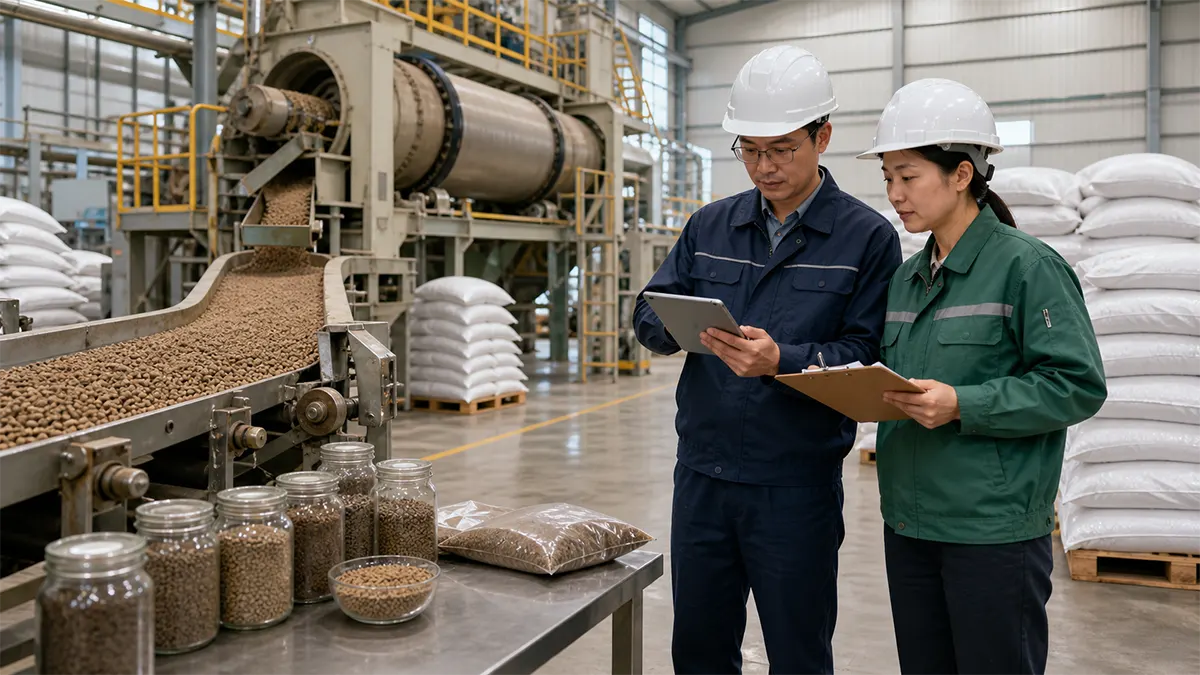
State acquistando un processo produttivo, non una foto del prodotto. Lo scopo di un audit è verificare che il fornitore produca effettivamente ciò che vende, controlli la qualità di ogni singolo lotto e sia in grado di ricondurre una spedizione al lotto di produzione corrispondente.
Cosa verificare, in ordine di priorità:
- Metodo di produzione e capacità produttiva — fermentazione aerobica, tipo di linea di granulazione (a tamburo, a disco o per estrusione), metodo di essiccazione e tonnellaggio mensile realistico. Richiedete foto della linea e un breve video dimostrativo non montato, non immagini di repertorio.
- Laboratorio interno di controllo qualità — Sono in grado di analizzare in loco i valori di NPK, la materia organica, l'umidità e i metalli pesanti, oppure affidano ogni lotto a un laboratorio esterno? Le analisi in loco consentono di effettuare ricontrolli più rapidi ed economici.
- Tracciabilità dei lotti — ogni spedizione deve essere associata a un numero di lotto, a una data di produzione, a un campione conservato e a un certificato di analisi (COA) relativi alla stessa spedizione.
- Ispezione da parte di terzi — Per il primo ordine, richiedete un’ispezione pre-imbarco effettuata da SGS, Bureau Veritas o Intertek. Il costo è irrisorio rispetto al costo di un container intero.
La trappola del drop shipping: Un problema ricorrente è quello delle cosiddette “fabbriche” che in realtà sono semplici uffici commerciali che gestiscono il drop shipping da diversi stabilimenti; di conseguenza, le specifiche variano da lotto a lotto e nessuno si assume la responsabilità dei problemi di qualità. Un vero produttore è in grado di mostrarvi la linea di produzione che realizza il vostro prodotto su richiesta: una richiesta che permette di distinguere in modo affidabile i produttori dai semplici rivenditori.
5. Verifica attentamente le condizioni commerciali prima di impegnarti
I fornitori affidabili chiariscono le condizioni commerciali prima del versamento dell'acconto. Le offerte poco chiare nascondono rischi legati all'umidità, al peso insufficiente, a imballaggi vaghi, alle spese portuali o a un piano di carico che non coincide con le tempistiche dell'acquirente. Esamina attentamente questi aspetti:
Quantità minima ordinabile e fasce di prezzo
Richiedete per iscritto lo sconto sul volume: quantità minima per gli ordini di prova, prezzi per container completo, quantità minima per il marchio privato ed eventuali fasce di volume. Gli ordini di prova vanno solitamente da 1 a poche tonnellate metriche; gli ordini di produzione vengono di norma quotati per container completo (circa 20–25 tonnellate metriche). MOQ inferiori comportano in genere prezzi per tonnellata più elevati.
Incoterms
Chiarite per iscritto se si tratta di condizioni FOB, CIF o EXW e accertatevi di sapere esattamente chi si assume il rischio in ogni fase. Se la fabbrica si trova nell'entroterra, confermare se il trasporto terrestre fino al porto cinese indicato è incluso: spesso è escluso e può aggiungere diverse centinaia di dollari per container, quindi un preventivo che sembra economico potrebbe diventare meno competitivo una volta aggiunti il trasporto terrestre, la movimentazione portuale e le spese di documentazione.
Condizioni di pagamento
Un acconto 30% / saldo 70% a fronte di una copia della polizza di carico (B/L) è una struttura comune ed equilibrata per i primi ordini. Per ordini di maggiore entità, una lettera di credito riduce il rischio per entrambe le parti. Considerare una richiesta di pagamento anticipato 100% da parte di un fornitore non sottoposto a revisione contabile come un rischio che richiede ulteriori misure di salvaguardia: analisi indipendenti su campioni, verifica dei documenti e ispezione da parte di terzi prima di sbloccare il pagamento finale.
Imballaggio e protezione dall'umidità
Specificare le dimensioni dei sacchi e il rivestimento interno (di solito sacchi in PP intrecciato da 25 kg con rivestimento in PE, oppure sacchi jumbo), se il carico è su pallet o meno, l’essiccante, il rivestimento del container e l’umidità massima al momento della spedizione. Il trasporto dalla Cina al porto può causare forti sbalzi di umidità: inserite queste condizioni nel contratto o nella fattura proforma, non solo nella cronologia delle comunicazioni.
Tempi di consegna e piano di carico dei container
Verificate la tolleranza sul peso di carico per evitare di pagare il nolo marittimo per merci non imbarcate, e controllate i tempi di produzione in relazione alla scadenza della stagione di applicazione.
6. Il campione è la tua assicurazione più economica
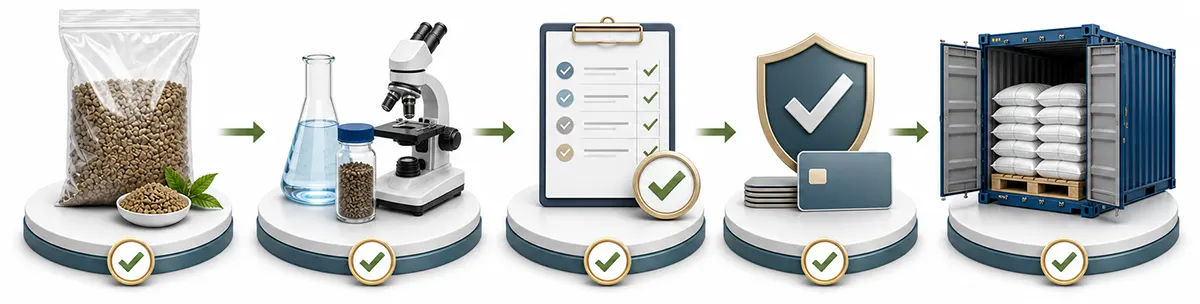
Non approvare mai un programma di riordino basandoti esclusivamente sull'aspetto, sull'odore o sul catalogo del fornitore. Un campione rappresentativo, sottoposto a test indipendenti e confrontato punto per punto con il certificato di analisi (COA) del fornitore, è il modo più economico per ridurre al minimo i rischi.
Richiedere un campione dalle scorte attuali e, nel caso di un programma ricorrente, un campione di pre-produzione proveniente dal lotto effettivo. Invia entrambi a un laboratorio indipendente e confronta i risultati con il certificato di analisi (COA) rilasciato dal fornitore. Le differenze non implicano sempre una frode — i metodi di campionamento e analisi variano — ma discrepanze significative dovrebbero comportare una nuova analisi, una spiegazione da parte del fornitore e l’applicazione delle clausole contrattuali a tutela dell’acquirente prima del pagamento. Un produttore affidabile si aspetta questo e non esiterà a collaborare.
7. Trasforma la lista di controllo in un modello riutilizzabile
Gli importatori più affidabili non sono quelli che si affidano al proprio istinto. Seguono sempre la stessa procedura di verifica, indipendentemente da quanto un fornitore possa sembrare affidabile durante la conversazione. Crea un modulo di approvazione di una pagina e richiedi che tutti i punti siano soddisfatti prima di autorizzare il pagamento:
- Il COA è stato verificato e abbinato al lotto di spedizione
- Certificato biologico o elenco dei fattori di produzione verificato rispetto al database dell'ente certificatore, con ambito di applicazione confermato per il prodotto specifico
- Conformità tra destinazione e mercato confermata dall'acquirente o dall'ente di certificazione
- Esaminate le prove fornite dal produttore e organizzata l'ispezione di primo livello
- Condizioni commerciali, imballaggio, umidità e piano di carico indicati nei documenti d'ordine
- Campione testato in laboratorio in modo indipendente e confrontato con il certificato di analisi (COA) del fornitore
Non effettuare alcun bonifico finché non saranno stati verificati tutti i punti. Esegui questi sette controlli una volta sola e diventeranno un modello da riutilizzare per ogni fornitore, in ogni mercato.
Punti di forza
- Inizia dal certificato di conformità (COA), non dal dépliant—e confrontare i valori dei metalli pesanti (Cd, Pb, As, Hg) con il limite numerico previsto dal vostro mercato, non con un vago “rientro nei limiti standard”.”
- Verificare la certificazione biologica a livello di prodotto e di formulazione, non solo a livello aziendale—verificare il numero, l'ambito di applicazione e la validità del certificato nel database dell'ente certificatore.
- Adattare i documenti al mercato di destinazione e all’ente di certificazione biologica dell’acquirente—NOP/OMRI per gli Stati Uniti, Reg. 2018/848 e/o 2019/1009 per l'UE e JAS per il Giappone.
- Ricorrere a prove di fabbrica, ispezioni di terze parti e tracciabilità dei lotti per distinguere i produttori autentici dai rivenditori che vendono in drop shipping borse di altri marchi.
- Far analizzare il campione da un laboratorio indipendente e confrontarlo con il certificato di analisi prima di sottoscrivere un contratto per ordini ricorrenti.
- Pubblica i dati effettivi relativi a quantità minima ordinabile (MOQ), tempi di consegna, imballaggio e recapiti — I dettagli rendono la pagina più utile per gli acquirenti e più credibile agli occhi dei motori di ricerca.
Domande Frequenti
Quali documenti devo richiedere prima di versare un acconto?
Come minimo: un certificato di analisi recente specifico per il lotto, il certificato biologico pertinente o l’elenco dei fattori di produzione (con un numero verificabile e l’ambito di applicazione), la licenza commerciale, una scheda tecnica del prodotto e un recente test sui metalli pesanti effettuato da un ente terzo. Per i primi ordini, richiedete anche le opzioni di ispezione da parte di un ente indipendente e i dettagli relativi all’imballaggio. Se il fornitore non è in grado di presentare un COA aggiornato e collegato a un lotto effettivo, consideratelo un segnale di stop, non un semplice ritardo da aggirare. Prima della spedizione della merce, verificate inoltre il codice HS corretto e i documenti doganali per la tua destinazione: un container classificato erroneamente viene bloccato al porto, non in fabbrica.
Come posso verificare che la certificazione biologica di un fornitore cinese sia autentica?
Controlla il numero del certificato, l’ente emittente, l’ambito di applicazione del prodotto, il nome del prodotto, la formulazione e la data di validità confrontandoli con la banca dati pubblica dell’ente di certificazione — ECOCERT, OMRI o l’ente di certificazione NOP di riferimento. Verifica un certificato ECOCERT sulla banca dati pubblica. Quindi confronta tali dettagli con il preventivo, la fattura, la bolla di accompagnamento e l’etichetta. Assicurati che il certificato sia in corso di validità e che il suo ambito di applicazione copra esattamente il prodotto che stai acquistando, non una linea diversa presente nel catalogo del fornitore. Per le voci ECOCERT, questa verifica viene illustrata passo dopo passo: scopri come verificare un certificato ECOCERT nella banca dati pubblica.
Quali metalli pesanti devono essere analizzati nei fertilizzanti biologici destinati all'esportazione?
Il cadmio, il piombo, l’arsenico e il mercurio sono le quattro sostanze che più comunemente causano il rifiuto delle spedizioni in dogana e durante la verifica da parte degli organismi di certificazione. I limiti variano a seconda del mercato e della categoria di prodotto: l'UE controlla i metalli pesanti nei prodotti fertilizzanti ai sensi del Regolamento (UE) 2019/1009, mentre gli Stati Uniti si basano sulle norme USDA NOP relative agli input. Verificate sempre che i valori del COA siano conformi ai limiti vigenti nella vostra destinazione prima della spedizione.
Qual è il quantitativo minimo d'ordine (MOQ) tipico per i fertilizzanti organici provenienti dalla Cina?
Gli ordini di prova variano solitamente da 1 a poche tonnellate, mentre gli ordini di produzione vengono generalmente quotati per container intero (circa 20–25 tonnellate). I MOQ inferiori comportano spesso prezzi unitari più elevati, pertanto è consigliabile richiedere per iscritto lo sconto previsto per il volume completo, anziché negoziarlo in un secondo momento.
Devo pagare in anticipo 100% per il mio primo ordine?
Raramente, e solo se accompagnata da solide garanzie. Un acconto 30% con 70% a fronte di una copia della polizza di carico rappresenta una struttura comune ed equilibrata, mentre per i primi ordini di importo elevato vale la pena sostenere le commissioni bancarie per una lettera di credito. Per un fornitore non verificato, combinare una struttura di pagamento equilibrata con test indipendenti sui campioni, verifica dei documenti e ispezione da parte di terzi prima di sbloccare il pagamento finale.
Metti in pratica questa lista di controllo. Richiedi una scheda tecnica e un campione pre-spedizione, quindi esegui questa sequenza di verifica confrontandola con un certificato di autenticità (COA) originale.
Riferimenti
Cina NY/T 525 — Standard di settore per i solidi fertilizzante organico (fabbisogno di materia organica, nutrienti totali e umidità), Ministero dell'Agricoltura e degli Affari rurali.
Regolamento (UE) 2019/1009 — Concimazione Regolamento sui prodotti; limiti relativi ai metalli pesanti e quadro normativo CE. eur-lex.europa.eu
Regolamento UE 2018/848 e Regolamento di esecuzione 2021/1165 — biologico norme di produzione e fattori di produzione ammessi nell'agricoltura biologica. eur-lex.europa.eu
Programma nazionale biologico (NOP) del Dipartimento dell'Agricoltura degli Stati Uniti (USDA), 7 CFR Parte 205 — ams.usda.gov
OMRI (Organic Materials Review Institute) — prodotti database su omri.org
IFOAM – Organics International — Quadro di riferimento "Family of Standards". ifoam.bio
Centro Ricerca Google — Creazione di contenuti utili, affidabili e incentrati sull'utente; linee guida sui contenuti generati dall'intelligenza artificiale; e indicazioni sull'idoneità dei dati strutturati per le FAQ. developers.google.com/search
Informazioni sull'autore: Rutom




 English
  Spanish
  French
  Japanese
  Korean
  German
  Portuguese
  Italian
  Indonesian
  Vietnamese
  Turkish
  Persian
  Russian
  Chinese