
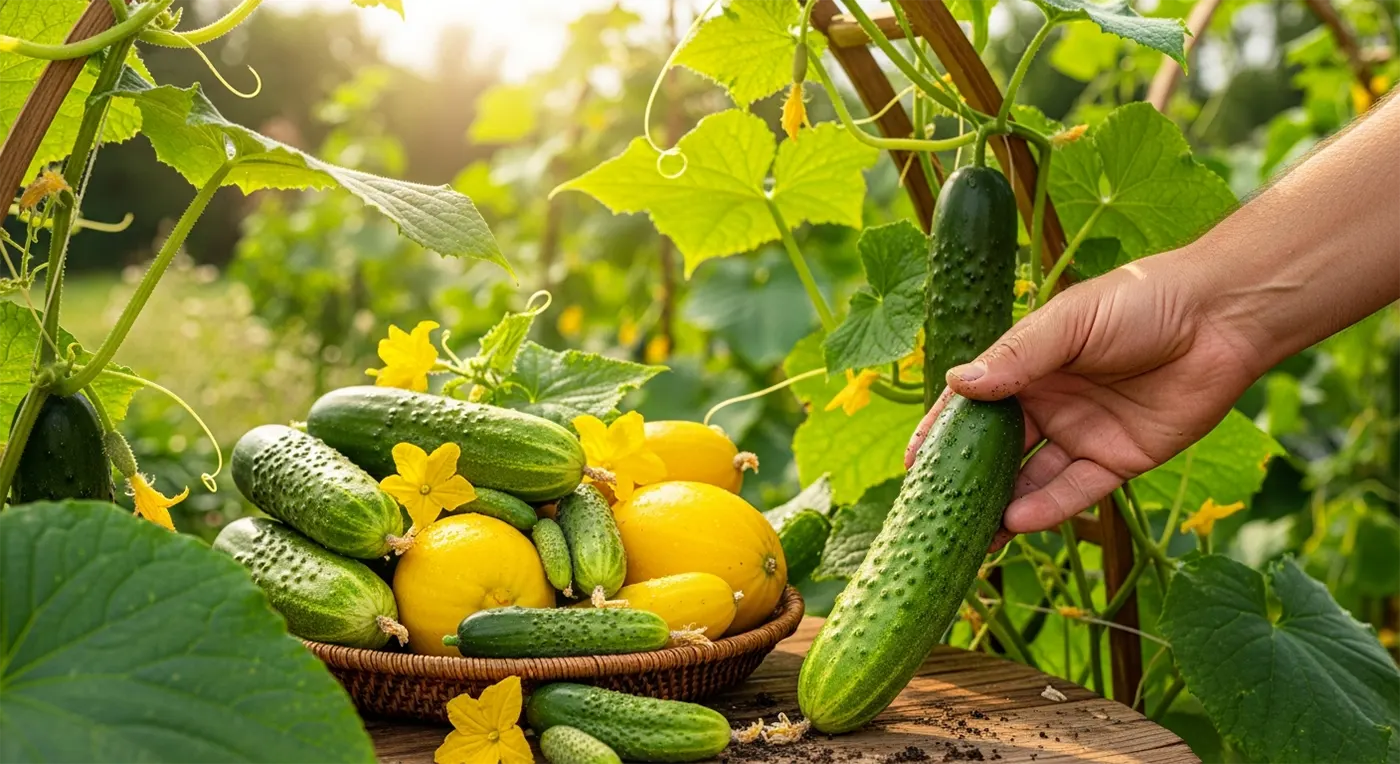
Cucumbers really are the most refreshing snack on a hot summer day. Cucumbers are an easy-to-grow crop for a beginner as long as you know the basics on how to grow them and what problems you might encounter ahead of time.
Cucumbers are warm-weather vegetables that grow best when temperatures are hot and water is plentiful. Cucumber plants come in two growth forms: vine-like and shrub-like. Vining cucumbers sprout quickly and climb vigorously along trellises or supports. With consistent watering, the vines will continuously provide you with crisp, refreshing cucumbers. These plants require little care; just a little space for them to spread or climb, and you’ll soon find yourself harvesting cucumbers faster than you can eat them. Shrub-like cucumbers, such as thornless shrub hybrids, have a compact form and are suitable for potted plants and small gardens. Vining cucumbers typically yield higher yields throughout the growing season, while shrub-like cucumbers can also produce a good harvest if sown in batches every two weeks.
Cucumber Varieties
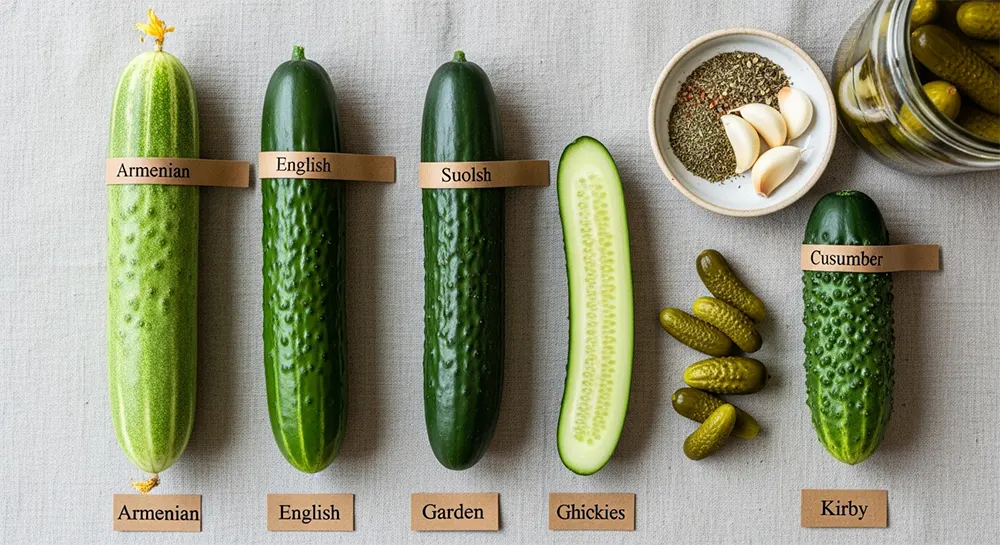
There are many common varieties of cucumbers, such as Armenian cucumbers, English cucumbers, lemon cucumbers, and Persian cucumbers. Choosing the right variety is important, as some cucumbers are not suitable for pickling but are better eaten fresh. Slicing a few pieces and adding them to a cocktail can create a unique flavor. Some varieties have large seeds and need to be deseeded before eating. You can select cucumber varieties based on how you plan to use them.
Armenian Cucumbers
Armenian cucumbers are long and slender, with slightly mottled skin in light green or yellow-green shades. They are crisp and refreshing, and delicious when sliced and eaten raw. There is no need to peel or remove the seeds before eating. However, they are not suitable for pickling.
English (or Seedless) Cucumbers
English cucumbers are also known as greenhouse cucumbers or seedless cucumbers. They are long with dark green skin. Their flavor is mild and almost neutral. They are popular because of their thin skin and few seeds. Like Armenian cucumbers, English cucumbers are best eaten raw and are not ideal for pickling. However, they work wonderfully in cocktails.
Garden Cucumbers
The most common cucumbers in North America are garden cucumbers. They have relatively smooth, dark green skin. Classic garden cucumbers contain large seeds, so many recipes call for removing the seeds before use. Once deseeded, they work well in almost any recipe.
Gherkins
Gherkins are very small cucumbers, sometimes less than two inches long. If you are looking for cucumbers for pickling, gherkins are a great choice because they fit easily into jars. They are often served with meat sauces or used as pickles.
Kirby Cucumbers
Kirby cucumbers are usually short with bumpy skin. Their color ranges from yellow-green to dark green. They are crisp and flavorful when eaten fresh and are excellent for pickling. Sometimes they are even sold under the name “pickling cucumbers.”
Planting time
Cucumbers are best planted in late spring and summer after the danger of frost has passed. Cucumber plants and seeds do not tolerate cold temperatures, especially when the soil temperature is below 65°F (18°C). In addition, cucumber plants do not grow well when nighttime temperatures fall below 40°F (4°C). Therefore, in spring it is important to monitor the weather and choose a planting period when nighttime temperatures stay above 50°F (10°C) and daytime temperatures reach 70°F (21°C) or higher. The key is to wait until the soil is warm enough. Cucumber seeds will not germinate in cold soil. Be sure to check the soil temperature at the planting depth (about 1/2 inch) in the morning and make sure it is at least 65°F (about 18°C). It is recommended to measure the soil temperature before planting. If spring temperatures are low in your area, you can start seeds indoors 3–4 weeks in advance at about 20–25°C, then transplant them outdoors after they have developed 3–4 true leaves and have been hardened off.
Soil Preparation
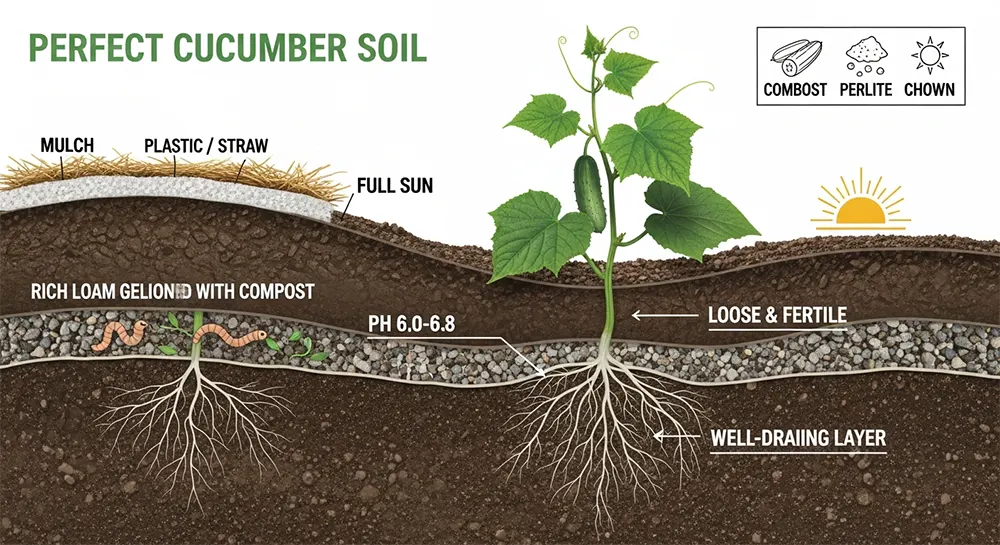
Cucumbers thrive in loose, fertile, and well-drained loam or sandy loam soil. Avoid compacted or waterlogged soil to prevent root rot and other diseases. The ideal soil pH for cucumber growth is 6.0-6.8. Slightly acidic soil facilitates nutrient absorption, while alkaline soil can cause yellowing leaves. Before planting, work plenty of well-rotted manure or compost into the soil to provide sufficient nutrients. During the growing season, apply fertilizer as needed. During flowering and fruiting, supplement with phosphorus and potassium, and avoid excess nitrogen, which can cause excessive leaf growth with few fruits.
Before planting, till the soil to a depth of 20-30 centimeters. If necessary, mix in vermiculite or perlite to improve soil aeration and water retention. For outdoor planting, you can create an ideal growing environment for cucumbers by covering the soil with plastic mulch to retain moisture, regulate soil temperature, and suppress weeds.
Like all fruiting plants, cucumbers grow best in full sun. Choose a location in your garden that receives at least six hours of direct sunlight daily; eight hours or more of sunlight is ideal.
Watering
Cucumbers prefer moist soil but are not tolerant of waterlogging, so the soil should be kept evenly moist. During the growing season, water in the morning and evening if needed, and try to use drip irrigation or water the roots directly. If you want to reduce the risk of powdery mildew and downy mildew, you need to keep the leaves dry.
During flowering and fruiting, cucumbers require ample water, but avoid heavy, one-time watering, as this can cause bitter fruit or damage the roots. Irrigate promptly during dry periods, and increase watering frequency during periods of vigorous growth, maintaining soil moisture at around 60%–70%.
Potted cucumbers should be watered flexibly according to the dryness of the soil. During the rainy season or in poorly drained soil, ensure good drainage to prevent waterlogging and root rot. Watering should be adjusted based on temperature, sunlight, and soil conditions, aiming for frequent, moderate, and consistent watering to provide a stable moisture environment for healthy cucumber growth.
Trellising Cucumbers
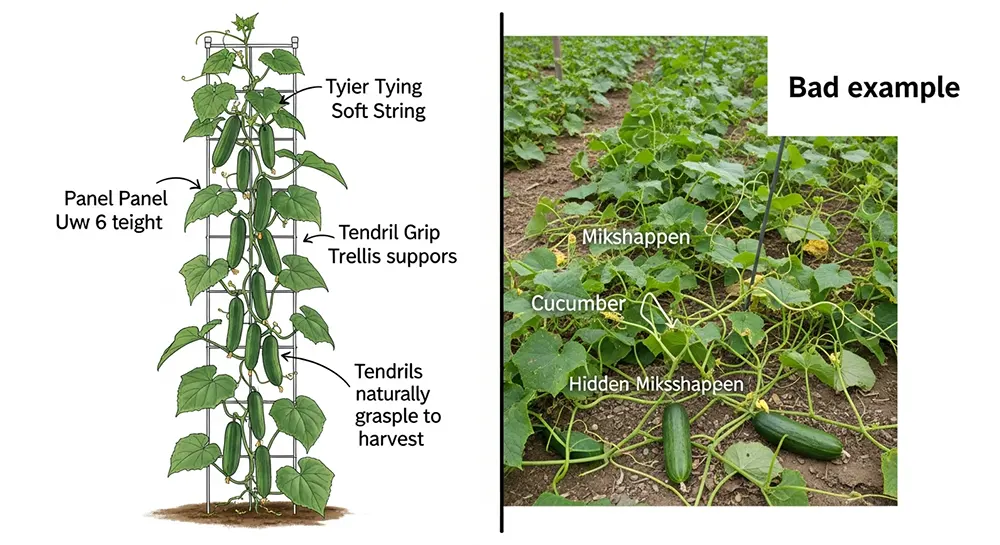
Building a trellis for cucumbers helps them grow strong and healthy. Some bush varieties do not need support, but in my experience, training vining cucumbers on a trellis and making sure their tendrils always have something to grab onto results in healthier plants and higher yields.
Panel and obelisk-style trellises at least 6 feet tall work very well, and cucumbers growing on arched trellises can also make a big difference. The small tendrils of cucumbers wrap around supports much like a monkey gripping a jungle gym. However, sometimes the tendrils can’t find a good hold and end up hanging in the air. When that happens, the vine may stop growing, or the stem may curl downward around the trellis.
The best way to make sure cucumber vines stay attached is to tie them gently to the trellis. Check your plants weekly with some string and scissors. Cut a few inches of string and loosely tie the top of the vine to the support. Remember, cucumbers are delicate plants, so be careful not to break the vines. This allows them to keep climbing upward and produce more fruit for you.
Fertilizing Cucumbers
Cucumbers are a crop with high nutrient requirements and need ample fertilization. Fertilization should be adjusted according to different growth stages. Fertilization should be adjusted according to different growth stages. Before planting, incorporate well-rotted manure or compost into the soil to provide a nutrient base and improve soil structure. During the seedling stage, apply a small amount of nitrogen fertilizer to promote root and leaf development. During flowering and fruiting, focus on supplying phosphorus and potassium.
Rutom Potassium Fulvate 1-0-11 High-K fertilizer helps promote flower bud formation and fruit enlargement and improves yield and fruit quality.
Fertilizers should be applied in small, frequent doses to avoid root burn or excessive vegetative growth. When cucumbers are growing vigorously, additional feeding can be combined with watering using liquid or water-soluble fertilizers. Applying Rutom VIRI No. 2 8-6-6 humic acid fertilizer helps maintain soil nutrient balance. Avoid over-applying nitrogen fertilizer, as excessive nitrogen can lead to lush foliage but sparse flowers and fruit. Regularly observe leaf color and plant growth, and adjust fertilizer application as needed to ensure healthy plant growth and sustained high yields.
Pollination Problems
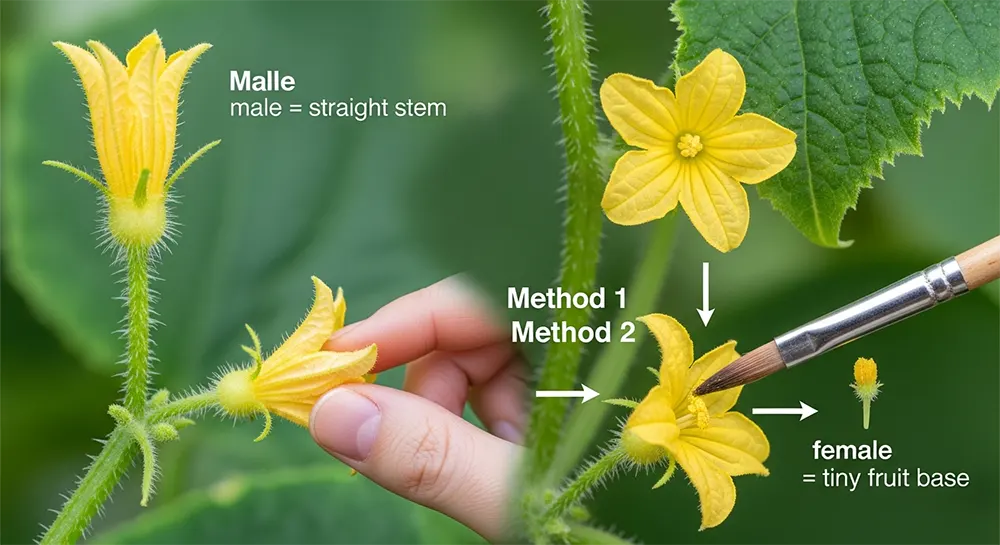
A common problem in cucumber cultivation is that the plants flower but don’t produce fruit. This can be caused by several factors. First, it’s important to know that male flowers open before female flowers, and the male flowers attract pollinating insects.
However, if you find that the female flowers are blooming but not developing into fruit, the problem may be insufficient pollination. Deformed fruit can also be caused by incomplete pollination. This could be due to a lack of pollinators, or it could be due to bad weather preventing pollen from spreading. If it’s the latter, maintain irrigation and wait for the weather to improve; pollination should then resume. You can also assist with cucumber pollination using tools: you can pick a male flower and rub it against a female flower, or use a small paintbrush to collect pollen from a male flower and gently apply it to a female flower.
Harvesting and Storage
Cucumbers are plants with a relatively long growing cycle, so they can grow in your garden for at least 60 to 90 days. Most plants will bear fruit about 55 days after planting.
The key to growing cucumbers is to harvest them early and often. One of the advantages of vertical cucumber cultivation is that the plants remain stable, making it easier to find the fruit. You certainly don’t want cucumbers hidden under dense foliage, consuming nutrients and other resources that the vine should be using for new fruit.
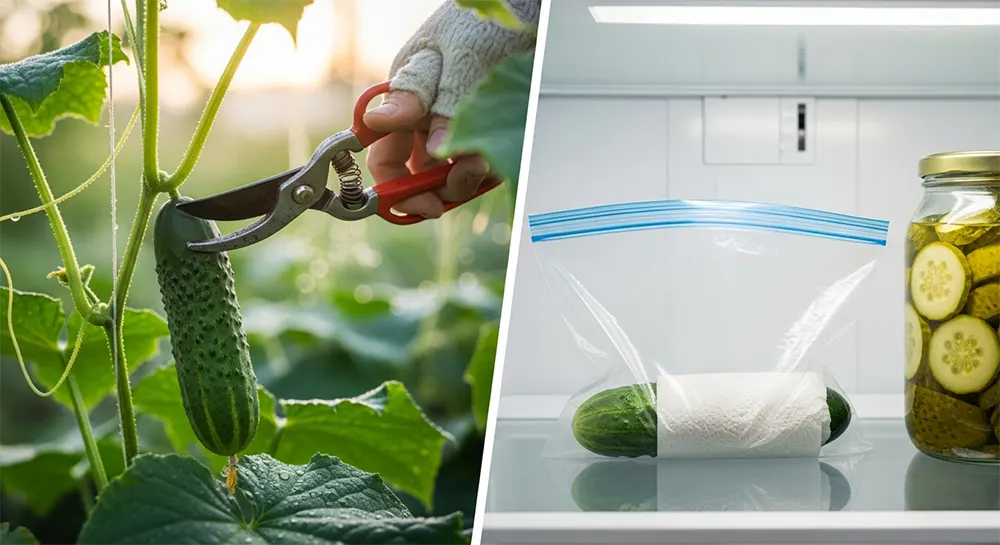
A single cucumber plant can produce 10 to 20 fruits, depending on the variety. It’s impossible to grow just one or two cucumber seeds and never have to buy cucumbers again. To harvest a large quantity of cucumbers, you need to plant many cucumber plants. The best time to harvest is in the early morning when the fruits are sweetest. Use clean pruning shears to cut the fruits from the stem. Be sure to harvest all the fruits before the first frost of autumn.
After harvesting, cucumbers have a high water content and a high respiration rate, making them sensitive to high temperatures, dryness, and frost. Proper storage is crucial to maintaining their crisp texture. You can wrap the cucumbers in paper towels or newspaper, place them in an unsealed plastic bag, and then refrigerate them at a temperature of 7-10°C. If you are growing a variety of cucumber suitable for pickling, you can extend their storage life by pickling them. Pickled cucumbers also have a unique flavor when paired with meat sauce.

 English
  Spanish
  Japanese
  Korean
  German
  Portuguese
  Italian
  Indonesian
  Vietnamese
  Turkish
  Persian
  Russian
  Chinese