
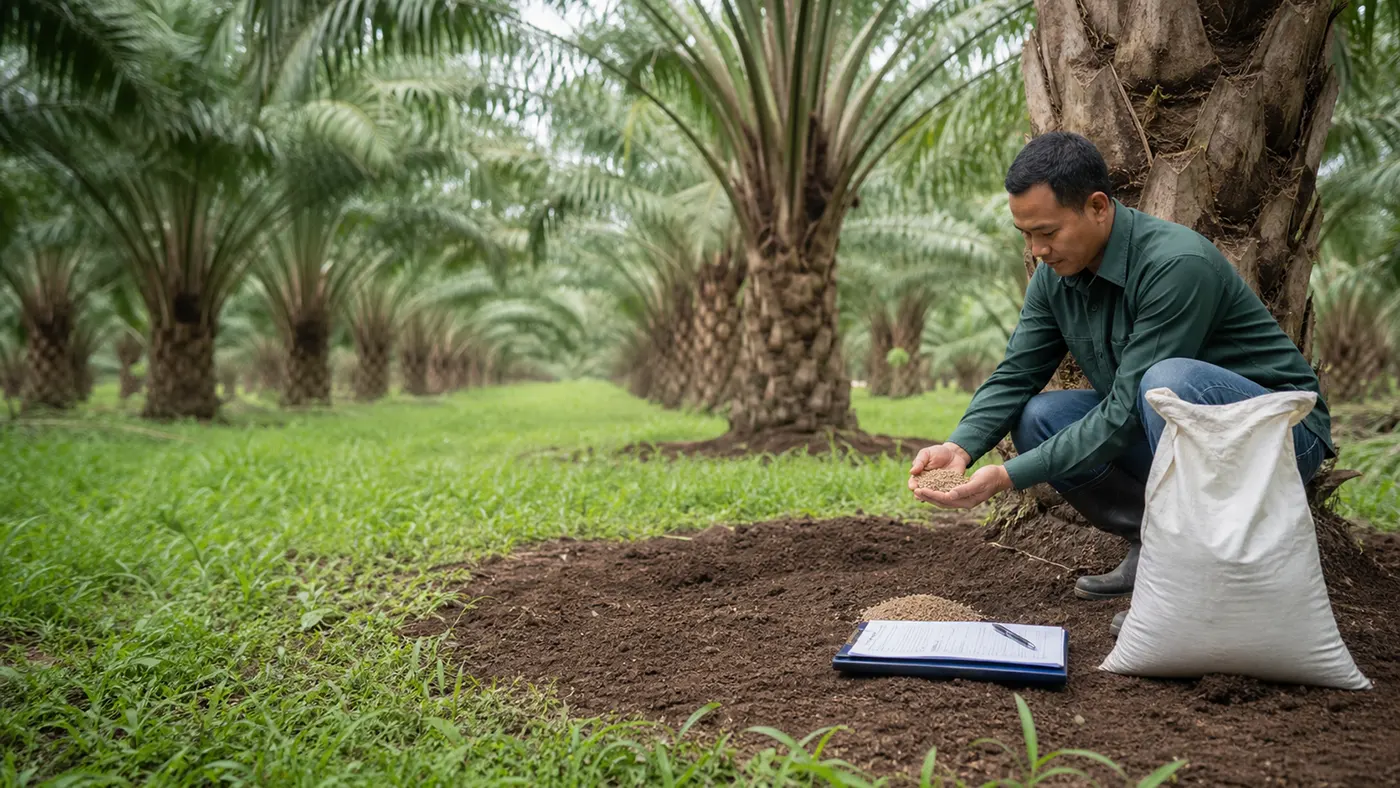
table des matières
Introduction
Il est facile de simplifier à l'extrême l'approvisionnement en engrais pour le palmier à huile. De nombreux engrais organiques granulaires sont conçus autour de l'azote et du phosphore parce qu'ils ont été conçus à l'origine pour les légumes, les vergers ou les cultures en ligne. Le palmier à huile mature est différent : le remplacement du potassium est généralement la première spécification à vérifier.
Pour les importateurs et les distributeurs, cette différence a une importance commerciale. Un produit peut sembler acceptable sur une brochure, passer un examen de base sur les intrants biologiques, mais ne pas convenir aux palmiers à huile adultes si le niveau de K₂O est trop bas, si le certificat ne couvre pas la formulation exacte ou si le lot est expédié avec un taux d'humidité suffisamment élevé pour qu'il se gélifie pendant le transport en conteneur.
Ce guide explique comment évaluer engrais organique en fonction du stade de croissance des palmiers à huile, du rapport NPK, du champ d'application de la certification, des analyses de contaminants et du calendrier d'expédition. Utilisez ce document comme une liste de contrôle pratique pour les appels d'offres, puis validez le programme définitif à l'aide d'analyses de sol locales, d'analyses de tissus foliaires et en concertation avec l'agronome de la plantation chargé des objectifs de rendement.
Ce que le palmier à huile retire réellement du sol
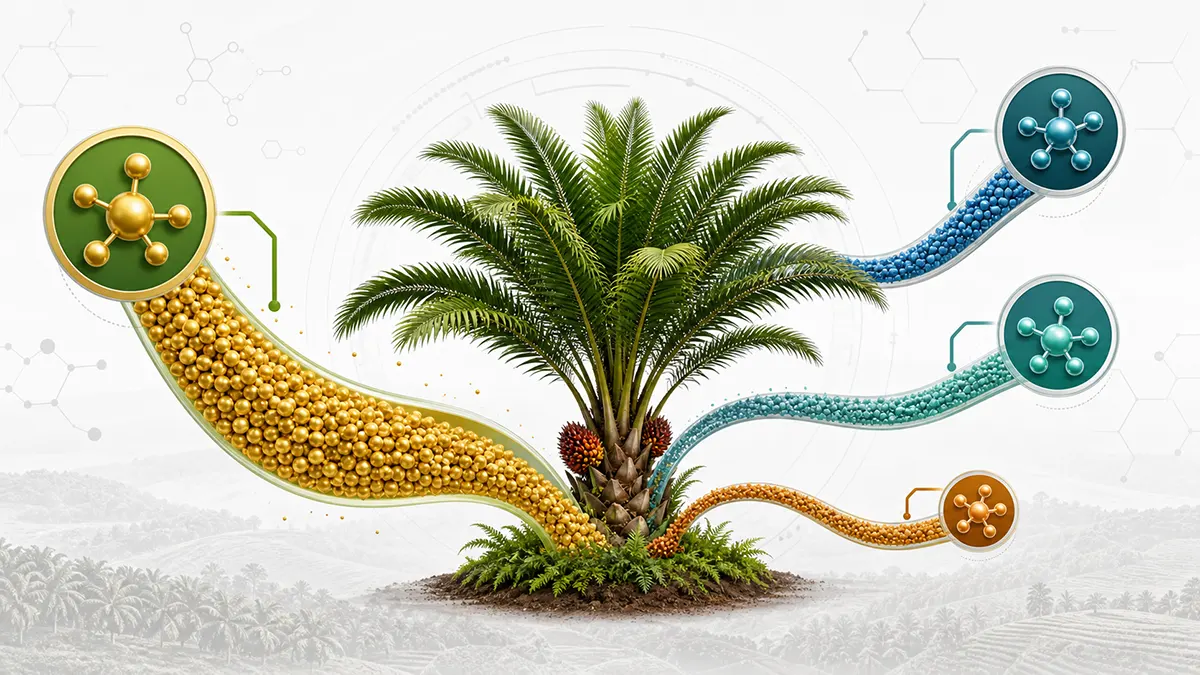
Pour les palmiers à huile adultes, la demande en potassium mérite normalement plus d'attention que celle en phosphore. Les références publiées sur la nutrition du palmier à huile montrent généralement que l'élimination du potassium dépasse celle de l'azote dans les peuplements matures à haut rendement, tandis que l'élimination du phosphore est beaucoup plus faible après l'établissement.
Les estimations typiques de l'élimination annuelle des éléments nutritifs pour un peuplement mature peuvent être résumées comme suit. Les besoins réels varient en fonction du niveau de rendement, des réserves du sol, des précipitations, de l'élimination des grappes, du recyclage des frondes et de l'historique du programme de fertilisation du domaine.
| Nutriments | Prélèvement annuel type | Priorité | Note pratique sur l'approvisionnement |
|---|---|---|---|
| Potassium (K₂O) | 150-200 kg/ha/an | Le plus élevé | Favorise le poids des grappes et le rendement en huile ; les formules pour les palmiers adultes ne doivent pas être K-light. |
| Azote (N) | 100-150 kg/ha/an | Haut | Favorise le renouvellement de la canopée et des frondes ; un excès de N sans équilibre de K peut affaiblir les programmes. |
| Magnésium (MgO) | 30-50 kg/ha/an | Moyen | La carence peut se manifester par une décoloration jaune-orange des frondes et passe souvent inaperçue dans les mélanges génériques. |
| Phosphore (P₂O₅) | 20-40 kg/ha/an | Plus faible dans les palmiers matures | Plus important en pépinière et en phase d'établissement que dans les blocs de production matures. |
| Bore (B) | 0,5-1,0 kg/ha/an | Micronutriments | Les petites quantités sont importantes ; une carence peut affecter le développement de la lance et de la grappe. |
Note de la source : gammes adaptées de Goh & Härdter, “General Oil Palm Nutrition”, dans Oil Palm : Management for Large and Sustainable Yields. Les recommandations agronomiques locales doivent être basées sur l'analyse du sol et des feuilles.
L'implication au niveau des achats est simple : un produit de palmier à huile mature avec un rapport N-P-K tel que 8-5-3 est généralement orienté dans la mauvaise direction. Pour le palmier à huile mature, K₂O devrait normalement être plus élevé que P₂O₅, et les acheteurs devraient demander aux fournisseurs d'expliquer comment la formulation favorise le remplacement du potassium.
L'importance de la certification biologique dans les chaînes d'approvisionnement en produits de la palme
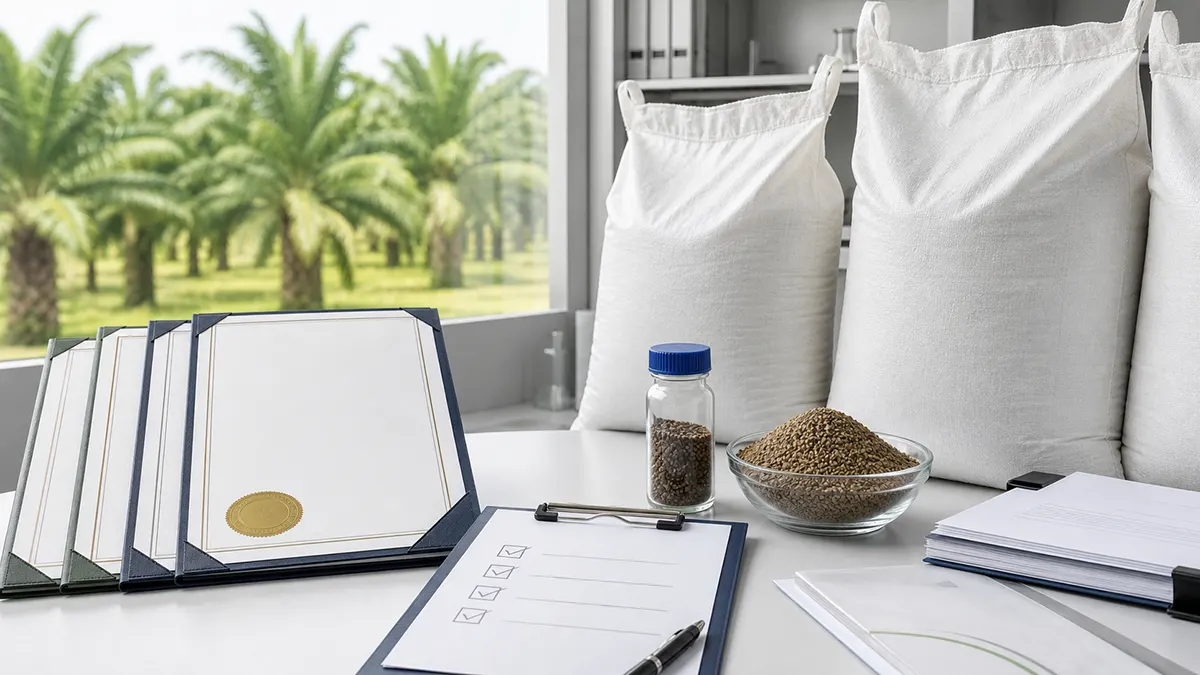
La certification RSPO et la certification biologique ne sont pas la même chose. La RSPO se concentre sur les pratiques de production d'huile de palme durable ; les programmes d'huile de palme biologique certifiée doivent également vérifier si les intrants utilisés dans la production sont autorisés par la norme biologique pertinente.
Pour les importateurs, le détail important est le champ d'application. Le certificat d'un fournisseur au niveau de l'entreprise ne signifie pas automatiquement que toutes les qualités d'engrais, toutes les formulations et tous les lots sont couverts. Avant d'émettre un bon de commande, vérifiez le nom du produit, la formulation, le numéro du certificat, l'organisme émetteur, la période de validité et les références du lot par rapport à la facture, à la liste de colisage et à la pièce jointe au certificat.
Les contrôles de certification qui importent généralement en fonction du marché de destination sont les suivants :
- Biologique UE : confirmer que l'utilisation de l'intrant est autorisée dans la production biologique et que le champ d'application du produit correspond à la formulation exacte fournie.
- USDA NOP : confirmer l'admissibilité de l'utilisation dans la production certifiée NOP. La liste OMRI est largement reconnue, mais le nom du produit et sa formulation doivent encore correspondre à la cargaison.
- JAS : pour les programmes biologiques du marché japonais, vérifier que les intrants et le champ d'action du certificateur correspondent aux exigences du JAS de l'acheteur.
- Demandes de certification spécifiques à l'acheteur : certains acheteurs ou financiers peuvent exiger des documents provenant d'organismes de certification désignés ou des documents supplémentaires sur le développement durable allant au-delà du minimum légal.
Ne considérez pas la certification comme un exercice de collecte de PDF. Les erreurs les plus risquées sont les noms de produits non concordants, les certificats expirés, les formules modifiées après la certification et les documents de lots qui ne peuvent être rattachés aux marchandises dédouanées.
Qui Engrais organique Types de travaux pour le palmier à huile
Engrais composés organiques granulaires
L'engrais composé organique granulaire est généralement le produit de base pour les programmes à l'échelle de la plantation. Il peut être épandu à la main ou à l'aide d'un épandeur autour du cercle de palmiers, et son profil de libération plus lent convient mieux au schéma de fructification continue du palmier à huile qu'un apport soluble unique.
Pour les palmiers adultes, les acheteurs doivent normalement commencer leur appel d'offres par une formule de granulés organiques à forte teneur en potassium, puis l'ajuster en fonction des résultats des analyses de sol, des données sur les tissus foliaires et de la pluviométrie locale. La fourchette cible est de 5-3-8 à 8-3-12 N-P-K pour les blocs de production matures, l'indice K₂O étant intentionnellement plus élevé que l'indice P₂O₅.
Guano d'oiseaux de mer
Guano d'oiseaux de mer peut s'avérer utile dans les programmes de pépinière et de mise en place, car il apporte généralement de l'azote et du phosphore sous forme concentrée. Il ne remplace toutefois pas entièrement l'engrais de base destiné aux palmiers adultes, car ses teneurs en K₂O sont généralement trop faibles pour favoriser le développement des régimes.
Engrais liquides à base d'acides aminés
Les acides aminés liquides sont mieux positionnés en tant que produits de soutien au stress plutôt qu'en tant que programme de nutrition principal. Ils peuvent être utiles après un stress lié à la saison sèche, un choc de transplantation ou d'autres périodes de récupération, mais ils ne doivent pas remplacer un programme de base équilibré à base de granulés.
Humique et Acide fulvique Produits
Les produits humiques et fulviques ne remplacent pas le NPK. Leur valeur réside généralement dans le conditionnement du sol et le soutien à l'utilisation des nutriments, en particulier sur les sols sableux ou latéritiques à faible capacité d'échange cationique. Dans ces programmes, ils peuvent compléter un engrais de base granulaire en aidant à retenir les cations tels que le K⁺ et le Mg²⁺ entre les précipitations.
Spécifications NPK à demander aux fournisseurs
Les fourchettes suivantes sont des points de départ pratiques pour les appels d'offres, et non des prescriptions universelles. Demandez aux fournisseurs d'expliquer comment le produit est adapté au stade de la culture et comment l'analyse garantie est vérifiée sur le certificat d'analyse.
Palmiers matures : Plus de 3 ans
| Paramètres | Fourchette cible de l'appel d'offres | Pourquoi c'est important |
|---|---|---|
| N | 5-10% | Favorise le renouvellement des frondes sans rendre la formule trop azotée. |
| P₂O₅ | 2-5% | Utile mais normalement moins prioritaire que K dans les blocs matures. |
| K₂O | 8-15% | Spécification clé pour le poids de la grappe et le rendement en huile ; devrait normalement dépasser P₂O₅. |
| Matière organique | ≥45% | Favorise la décomposition microbienne et la libération lente des nutriments. |
| Humidité | ≤15% | Réduit le risque de gélification pendant le transit des conteneurs de longue durée. |
| Taille des particules | 2-5 mm granuleux | Améliore la compatibilité avec l'épandeur et permet une application plus régulière sur le terrain. |
Young Palms et Nursery : 0-18 mois
| Paramètres | Fourchette cible de l'appel d'offres | Pourquoi c'est important |
|---|---|---|
| N | 8-12% | Favorise la croissance végétative précoce et l'établissement des frondes. |
| P₂O₅ | 5-8% | Important pour le développement de la motte avant et après la transplantation. |
| K₂O | 4-8% | Inférieur aux besoins des palmiers adultes, mais nécessaire à l'équilibre de la croissance précoce. |
| Taille des particules | Granulés fins ou poudre acceptables | Peut être incorporé dans les trous de plantation ou les milieux de culture. |
Paramètres de contamination et de qualité
| Paramètres | Demande au fournisseur | Raison commerciale |
|---|---|---|
| Cadmium (Cd) | <3 mg/kg ou plus strict si la destination l'exige | Permet de réduire les risques de conformité pour les chaînes d'approvisionnement tournées vers l'UE et les audits d'acheteurs. |
| Plomb (Pb) | <150 mg/kg ou limite du marché de destination | Demande commune de documentation de l'acheteur ; confirmer les règles locales applicables. |
| Humidité | ≤15% ; rejeter ou retester au-delà de 18% | Un taux d'humidité élevé augmente le mottage et la perte de qualité dans les expéditions de conteneurs. |
| Salmonelle | Absent dans l'échantillon de 25 g | Important pour l'hygiène des intrants biologiques et les dossiers de qualité des acheteurs. |
| E. coli | <1000 CFU/g ou limite spécifiée par l'acheteur | Confirme le contrôle de base des agents pathogènes ; utilise des rapports de laboratoires tiers accrédités. |
Comment adapter le calendrier de fertilisation au stade de croissance
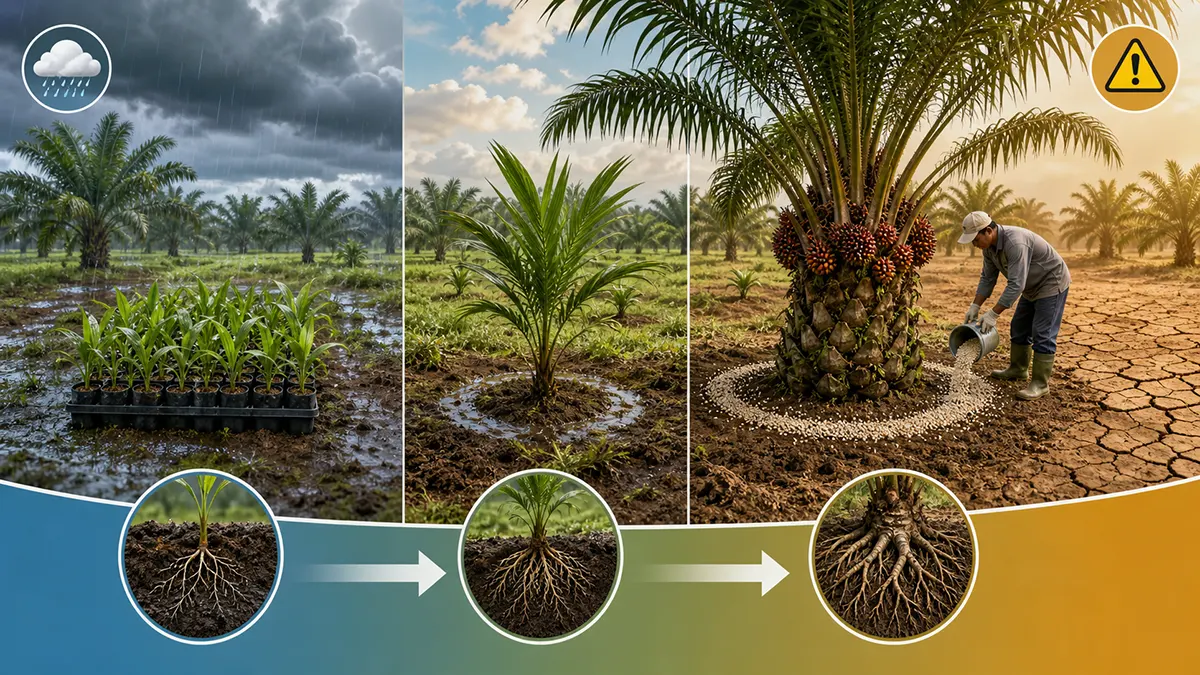
Le palmier à huile est récolté tout au long de l'année dans les climats équatoriaux, il n'y a donc pas de fenêtre de fertilisation annuelle unique. Les apports organiques nécessitent toujours une discipline de calendrier car la libération des nutriments dépend de l'activité microbienne, de l'humidité et de la température du sol.
- Début de la saison des pluies : appliquer la première dose de granulés lorsque l'humidité du sol favorise la conversion microbienne et l'absorption par les racines. Dans de nombreux programmes de Malaisie et de Sumatra, cette période peut se situer autour d'octobre-décembre ; dans de nombreux programmes d'Afrique de l'Ouest, elle peut se situer autour d'avril-juin.
- En milieu de saison : appliquer l'équilibre granulaire restant ou utiliser un complément ciblé si l'analyse des tissus foliaires révèle une lacune spécifique.
- Pépinière et repiquage : utiliser des intrants organiques à forte teneur en phosphore ou du guano lorsque l'établissement des racines est l'objectif principal.
- Saison sèche : éviter l'application de granulés en surface sans irrigation, en particulier sur les pentes, car la libération peut être lente et le risque de ruissellement augmente lorsque de fortes pluies reviennent.
Pour les importateurs, la planification des expéditions fait partie de l'agronomie. Deux petites expéditions programmées en fonction des fenêtres d'application régionales peuvent s'avérer plus utiles qu'une grosse expédition annuelle qui reste stockée dans des champs humides. Demandez à l'acheteur où l'engrais sera stocké, si le site dispose d'un stockage couvert et à quelle vitesse le produit sera appliqué après son arrivée.
Liste de contrôle pour les commandes groupées avant l'émission du bon de commande
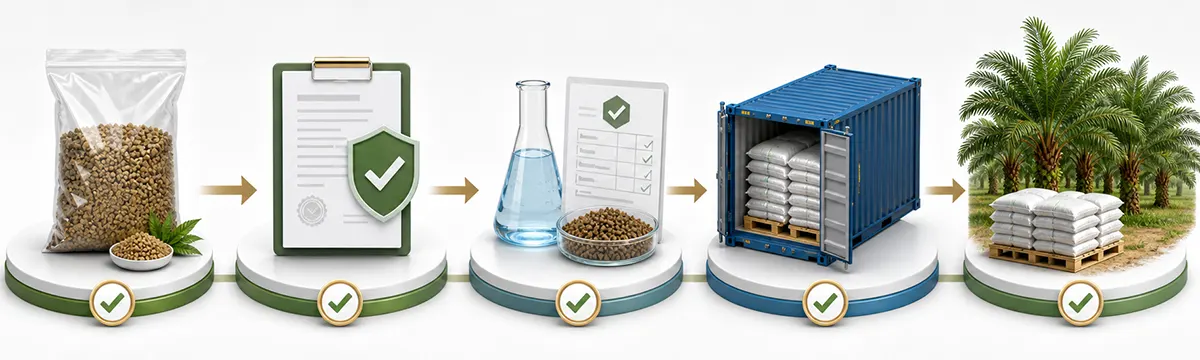
Utilisez cette liste de contrôle avant d'approuver un fournisseur, en particulier pour les premières commandes ou les programmes de produits biologiques certifiés :
- Le certificat biologique au niveau du produit est à jour et mentionne le nom exact du produit et sa formulation.
- Le numéro de certificat peut être vérifié auprès de l'organisme émetteur ou de la base de données de référencement lorsqu'elle est disponible.
- Le COA indique N, P₂O₅, K₂O, la matière organique, l'humidité, la taille des particules et le numéro de lot.
- Le rapport sur les métaux lourds provient d'un laboratoire tiers accrédité et correspond au lot actuel.
- Le rapport sur les agents pathogènes est suffisamment récent pour figurer dans le dossier de qualité de l'acheteur et comprend la salmonelle et l'E. coli.
- La liste d'emballage, la facture, le certificat, le COA et les étiquettes de lot utilisent des noms de produits cohérents.
- L'humidité et l'emballage sont adaptés aux conditions de transit des conteneurs et de stockage à destination.
- Le fournisseur peut expliquer si la formule est destinée aux pépinières, aux jeunes palmiers, aux palmiers adultes ou à un programme mixte.
La vérification du numéro de lot est l'étape la plus souvent omise. Si le certificat couvre une qualité mais que la liste de colisage en mentionne une autre, l'envoi peut entraîner un risque de non-conformité, même si le fournisseur est par ailleurs légitime.
Rutom Bio. Options d'engrais organiques pour les programmes de palmiers à huile
Rutom Bio fournit apports d'engrais organiques pour les importateurs et distributeurs s'approvisionnant à Qingdao. La quantité minimale de commande (MOQ) est de 5 MT par formulation, sous réserve de la disponibilité des qualités, des conditions d'emballage, des exigences en matière de documentation et des règles en vigueur sur le marché de destination.
Granulés organiques 8-3-5
Cette qualité peut être appropriée pour les programmes de pépinière à début de maturité, l'utilisation générale des plantations biologiques, ou les acheteurs qui complètent déjà le potassium à partir d'une autre source approuvée. K₂O étant 5%, il ne doit pas être présenté comme le seul engrais de base pour les blocs de palmiers à huile matures à haut rendement où l'objectif de l'appel d'offres est K₂O ≥8%.
Granulés organiques à haute teneur en K
Pour les programmes de palmiers à huile matures, demandez au bureau d'approvisionnement technique de Rutom les qualités actuelles de granulés organiques à haute teneur en K, les documents COA, l'étendue du certificat et la disponibilité des lots. Les formulations sont confirmées par le lot de production, il convient donc de vérifier le nom du produit final et la couverture du certificat avant l'achat.
Guano d'oiseaux de mer
Il est préférable de l'utiliser pour l'établissement des racines en pépinière ou pour une supplémentation ciblée en phosphore. Il n'est pas recommandé comme seul engrais pour les peuplements adultes car les niveaux typiques de K₂O sont trop faibles pour la production de grappes adultes.
Produits à base d'acide humique
Utile comme produit d'accompagnement pour le conditionnement du sol, en particulier sur les sols sableux ou latéritiques à faible capacité d'échange cationique. A utiliser en complément d'un programme de base granulaire équilibré plutôt qu'en remplacement du NPK.
Pour obtenir les fiches techniques actuelles, les documents COA, les rapports sur les métaux lourds et les dossiers de certification, contactez le bureau d'approvisionnement technique de Rutom Bio. Pour une première qualification, demandez un échantillon représentatif et confirmez la documentation avant de réserver un conteneur complet.
Principaux enseignements
- Pour les palmiers à huile matures, commencez par vérifier le niveau de K₂O. Les programmes matures à haut rendement nécessitent généralement une spécification axée sur le K.
- Ne vous fiez pas à la certification biologique de l'entreprise. Confirmez le nom exact du produit, sa formulation, la portée du certificat et les références du lot.
- Le guano d'oiseaux de mer, les liquides d'acides aminés et les produits humiques peuvent être des compléments utiles, mais ils ne remplacent pas un programme de base granulaire pour les palmiers adultes.
- L'humidité, les métaux lourds, les tests sur les agents pathogènes et la traçabilité des lots sont des contrôles des risques commerciaux, et non des questions de paperasserie.
- Le fournisseur le plus utile est celui qui peut faire correspondre la qualité du produit, la documentation, le calendrier d'expédition et le stade agronomique de l'acheteur.
FAQ
Quel est le meilleur rapport NPK pour l'engrais organique des palmiers à huile ?
Pour les palmiers à huile adultes, le point de départ pratique de la RFQ se situe souvent entre 5-3-8 et 8-3-12 N-P-K, K₂O étant plus élevé que P₂O₅. Les pépinières et les jeunes palmiers ont généralement besoin de plus de phosphore pour l'établissement des racines, de sorte que le meilleur rapport dépend du stade de la culture et des résultats de l'analyse du sol.
Le guano d'oiseaux marins peut-il être utilisé comme engrais principal pour les palmiers à huile adultes ?
En général, non. Le guano d'oiseaux de mer peut fournir de l'azote et du phosphore, ce qui le rend utile en pépinière ou en phase d'établissement, mais les niveaux de potassium typiques sont trop faibles pour les palmiers à huile matures en tant que programme autonome.
Quels sont les documents qu'un importateur doit demander avant d'acheter de l'engrais organique de palmier à huile ?
Demandez le certificat biologique au niveau du produit, le COA actuel, le rapport sur les métaux lourds, le rapport sur les agents pathogènes, le résultat de l'humidité, le numéro de lot, la liste d'emballage et le champ d'application du certificat. Le nom et la formulation du produit doivent correspondre dans tous les documents.
Un certificat biologique d'entreprise suffit-il pour obtenir l'approbation des douanes ou de l'acheteur ?
Non. Un certificat d'entreprise peut ne pas couvrir toutes les formules ou tous les lots. Les importateurs doivent s'assurer que la qualité exacte de l'engrais et le lot d'expédition sont couverts par le certificat ou la liste utilisés pour le dossier de l'acheteur.
Références
- Goh, K.J. & Härdter, R., “General Oil Palm Nutrition”, in Oil Palm : Management for Large and Sustainable Yields, MPOB / Potash & Phosphate Institute, 2003.
- Principes et critères de la RSPO pour la production durable d'huile de palme, P&C 2018.
- Règlement (UE) 2018/848 relatif à la production biologique et à l'étiquetage des produits biologiques.
- Règlement d'exécution de l'UE 2021/1165, annexe II, produits et substances autorisés à être utilisés dans l'agriculture biologique.
- Règlement de l'UE sur les produits fertilisants 2019/1009, annexe I, limites de contaminants et cadre CE pour les produits fertilisants.
- OMRI, Organic Materials Review Institute, base de données sur les produits.
A propos de l'auteur : Rutom




 English
  Spanish
  French
  Japanese
  Korean
  German
  Portuguese
  Italian
  Indonesian
  Vietnamese
  Turkish
  Persian
  Russian
  Chinese