
Détail du produit
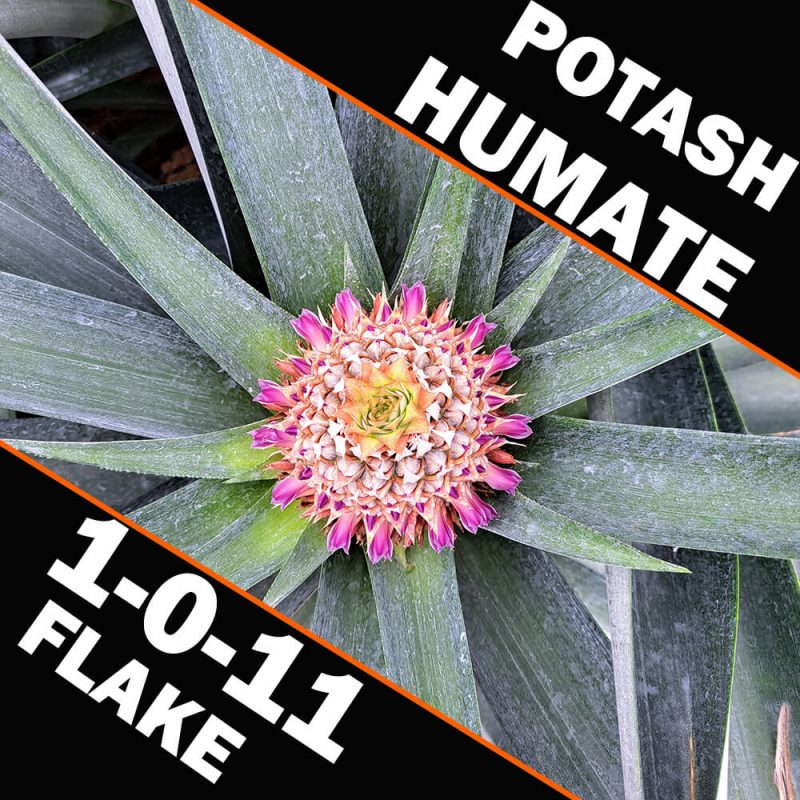
Humate de potasse en poudre 1 - 0 - 11
(Amélioration des sols & Prompt K Supply)
- L'humate de potassium peut améliorer efficacement la structure du sol.
- Il peut ajuster le pH du sol. Dans un sol acide, les groupes alcalins de l'humate de potassium peuvent neutraliser l'acidité et augmenter la valeur du pH du sol.
- L'humate de potassium peut également augmenter la capacité d'échange cationique (CEC) du sol.
- Il constitue un milieu de vie idéal et une source abondante de nutriments pour les micro-organismes du sol.
- L'humate de potassium peut améliorer la résistance à la sécheresse des plantes.
HUMATE DE POTASSE
L'humate de potassium est un engrais organique potassique et le sel de potassium de l'acide humique. Les principaux composants sont l'acide humique et les ions de potassium. L'acide humique est un composé macromoléculaire organique naturel complexe. Il s'agit d'un acide organique à haut poids moléculaire composé de groupes aromatiques et de divers groupes fonctionnels. Sa structure moléculaire contient des groupes fonctionnels acides tels que le groupe carboxyle (-COOH) et le groupe hydroxyle phénolique (-OH). Ces groupes fonctionnels peuvent se combiner avec les ions potassium (K⁺) pour former l'humate de potassium. La structure chimique de l'humate de potassium lui confère de nombreuses propriétés uniques. Il possède des propriétés colloïdales. Sa solution aqueuse peut former une solution colloïdale. Cette solution colloïdale peut adsorber les substances nocives telles que les ions de métaux lourds dans le sol et jouer un certain rôle dans la purification du sol. Parallèlement, la propriété colloïdale de l'humate de potassium contribue également à améliorer la structure agrégée du sol, de sorte que les particules du sol peuvent mieux se lier entre elles et former une bonne structure du sol. En outre, il possède également une capacité d'échange d'ions et peut s'échanger avec d'autres ions dans le sol, activant ainsi les nutriments dans le sol et améliorant la fertilité du sol.
Analyse garantie
Azote (N) -------1.21%
Potassium (K2O)------11.12%
Magnésium (MgO)-----0.263%
Bore (B)---------26 mg/kg
Soufre (S)---------0.25%
Ferro (Fe)---------0.563%
Zinc (Zn) ---------14,5 mg/kg
Manganèse (Mn) ------27.9 mg/kg
Cuivre (Cu)--------12,5 mg/kg
Carbone total ( C ) -----38.38%
Acide humique--------56.5%
Solubilité dans l'eau------98%
Matière organique (M.O.)----65.13%
pH-----------9.96
Humidité--------1.5%
Conductivité (CE)-----15.10 mS/cm
État physique : Poudre ou flocons perdus noirs.
Mode d'emploi
Amélioration des sols
Le taux d'application par hectare est de 30 à 75 kilogrammes. L'application se fait deux à trois semaines avant la plantation au printemps, en étalant uniformément la poudre d'humate de potassium sur la surface du sol, puis en labourant pour la mélanger complètement au sol.
Engrais de base
Répartir uniformément l'engrais bien mélangé dans le sillon ou le trou de plantation. Le dosage général par hectare est généralement de 45 à 90 kilogrammes. L'humate de potassium en poudre peut être utilisé comme engrais de base avec des engrais organiques, des engrais composés, etc. Lors de l'utilisation, il faut d'abord mélanger l'humate de potassium en poudre et les autres engrais de manière homogène selon une certaine proportion.
Engrais de couverture
- Fertilisation des racines : Pendant la période de croissance des cultures, l'humate de potassium en poudre peut être utilisé pour le terreautage des racines. Pour les cultures légumières, pendant la période de croissance vigoureuse, la poudre d'humate de potassium peut être dissoute dans l'eau pour obtenir une solution de 0,5%-1%, puis versée autour des racines des cultures. Par exemple, l'application de 0,5 à 1 litre de solution par plante potagère peut favoriser la croissance des racines des légumes et l'absorption des nutriments.
- Traitement de surface foliaire : Il peut également être utilisé pour l'épandage foliaire. Préparez la poudre d'humate de potassium dans une solution d'engrais foliaire de 0,1%-0,3%, et choisissez de pulvériser sur les feuilles par une journée nuageuse sans vent ou le soir par une journée ensoleillée. La quantité pulvérisée doit être telle que la surface des feuilles soit humide mais non ruisselante. Par exemple, pour les arbres fruitiers, la pulvérisation foliaire pendant la période d'expansion des fruits peut favoriser le développement des fruits et améliorer leur qualité.
L'humate de potassium présente de nombreux avantages significatifs dans le domaine agricole :
1. Impacts positifs sur les sols
Excellent effet d'amélioration du sol
L'humate de potassium peut améliorer efficacement la structure du sol. C'est un bon formateur d'agrégats de sol qui peut lier les particules de sol en agrégats stables. Cette structure est essentielle pour améliorer l'aération et la perméabilité du sol. Par exemple, dans les terres agricoles où le compactage du sol est causé par l'utilisation à long terme d'engrais chimiques, l'application d'humate de potassium peut permettre au sol de redevenir meuble et poreux. C'est comme un “massage d'assouplissement”, qui permet à l'air et à l'eau de circuler librement dans le sol et crée un environnement propice à la croissance des racines des plantes. En même temps, il peut ajuster le pH du sol. Dans un sol acide, les groupes alcalins de l'humate de potassium peuvent neutraliser l'acidité et augmenter la valeur du pH du sol. Dans un sol alcalin, il peut jouer un rôle tampon et empêcher un pH excessif de nuire aux plantes. C'est un peu comme un “équilibreur de pH” pour le sol, qui ajuste automatiquement le pH du sol pour rendre l'environnement du sol plus propice à la croissance de la plupart des cultures. L'humate de potassium peut également augmenter la capacité d'échange cationique (CEC) du sol. La capacité d'échange cationique du sol est un indicateur important pour mesurer la capacité de rétention de la fertilité du sol. Elle peut adsorber et échanger les cations présents dans le sol, tels que le potassium, le calcium, le magnésium et d'autres éléments nutritifs, et préserver ces éléments nutritifs afin d'éviter qu'ils ne soient perdus à cause du lessivage par la pluie. Il s'agit en quelque sorte d'une “banque de stockage des nutriments”, et lorsque les plantes ont besoin de ces nutriments, ils peuvent être libérés pour être absorbés par les plantes.
Favoriser les activités microbiennes du sol
Il constitue un milieu de vie idéal et une riche source de nutriments pour les micro-organismes du sol. Les micro-organismes du sol jouent un rôle clé dans le processus de décomposition de la matière organique et de libération des nutriments. L'humate de potassium est comme un “festin pour les micro-organismes”. Les composants organiques qu'il contient peuvent être décomposés et utilisés par des micro-organismes tels que les bactéries et les champignons. Par exemple, certaines bactéries fixatrices d'azote peuvent mieux jouer leur rôle de fixation de l'azote dans le bon environnement fourni par l'humate de potassium et convertir l'azote de l'air en azote ammoniacal disponible pour les plantes, augmentant ainsi la fertilité du sol.
2. Effets d'aide sur la croissance des plantes
Améliorer la résistance des plantes au stress L'humate de potassium peut améliorer la résistance des plantes à la sécheresse. Il peut favoriser le développement des racines des plantes et augmenter la surface d'absorption et la profondeur des racines. Ainsi, pendant les périodes de sécheresse, les racines des plantes peuvent mieux absorber l'eau en profondeur. En outre, il peut également réguler la pression osmotique des cellules végétales, de sorte que les cellules végétales peuvent maintenir une certaine pression de turgescence dans des conditions de pénurie d'eau et réduire la perte d'eau. Par exemple, pour le blé planté dans des zones arides, l'application d'humate de potassium ralentit considérablement la vitesse de flétrissement des feuilles en cas de sécheresse et permet aux plantes de mieux survivre. L'humate de potassium contribue également à améliorer la résistance au froid des plantes. Dans un environnement à basse température, l'humate de potassium peut augmenter la teneur en substances telles que le sucre soluble et la proline dans les cellules des plantes. Ces substances peuvent abaisser le point de congélation des cellules végétales. C'est comme si l'on ajoutait un “antigel” aux cellules pour éviter qu'elles ne soient endommagées par le gel. Par exemple, pour les légumes plantés en hiver nordique, l'utilisation de l'humate de potassium peut réduire l'impact des dommages causés par le gel. En outre, l'humate de potassium peut également renforcer la résistance des plantes aux ravageurs et aux maladies. Il peut inciter les plantes à produire une série de réponses de défense et activer le système d'enzymes de défense des plantes, comme la peroxydase, la polyphénol oxydase, etc. Ces enzymes peuvent aider les plantes à résister à l'invasion de bactéries pathogènes et de ravageurs. Ces enzymes peuvent aider les plantes à résister à l'invasion de bactéries pathogènes et de ravageurs. Par exemple, lorsque les plantes sont menacées par des maladies fongiques, les plantes traitées à l'humate de potassium peuvent réduire la zone d'apparition et la gravité des maladies grâce à leurs mécanismes de défense renforcés.
Favoriser la croissance et le développement des plantes En tant que source d'engrais potassique, l'humate de potassium peut fournir suffisamment d'éléments potassiques aux plantes. Les éléments potassiques jouent plusieurs rôles importants dans le processus physiologique des plantes. Dans la photosynthèse, il participe aux processus de transfert d'électrons photosynthétiques et de phosphorylation photosynthétique, favorise l'assimilation du dioxyde de carbone et améliore l'efficacité de la photosynthèse. Parallèlement, le potassium peut également favoriser le transport et l'accumulation de sucre dans les plantes, ce qui est bénéfique pour le développement et l'amélioration de la qualité des fruits. Par exemple, lors de la plantation de pommes, l'application d'humate de potassium peut rendre les fruits plus volumineux, avec des couleurs plus vives et un meilleur goût. Le composant acide humique de l'humate de potassium peut également stimuler la synthèse et la sécrétion des hormones de croissance des plantes. Ces hormones de croissance peuvent favoriser la croissance et l'élongation des racines des plantes et les rendre plus développées. Les racines développées peuvent mieux absorber l'eau et les nutriments dans le sol, puis favoriser la croissance de la partie aérienne, comme l'augmentation de la hauteur des plantes, de l'épaisseur des tiges et du nombre de feuilles, etc. et enfin augmenter le rendement des cultures.
3. Avantages de la synergie des engrais
Améliorer le taux d'utilisation des engrais L'humate de potassium peut être utilisé en combinaison avec divers engrais pour jouer un rôle synergique. Il peut adsorber l'azote ammoniacal et le fixer dans le sol afin de réduire la perte par volatilisation de l'ammoniac. Par exemple, lors de l'utilisation d'engrais azotés tels que l'urée, l'application conjointe d'humate de potassium peut augmenter le taux d'utilisation des engrais azotés. Parallèlement, il peut également former des complexes avec les engrais phosphorés et libérer le phosphore fixé dans le sol afin d'améliorer l'efficacité des engrais phosphorés. Il s'agit en quelque sorte d'un “petit assistant pour les engrais”, qui améliore l'efficacité des engrais, réduit les déchets d'engrais et diminue les coûts de production agricole.
Quelles sont les différences dans les effets d'amélioration de l'humate de potassium sur différents types de sol ?
[Sol visqueux] [Amélioration de la structure] : Le sol visqueux se caractérise par des particules fines, une texture lourde et une mauvaise perméabilité à l'air et à l'eau. L'humate de potassium peut agglomérer les particules du sol et former une bonne structure granulaire. Son composant colloïde organique peut lier les particules du sol. Dans un sol visqueux, il est comme un “pont”, reliant les petites particules du sol, augmentant les pores du sol et améliorant la perméabilité à l'air et à l'eau du sol. Par exemple, dans un environnement principalement composé de sol visqueux tel que les rizières, l'application d'humate de potassium soulage le compactage du sol, ce qui est bénéfique pour la respiration aérobie des racines de riz.
[Activation et échange des nutriments] : Dans un sol visqueux, la capacité d'échange de cations est relativement élevée, mais la disponibilité des nutriments peut être faible. L'humate de potassium peut s'adsorber à la surface des colloïdes du sol et échanger les ions nutritifs adsorbés par échange d'ions afin d'améliorer la disponibilité des nutriments. Par exemple, il peut échanger les ions potassium, les ions ammonium, etc. adsorbés par les colloïdes du sol pour l'absorption et l'utilisation par les plantes, réduisant ainsi la fixation des nutriments.
[Optimisation de l'environnement microbien] : L'amélioration de la structure du sol et de l'état des nutriments offre un meilleur espace de vie aux micro-organismes. Les micro-organismes peuvent se reproduire et être plus actifs dans un environnement de sol avec une bonne perméabilité à l'air et décomposer la matière organique pour améliorer davantage la fertilité du sol. Par exemple, l'application d'humate de potassium peut augmenter le nombre de micro-organismes bénéfiques, tels que les bactéries fixatrices d'azote et les bactéries solubilisatrices de phosphore, dans le sol. Ces micro-organismes peuvent fournir de l'azote et du phosphore disponible pour les plantes.
Sol sablonneux
[Amélioration de la rétention d'eau et d'engrais] : Les sols sablonneux ont de grandes particules et de grands pores et une faible capacité de rétention d'eau et d'engrais. L'humate de potassium peut remplir les pores du sol et augmenter la capacité de rétention d'eau du sol. Comme une éponge, il absorbe et retient l'eau pendant les précipitations ou l'irrigation pour empêcher une infiltration excessive vers le bas et une perte d'eau. En même temps, il peut également adsorber et retenir les ions nutritifs tels que l'azote ammoniacal, l'azote nitrique et les ions potassium, réduisant ainsi les pertes d'engrais par lessivage. Par exemple, pour certaines plantes brise-vent et plantes fixatrices de sable plantées en bordure du désert, l'application d'humate de potassium améliore les performances de rétention d'eau et d'engrais du sol, ainsi que l'environnement de croissance des plantes.
[Stabilisation de la structure du sol] : Bien que le sol sablonneux ait une bonne perméabilité à l'air, sa structure est lâche. L'humate de potassium peut lier les particules de sable et rendre la structure du sol plus stable. Cela permet d'éviter l'érosion du sol par le vent ou l'écoulement de l'eau et de maintenir l'intégrité du sol. Par exemple, dans certaines terres sablonneuses riveraines ou côtières, l'humate de potassium peut aider à fixer le sol et à en réduire l'érosion.
[Favoriser la croissance des plantes] : Une structure de sol stable et une bonne rétention de l'eau et des engrais créent des conditions favorables à la croissance des plantes. Les racines des plantes peuvent mieux s'enraciner dans le sol et absorber l'eau et les nutriments. L'humate de potassium peut également stimuler la croissance des racines des plantes et les rendre plus développées, améliorant ainsi l'adaptabilité des plantes aux sols sablonneux.
[Sol acide] [Ajustement du pH] : Le pH d'un sol acide est relativement bas, ce qui inhibe la croissance de nombreuses plantes. L'humate de potassium contient des groupes alcalins et peut neutraliser l'acidité du sol et augmenter la valeur du pH. Par exemple, dans la région des terres rouges du sud où le sol est fortement acide, l'application d'humate de potassium peut ajuster la valeur du pH du sol dans une fourchette plus propice à la croissance des plantes et réduire la toxicité d'éléments nocifs tels que l'aluminium et le manganèse pour les plantes.
[Amélioration de la disponibilité des nutriments] : Dans un sol acide, la disponibilité des nutriments tels que le phosphore et le potassium est souvent faible. L'humate de potassium peut libérer le phosphore fixé en se complexant avec des éléments tels que le fer et l'aluminium dans le sol. En même temps, il peut également fournir des éléments potassiques et améliorer la disponibilité des nutriments dans le sol. Cela aide les plantes à mieux absorber les nutriments et favorise leur croissance.
[Restauration écologique des sols] : L'ajustement du pH et l'amélioration de l'état des nutriments sont bénéfiques pour la survie des micro-organismes et des animaux dans le sol. L'activité de certains micro-organismes est inhibée dans les sols acides. L'utilisation de l'humate de potassium peut restaurer et améliorer l'activité des micro-organismes du sol et promouvoir l'équilibre de l'écosystème du sol. Par exemple, les animaux du sol tels que les vers de terre seront plus actifs dans le sol acide amélioré, et leurs activités amélioreront encore la structure du sol.
[Sol alcalin] [Fonction tampon] : Le pH d'un sol alcalin est relativement élevé. L'humate de potassium peut jouer un rôle tampon et empêcher qu'un pH trop élevé ne nuise aux plantes. Il peut réagir avec les substances alcalines présentes dans le sol, réduire l'alcalinité du sol et maintenir la valeur du pH du sol dans une fourchette relativement stable, créant ainsi un environnement de pH approprié pour la croissance des plantes.
[Régulation du sel] : Certains sols alcalins ont une teneur en sel relativement élevée. L'humate de potassium peut adsorber les ions de sel dans le sol et réduire la nocivité du sel pour les plantes. Par exemple, dans les terres salines-alcalines, l'humate de potassium peut réduire la teneur en sel nocif tel que les ions de sodium dans le sol, réduire les dommages causés par le sel dans le sol et permettre aux plantes de mieux pousser.
[Amélioration de la fertilité des sols] : Comme pour les sols acides, l'humate de potassium peut également améliorer la structure du sol, augmenter la capacité de rétention des engrais et favoriser l'utilisation efficace des éléments nutritifs dans les sols alcalins. Il peut activer les nutriments tels que le phosphore dans le sol et augmenter l'activité des micro-organismes du sol, améliorant ainsi la fertilité du sol.



 English
  Spanish
  French
  Japanese
  Korean
  German
  Portuguese
  Italian
  Indonesian
  Vietnamese
  Turkish
  Persian
  Russian
  Chinese