
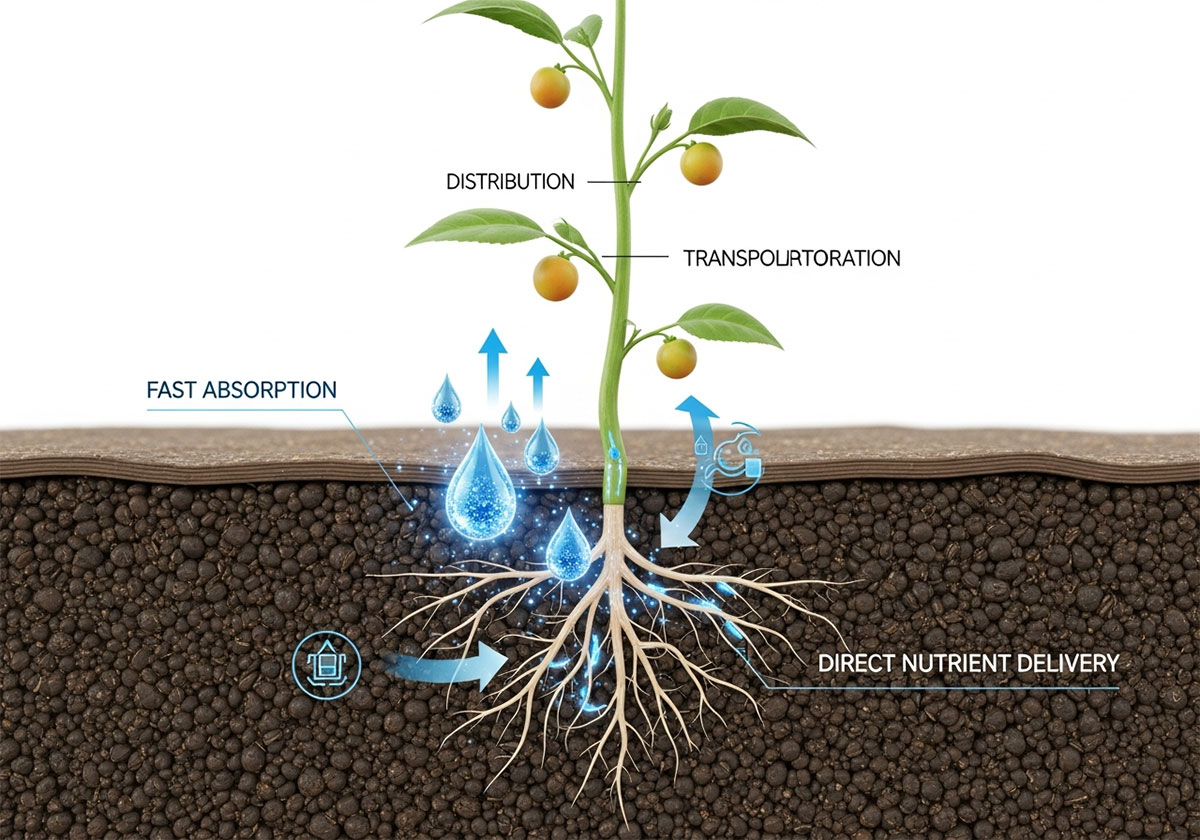
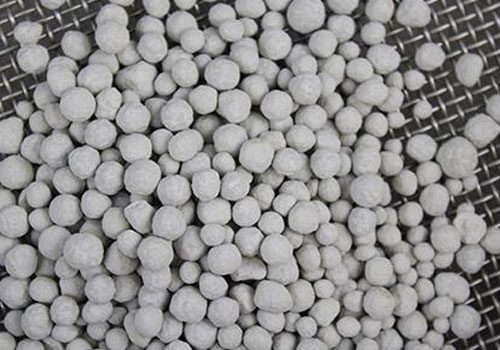
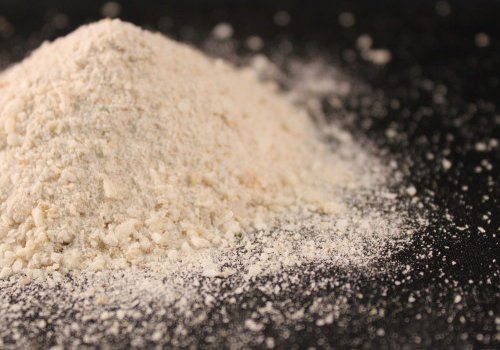
Organic fertilizers on the market mainly come in three physical states: granular, powder, and liquid. Which type of organic fertilizer do our growers use most often? What are your reasons for choosing this particular physical state? Many people are also curious about the difference between granular and liquid fertilizers. Today, this blog post will provide a detailed introduction to liquid organic fertilizers, helping you choose the right liquid fertilizer for your plants and more effectively improve their yield and quality.
What Is Liquid Fertilizer?
To understand liquid fertilizer, we must first know what liquid fertilizer is. And which type of fertilizer can be called liquid fertilizer?
Definition and Key Characteristics
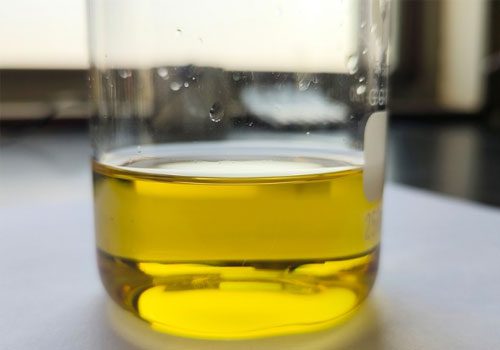
Liquid fertilizers differ from granular and powder fertilizers in that they are nutrient-rich concentrates in liquid form. Before using, liquid fertilizers need to be diluted in water according to a specific ratio. Although in liquid form, like granular fertilizer, it provides nutrients for plant growth and is directly absorbed by plant leaves and roots through foliar spraying. This makes nutrient absorption more efficient for plants.
Liquid fertilizers are highly soluble, with nutrients completely dissolved in water. After application, they can quickly enter the root zone or be absorbed through the leaves, making them suitable for rapid nutrient replenishment and correction of crop deficiencies. They offer flexible application methods, including drip irrigation, fertigation, and foliar spraying, making them suitable for intensive management. On the other hand, granular fertilizers need to be absorbed by the soil before releasing nutrients slowly. They are also affected by temperature and humidity, but their effects last longer. So granular fertilizers are suitable for base fertilizer and long-lasting fertilizers. Their application method is simple and ideal for field crops and a single application. Granular fertilizers and liquid fertilizers can be used together to achieve both rapid nutrient replenishment and continuous fertilization.
Liquid fertilizers can be used in many ways, like drip irrigation, fertigation, sprinkler irrigation, and foliar spraying. You can choose one of the methods according to crop type and growing environment. Drip irrigation is the most common method, where fertilizer is placed in a fertilizer tank or injector and precisely delivered to the root zone with water. By adjusting the concentration and flow rate, fertilizer can be supplied as needed. After application, the pipes should be flushed with clean water to prevent clogging. This method is suitable for fruit trees, vegetables, greenhouses, blueberries, and cash crops. Fertigation is suitable for the seedling stages or stages of plants requiring rapid nutrient supplementation. The liquid fertilizer is diluted and applied to the plant roots, so the roots can absorb nutrients quickly and directly. This method is suitable for seedlings, transplanted plants, plants with weak root systems, and plants requiring rapid nutrient replenishment. If your orchard is equipped with a sprinkler system and covers a relatively large area, you can use sprinkler irrigation, which is also more labor-saving.
If your plants in the critical stage need micronutrient supplementation and management, you can use foliar spraying. The liquid fertilizer will be applied to the plant leaves, and plants absorb nutrients from the leaves. We should choose an ideal time to spray, like early morning or evening, avoiding high temperatures and rainy days, which can maximize the effectiveness of liquid fertilizer. In addition, some liquid fertilizers can be used for seed treatment or root dipping, such as soaking seeds after dilution or soaking roots before transplanting, which helps promote germination and improve survival rates. Multiple methods can be used in combination to achieve a balance between rapid replenishment and continuous nutrient supply.
I wonder if anyone confuses water-soluble fertilizer with liquid fertilizer. Both are applied in a liquid state, so can water-soluble fertilizer be considered liquid fertilizer? The answer is no. Water-soluble fertilizer is granular or powdered organic fertilizer crystals dissolved in water. Although its effects are the same as liquid fertilizer after dissolving in water, it cannot be classified as liquid fertilizer.
Why Use Liquid Fertilizer?
In recent years, the use of liquid fertilizers has been increasing year by year. They are simple to use, produce quick results, and are superior to granular and powder fertilizers in many aspects. Many growers may ask, what are the advantages of liquid fertilizers compared to granular fertilizers?
As we all know, liquid fertilizers are nutrient-rich, eco-friendly solutions that can be applied to plants, which can enhance plant growth and improve soil health. Rutom liquid fertilizers are derived from natural sources and affect plants immediately.
Key Advantages of Liquid fertilizer
Rapid nutrient absorption and high utilization rate: The nutrients in liquid fertilizer are completely dissolved, allowing for rapid entry into the root system or absorption through the leaves, making it suitable for quick supplementation during critical growth stages or when nutrients are deficient.
Uniform distribution and more precise application: Liquid fertilizer forms a uniform coverage on the soil or leaves, preventing localized over- or under-fertilization and improving consistent fertilizer effectiveness.
Flexible application methods: It can be used for drip irrigation, sprinkler irrigation, fertigation, foliar spraying, or seedling irrigation and is highly compatible with modern agricultural fertigation systems.
Mixable with various products: Liquid fertilizer can often be mixed with micronutrients, biostimulants, or pesticides, enabling multiple tasks to be completed in one application, saving time and labor.
Liquid fertilizer performs outstandingly under adverse conditions: in conditions like drought, low temperatures, or insufficient soil fertility. It can provide crops with directly usable nutrients.
Convenient application and labor-saving: No dissolving required, dust-free, easy to measure, and easy to mix, making it particularly suitable for large-scale planting and precision agriculture management.
Key Differences Between Liquid and Granular Fertilizers
| Features | Granular Fertilizer | Liquid Fertilizer |
|---|---|---|
| Release Speed | Slow, sustained | Fast, immediate |
| Application | Broadcasting, base application | Foliar, fertigation |
| Rate of Absorption | Slower to be absorbed by plants | Quickly absorbed by plants |
| Nutrient Consistency | May have inconsistent nutrient distribution | Uniform nutrient distribution |
| Cost | Typically less expensive, especially when bought in bulk | May be more expensive than granular fertilizer |
| Precision | Moderate | very high |
There are many different types of liquid fertilizers on the market. Liquid fertilizers are categorized by their nutrient content (N-P-K, micronutrient), origin (organic vs. synthetic), and application method (foliar vs. soil). The common types of liquid fertilizer include solution fertilizer (fully dissolved), suspension fertilizers (partially dissolved solids), and others based on specific compounds like UAN (urea ammonium nitrate) or superphosphoric acid. They also differ in their speed of release, such as quick-release for fast results or slow-release for continuous feeding.
Based on Nutrient Composition (NPK)
Let’s start by discussing the most basic NPK liquid fertilizer. It’s named according to its nutrient content. NPK stands for nitrogen, phosphorus, and potassium. The numbers represent the percentage of each nutrient in the product. For example, Rutom VFOLI NO.1 15-3-5 Amino Foliar Liquid Fertilizer shows that nitrogen accounts for 15% of the product, phosphorus for 3%, and potassium for 5%.
The photo on the right side is the ingredient list for Rutom VFOLI NO.1.
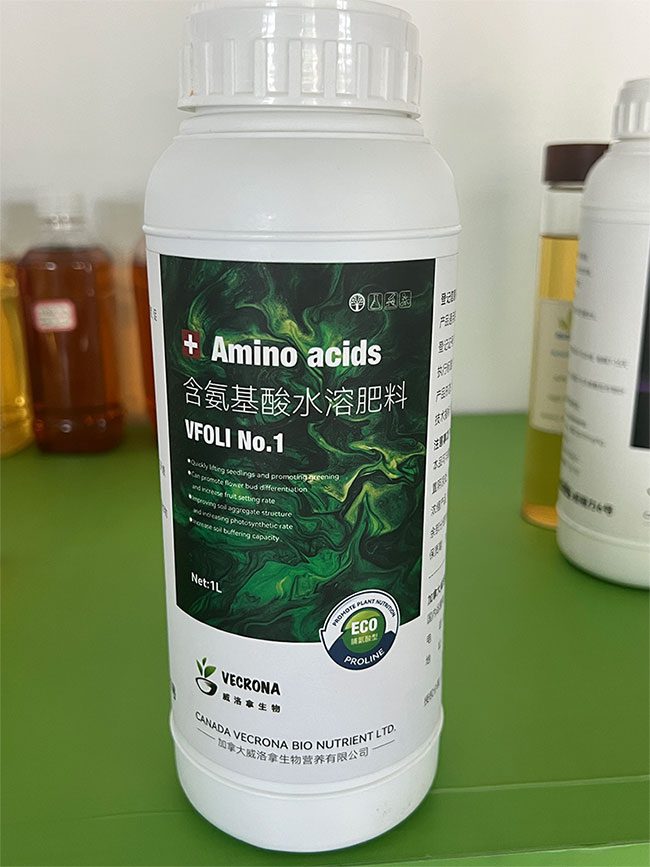
| Ingredients | |
| N ≥15% | Zn+B ≥20g/L |
| P₂O₅≥3% | Glycine ≥100g/L |
| K₂O ≥5% | |
Of course, different nitrogen, phosphorus, and potassium ratios are used to meet the nutritional needs of plant growth. Plants require different nutrients during their growth stages to support the growth needs of different parts of the plant.
During the green leaf growth period, more nitrogen is needed. Nitrogen is an important component of chlorophyll and protein, contributing to leaf growth and improved photosynthetic efficiency. Plants at this stage need to rapidly grow leaves and stems and expand their canopy to prepare for the later flowering and fruiting. You can choose a liquid fertilizer with high nitrogen content during this period.
Plants need phosphorus during the flowering period. Phosphorus participates in energy transfer (ATP) and cell division and is a key element in flower bud formation and floral development. It promotes the transformation from vegetative growth to reproductive growth, increasing flower bud differentiation and fruit set rates. It also enhances pollen viability and plant growth potential.
Plants need potassium during the fruit-setting period. Potassium regulates water balance, sugar transport, and enzyme activity and is crucial for fruit enlargement and quality formation. It can strengthen fruit set, promote fruit enlargement, and increase fruit sweetness. RutomVitaGro High Potash Fruit Food 2-6-12 Liquid Solution is very high in potassium and rich in amino acids, which enhances the plant’s resistance to stress.
According to the formula/physical type
Liquid fertilizers come in various formulations, each designed for different application needs and plant growth conditions. Understanding the differences between these formulations helps growers choose the suitable products.
Clear solutions are the most common types. These fertilizers can be mixed with water easily in a certain ratio, forming a solution without any sediment. So many farmers use liquid fertilizer for easy use. Their high solubility ensures that nutrients can be quickly released through soil irrigation or foliar spraying.
Liquid fertilizer with suspended particles is a high-concentration liquid fertilizer. This type of fertilizer with rich nutrients like nitrogen, phosphorus, potassium, or trace elements is uniformly distributed in the liquid in the form of micron-sized solid particles. These particles exist in micron-sized solid form and do not settle rapidly but are kept in suspension by thickeners, dispersants, and stabilizers—this is their key characteristic. Suspension fertilizers typically provide higher nutrient concentrations because they can carry more solid particles than a true solution. They need to be shaken thoroughly before use to ensure even particle distribution and prevent uneven application. They can be used for drip irrigation and sprinkler irrigation on farms. Plants require high phosphorus and potassium levels during critical growth stages.
Emulsions and organic liquid fertilizers—such as fish milk, seaweed extracts, and plant extracts—combine nutritional value with soil-improving benefits. These products typically enhance microbial activity, promote root development, and improve plant resilience, making them popular among sustainable growers. Rutom Fish Amino Acid Liquid Solution 3-0.5-5 is made from fermented natural fish milk, providing nutrition at different stages of plant growth.
Ready-to-use (RTU) formulations are pre-diluted liquid sprays that require no mixing. They are especially convenient for beginners, small potted plants, or home users who want quick and easy fertilization without the need for metering or mixing.
Furthermore, foliar sprays are designed for foliar application, allowing for rapid nutrient absorption during key growth stages such as flowering or fruiting. Their fine spray characteristics ensure even coverage and rapid absorption.
These formulation types offer growers flexibility to meet the needs of different crops, environments, and management practices.
How to Apply Liquid Fertilizer Correctly
Based on the above introduction, we have a general understanding of the types of liquid fertilizers on the market. We can choose suitable liquid fertilizer products for plant cultivation according to this knowledge. So, how do we apply liquid fertilizer? Since liquid fertilizer is mainly a concentrated solution rich in nutrients, it cannot be applied directly, which will cause an imbalance in root osmotic pressure, leading to root tip burn and browning. It needs to be diluted with water according to a specific ratio before use. Diluted liquid fertilizer is more easily absorbed by root hairs, resulting in a more significant fertilizing effect.
The dilution ratio varies depending on the plant’s nutrient needs and absorption capacity at different growth stages.
For example, in the seedling stage, when the root system is weak, liquid fertilizer needs to be highly diluted, approximately 1:800-1:1500.
| Stage | Features | Dilution Ratio |
|---|---|---|
| Seedling Stage | Weak root system, requires high dilution | 1:800–1:1500 |
| Vigorous Growth Stage | Green leaves, strong absorption | 1:300–1:800 |
| Flowering/Fruiting Stage | Sensitive to salt | 1:500–1:1000 |
Different application methods require different dilution ratios for liquid fertilizer.
| Application Method | Absorption Efficiency | Dilution Requirement |
|---|---|---|
| Foliar Spraying | High | 1:800–1:1500 |
| Root Irrigation/Watering | Medium | 1:300–1:800 |
| Drip Irrigation/Fertilizer Integration | High | 1:400–1:1200 |
| Fertigation | Low | Slightly lower dilution is acceptable. |
Foliar spraying, which involves direct contact with plant leaves, is most likely to cause burns; therefore, it requires the highest dilution ratio.
Most product descriptions will indicate the dilution ratio, allowing you to dilute liquid fertilizer according to the plant’s growth stage and fertilization method.
For example, we have provided usage instructions for Rutom Fish Amino Acid Liquid Fertilizer on our product page.
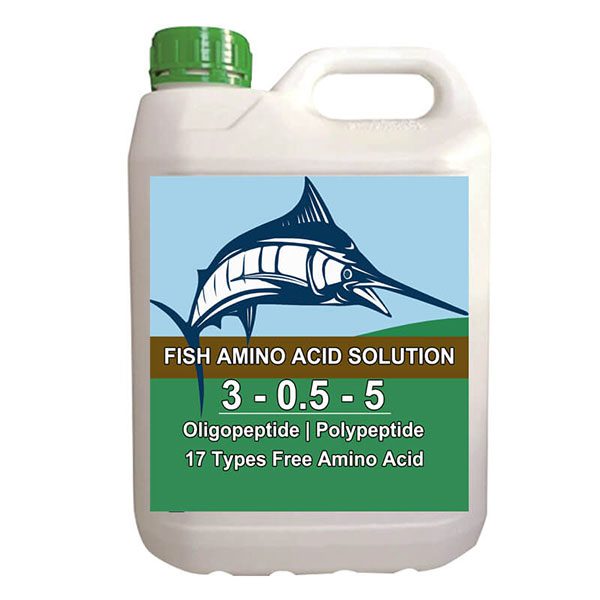
Directions For Use
Rutom Fish Amino Acid Liquid Fertilizer is advisable for application on all plants throughout the growth stage.
The frequency and dilution ratio of application should be in accordance with your local guidelines.
Foliar Spraying
Dilute one part of fish amino acids with 800 to 1000 parts of water to obtain the spraying solution, and then apply it via your spraying equipment. It is advisable to use this on all plants during the growth period.
Repeat the spraying application at weekly intervals.
Soil Irrigation
Mix one part of fish amino acids thoroughly with 500 to 800 parts of water to prepare the irrigation solution.
Apply it through your irrigation systems and repeat the application every two weeks.
Drip Irrigation or Hydroponics
For all plants, apply the fish amino acids with a dilution ratio of 1:800 to your drip irrigation or hydroponic systems.
Application Methods
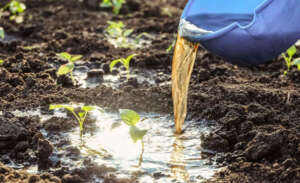
Watering the plant root zone with diluted liquid fertilizer: This allows nutrients to enter the root system directly for absorption. Watering the roots when the soil is slightly moist is most effective, maximizing absorption efficiency.
Suitable for most crops, including vegetables, fruit trees, potted plants, and flowers. When using, water around the roots, not directly onto the stem.
2. Foliar spraying is a highly efficient method; in this way, nutrients are absorbed directly through the stomata. Timing is crucial for foliar spraying. For reducing leaf burn and evaporation loss, spray in the morning or evening when sunlight is mild and evaporation is low. Cover both sides of the leaves with the spray, as most stomata are concentrated on the underside. Avoid spraying in strong sunlight, high temperatures, or dry, windy weather at midday to reduce the risk of leaf burn. Prevent plant injury.
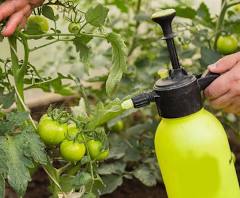
3. Irrigation System / Fertigation: For greenhouse, facility agriculture, or commercial growers, liquid fertilizer can be added to sprinkler, drip, or micro-sprinkler irrigation systems for integrated water and fertilizer management. Irrigation fertilization is suitable for an orchard with irrigation equipment. When using it, ensure the fertilizer is completely dissolved and avoid precipitation reactions with hard water or other fertilizers. This method delivers nutrients evenly and is highly automated. It does not require much labor and is suitable for large-scale planting.
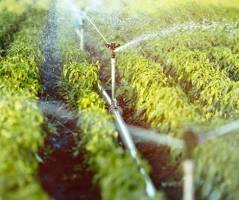
4. Hose-End Sprayer/Watering Can: Suitable for home gardening enthusiasts, the hose-end sprayer automatically mixes fertilizer according to a certain ratio, ideal for lawns and gardens. The watering can is easy to use; simply add fertilizer according to the dilution ratio. It is suitable for potted plants, vegetable gardens, and flower beds.
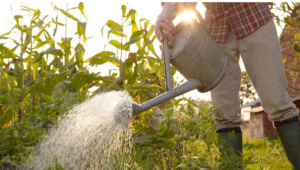
Timing & Frequency
Liquid fertilizers lack the sustained-release properties of granular fertilizers. So we recommend a more frequent, lighter, and multi-application method. Apply every 1–2 weeks, using a low concentration with each irrigation. Seedlings require even lower concentrations of liquid fertilizer, but the frequency can be increased appropriately. The timing of liquid fertilizer application is also crucial; early morning and late evening are ideal. At these times, leaf stomata are open, and temperatures are not high. This reduces the risk of evaporation and fertilizer burn. We should avoid applying liquid fertilizer in a foliar way at midday, as water evaporates very quickly from the leaf surface, and the fertilizer solution evaporates before it can be absorbed because of the high temperature. Weather conditions also affect the effectiveness of liquid fertilizers. Rainwater can wash away or dilute the fertilizer solution, which leads to decreased absorption, reduced fertilizer efficiency, and even fertilizer waste. Even more, raindrops will disrupt the distribution of the fertilizer on the leaves. It may cause localized over-concentration or under-concentration, affecting the overall fertilization effect. If leaves are still damp after rain, the fertilizer solution will also be difficult to adhere to and be absorbed.
Liquid fertilizers can have immediate effects on plants, but they should not be overused. It’s important to know the precautions when using liquid fertilizer. So it will not be misused and damage plant health.
Most liquid fertilizers (especially nitrogen, potassium, and micronutrient fertilizers) inherently contain water-soluble salts. The liquid concentration is relatively high. When the concentration is too high, the salt concentration in the roots or on the outer surface of the leaves is much higher than inside the cells, causing plant cell dehydration, cell shrinkage, death, scorched leaf edges, browning of roots, and root rot. If the plant shows yellowing leaves, scorched edges, or burns, the root zone should be rinsed with clean water immediately and the fertilizer concentration reduced.
Liquid fertilizers are divided into solution and suspension types. Solution fertilizers contain all nutrients completely dissolved in water, resulting in a clear, uniform liquid without sedimentation; simply dilute with water before use. Suspension fertilizers, on the other hand, contain nutrients suspended in fine particles in the liquid. They will settle when left to stand and require shaking to mix well. Stir constantly during use.
The biggest concern when applying liquid fertilizer is during rainy days. Applying liquid fertilizer before or after rain poses risks to the environment and nutrient loss. If fertilizer is applied immediately after or just before heavy rain, the fertilizer solution is easily washed away by rainwater, cannot be effectively absorbed by plants, and enters drainage ditches or natural water bodies with surface runoff. We should avoid excessive or improper fertilization, which leads to exacerbation of nutrient loss, especially nitrogen and phosphorus fertilizers. This will affect ecosystem stability. Therefore, the concentration and frequency of liquid fertilizer application should be strictly controlled to avoid periods of rainfall, and operation should be carried out when the soil is not waterlogged. If the weather is stable, it helps to ensure fertilizer effectiveness and reduce environmental impact.
Proper storage and handling of liquid fertilizers are crucial for maintaining product stability. Liquid fertilizers should be stored in a cool, dry place, away from direct sunlight. High temperatures or ultraviolet radiation can cause nutrient degradation, discoloration, or increased pressure inside the container.
When using the product, users should wear protective gloves and goggles, as some formulas may irritate the skin or eyes. Also, unless the product label explicitly states that it can be mixed, do not mix chemically incompatible fertilizers. Improper mixing may lead to precipitation, reduced nutrient availability, or adverse chemical reactions, thereby affecting safety and efficacy. Rutom VFOLI Amino Acid liquid fertilizer can be used with insecticides, fungicides, and acaricides.
Conclusion
If your plants need an urgent boost of nutrients, liquid fertilizer is a good option. However, attention must be paid to the application ratio, timing, and weather conditions. Otherwise, the desired effect will not be achieved, and plant health may be harmed, further reducing the grower’s economic benefits. Always read the product instructions before use and dilute the liquid fertilizer according to the plant’s growth condition and application method. Also, we should consider whether the liquid fertilizer you chose can be used with other insecticides or acaricides. Hopefully, this blog can help you understand liquid fertilizer and use it correctly. Let liquid fertilizer improve the quality and yield of your crop.
Q: How soon do plants absorb liquid fertilizer?
A: Very quickly. Since nutrients in liquid fertilizers are already dissolved, plants can take them up within minutes to several hours. Depending on plant species and environmental conditions, most absorption is completed within 24 hours.
Q: Is liquid fertilizer better than granular?
A: Not necessarily “better”—they simply serve different purposes. Liquid fertilizers provide fast absorption and flexible application, while granular fertilizers release nutrients slowly, offering longer-lasting effects and fewer application intervals.
Q: Can I apply liquid fertilizer every week?
A: It depends on plant requirements. Heavy feeders like vegetables or systems with frequent irrigation may need applications every 1–2 weeks. However, always follow recommended dilution rates to avoid nutrient burn or over-fertilization.
Q: How to prevent sediment in suspension fertilizers?
A: Shake thoroughly before use and maintain agitation during application. Continuous stirring prevents heavier particles from settling, ensuring the fertilizer remains uniform and nutrients are evenly delivered to the plants.
Q: Can I store mixed liquid fertilizer?
A: Generally no. Diluted solutions tend to separate, form sediments, or lose nutrient stability over time. For best results, mix only the amount needed and apply immediately according to product instructions.

 English
  Spanish
  Japanese
  Korean
  German
  Portuguese
  Italian
  Indonesian
  Vietnamese
  Turkish
  Persian
  Russian
  Chinese