
Detail Produk
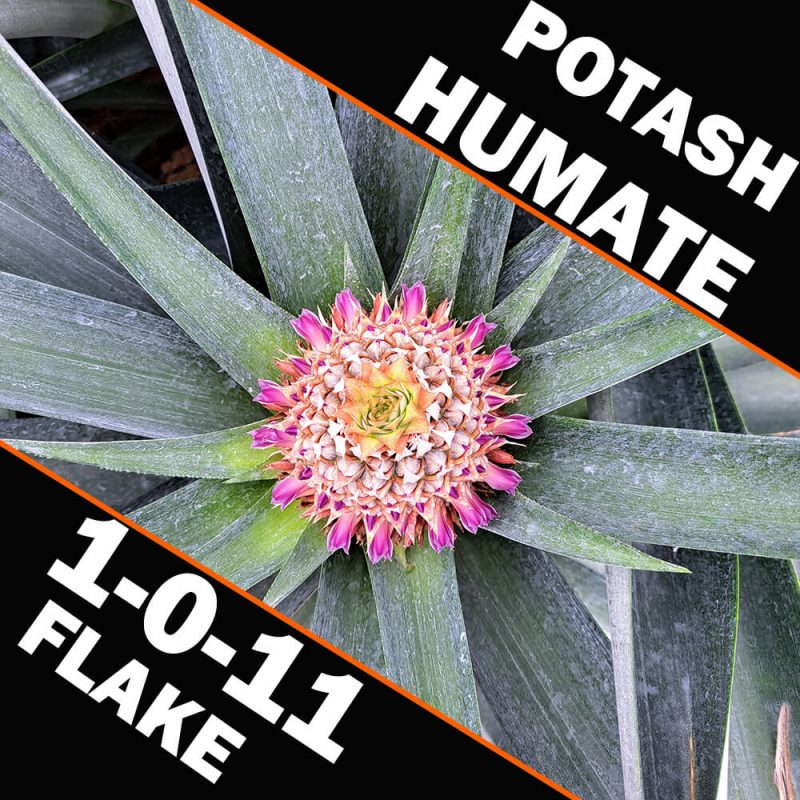
Bubuk Potash Humate 1 – 0 – 11
(Perbaikan Tanah & Pasokan Kalium Tepat Waktu)
- Kalium humat dapat secara efektif memperbaiki struktur tanah.
- Ia dapat mengatur pH tanah. Pada tanah asam, gugus basa dalam kalium humat dapat menetralkan keasaman dan meningkatkan nilai pH tanah.
- Kalium humat juga dapat meningkatkan kapasitas pertukaran kation (CEC) tanah.
- Hal ini menyediakan lingkungan hidup yang ideal dan sumber nutrisi yang melimpah bagi mikroorganisme tanah.
- Kalium humat dapat meningkatkan ketahanan tanaman terhadap kekeringan.
KALIUM HUMAT
Kalium humat adalah pupuk kalium organik dan garam kalium dari asam humat. Komponen utamanya adalah asam humat dan ion kalium. Asam humat adalah senyawa makromolekul organik alami yang kompleks. Ini adalah asam organik molekul tinggi yang terdiri dari gugus aromatik dan berbagai gugus fungsi. Struktur molekulnya mengandung gugus fungsi asam seperti gugus karboksil (-COOH) dan gugus hidroksil fenolik (-OH). Gugus fungsi ini dapat bergabung dengan ion kalium (K⁺) untuk membentuk kalium humat. Struktur kimia kalium humat memberinya banyak sifat unik. Ini memiliki sifat koloid. Larutan encernya dapat membentuk larutan koloid. Larutan koloid ini dapat menyerap zat berbahaya seperti ion logam berat di dalam tanah dan memainkan peran tertentu dalam memurnikan tanah. Pada saat yang sama, sifat koloid kalium humat juga membantu memperbaiki struktur agregat tanah, sehingga partikel-partikel tanah dapat saling terikat dengan lebih baik dan membentuk struktur tanah yang baik. Selain itu, ia juga memiliki kapasitas pertukaran ion dan dapat bertukar dengan ion lain di dalam tanah, sehingga mengaktifkan unsur hara di dalam tanah dan meningkatkan kesuburan tanah.
Analisis Terjamin
Nitrogen (N) ———————1,21%
Kalium (K2O)——————11,12%
Magnesium (MgO)—————0,263%
Boron (B)————————-26 mg/kg
Sulfur (S)————————–0,25%
Besi (Fe) ————————— 0,563%
Seng (Zn) ————————-14,5 mg/kg
Mangan (Mn) —————-27,9 mg/kg
Tembaga (Cu)———————-12,5 mg/kg
Total Karbon (C) —————38,38%
Asam Humat———————-56,5%
Kelarutan dalam Air—————–98%
Bahan Organik (OM)———–65,13%
pH——————————-9,96
Kelembapan————————1,5%
Konduktivitas (CE)—————15,10 mS/cm
Wujud Fisik: Bubuk atau serpihan hitam lepas.
Petunjuk Penggunaan
Perbaikan Tanah
Dosis aplikasi per hektar adalah 30 hingga 75 kilogram. Aplikasikan dua hingga tiga minggu sebelum tanam di musim semi, sebarkan bubuk kalium humat secara merata di permukaan tanah, lalu lakukan pembajakan untuk mencampurnya sepenuhnya dengan tanah.
Pupuk Dasar
Sebarkan pupuk yang telah tercampur rata di alur tanam atau lubang tanam. Dosis umum per hektar biasanya 45 hingga 90 kilogram. Bubuk kalium humat dapat digunakan sebagai pupuk dasar bersama dengan pupuk organik, pupuk majemuk, dll. Saat menggunakannya, campurkan terlebih dahulu bubuk kalium humat dan pupuk lainnya secara merata sesuai proporsi tertentu.
Pupuk Tabur
- Penutup atas akar: Selama masa pertumbuhan tanaman, bubuk kalium humat dapat digunakan untuk pembalut akar. Untuk tanaman sayuran, selama masa pertumbuhan yang kuat, bubuk kalium humat dapat dilarutkan dalam air untuk membuat larutan 0,5%-1%, dan kemudian dituangkan di sekitar akar tanaman. Misalnya, menuangkan 0,5-1 liter larutan per tanaman sayuran dapat meningkatkan pertumbuhan akar sayuran dan penyerapan nutrisi.
- Penataan daun bagian atas: Ini juga dapat digunakan untuk topdressing daun. Siapkan bubuk humat kalium ke dalam larutan pupuk daun 0.1%-0.3%, dan pilih untuk menyemprotkan pada daun pada hari berawan tanpa angin atau di malam hari pada hari yang cerah. Jumlah penyemprotan harus sedemikian rupa sehingga permukaan daun lembab tetapi tidak menetes. Sebagai contoh, untuk pohon buah-buahan, penyemprotan daun selama periode pengembangan buah dapat mendorong perkembangan buah dan meningkatkan kualitas buah.
Kalium humat memiliki banyak keuntungan signifikan dalam bidang pertanian:
1. Dampak positif pada tanah
Efek perbaikan tanah yang sangat baik
Kalium humat dapat secara efektif memperbaiki struktur tanah. Ini adalah pembentuk agregat tanah yang baik yang dapat mengikat partikel tanah menjadi agregat yang stabil. Struktur ini sangat penting untuk meningkatkan aerasi dan permeabilitas tanah. Misalnya, di lahan pertanian di mana pemadatan tanah disebabkan oleh penggunaan pupuk kimia dalam jangka panjang, pemberian kalium humat dapat membuat tanah menjadi gembur dan keropos kembali. Hal ini seperti memberikan “pijatan pelonggaran” pada tanah, sehingga udara dan air di dalam tanah dapat bergerak bebas dan menciptakan lingkungan pertumbuhan yang baik untuk akar tanaman. Pada saat yang sama, ini dapat menyesuaikan pH tanah. Pada tanah yang bersifat asam, gugus basa dalam kalium humat dapat menetralkan keasaman dan meningkatkan nilai pH tanah. Di tanah basa, ini dapat memainkan peran penyangga dan mencegah pH tanah yang berlebihan merusak tanaman. Ini seperti “penyeimbang pH” untuk tanah, secara otomatis menyesuaikan pH tanah untuk membuat lingkungan tanah lebih cocok untuk pertumbuhan sebagian besar tanaman. Kalium humat juga dapat meningkatkan kapasitas pertukaran kation (KTK) tanah. Kapasitas tukar kation tanah merupakan indikator penting untuk mengukur kapasitas retensi kesuburan tanah. Ia dapat menyerap dan menukar kation di dalam tanah, seperti kalium, kalsium, magnesium, dan unsur hara lainnya, serta mengawetkan unsur hara tersebut agar tidak hilang akibat pencucian oleh hujan. Ini seperti “bank penyimpanan unsur hara”, dan ketika tanaman membutuhkan unsur hara ini, unsur hara tersebut dapat dilepaskan untuk diserap tanaman.
Meningkatkan aktivitas mikroba tanah
Ini menyediakan lingkungan hidup yang ideal dan sumber nutrisi yang kaya untuk mikroorganisme tanah. Mikroorganisme tanah memainkan peran kunci dalam proses penguraian bahan organik dan pelepasan unsur hara. Kalium humat bagaikan “pesta bagi mikroorganisme”. Komponen organik di dalamnya dapat diuraikan dan dimanfaatkan oleh mikroorganisme seperti bakteri dan jamur. Sebagai contoh, beberapa bakteri pengikat nitrogen dapat memainkan peran fiksasi nitrogen dengan lebih baik di lingkungan yang baik yang disediakan oleh kalium humat dan mengubah nitrogen di udara menjadi nitrogen amonium yang tersedia untuk tanaman, sehingga meningkatkan kesuburan tanah.
2. Efek membantu pertumbuhan tanaman
Meningkatkan ketahanan tanaman terhadap stres Kalium humat dapat meningkatkan ketahanan tanaman terhadap kekeringan. Hal ini dapat mendorong perkembangan akar tanaman menjadi lebih kuat dan meningkatkan area penyerapan dan kedalaman akar. Dengan cara ini, selama periode kekeringan, akar tanaman dapat menyerap air dengan lebih baik dari dalam tanah. Selain itu, juga dapat mengatur tekanan osmotik sel tanaman, sehingga sel tanaman dapat mempertahankan tekanan turgor tertentu dalam kondisi kekurangan air dan mengurangi kehilangan air. Misalnya, untuk gandum yang ditanam di daerah kering, setelah menerapkan kalium humat, kecepatan layu daunnya dalam kondisi kekeringan melambat secara signifikan, dan tanaman dapat bertahan hidup lebih baik. Ini juga membantu meningkatkan ketahanan tanaman terhadap suhu dingin. Dalam lingkungan bersuhu rendah, kalium humat dapat meningkatkan kandungan zat seperti gula larut dan prolin dalam sel tanaman. Zat-zat ini dapat menurunkan titik beku sel tanaman. Ini seperti menambahkan “antibeku” ke dalam sel untuk mencegah sel rusak karena pembekuan. Sebagai contoh, untuk sayuran yang ditanam pada musim dingin di bagian utara, penggunaan kalium humat dapat mengurangi dampak kerusakan akibat pembekuan. Selain itu, kalium humat juga dapat meningkatkan ketahanan tanaman terhadap hama dan penyakit. Ini dapat mendorong tanaman untuk menghasilkan serangkaian respons pertahanan dan mengaktifkan sistem enzim pertahanan pada tanaman, seperti peroksidase, polifenol oksidase, dll. Enzim-enzim tersebut dapat membantu tanaman melawan serangan bakteri patogen dan hama. Sebagai contoh, ketika tanaman terancam oleh penyakit jamur, tanaman yang diaplikasikan dengan kalium humat dapat mengurangi area kejadian dan tingkat keparahan penyakit melalui mekanisme pertahanan yang ditingkatkan.
Meningkatkan pertumbuhan dan perkembangan tanaman Sebagai sumber pupuk kalium, kalium humat dapat menyediakan unsur kalium yang cukup untuk tanaman. Unsur kalium memainkan berbagai peran penting dalam proses fisiologis tanaman. Dalam fotosintesis, ia berpartisipasi dalam proses transfer elektron fotosintesis dan fosforilasi fotosintesis, meningkatkan asimilasi karbon dioksida, dan meningkatkan efisiensi fotosintesis. Pada saat yang sama, kalium juga dapat meningkatkan pengangkutan dan akumulasi gula pada tanaman, yang bermanfaat bagi perkembangan dan peningkatan kualitas buah. Misalnya, saat menanam apel, pemberian kalium humat dapat membuat buah apel lebih berisi, dengan warna yang lebih cerah dan rasa yang lebih enak. Komponen asam humat dalam kalium humat juga dapat merangsang sintesis dan sekresi hormon pertumbuhan tanaman. Hormon pertumbuhan ini dapat meningkatkan pertumbuhan dan pemanjangan akar tanaman dan membuat akar lebih berkembang. Akar yang berkembang dapat menyerap air dan nutrisi di dalam tanah dengan lebih baik, dan kemudian mendorong pertumbuhan bagian di atas tanah, seperti menambah tinggi tanaman, ketebalan batang dan jumlah daun, dll., Dan akhirnya meningkatkan hasil panen.
3. Keunggulan sinergi pupuk
Meningkatkan tingkat pemanfaatan pupuk Kalium humat dapat digunakan dalam kombinasi dengan berbagai pupuk untuk memainkan peran sinergis. Ia dapat menyerap nitrogen amonium dan memperbaikinya di dalam tanah untuk mengurangi hilangnya penguapan amonia. Misalnya, saat menggunakan pupuk nitrogen seperti urea, mengaplikasikannya bersama dengan kalium humat dapat meningkatkan tingkat pemanfaatan pupuk nitrogen. Pada saat yang sama, ia juga dapat membentuk kompleks dengan pupuk fosfor dan melepaskan fosfor tetap di dalam tanah untuk meningkatkan efektivitas pupuk fosfor. Ini seperti “penolong kecil untuk pupuk”, membuat pupuk bekerja lebih baik, mengurangi limbah pupuk, dan menurunkan biaya produksi pertanian.
Apa saja perbedaan efek perbaikan kalium humat pada berbagai jenis tanah?
[Tanah kental] [Perbaikan struktur]: Tanah yang kental memiliki partikel yang halus, tekstur yang berat, serta permeabilitas udara dan air yang buruk. Kalium humat dapat membuat partikel tanah menggumpal dan membentuk struktur butiran yang baik. Komponen koloid organiknya dapat mengikat partikel tanah. Pada tanah yang kental, ini seperti “jembatan”, menghubungkan partikel-partikel tanah yang kecil, meningkatkan pori-pori tanah, dan meningkatkan permeabilitas udara dan permeabilitas air pada tanah. Misalnya, di lingkungan yang sebagian besar terdiri dari tanah kental seperti sawah, setelah menerapkan kalium humat, pemadatan tanah menjadi lega, yang bermanfaat bagi respirasi aerobik akar padi.
[Aktivasi dan pertukaran unsur hara]: Pada tanah yang kental, kapasitas pertukaran kation relatif tinggi, tetapi ketersediaan unsur hara mungkin rendah. Kalium humat dapat teradsorpsi pada permukaan koloid tanah dan menukar ion hara yang teradsorpsi melalui pertukaran ion untuk meningkatkan ketersediaan hara. Misalnya, dapat menukar ion kalium, ion amonium, dll. Yang teradsorpsi oleh koloid tanah untuk penyerapan dan pemanfaatan tanaman, mengurangi fiksasi hara.
[Optimalisasi lingkungan mikroba]: Struktur tanah dan status hara yang lebih baik memberikan ruang hidup yang lebih baik bagi mikroorganisme. Mikroorganisme dapat berkembang biak dan aktif dengan lebih baik di lingkungan tanah dengan permeabilitas udara yang baik dan menguraikan bahan organik untuk lebih meningkatkan kesuburan tanah. Sebagai contoh, aplikasi kalium humat dapat meningkatkan jumlah mikroorganisme yang menguntungkan, seperti bakteri pengikat nitrogen dan bakteri pelarut fosfor, di dalam tanah. Mikroorganisme ini dapat menyediakan nitrogen dan fosfor yang tersedia untuk tanaman.
Tanah berpasir
[Peningkatan retensi air dan pupuk]: Tanah berpasir memiliki partikel yang besar dan pori-pori yang besar serta kapasitas penyimpanan air dan pupuk yang buruk. Kalium humat dapat mengisi pori-pori tanah dan meningkatkan kapasitas penyimpanan air tanah. Ini seperti spons, menyerap dan menahan air selama hujan atau irigasi untuk mencegah rembesan ke bawah yang berlebihan dan hilangnya air. Pada saat yang sama, ia juga dapat menyerap dan menahan ion hara seperti nitrogen amonium, nitrogen nitrat, dan ion kalium, sehingga mengurangi hilangnya pupuk yang tercuci. Misalnya, untuk beberapa tanaman penahan angin dan fiksasi pasir yang ditanam di tepi gurun, setelah menerapkan kalium humat, kinerja retensi air dan pupuk tanah ditingkatkan, dan lingkungan pertumbuhan tanaman ditingkatkan.
[Stabilisasi struktur tanah]: Walaupun tanah berpasir itu sendiri memiliki permeabilitas udara yang baik, namun strukturnya gembur. Kalium humat dapat mengikat partikel pasir dan membuat struktur tanah menjadi lebih stabil. Hal ini membantu mencegah tanah terkikis oleh angin atau aliran air dan menjaga keutuhan tanah. Sebagai contoh, pada beberapa lahan berpasir di tepi sungai atau lahan berpasir di pesisir pantai, kalium humat dapat membantu memperbaiki tanah dan mengurangi erosi tanah.
[Mempromosikan pertumbuhan tanaman]: Struktur tanah yang stabil dan kinerja retensi air dan pupuk yang baik memberikan kondisi yang menguntungkan untuk pertumbuhan tanaman. Akar tanaman dapat berakar lebih baik di dalam tanah dan menyerap air serta unsur hara. Kalium humat juga dapat merangsang pertumbuhan akar tanaman dan membuat akar lebih berkembang, yang selanjutnya meningkatkan kemampuan beradaptasi tanaman terhadap lingkungan tanah berpasir.
[Tanah asam] [Penyesuaian pH]: Nilai pH tanah asam relatif rendah, yang menghambat pertumbuhan banyak tanaman. Kalium humat mengandung gugus basa dan dapat menetralkan keasaman tanah serta meningkatkan nilai pH tanah. Misalnya, di daerah tanah merah selatan yang tanahnya sangat asam, aplikasi kalium humat dapat menyesuaikan nilai pH tanah ke kisaran yang lebih sesuai untuk pertumbuhan tanaman dan mengurangi toksisitas elemen berbahaya seperti aluminium dan mangan pada tanaman.
[Peningkatan ketersediaan unsur hara]: Pada tanah yang asam, ketersediaan unsur hara seperti fosfor dan kalium sering kali rendah. Kalium humat dapat melepaskan fosfor tetap dengan cara mengomplekskan dengan unsur-unsur seperti besi dan aluminium di dalam tanah. Pada saat yang sama, ia juga dapat menyediakan unsur kalium dan meningkatkan ketersediaan unsur hara di dalam tanah. Hal ini membantu tanaman menyerap unsur hara dengan lebih baik dan meningkatkan pertumbuhan tanaman.
[Pemulihan ekologi tanah]: Menyesuaikan pH dan meningkatkan status unsur hara bermanfaat bagi kelangsungan hidup mikroorganisme dan hewan di dalam tanah. Aktivitas sebagian mikroorganisme di tanah asam terhambat. Penggunaan kalium humat dapat memulihkan dan meningkatkan aktivitas mikroorganisme tanah dan meningkatkan keseimbangan ekosistem tanah. Sebagai contoh, hewan tanah seperti cacing tanah akan lebih aktif di tanah asam yang telah diperbaiki, dan aktivitas mereka akan semakin memperbaiki struktur tanah.
[Tanah basa] [Fungsi penyangga]: Nilai pH tanah alkali relatif tinggi. Kalium humat dapat berperan sebagai penyangga dan mencegah pH tanah yang berlebihan sehingga tidak membahayakan tanaman. Dapat bereaksi dengan zat basa di dalam tanah, mengurangi alkalinitas tanah, dan menjaga nilai pH tanah dalam kisaran yang relatif stabil, menciptakan lingkungan pH yang sesuai untuk pertumbuhan tanaman.
[Pengaturan garam]: Beberapa tanah alkali memiliki kandungan garam yang relatif tinggi. Kalium humat dapat menyerap ion garam di dalam tanah dan mengurangi bahaya garam bagi tanaman. Sebagai contoh, pada tanah salin-alkali, kalium humat dapat mengurangi kandungan garam berbahaya seperti ion natrium di dalam tanah, mengurangi kerusakan garam pada tanah, dan memungkinkan tanaman untuk tumbuh lebih baik.
[Peningkatan kesuburan tanah]: Mirip dengan tanah asam, kalium humat juga dapat memperbaiki struktur tanah, meningkatkan kapasitas penyimpanan pupuk tanah, dan meningkatkan pemanfaatan nutrisi secara efektif di tanah basa. Ini dapat mengaktifkan nutrisi seperti fosfor di dalam tanah dan meningkatkan aktivitas mikroorganisme tanah, sehingga meningkatkan kesuburan tanah.

 English
  Spanish
  Japanese
  Korean
  German
  Portuguese
  Italian
  Indonesian
  Vietnamese
  Turkish
  Persian
  Russian
  Chinese