

table of contents
Humus soil is often called “black gold” or “gardener’s gold”, which is a kind of soil that contains a lot of humus, it is dark with organic matter, which is formed when plant and animal remains break down into the soil. So when we are talking about the humus in soil, it is actually the final stage of decomposition, all the original materials have been decomposed so that we cannot recognize what they are anymore. At this stage, humus-rich soil is dark in color, contains abundant nutrients, has a loose texture, and emits a healthy earthy smell. Humus soil can help plants grow better because it can not only supply water and nutrients but also keep the soil loose. This guide will help you deeply understand what humus soil is, its benefits, and how to use it.
Humus Soil Definition & Basic Science
The Scientific Definition of Humus Soil
We have explained the humus briefly above. After soil microorganisms break down all of the plant and animal waste, humus is the stable, complex, and dark organic material that is left over. Humus is different from fresh compost or organic matter in that it has reached a biochemical stability that makes it resistant to further rapid decomposition. The USDA Natural Resources Conservation Service says that humus is amorphous and colloidal, which means that it is made up of tiny particles that give soil its dark color and crumbly texture. You can’t see it as a separate thing; it’s part of healthy topsoil.
The Process: How Organic Matter Becomes Humus
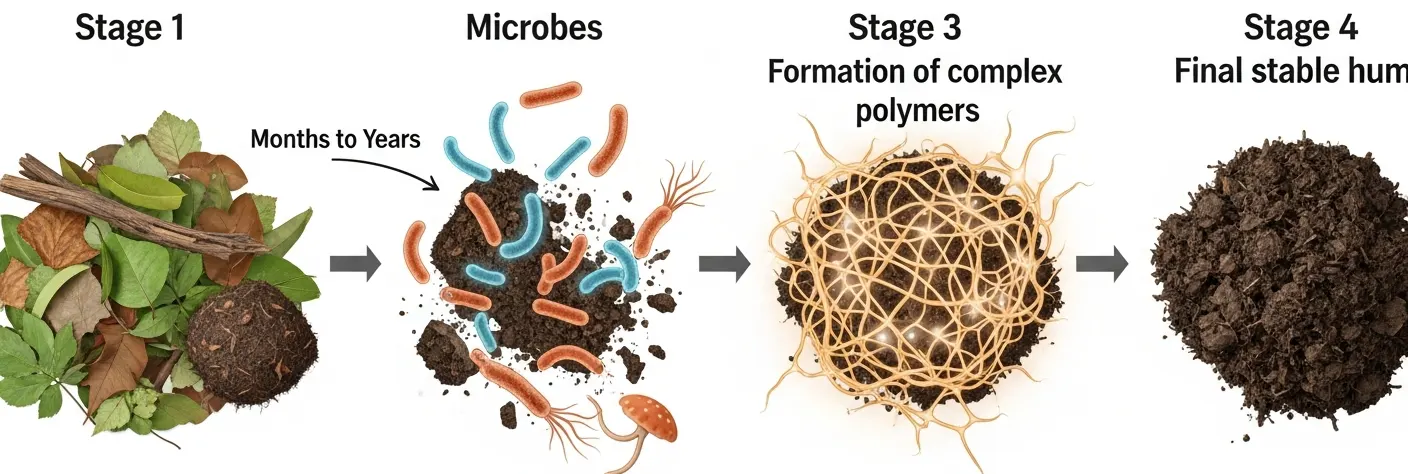
The change from organic waste to humus happens through a biological process called humification:
- Initial Decomposition: Bacteria and fungi break down fresh organic matter like leaves and manure into simpler compounds.
- Second Stage: It’s called the Synthesis Phase; microbial byproducts and resistant compounds (like lignin) come together to form complex polymers known as humic substances.
- Stabilization: These humic substances (humic acids, fulvic acids, and humin) become chemically stable and can stay in the soil for decades to centuries if the conditions are right. This whole process needs the right amount of moisture, oxygen, temperature, and microbial activity. It usually takes 6 months to 2 years in the best garden conditions.
Humus vs. Compost: Understanding the Critical Difference
It’s very easy for us to mix up the humus and compost. Let me explain it briefly: Compost is just like some ingredients in our kitchen, while humus is like the finished meal, which is waiting for us to taste. Compost is organic matter that is breaking down and still has things in it that you can see. The end result is humus, which is completely changed, stable, and part of the soil matrix.
Comparative Table: Humus vs. Compost
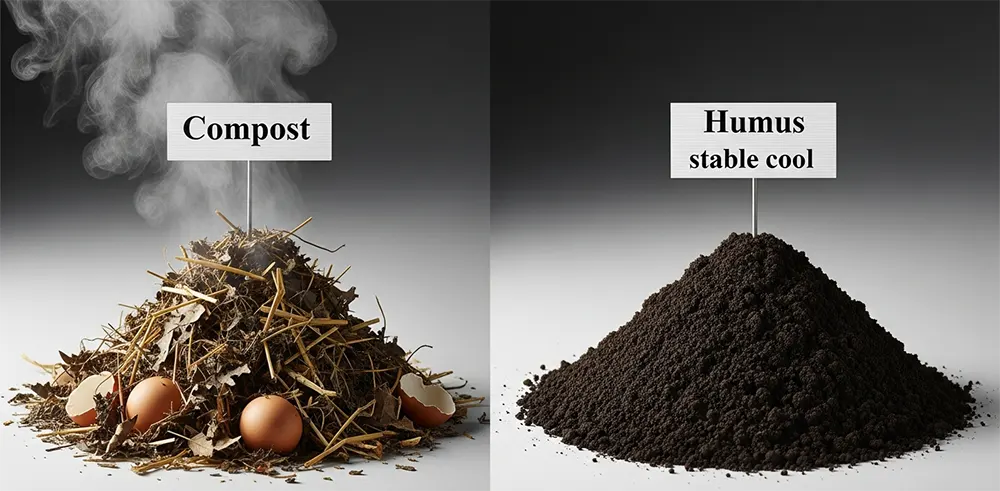
| Characteristic | Compost | Humus |
|---|---|---|
| Physical State | Variable texture, may contain recognizable bits | Uniform, dark, crumbly, no recognizable pieces |
| Decomposition Stage | Active decomposition | Completely decomposed, stable |
| Nutrient Availability | Releases nutrients quickly | Releases nutrients slowly over years |
| Microbial Activity | Very high (hot decomposition) | Moderate (stable microbial habitat) |
| Soil Structure Role | Adds bulk organic matter | Creates stable aggregates, improves tilth |
| Typical Application | Added seasonally as amendment | Built and maintained over years |
The Benefits of Humus Soil
The CEC Factor: Supercharged Nutrient Retention
Humus has a very high Cation Exchange Capacity (CEC). In simple terms, humus particles have negative charges on their surfaces that pull in and hold positively charged nutrient ions like potassium (K⁺), calcium (Ca²⁺), and magnesium (Mg²⁺). Cornell University Cooperative Extension’s research shows that humus can have a CEC that is 4 to 6 times higher than clay particles. So we can know that:
- It’s not easy for rain and irrigation to wash over the nutrients.
- Plants can get the nutrients slowly and won’t burn the roots.
- Less need for fertilizers and less cost.
Soil Structure Improvement
Humus is like natural glue for soil. It can stick together small soil particles like sand, silt, and clay, and this will make larger “crumbs” or “peds.” And we can find the grouping function:
- Space for plant root breathing
- Good for water infiltration and drainage
- Less compaction and crusting
Water Management
As we know, humus loves water a lot. It can keep 80% to 90% of its weight in water, which is a lot more than clay can. The main function is:
- Better water retention in sandy soils (less watering needed)
- Better drainage in clay soils (keeps water from pooling)
- Buffered levels of moisture during dry spells or heavy rain The Soil Science Society of America Journal published a study that found that adding just 1% organic matter as humus could increase the amount of water the soil can hold by up to 25,000 gallons per acre-foot.
Ecosystem for Soil Life
Humus is the best place for helpful soil organisms to live and get food.
- Bacteria and fungi can Help nutrients move around and prevent the diseases
- Earthworms can dig holes and their waste will supply nutrients for plants
- Nematodes and microarthropods that keep populations in check and break down waste This living part makes a nutrient cycle that doesn’t need outside inputs to keep going.
How to Increase Humus in Soil
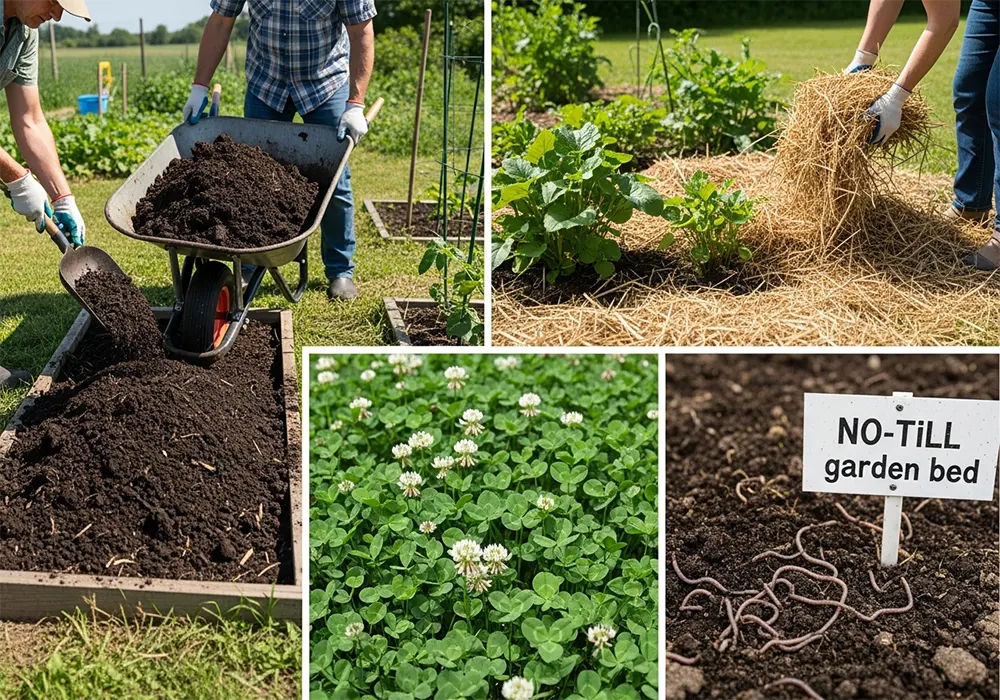
Adding Organic Matter: Compost, Manure, and Plant Residues
If we want to increase humus in soil, one of the best ways is to add organic matter regularly and let the soil food web break it down at any time. We can apply well-aged compost, rotted manure, chopped plant residues, and kitchen scraps that are safe for compost to our fields. In this way, we can slowly build humus by mixing high-quality compost into the top few inches of soil every year.
We need to make sure that the materials we use are well decomposed and that they don’t contain any pollution or herbicide residues and excessive salts. And high temperature and proper curing can help kill weed seeds and reduce harmful organisms.
Use Mulch And Cover Crops to Makes Humus
Cover crops, which we can also call green manures, are plants we grow to protect and improve the soil rather than to get a harvest. The plants, like rye, oats, clover, and vetch, have roots and biomass that can provide organic matter to the soil when they decompose. We can leave the roots in the ground and cut the tops to lay on the surface, which can feed both soil microbes and earthworms.
And using shredded leaves, straw, grass clippings, and wood chips to cover the soil also can promote the humus formation. All these materials can be broken down on the soil surface; they can slowly release the nutrients to the soil surface. At the same time, mulch can help to prevent soil erosion and can reduce temperature changes and keep the surface moist; all these factors can affect organisms building humus.
Avoid Over-tilling and Chemical Overuse
As we know, if we dig soil too frequently, it will break apart soil aggregates and expose the humus to air. And humus will react chemically with oxygen in the air and lead to loss. If we do it for a long time, this process can reduce the humus level and lead to more compacted and less resilient soil. So, we’d better reduce the frequency of tilling, which will help preserve soil structure and humus.
Using too many synthetic fertilizers and some pesticides can also stress soil life and have an indirect effect on the formation of humus. Mineral fertilizers can help crops get the nutrients they need, but if you only use them and don’t add organic matter, they usually don’t build humus. A balanced approach that includes careful use of fertilizers, organic inputs, cover crops, and less disturbance is usually good for both yields and the long-term health of the soil.
Simple Jar Test for Detecting Humus in Soil
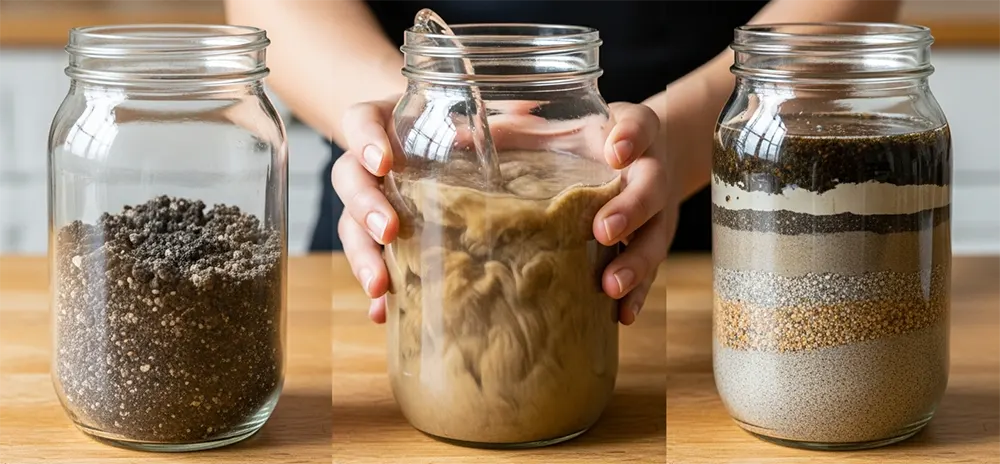
If we want to test our soil humus, we can do a simple jar test at home; it will help us to know what our soil is like and how much organic matter it has. We can fill a clear jar about one-third full with dry soil, add water almost to the top, close the lid, and shake it well to do this. After letting the jar sit for a day or more, the sand settles to the bottom first, then the silt, then the clay. Some fine organic matter and humus may float or stay suspended as a darker layer near the top.
This test doesn’t tell us exactly how much humus is in our soil, but it can tell us if there is a lot of fine dark material mixed in with the mineral particles. Laboratory tests are more reliable for getting accurate readings of organic matter or organic carbon levels. The jar test is still a simple and cheap way for us to start looking at our soil and keeping track of how it changes over time as we add organic matter and change the way we do things.
How to Use Humus-Rich Soil in Gardens, Lawns, and Fields
Humus Soil for Vegetable Gardens and Raised Beds
In the garden of vegetables and raised beds, humus-rich soil can help hold moisture and nutrients, and roots can easily reach them. We can mix up the humus-rich soil with our existing garden soil so that the soil can drain well and does not dry out too quickly. A lot of gardeners slowly add organic matter by putting compost in the ground when they plant and again after they harvest each crop.
Soil with a lot of humus can help leafy greens, tomatoes, peppers, squash, and root crops grow better by making the environment more stable. But having more organic matter isn’t always better; too much of some nutrients can throw things off. So we can change the crops, test the soil, and avoid high-nutrient inputs when they are not needed to reduce the risk.
Humus for Lawns, Trees, and Shrubs
A thin layer of compost that is rich in humus and spread over the lawn and lightly worked into the grass is good for the lawn. This topdressing makes the root zone better, helps good microbes grow, and helps grass bounce back from stress. Repeated light applications over time can help with deeper rooting, reduce thatch problems, and improve infiltration.
When we add organic matter and humus to soil, trees and shrubs can also respond well. We can spread a ring of mulch and compost around the drip line. This method is like a forest floor, where leaves and other things break down to make humus over many years.
How to Choose Humus Soil
A lot of bagged goods use words like “humus soil,” “humus compost,” or “humus-rich topsoil,” but these words can mean different things in different places. We usually buy a soil or compost mix that is dark in color and has a lot of organic matter in it, not pure humus. Humus is hard to package as a single, pure product because it is a stage of decomposition and not just an ingredient.
When we go shopping, we should look for things that are dark, crumbly, and smell good like dirt, not like something sour or rotten. Reading the labels can tell you how much organic matter is in the product, how to compost it, and if any fertilizers or other things have been added. If we are mixing fresh wood chips directly into planting areas, we may also want to stay away from products that have a lot of them, because they can temporarily tie up nitrogen as they break down.
Conclusion
In a word, if you care more about the soil health, humus soil is your good choice. It makes the soil more fertile, helps it hold water, changes its structure, and increases biological activity; all these benefits don’t harm the environment.
FAQs About Humus Soil
In simple terms, what is humus soil? Humus soil is a kind of soil; it is dark in color and has stable organic matter, and this organic matter comes from the completely decomposed plants and animals. It is soft and crumbly, and it is usually great for growing plants.
How long does it take for soil to get humus?
It can take a long time to build humus, depending on the weather, the type of soil, and how we take care of organic matter. We can often see big changes in the color and structure of the soil in two to five seasons when we add compost regularly, grow cover crops, and till less.
Is humus good for every kind of plant?
Humus is good for most garden and field crops because it makes the soil better at holding water and nutrients. Some plants that are used to living in very poor, sandy, or very acidic soils may not need a lot of organic matter.
Is humus a kind of fertilizer?
In the strictest sense, humus is not a fertilizer because it doesn’t give plants a lot of nutrients quickly. Instead, it serves as a long-term source of nutrients and a way to improve soil quality by slowly releasing nutrients and making the soil work better.
Is it possible to make humus soil at home?
We can’t make humus right away, but we can set up the right conditions for it to form by composting, adding organic matter, using cover crops, and keeping the soil structure safe. These things will help our garden soil get richer in humus and better for plants over time.


 English
  Spanish
  Japanese
  Korean
  German
  Portuguese
  Italian
  Indonesian
  Vietnamese
  Turkish
  Persian
  Russian
  Chinese