
table of contents
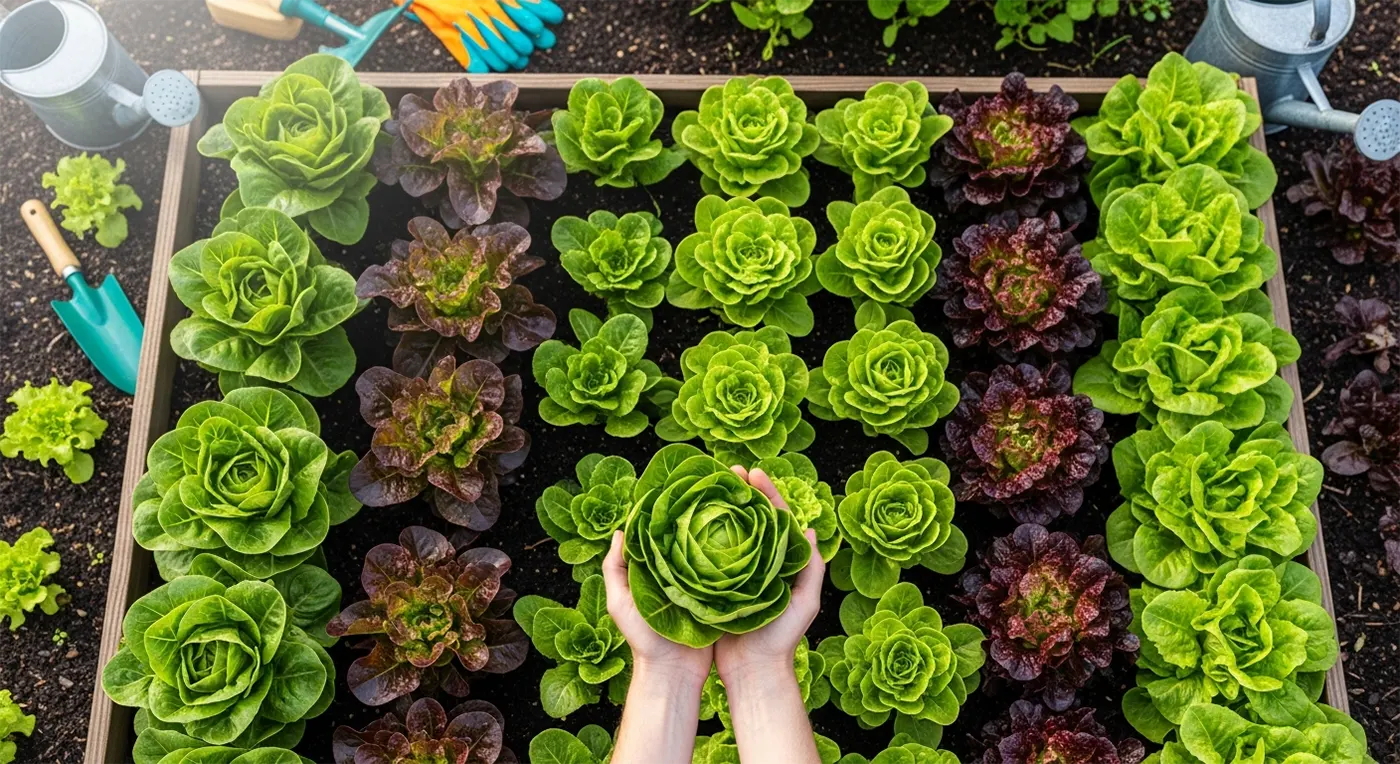
The most classic and basic “salad companion,” lettuce, serves as the base for almost all Western-style salads. It is also a classic ingredient in burgers, adding a crisp texture that helps balance greasy flavors. Lettuce is very easy to grow, takes up little space, and can even be planted among flower beds. In the mild temperatures of spring and autumn, lettuce can grow for several weeks. Leaf lettuce can easily be grown above or below taller vegetables, making it very suitable for container gardening. If you regularly use lettuce, why not try growing your own?
Lettuce is a cool-season vegetable that prefers full sunlight, fertile soil, and good drainage. Sow seeds at a depth of ¼–½ inch, 2–3 weeks before the last frost. For head-forming lettuce, plant seedlings 8–12 inches apart in rows spaced 12–18 inches apart. Lettuce grows rapidly and reaches peak flavor before the high summer heat. During the growing period, avoid water or nutrient shortages, and practice year-round pest and disease control. Harvest leaves or heads when they are fully mature.
Choosing the right lettuce variety is “crucial for the quality of summer salads.” This applies year-round—genetics determine a crop’s ability to withstand stress, heat, cold, and disease—but extra care is needed under extreme weather conditions. Lettuce comes in many varieties, with leaves differing in color and texture. Growing multiple types of lettuce can make your salads more colorful and diverse. Different varieties vary significantly in maturity, flavor, texture, and adaptability to growing conditions.
Types of lettuce to grow
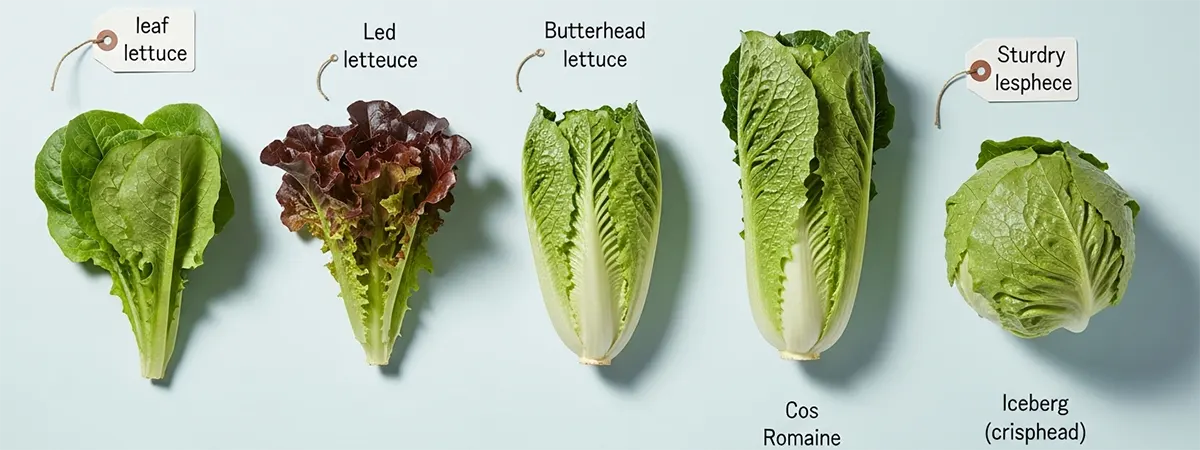
Leaf
Most gardeners raise this type, which has either green or reddish leaves. Fast-growing and long-lasting, this type can be grown from March to December with a break in July and August. Sow 10 to 20 seeds per foot of row. Thin individual plants 4- to 8-inches apart, depending on variety. Leaf lettuce also grows very successfully in a wide-bed arrangement when seedlings are thinned to 4- to 8 inches on all sides.
Butterhead
Bibb and Boston are examples of this loose-heading type with dark green leaves that are somewhat thicker than those of iceberg lettuce. Butterheads develop a light yellow, buttery appearance. Small-headed varieties are good choices for succession plantings. It may be started indoors for an even longer season. Bibb lettuce becomes bitter under high summer temperatures.
Romaine or cos
It is typically less commonly grown by gardeners but is a very nutritious lettuce that deserves attention. Relatively easy to grow, forms upright heads with wavy, attractive leaves.
Crisphead (iceberg)
It has a tightly compacted head with crisp, light green leaves. Many gardeners find this type difficult to grow because it requires a long, cool season and goes to seed as soon as temperatures rise. Select a slow-bolting variety and start seed indoors in late winter for a late spring/early summer harvest or late summer for a fall harvest.
Soil
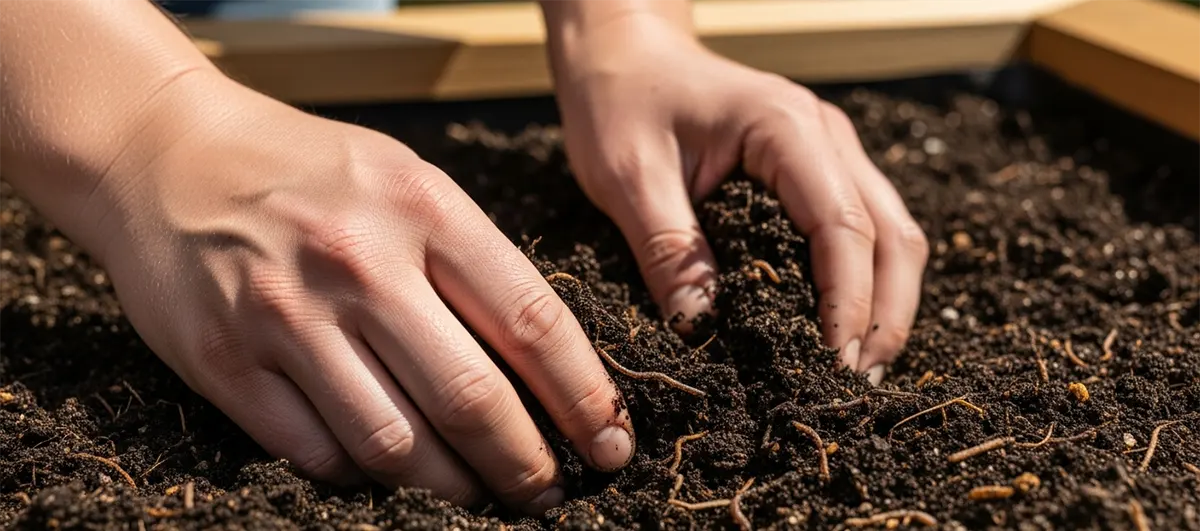
Lettuce grows best in loose, fertile, well-drained loamy soil. While it is not particularly demanding about soil, good soil quality can significantly improve both yield and flavor. The optimal soil pH is 6.0–7.0; overly acidic or alkaline soils can hinder nutrient absorption. The soil should be rich in organic matter, and compost or well-rotted organic fertilizer can be incorporated before planting to enhance water retention and nutrient availability. Lettuce has a shallow root system, mainly concentrated in the top 6–8 inches (15–20 cm) of soil, so the quality of the surface soil is especially important. At the same time, the soil should be kept moist but not waterlogged to avoid drought or root rot.
Before planting, conduct a soil test to determine fertilization needs and follow the recommendations in the report. If fertilization is required, mix the fertilizer into the top 15 cm (6 inches) of soil. When using compost, apply no more than 2.5 cm (1 inch) of fully decomposed organic matter in the garden area.
Planting
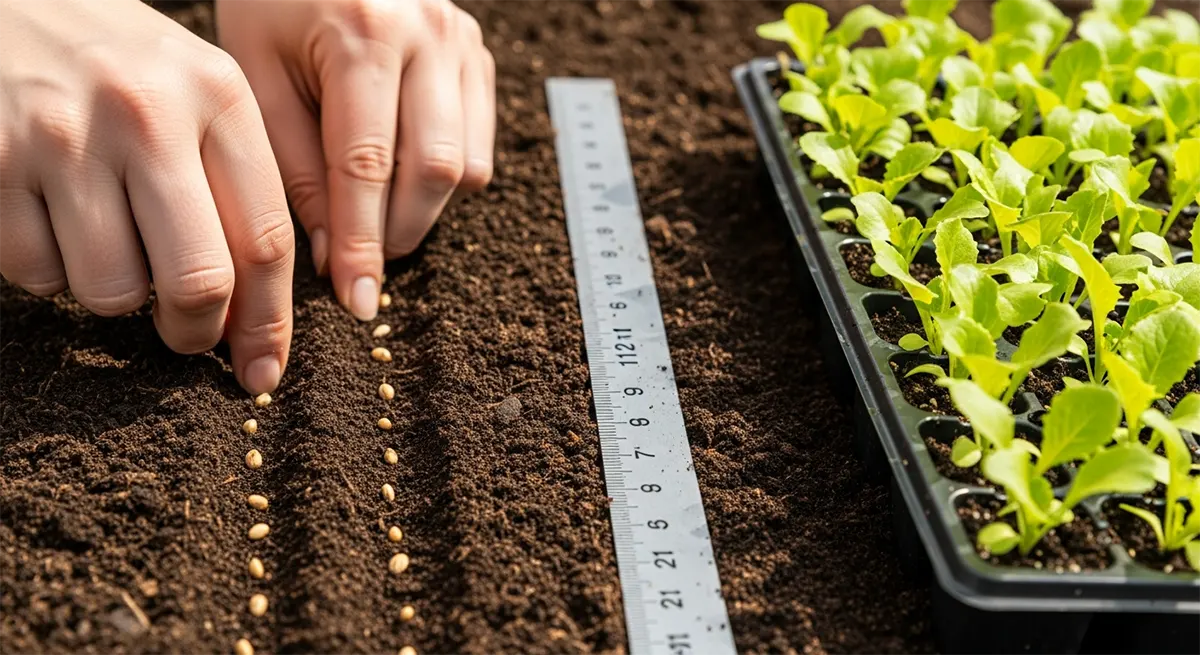
Lettuce can be sown directly or transplanted. Sowing can begin when the soil temperature reaches 4°C (4°F), but the optimal germination temperature is 13–18°C (55–65°F), with seedlings emerging in 7–10 days. Temperatures above 27°C (80°F) will reduce germination rates. Sow at a depth of 0.6–1.3 cm (¼–½ inch) and thin seedlings when they have 3–4 true leaves. Whether sowing or transplanting, maintain a plant spacing of 20–30 cm (8–12 inches) and a row spacing of 30–45 cm (12–18 inches), and choose a sunny location. Dense planting helps suppress weed growth. The optimal growing temperature for lettuce is no higher than 24°C (75°F). Temperatures as low as 0°C (32°F) generally do not cause serious damage to seedlings. Transplanted seedlings should be planted around the date of the last frost in the local area, while direct-seeded lettuce can be sown 2-3 weeks earlier. High summer temperatures can inhibit growth, reduce quality, and cause bitterness or off-flavors. For autumn plantings, choose early-maturing varieties and sow them 50–75 days before the expected harvest date, aiming for maturity about 1–2 weeks before the first autumn frost. Lettuce can tolerate light frosts and remain in the garden afterward.
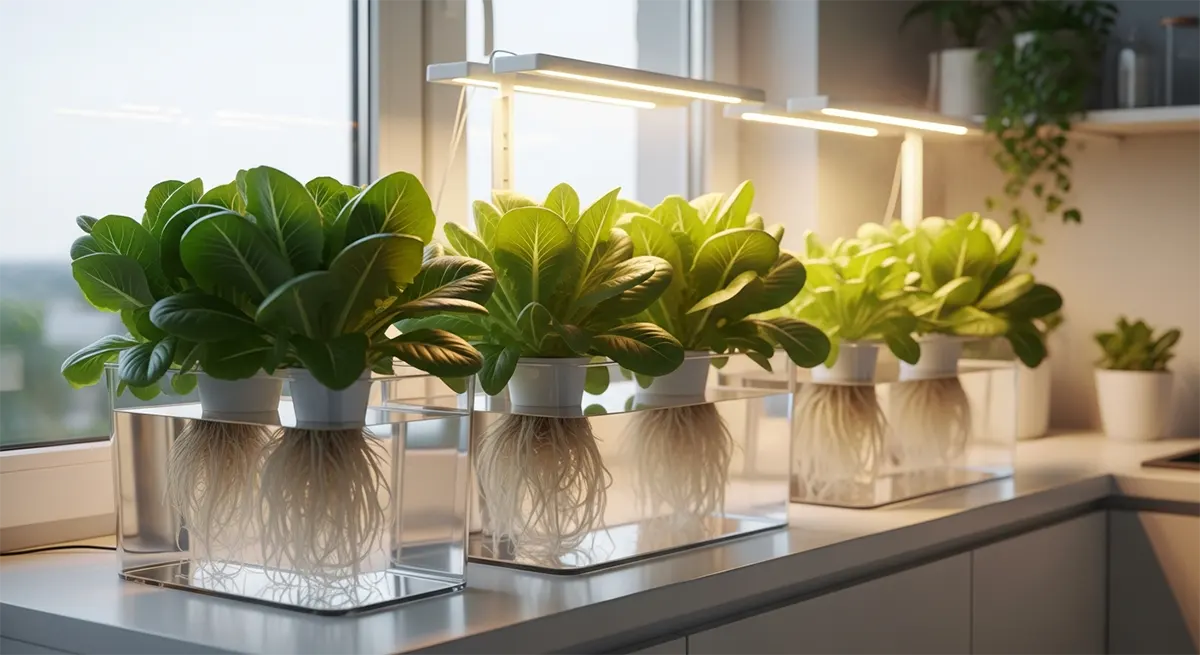
In addition to soil planting, lettuce can also be grown hydroponically. Hydroponic lettuce is an efficient, clean, and home-friendly cultivation method. Common growing methods include the Clattchi static hydroponics and deep-water cultivation (DWC). The Kratky method does not require electricity or a water pump, which is suitable for beginners. First, sow seeds in rock wool or seedling sponges. Once the seedlings have 2-3 true leaves, transplant them into a nutrient solution. Maintain a suitable nutrient solution concentration and a pH of 5.5-6.5. Lettuce needs 12-16 hours of light daily; indoor growers should use plant growth lights. The optimal temperature is 15-24°C (59-75°F); excessively high water temperatures can lead to root rot. Hydroponically grown lettuce can typically be harvested in about 30 days, faster than soil-grown lettuce, and is less susceptible to pests and diseases, making it suitable for year-round cultivation on balconies or indoors.
Watering
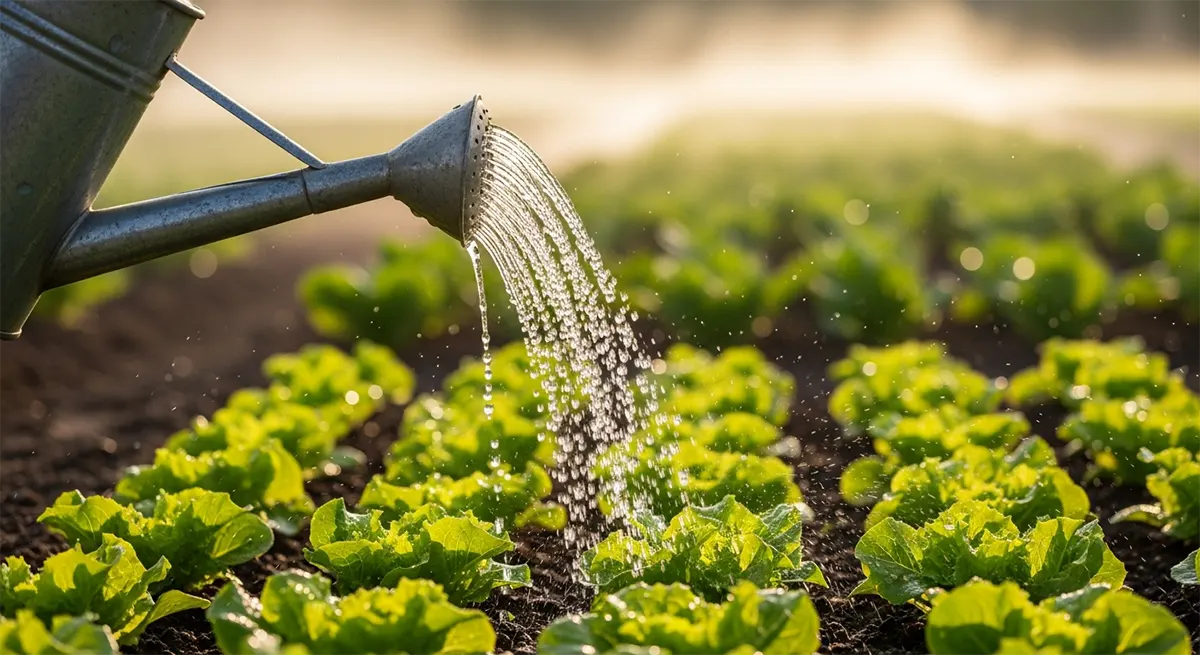
Water lettuce regularly, applying about 1–2 inches of water per week. In spring and autumn, watering every 2–3 days is usually sufficient, but during high temperatures, more frequent watering is necessary. Potted lettuce dries out faster than ground-planted lettuce, so check the soil often. To determine whether to water, insert your finger into the soil up to the second knuckle: if the soil feels moist, watering is not needed; if it feels dry, it’s time to water.
Fertilization
Four weeks after transplanting, or when thinning seedlings, apply ¼ cup of nitrogen fertilizer (Rutom Poly Glutamic Acid 14-0-0) per 10 feet of plants to promote rapid growth. Sprinkle fertilizer around the base of the plant and then water to allow it to seep into the soil.
For hydroponic lettuce, liquid fertilizer can be added to provide essential nutrients. When using Rutom VFOLI NO.2, dilute with water according to the recommended ratio before application. Liquid fertilizer dissolves in water to form a nutrient solution, allowing the roots to directly absorb nutrients. The nutrients in liquid fertilizer are already in ionic form, making them easier for plants to absorb, thus improving absorption efficiency. Liquid fertilizer can replace soil nutrients, providing a comprehensive source of nutrition for hydroponic lettuce.
Harvesting and Storage
Lettuce plants are ready to harvest when they reach 12-15 cm (5-6 inches) in height. Pick the older, outer leaves first, as these have a higher calcium content. To thin the plants, harvest every other larger plant. Lettuce is mature when the leaves begin to curl inwards, forming a loose head. For romaine lettuce or long-leaf varieties, harvest when the leaves elongate and overlap, forming a firm head about 10 cm (4 inches) wide at the base and 15-20 cm (6-8 inches) high. For head lettuce varieties, harvest when the leaves overlap, forming a firm, plump head.
Lettuce can be stored for 2-3 weeks in very cool (0°C/32°F) and high humidity (95% relative humidity). Head lettuce can be stored in the refrigerator for about two weeks. Leafy lettuce and butter lettuce can be stored for up to four weeks if the leaves are dried when bagged. To store lettuce, pick it while it is dry, remove the outer leaves but do not wash it, put it in a mesh or plastic bag, and then store it in the crisper drawer of the refrigerator.

 English
  Spanish
  Japanese
  Korean
  German
  Portuguese
  Italian
  Indonesian
  Vietnamese
  Turkish
  Persian
  Russian
  Chinese