
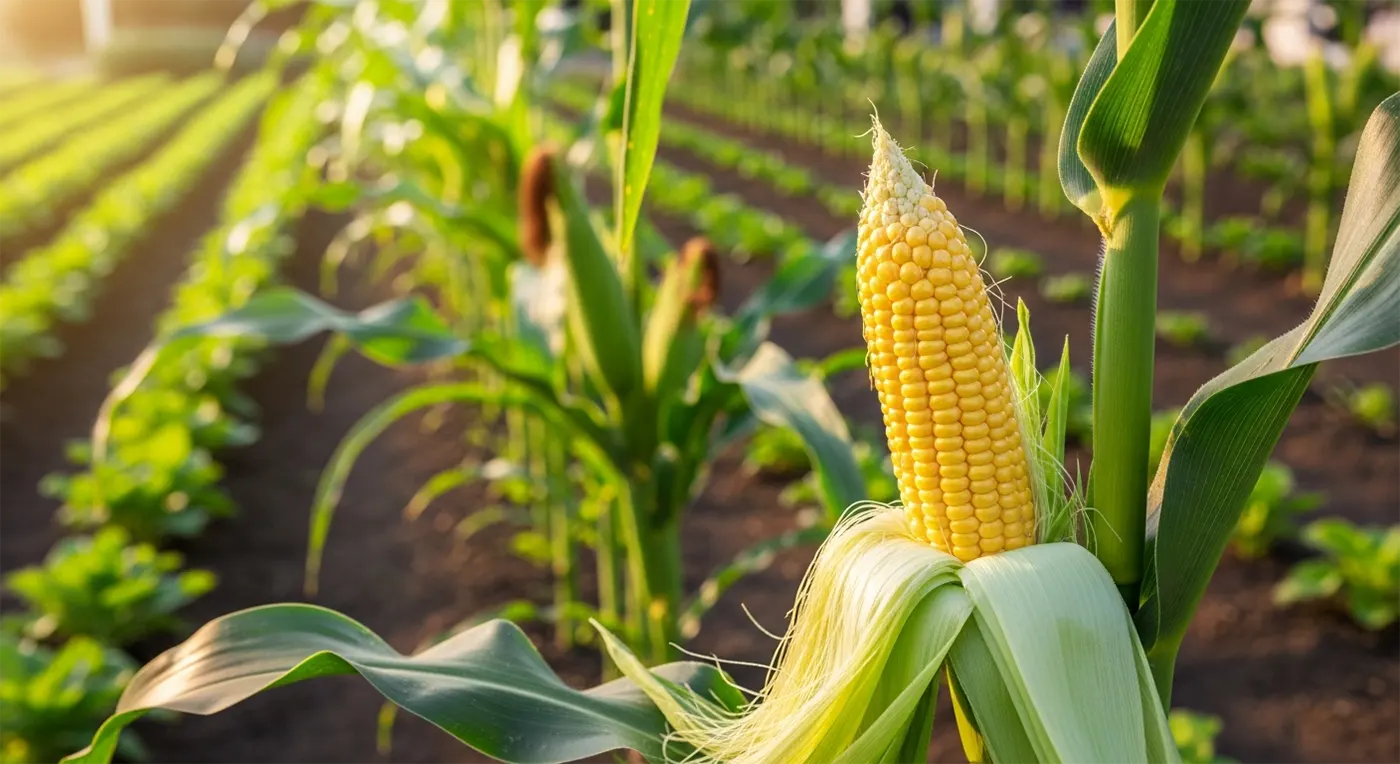
Whether or not you enjoy eating popcorn or corn-filled pastries, their main ingredient is corn. In the United States, corn has the largest planting area and the highest total production. The country produces roughly one-third of the world’s corn each year, making it the world’s leading producer and exporter of corn. Corn also serves as a key feed ingredient in livestock farming. A significant portion of the corn produced annually in the U.S. is used to feed cattle, pigs, and poultry. Rich in energy and starch, and highly palatable, corn promotes animal growth and helps increase meat, egg, and dairy yields. Corn is also very well suited for mechanized cultivation. Its uniform plant structure, standardized row spacing, and orderly growth make it ideal for machine operations, allowing cultivation on hundreds or even thousands of acres. Corn is relatively easy to grow and can also be planted on a small scale in a backyard garden. With enough space, anyone can grow sweet corn in their garden.
Before planting corn, farmers first need to choose seed varieties that are suited to the local growing conditions. Each corn seed variety has its own advantages and disadvantages. For example, some varieties mature quickly, while others are more resistant to pests and diseases. Many farmers also consider seeds that have undergone special treatments, which provide extra protection during germination and help prevent pest and disease damage. This ensures that the corn can grow robustly throughout the entire period from planting to harvest, improving its survival rate.
Planting
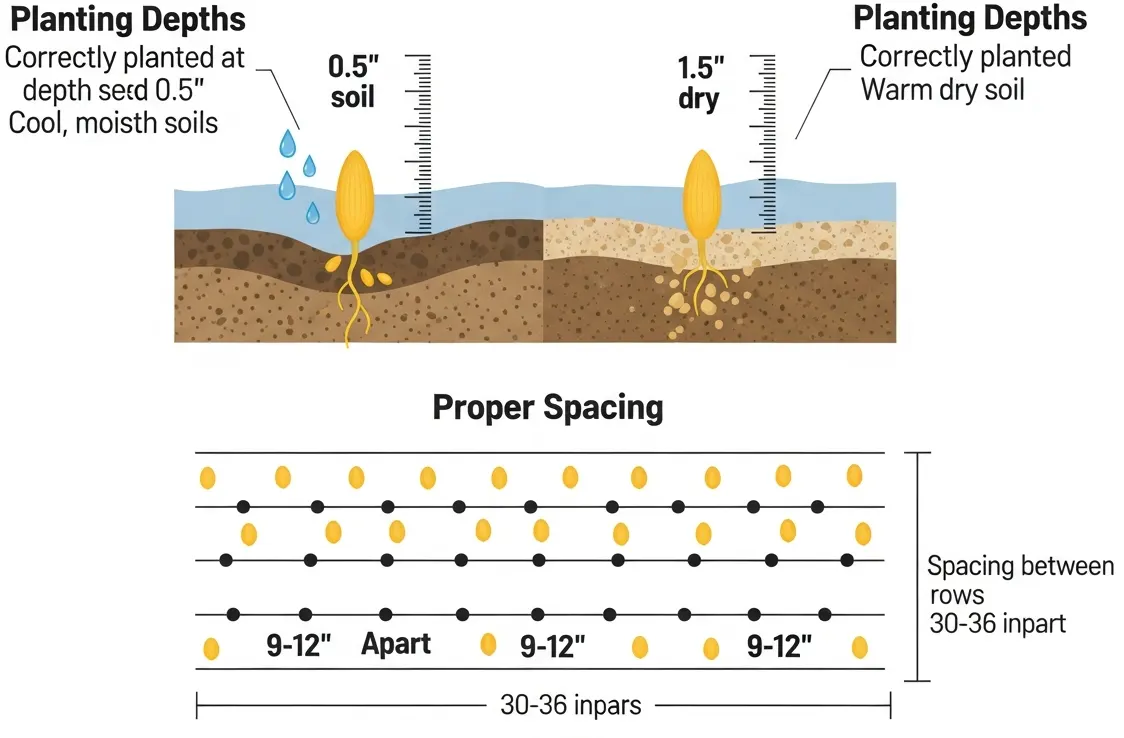
Sweet corn is planted from corn kernels (seeds). In cool, moist soil, the seeds should be planted about half an inch deep; in warm, dry soil, they should be planted 1 to 1.5 inches deep. Corn kernels should be spaced 9 to 12 inches apart within a row. Each sweet corn variety should be planted in two or more rows. The rows should be planted side by side to ensure proper pollination and ear development. Additionally, a spacing of 30 to 36 inches between rows should be maintained. For large-scale planting, corn seeds are sown using a seed planter. The seeds are loaded into the planter, which is then pulled across the field by a tractor. Growers sow each seed evenly in the soil, maintaining consistent spacing and depth. This prevents the seeds from competing for water and nutrients, allowing them to grow more efficiently.
Corn grows best in fertile, well-drained loam soil, but it can adapt to a variety of soil types. The ideal soil pH is between 6.0 and 6.5. Soil that is too acidic can affect nutrient absorption, while soil that is too alkaline can lead to nutrient deficiencies. The soil should be tilled to a depth of 6 to 8 inches using a shovel, plow, or rotary tiller, but avoid tilling when the soil is too wet to prevent the formation of large clods. Corn is a nutrient-demanding crop, so the soil should contain sufficient organic matter and essential nutrients such as nitrogen, phosphorus, and potassium. Before planting, well-rotted organic fertilizer should be applied along with an appropriate amount of compound fertilizer.
Planting Time
Corn is usually planted around April 15, which roughly corresponds to the date of the last frost. Most corn planting takes place in April and May, though planting can be done as late as June 5. This time frame is chosen because the soil temperature is sufficiently warm to promote seed germination. Planting too early can result in low emergence rates, poor growth, or seedlings being damaged by frost. Corn seeds require the soil temperature to remain above 50°F (about 10°C) for at least 48 consecutive hours to germinate successfully.
Like all plants, corn also requires adequate moisture. Planting in April and May avoids the drier summer months, helping seeds absorb sufficient water. At the same time, excessive moisture can cause seed rot. Planting too early may expose the seeds to melting snow or excessive soil moisture. Corn is a wind-pollinated crop, so sweet corn should be planted in short rows of four or more rows side by side to ensure good pollination.
Fertilization
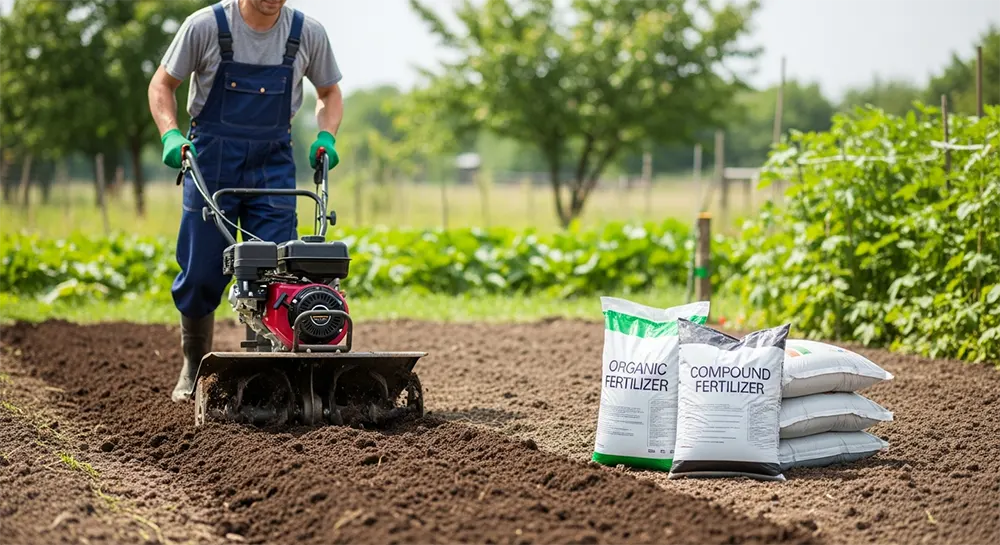
Corn is a crop with high nutrient requirements, and proper fertilization is crucial for ensuring high yields. A sufficient base fertilizer should be applied before planting, typically by mixing well-rotted organic fertilizer and compound fertilizer into the soil to provide the basic nutrients necessary for seedling growth. After emergence, nitrogen fertilizer can be applied as a top dressing during the seedling stage. For example, Rutom VFOLI NO.1 15-3-5 High Nitrogen Foliar Fertilizer can be used to promote stem and leaf growth, and the uptake of organic fertilizer is improved.
The jointing stage is the peak period of nutrient demand for corn. Nitrogen should be applied again, combined with phosphorus and potassium fertilizers. Fertigation with Rutom VIRI 12-4-4 Humic Acid Fertilizer can strengthen plant vigor. Around the tasseling and silking stages of corn, it is crucial to supplement with potassium fertilizer, which can promote pollination and grain filling and improve ear quality. Fertilization should be combined with irrigation to prevent seedling burn, and excessive nitrogen fertilization should be avoided to prevent lodging. By applying fertilizer in stages, corn can grow steadily in the early stages. Corn achieves higher yields and healthier, plumper kernels in the later stages.
Watering
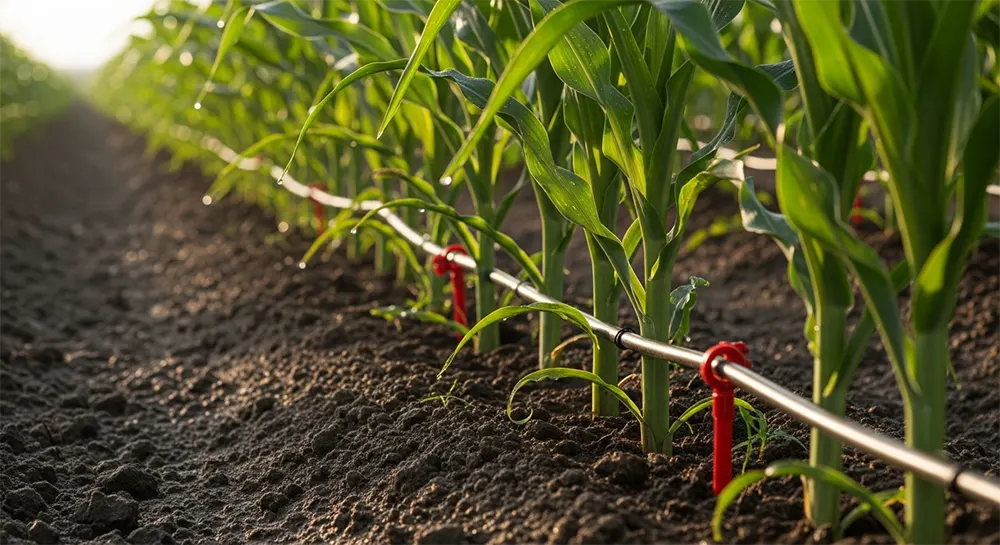
Water is crucial for the healthy growth of corn. During normal growth and development, corn needs at least one inch of water per week. The pollination and grain-filling stages are the most critical periods for water demand in corn. Irrigation should thoroughly moisten the soil to a depth of 6 inches. Watering is best done in the early morning or evening so that the leaves can dry before nightfall. Installing drip irrigation pipes or seepage hoses next to corn rows is an excellent way to irrigate efficiently and save water.
As crops approach maturity, watering can be reduced appropriately to prevent lodging and root rot. Avoid watering excessively in hot weather and ensure good drainage to prevent waterlogging. Shallow tillage also helps control weeds. Water deficiency during critical growth stages will reduce yield and quality. If rainfall is insufficient, supplemental irrigation is necessary to maintain consistently high yields.
Common Problems in Cultivation
Sweet corn cultivation can encounter several common issues:
- Uneven emergence—often caused by unsuitable soil temperature, overly dry or wet soil, or poor seed quality, which can lead to missing plants and gaps in the rows.
- Poor pollination—If corn is planted too sparsely, or if there is insufficient water during tasseling and silking, or during high-temperature or rainy periods, it can result in bare tips and missing kernels.
- Improper fertilizer and water management—Nitrogen deficiency slows growth, and potassium deficiency results in poorly filled kernels, while excessive nitrogen can cause excessive vegetative growth and lodging.
- Lodging—Dense planting, strong winds, heavy rain, or improper management can cause plants to fall over, reducing ventilation and affecting ear development.
- Pests and diseases—Common pests include corn earworm, aphids, and flea beetles. Other potential pests are wireworms, corn root flies, southern corn rootworms, click beetles, fall armyworms, European corn borers, and Japanese beetles.
Harvesting
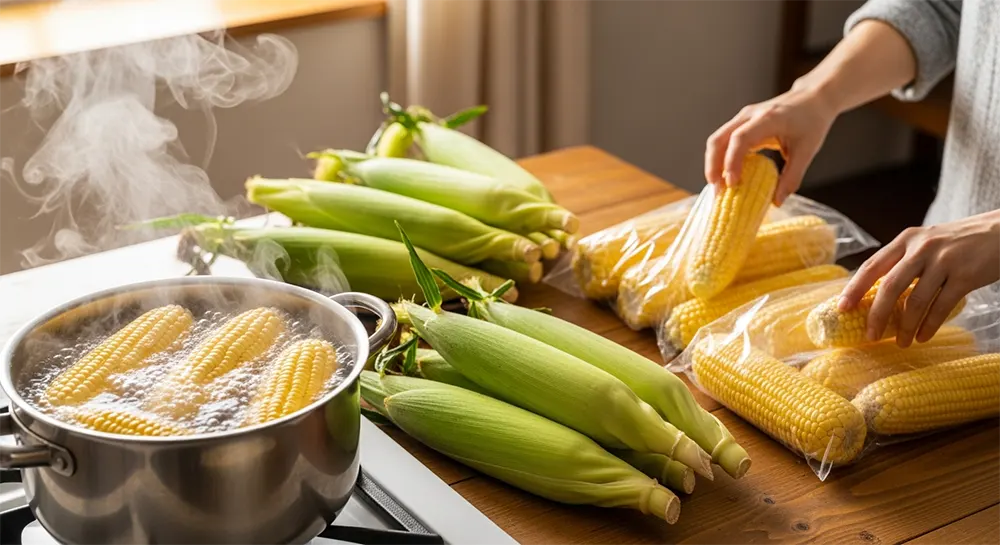
Corn matures in 60 to 100 days, depending on the variety. To ensure a continuous harvest, you can plant early, mid-season, and late-season varieties, or plant the same variety every two weeks.
Corn is harvested during the “milk stage,” when the kernels are not yet fully mature. This stage occurs about 20 days after the silks appear. At this point, the kernels are smooth and plump, and a milky white liquid will ooze out when gently pricked with a fingernail. Other signs that the corn is ready for harvest include dry, brown silks, plump kernels at the tip of the ear, and firm, unhusked ears.
After harvesting, corn should be cooked and eaten as soon as possible or stored in the refrigerator or other cool place. Corn can also be canned, frozen, or eaten fresh within a few days. Keeping it cool is key to preserving the corn’s flavor, as high temperatures convert the sugars in the kernels into starch, resulting in a less sweet taste. While many new varieties have a longer shelf life, most corn will lose up to 50% of its flavor if not refrigerated within 12 to 18 hours of harvest.

 English
  Spanish
  Japanese
  Korean
  German
  Portuguese
  Italian
  Indonesian
  Vietnamese
  Turkish
  Persian
  Russian
  Chinese