
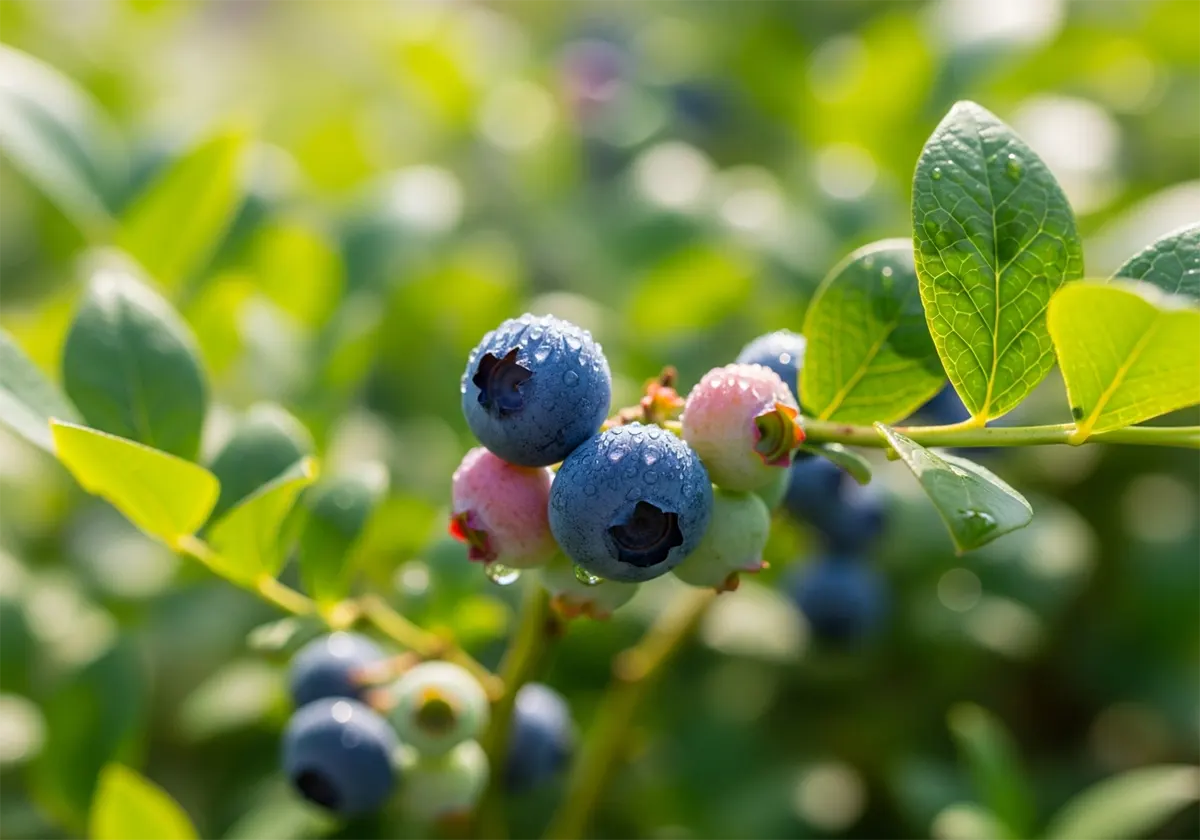
Which fruit comes to mind when you think of a small, anthocyanin-rich, bluish-purple berry that can also be used as a baking ingredient?
Blueberries are classified as berry fruits and are the small-shrub fruits of the genus Vaccinium in the family Ericaceae. They have tender, juicy flesh with fine texture, making them a typical small berry fruit. Blueberries are best known for their richness in anthocyanins, which provide antioxidant and free-radical-scavenging benefits and help protect vision. In addition to abundant antioxidant anthocyanins, their dietary fiber, vitamin C, manganese, and vitamin K offer comprehensive nutritional support. They help improve gut health, strengthen immunity, support energy metabolism, and maintain bone health, making blueberries a fruit with both nutritional and functional value.
Blueberries also have high commercial value. As a premium berry, global blueberry consumption has grown significantly faster than that of traditional fruits over the past decade. They are relatively easy to cultivate and thrive in acidic soils (pH 4.5–5.5). Blueberries can be sold fresh or frozen, with frozen berries retaining a texture and flavor close to fresh ones. They can also be processed into dried blueberries, jams, and nutritional products. As a high-return specialty crop, blueberries are an excellent choice for new farmers, agricultural parks, and fresh-produce brands.
Quick Guide to Growing Blueberry
- Choose rabbiteye, southern highbush, or northern highbush cultivars based on local temperature and chill hours to avoid poor flowering or fruit set caused by climate mismatch.
- Plant during the cool season when temperatures are 5–20°C for the highest survival rate.
- Blueberries have shallow roots, so use a well-ventilated large pot (30–40 cm) with sufficient drainage holes.
- Use peat moss + pine bark + coco coir (pH 4.5–5.5); avoid using native garden soil directly.
- Maintain soil acidity with sulfur powder, ammonium sulfate, citric acid, or diluted acetic acid, and check pH every 2–4 weeks.
- Keep roots spread out when planting; avoid burying too deep—the crown should be level with or slightly above the soil surface.
- Follow the “small amount, more often” watering rule; keep soil moist but not waterlogged. Mulch with pine bark during hot seasons to reduce heat.
- Provide 6–10 hours of full sunlight daily; insufficient light leads to smaller berries and higher acidity.
- Use acid-forming fertilizers such as ammonium sulfate, blueberry-specific fertilizer, or amino acid liquid fertilizer; apply lightly every 2–3 weeks during the growing season.
- Prune weak and crossing branches in winter; remove vigorous water sprouts during the growing season to improve airflow and yield.
- Harvest when berries turn fully deep blue with a natural bloom and fall off easily when gently touched. Store fresh berries for 5–10 days in the refrigerator or freeze for 6–12 months.
Soil, Planting, and Care
First, choose blueberry varieties based on your local temperature and chill-hour accumulation. Blueberry dormancy release, flowering, fruit set, and growth rate are all closely tied to temperature. Blueberries require a certain amount of winter “chill hours” to break dormancy and produce normal flowers and fruit: northern highbush blueberries require high chill, southern highbush require medium chill, and rabbiteye blueberries need low chill.
Pay special attention to planting temperature. The ideal range for planting is 10–20°C, when temperatures are mild, transpiration pressure is low, and root recovery is fast, resulting in the highest survival rate. Avoid planting when temperatures drop below 5°C or rise above 28–30°C, as root growth slows significantly and survival decreases.
Before planting, adjust the soil pH. Blueberries can only absorb nutrients in acidic conditions. The optimal pH is 4.0–5.5. As members of the Ericaceae family, blueberries have extremely fine roots and are intolerant of alkaline soils. You can achieve suitable acidity by incorporating 5–10 cm of pine needles, pine bark, or pine wood chips. Choose soft, lightweight soil that provides both oxygen and moisture retention.
After improving the soil, planting can begin. Select a site with long hours of sunlight, which promotes fruiting and sweetness, but avoid excessive heat. When temperatures exceed 32–35°C, use shade nets. Because blueberry roots are shallow—only active within the top 20–30 cm—they should not be planted directly into native soil. Provide a separate, well-aerated, acidic root zone. After removing the seedling from the pot, gently loosen part of the root ball and place it into the prepared acidic substrate. Lightly firm the soil and water thoroughly. Avoid fertilizing immediately after transplanting to prevent root burn.
Blueberries have shallow, fine roots that are sensitive to both waterlogging and drought. Check the top 2–3 cm of the substrate: if it feels dry, water; if still moist, skip watering. Rainwater, filtered water, or bottled water is preferred.
During the growing period, you may apply balanced slow-release fertilizers such as Rutom Water Soluble Plant Food 18-18-18. This fertilizer contains acid-forming fertilizers containing ammonium sulfate, potassium sulfate, and modest amounts of iron and magnesium.
Troubleshooting
Common problems during blueberry cultivation include yellowing leaves, root rot, weak growth, fruit drop, improper soil acidity, and pest infestations. Yellow leaves are usually caused by high soil pH or iron deficiency, which can be corrected by applying sulfur powder, ferrous sulfate, or acidic liquid fertilizers. Root rot is often the result of waterlogging. You can prevent root rot by improving drainage, using well-draining soil, and reducing watering frequency. Weak growth is typically due to insufficient sunlight or inadequate fertilization. Ensure 6–8 hours of sunlight each day and apply acidic fertilizer regularly to support healthy blueberry growth. Fruit drop often occurs when moisture fluctuates or temperatures are too high; keep the soil evenly moist and provide shade during hot periods. Pests such as thrips and fruit flies can be managed with yellow sticky traps and good orchard sanitation. Overall, the key management principles are controlled watering, avoiding waterlogging, maintaining acidity, providing strong light, and applying light but frequent fertilization—these practices will significantly reduce problems and stabilize yields.
Harvesting and Storage
Ripe blueberries are very easy to pick—gently rolling them with your fingers or pushing lightly from the side will cause the berries to fall into your hand. When blueberries reach maturity, their skin turns deep blue to blue-purple, and the surface is coated with a natural whitish bloom, which serves as a protective layer. If you need to pull hard to remove the berry, it is not yet ripe. Fully ripe berries loosen naturally from the stem and drop off with the slightest touch. Sweetness can also serve as an indicator: when sweetness outweighs acidity, the berry is mature.
Do not wash blueberries immediately after harvest, as moisture can cause skin breakage and mold. Store them in a cool, shaded place or refrigerate them. Under refrigeration, blueberries keep for 3–10 days; spread them in a breathable container to avoid bruising. For long-term storage, freezing preserves them for 6–12 months. Rinse blueberries quickly, dry them thoroughly, and spread them on a tray to freeze for 2–3 hours. Once frozen solid, transfer them to an airtight bag or container, remove excess air, and seal. The flavor remains nearly unchanged.
How to Use Blueberries

Blueberries are rich in anthocyanins, vitamin C, and dietary fiber and are commonly used for eye protection and antioxidant benefits. Blueberries pair perfectly with yogurt, oatmeal, and honey, making them an ideal breakfast choice. Frozen blueberries can also be blended into beverages such as blueberry smoothies, slushes, or sparkling blueberry drinks. If you like baking, adding frozen blueberries enhances both flavor and color. Cooked blueberries develop a stronger, richer flavor, making them ideal for blueberry muffins, blueberry bread, and blueberry cheesecake.

 English
  Spanish
  Japanese
  Korean
  German
  Portuguese
  Italian
  Indonesian
  Vietnamese
  Turkish
  Persian
  Russian
  Chinese