
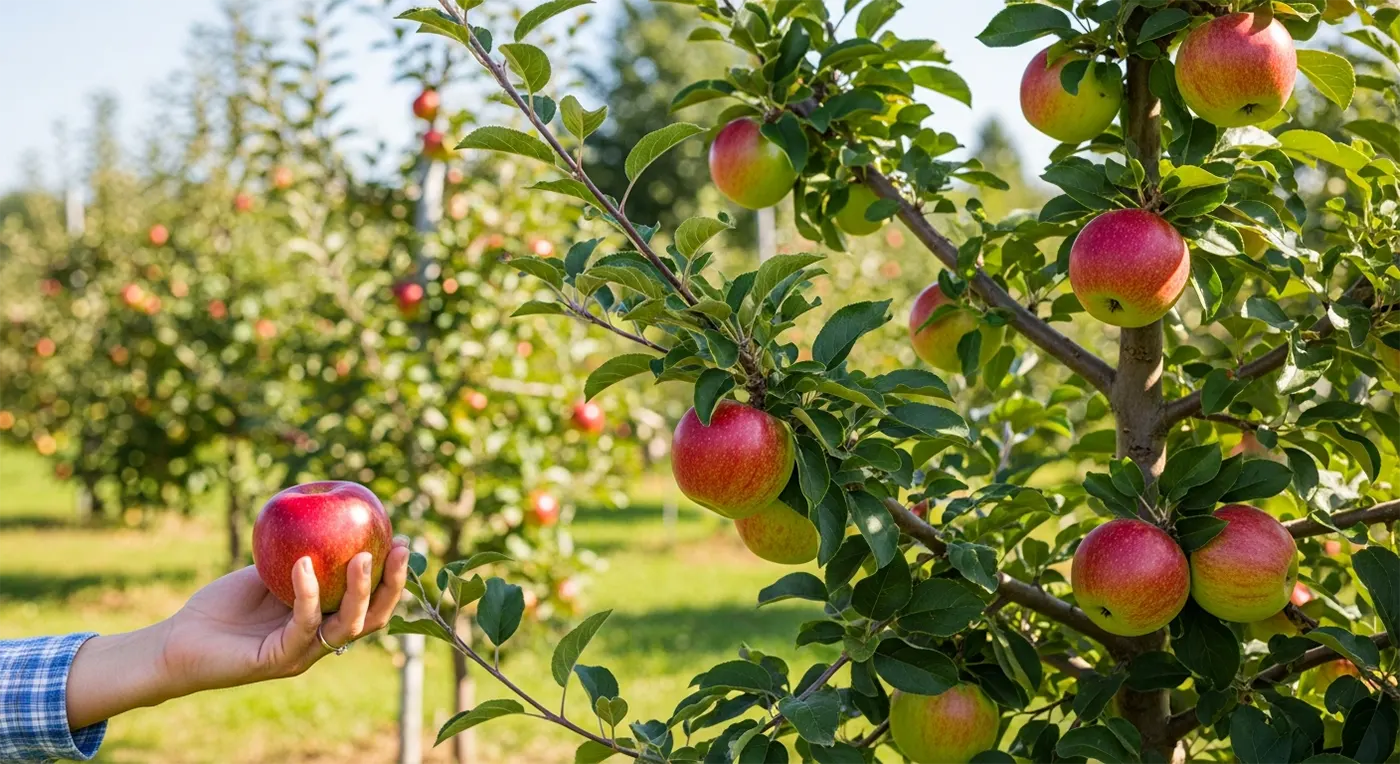
Apples originated in Central Asia and were introduced to North America in the 17th century by European colonists, who brought apple seeds and grafting techniques. By the mid-19th century, apples were widely cultivated in many states across the United States.
Given the economic importance of apples, understanding how to grow them at home or on a small scale is very valuable. The following is a beginner’s guide.
Many apple tree varieties are suitable for home gardens or backyards, especially dwarf and semi-dwarf varieties. These trees are compact, easy to manage, and usually begin bearing fruit within three to four years. In addition, well-maintained apple plantings can enhance home landscapes by serving as ornamental trees, boundary plantings, or trellis and espalier systems that improve the overall aesthetic of the property.
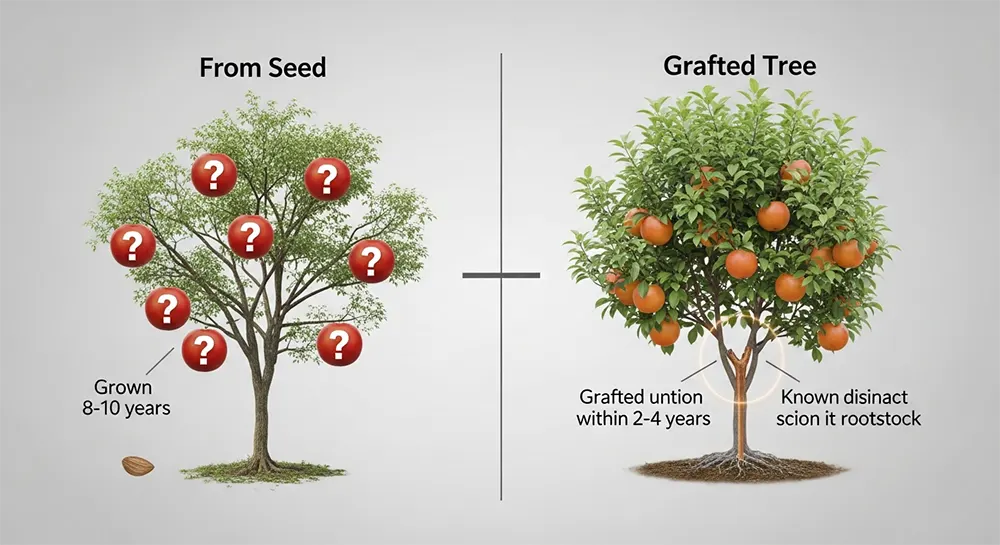
Although it is possible to grow apple trees from seed, the resulting tree is unlikely to be the variety you expect. For example, if you plant a Honeycrisp seed, the fruit it eventually produces may not be Honeycrisp at all. In addition, seed-grown apple trees usually take 8 to 10 years to mature enough to bear fruit, making the growing cycle very long. For this reason, apples are rarely planted directly from seed. Instead, growers typically purchase nursery trees. Grafting fruit trees involves joining a selected variety onto a rootstock, ensuring consistency in varietal characteristics and promoting earlier fruiting. Most grafted apple trees begin bearing fruit within 2-4 years. By using dwarfing or semi-dwarfing rootstocks, the size of the tree can be controlled, making them ideal for home gardens and backyard orchards. Grafted fruit trees also offer other advantages, such as greater adaptability, improved disease resistance, stable yields, and more reliable fruit quality.
Types of Apple Trees
There are currently over 7,500 known cultivated apple varieties. When choosing a variety, growers should consider selecting varieties that are resistant to common diseases such as apple scab, cedar apple rust, and fire blight. Many apple varieties have good disease resistance, such as Enterprise, Goldrush, Jonafree, Liberty, Pristine, Redfree, and Williams’ Pride.
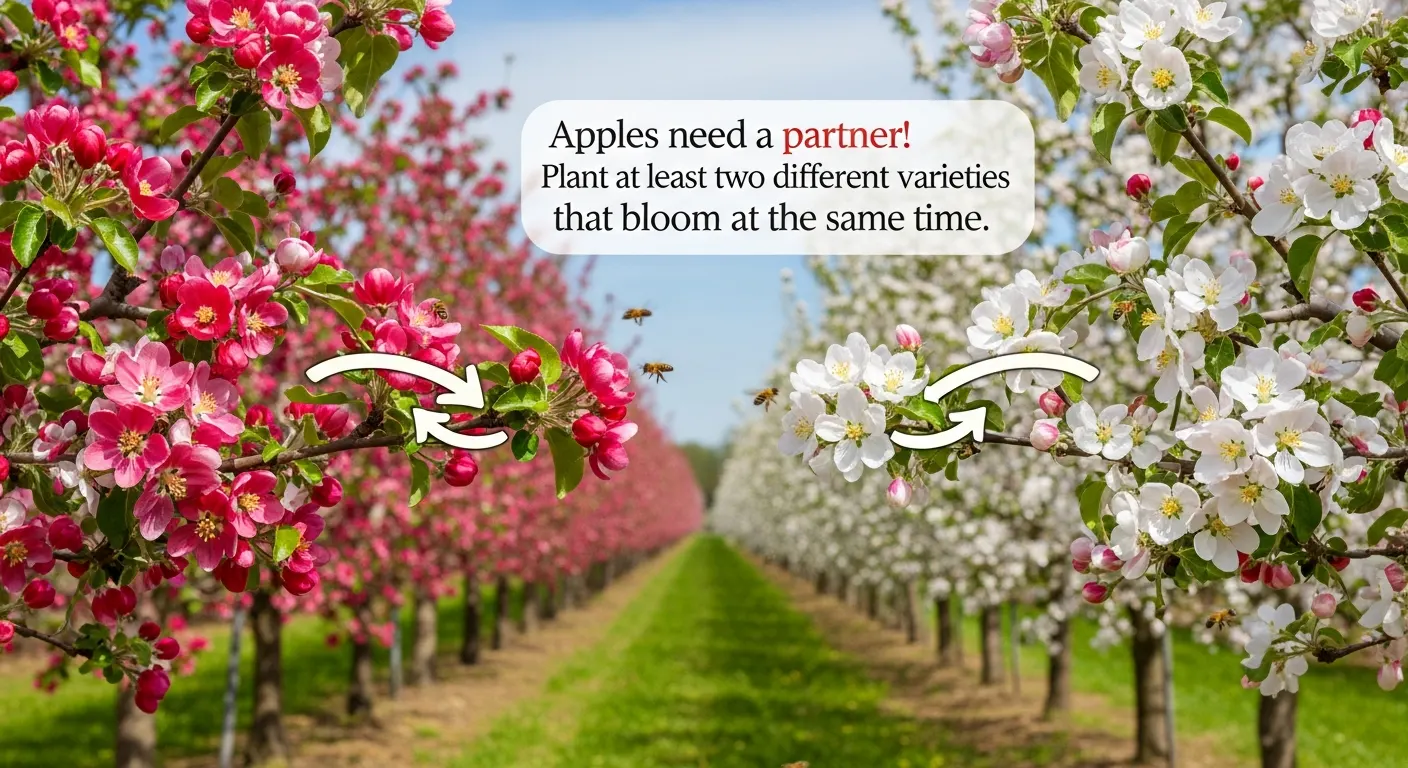
All apple varieties are considered self-incompatible, meaning they cannot pollinate themselves or other flowers of the same variety. To achieve the highest yields and fruit quality, at least two different apple varieties must be planted. In addition, the selected varieties must bloom at the same time to ensure successful cross-pollination.
| Cultivar | Bloom Season | Description |
|---|---|---|
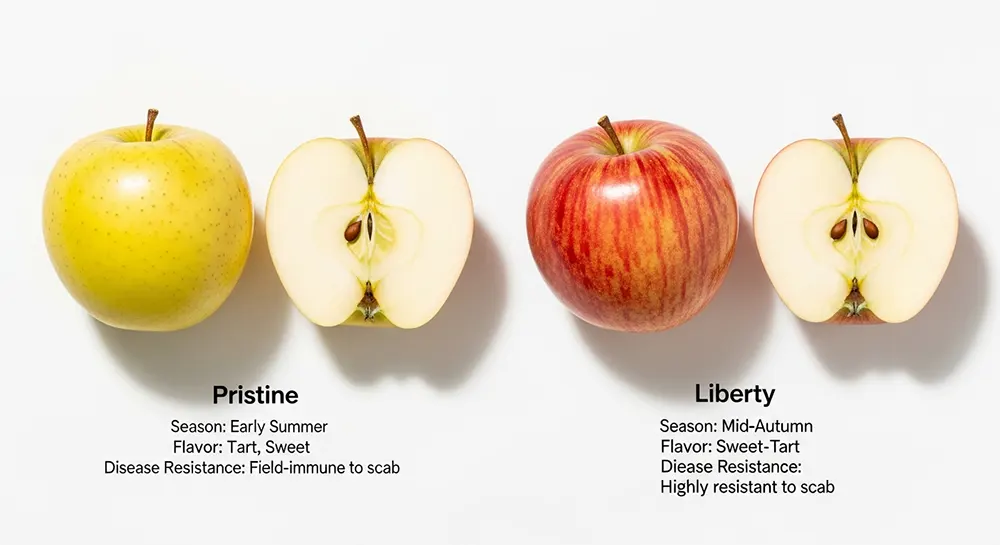
| Pristine | Early | The fruit is medium-to-large in size and has a canary-yellow color, often with a blush. The texture is fine. The flavor is tart, excellent for cooking or fresh eating. The cultivar is field-immune to apple scab, highly resistant to powdery mildew, resistant to cedar apple rust, and moderately resistant to fire blight. Pollinates with Pristine, Williams’ Pride, Redfree, Jonafree, and Liberty. |
| Pixie Crunch | Early to Mid | Fruit size is slightly smaller than Gala—making it a perfect snack-size apple. Its fruit color is a dark red blush over a yellow background. Fruit is very crisp—similar to Honeycrisp crispness—and stays crisp on the tree for several weeks. Pollinates with Empire, Enterprise, Goldrush, Pink Lady, Suncrisp, or other early- to mid-season blooming cultivars. |
| William’s Pride | Mid | The fruit is medium to large in size, slightly striped with a dark-red to purple-red color. The flesh is firm, very juicy, and spicy. It keeps very well. It is good for fresh eating and cooking. The cultivar is field-immune to apple scab and apple rusts and is resistant to powdery mildew and fire blight. Pollinates with other mid- and late-blooming cultivars. |
| Redfree | Mid | The fruit is medium-sized with a bright red color. Flesh is firm with good texture. The flavor is sweet and aromatic. Fruit stores for one month or more in refrigeration. It is good for fresh eating and cooking. The cultivar is field-immune to apple scab and cedar apple rust and is moderately resistant to powdery mildew. It has good resistance to fire blight. Pollinates with other mid- and late-blooming cultivars. |
| Jonafree | Mid | The fruit is medium in size with a 75%–90% medium-red blush. The flesh is firm, crisp, and moderately rich in flavor. Its flavor is similar to Jonathan and good for fresh eating, sauce, pies, and cider. It is not prone to bitter pit or Jonathan spot. The cultivar is field-immune to scab and is less susceptible to powdery mildew, fire blight, and cedar apple rust than Jonathan. Pollinates with Goldrush or Enterprise. |
| Liberty | Mid | The fruit is medium in size and is mostly red-striped over a greenish-yellow background. The flesh is white, fine-textured, crisp, and juicy. The flavor is very good, sprightly, subacid, and sweet. Good for fresh eating, cooking, canning, and desserts. The cultivar is highly resistant to apple scab and is resistant to cedar apple rust and fire blight. It is moderately resistant to powdery mildew. Pollinates with other mid- and late-blooming cultivars. |
Soil
Apple trees are long-lived crops (even dwarf types, which have a shorter lifespan, can survive for about 20 years), so proper soil preparation is essential before planting. The best soils for apples are deep, loose-textured, and well-drained, yet moisture-retentive. Soil depth must be sufficient to allow good root development.
If conditions permit, it is best to plant apple trees on a slope. In winter, cold air drains downhill, helping protect trees from the most severe frost injury. In summer, good air movement dries the leaves quickly, which minimizes fungal growth and reduces the need for spraying.
The ideal soil pH for apples is between 6.0 and 6.5, although a range of 5.5 to 7.0 is acceptable. Before planting apple trees, be sure to conduct a soil test.
Planting
Before planting, remove all weeds and sod within a 4-foot diameter area. After purchasing the tree, protect it from injury, drying out, freezing, or overheating. If the roots have dried, soak them in water for about 24 hours before planting.
Tree spacing depends on the rootstock, soil fertility, and pruning practices. Standard or semi-standard trees should be spaced about 15–18 feet apart. Dwarf rootstocks can be spaced 4–8 feet apart. Apples require cross-pollination, so another variety with the same bloom period must be planted within 2,000 feet (preferably much closer).
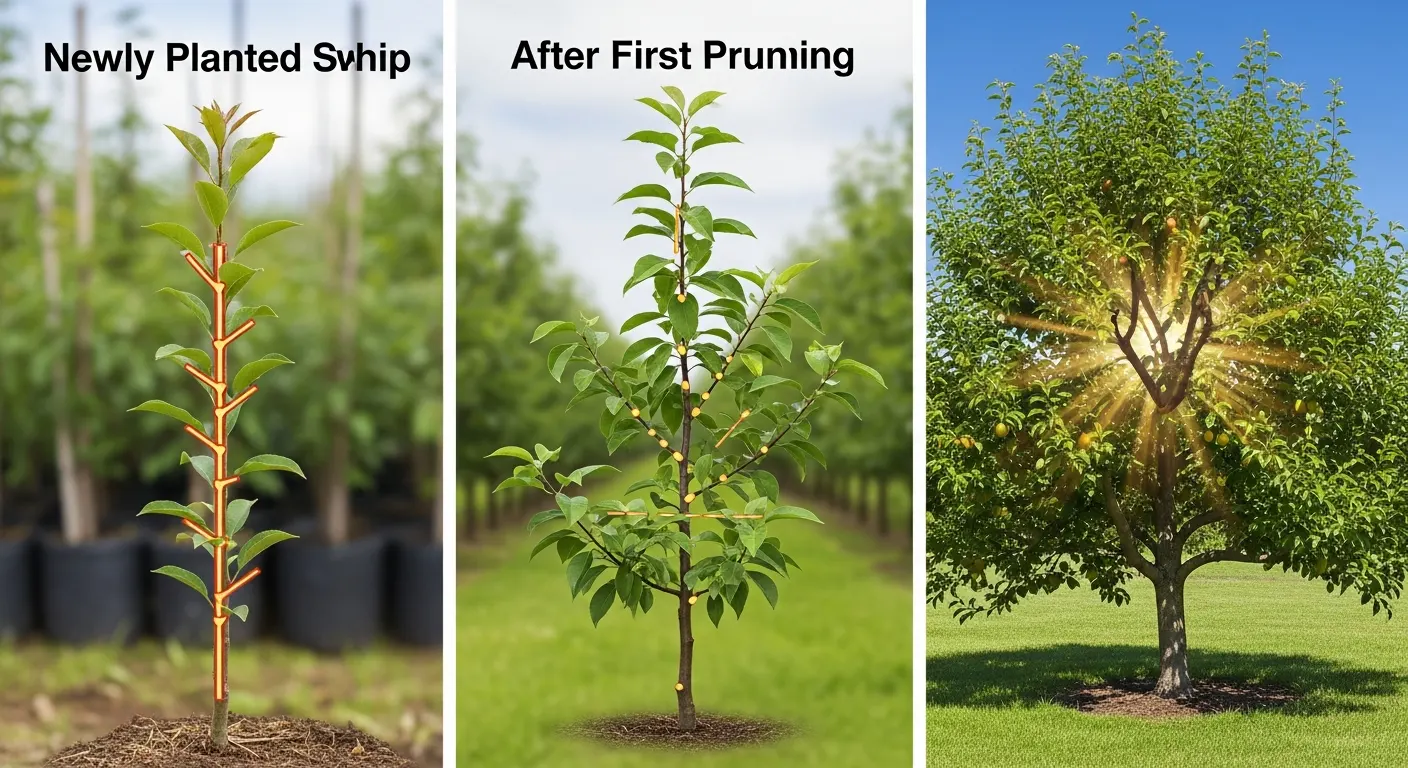
Spread the roots over the loose soil, making sure they are not twisted or crowded in the hole. Continue backfilling soil around the roots. As you begin covering the roots, firm the soil so it makes good contact with the roots and removes air pockets.
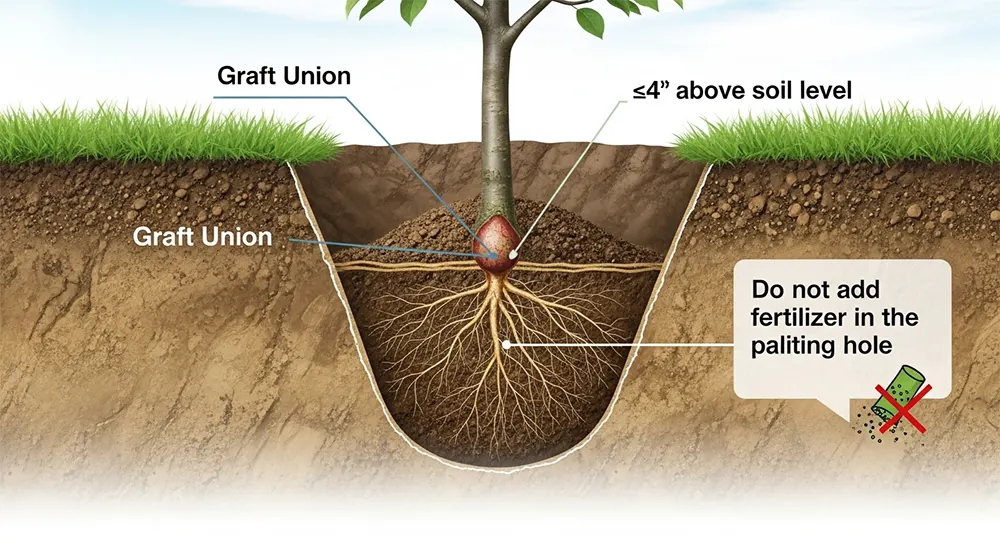
Do not fertilize at planting, as this may burn the roots. Fill the rest of the hole with loose soil and gently firm it in place.
Most apple trees are grafted. The graft union should be at least 4 inches (about 10 cm) above the soil surface to prevent the scion from rooting. The graft union can be identified by the swollen area where the scion joins the rootstock. You may also mix into the soil about one quart of rock phosphate, some silicate cement, and a few shovels of compost.
Fertilization
Before planting, incorporate well-decomposed organic fertilizer into the soil and supplement with a small amount of phosphorus and potassium to improve soil structure. Newly planted apple trees should prioritize root growth and recovery; therefore, chemical fertilizers should not be applied immediately. After the trees have survived and begun growing, small amounts of diluted liquid fertilizer may be applied.
During the young-tree stage, the goal is to promote vegetative growth. Apply moderate nitrogen in early spring, fertilize lightly but frequently during the growing season, and add more organic matter along with phosphorus and potassium in autumn to strengthen the trees.
For bearing apple trees, fertilization is usually done in three key stages. At bud break, nitrogen fertilizer is applied to promote shoot growth and flowering. After fruit set, phosphorus and potassium fertilizers are emphasized to enhance fruit enlargement and coloring. After harvest, organic fertilizer is applied to restore tree vigor and prepare for the following season.
Fertilizers should be placed in shallow trenches near the drip line of the canopy or applied with irrigation, and overly concentrated fertilizer should be avoided to prevent root burn.
Pest Control
Codling Moth (H3)
The codling moth, like the plum curculio, bores into apple trees. The larvae of this moth are the worms commonly found in apples.
They can be trapped using the following method: Dissolve a teaspoon (or up to a cup) of molasses in a gallon of vinegar, then pour a few inches of the solution into the bottom of a soda bottle with a hole cut in the side. From early June to early September, hang two or three of these soda bottles on each medium-sized tree, near the fruit. The codling moths will fly into the bottles and drown in the liquid. Clean them out approximately once a week.
Apple Maggot (H3)
The apple maggot fly is a fruit fly that lays its eggs on apples. To trap them, you can take some old apples from your cellar or buy some from the store, thread them with wire, coat them with flypaper adhesive, and hang about two on each tree at eye level. Prune away branches near the traps so the flies can see them.
Yellow sticky traps can also be used to catch apple maggot flies. The adhesive on these traps contains a food attractant, making the trap more appealing. This attractant is not present in the sticky traps mentioned earlier.
Red sphere traps are used to trap apple maggot flies in mid-season. They should be hung on the trees before July 1st and checked twice a week. These traps do not come pre-coated with adhesive, so you will need to apply it yourself: one ounce of Tanglefoot adhesive will cover three traps. These plastic traps come in reusable and disposable models. Reusable traps must be cleaned and recoated with new adhesive at least once each growing season.
Apple Sawfly (H3)
The apple sawfly also lays its eggs on apples, and the larvae feed on the fruit. White sticky traps can be used to catch them. The white color of the traps mimics the white of apple blossoms, attracting these pests. When they land on the traps, they get stuck. These traps should be hung on the south side of the tree before the apple blossoms open, at eye level, where they receive plenty of sunlight and are easily visible.
Apple Harvest and Storage
Apple color is only one indicator of maturity. In addition to fruit size and appearance, sweetness is an important factor in determining harvest time. Watch for changes in the background color—the parts of the skin not covered by red blush. When the background color (also called the ground color) begins to change from green to yellow-green, the apples are starting to mature. Except for Golden Delicious, all apples should show a shift from green to yellow in the ground color when fully mature.
Select a few apples that look ready and taste them to be sure they have reached the maturity level you prefer. As apples ripen, the starch in the flesh converts into sugar. Immature apples are high in starch and leave a sticky, pasty film on the teeth. Mature apples may still be slightly tart, but they should already have a strong aroma.

 English
  Spanish
  Japanese
  Korean
  German
  Portuguese
  Italian
  Indonesian
  Vietnamese
  Turkish
  Persian
  Russian
  Chinese